
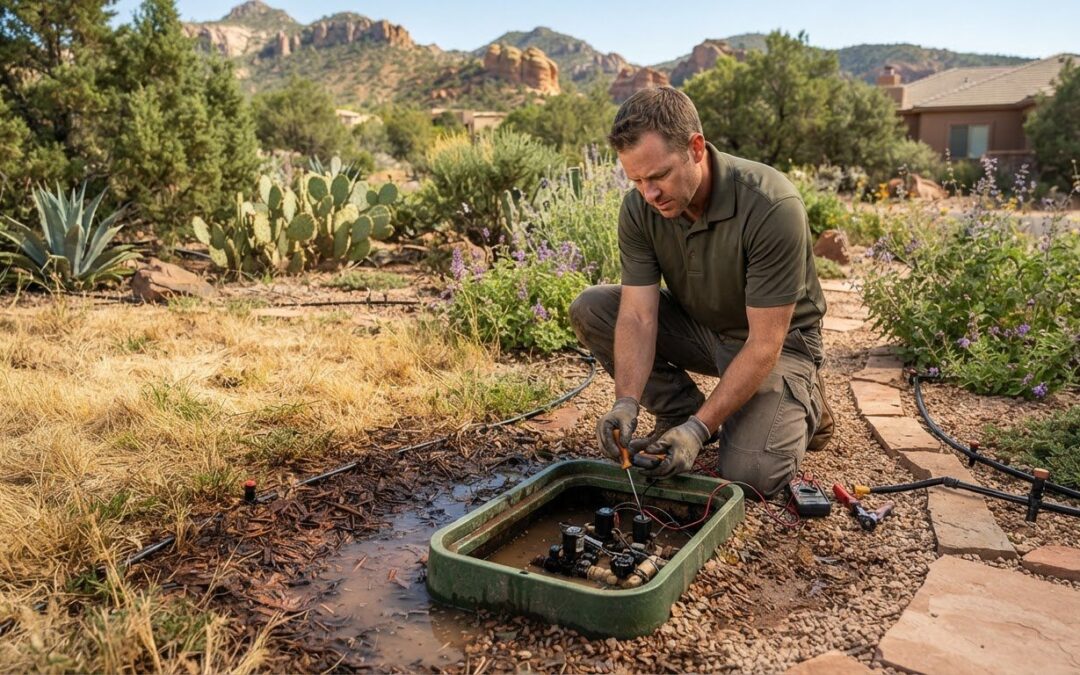
What if the fastest path to irrigation repair in Prescott, AZ, isn’t replacing a sprinkler head, but finding out why it failed? A dry patch beside a soggy one can point to different problems. A hidden leak or clogged emitter may waste water without being obvious. Replacing parts before diagnosing the system can leave the actual fault untouched.
Before planning a repair, it helps to connect the symptoms to likely causes. A careful assessment considers whether the issue involves a sprinkler, drip line, valve, or electronic controller. This guide explains what to look for, what a thorough assessment should examine, and how to choose a practical next step for your Prescott property.
Green Earth, LC brings more than 47 years of regional experience to irrigation troubleshooting and repair for residential and commercial landscapes. Learn how targeted repairs can support reliable watering, protect landscape health, and help avoid unnecessary water waste, with local conditions and seasonal care in mind.
Key Takeaways
- Dry areas, pooling water, weak spray, and inactive zones can signal irrigation trouble, but symptoms alone don’t identify the cause.
- A step-by-step assessment checks affected zones and related components before defining the repair scope.
- Compare isolated faults with recurring or multi-zone problems to understand whether a targeted repair or broader review may be appropriate.
- For irrigation repair prescott az, record affected zones, visible symptoms, and when the issue occurs to help focus the assessment.
- Green Earth, LC repairs sprinkler systems, drip systems, and electronic irrigation controllers for residential and commercial properties.
Irrigation Repair in Prescott, AZ: Signs Your System Needs Attention
Dry patches, pooling water, weak spray, or a zone that won’t run are all reasons to inspect your irrigation system. A visible symptom rarely identifies the faulty part by itself. A dry area might result from a clogged emitter, damaged line, or sprinkler that isn’t distributing water evenly. Pooling may point to a leak, runoff, or a component that continues releasing water after the zone stops.
Notice whether the problem is isolated or affects several zones. If water continues flowing after the irrigation cycle should have ended, treat it as urgent: use an accessible irrigation shutoff if you can identify it safely, and arrange a professional diagnosis. Uneven coverage or weak spray without continuous leaking usually calls for planned troubleshooting, not guesswork or immediate part replacement. If you’re searching for “irrigation repair prescott az,” noting whether water is actively escaping can help clarify the urgency.
What visible irrigation problems can tell you
Watch how water moves across the landscape. Uneven coverage may leave some plants dry while nearby ground receives enough water. Overspray sends water onto paths, walls, or other areas that don’t need it. Runoff travels across the surface instead of soaking in, while an unusually wet patch may suggest a leak or a component delivering water where it shouldn’t.
These clues can overlap. A damaged line may create wet ground and reduce pressure elsewhere. A clogged drip emitter can leave one plant dry while the rest of its zone works. A damaged sprinkler component may weaken or redirect spray. The general guide Understanding Irrigation Sprinklers explains how sprinkler components work together, but inspection is still needed to identify a fault in a specific system.
Before service, note the affected zone, what you see, and when it happens. For example, record whether weak spray appears every time the zone runs or only after another zone has operated. These observations help guide diagnosis without relying on appearance alone.
Why Prescott properties need context-aware troubleshooting
In Prescott and throughout Yavapai County, local conditions should be part of the diagnosis, not assumed to be the cause of a symptom. The landscape’s layout, planting areas, irrigation method, and how each part of the property is used all affect what suitable coverage looks like. A planting bed and a frequently used lawn area may need different watering patterns, even if they share a controller.
Seasonal changes and recent controller adjustments can also provide useful context. A schedule that once suited an area may not match its current plants or use. Evaluating the system alongside the landscape helps distinguish an equipment fault from a mismatch in coverage or scheduling. That supports repairs focused on plant health and avoiding unnecessary water use. A search for irrigation repair prescott az should lead to a diagnosis shaped by the system and the landscape it serves.
Arrange professional irrigation diagnosis when water keeps running, a zone repeatedly fails, or uneven coverage persists. Record where and when the symptoms occur instead of replacing parts based on appearance alone. Effective irrigation repair starts with understanding both the system and the landscape it serves.
How an Irrigation Repair Assessment Finds the Actual Fault
A sound repair starts by tracing the problem, not by choosing a replacement part too soon. For property owners searching for irrigation repair prescott az, a structured assessment connects observed symptoms to the part of the system that may be responsible. It also ties the proposed work to what the inspection finds, rather than assumptions based on one visible clue.
- Document the symptoms. Record what isn’t working, where it happens, and whether it occurs consistently or during particular watering cycles.
- Identify the affected zones. Note whether the issue is limited to one area or appears across several. That pattern can help narrow down the possibilities.
- Inspect relevant components. Consider controller operation and settings alongside the valves, visible lines, sprinkler heads, and drip emitters connected to the affected area.
- Determine the repair scope. Use inspection findings and system performance to identify which components need attention and whether related parts should also be reviewed.
Accurate diagnosis helps avoid replacing components that are still working properly. A system assessment considers how connected parts may contribute to the reported issue. A single-part guess focuses on one visible clue. For example, weak spray in a zone could relate to a sprinkler head, a valve, or another issue affecting water flow. Replacing one head without considering related components might leave the underlying fault unresolved.
What a system inspection may examine
The inspection focuses on components relevant to the symptoms. It may include whether the controller operates as expected, whether affected zones respond, and whether visible lines, valves, sprinkler heads, or drip emitters show signs of a problem. A wet area near a line and a dry plant beside an emitter call for different observations. The assessment connects those details without assuming every fault needs the same checks or repair.
How controller and hardware issues differ
A schedule or programming change can make a functioning zone appear to have a hardware failure. Watering may start at an unexpected time, or a zone may not run as anticipated. Physical problems offer different clues: a leak may leave persistent dampness, a blocked emitter may restrict flow to a plant, and a damaged head may disrupt spray. Controller troubleshooting and hardware repair therefore start with different evidence, even if both affect landscape health.
Green Earth, LC brings more than 47 years of regional experience to sprinkler systems, drip systems, and electronic irrigation controller troubleshooting. The Flagstaff irrigation repair guide provides related regional service context. A thorough irrigation repair prescott az assessment can clarify the fault and define a practical repair scope. Learn about irrigation repair services from Green Earth, LC.
Irrigation Repair or Replacement: How to Compare Your Options
Choosing between a focused repair and broader work depends on what an inspection reveals, not on one symptom alone. A single damaged component may be straightforward to address, while repeated faults or trouble across several zones can call for a wider review. For irrigation repair in Prescott, AZ, first understand the system’s condition and performance, then decide what needs attention.
| What the assessment finds | Option to consider | What helps guide the decision |
|---|---|---|
| An isolated, identifiable fault, such as a damaged sprinkler head or a limited drip-line problem | A targeted component repair may be suitable | Whether the surrounding zone operates as expected and nearby components are in sound condition |
| A fault that returns after repair or repeated problems in the same area | Review the related components and operation before planning further work | Whether the original cause was resolved and whether connected parts show signs of wear or malfunction |
| Inconsistent watering or faults affecting multiple zones | A broader system assessment may be appropriate | Controller operation, zone response, and the condition of relevant valves, lines, heads, or emitters |
This comparison is a guide, not a diagnosis. A recurring symptom doesn’t automatically mean the system needs extensive work, and a localized fault doesn’t prove every nearby part is in good condition. Repair scope should reflect inspection findings, component condition, and how the system performs as a whole. That gives property owners a clearer basis for deciding what to plan first.
When a targeted repair may be appropriate
A clearly identifiable problem, such as one damaged sprinkler head or a limited drip-line issue, may point toward a focused repair. The key question is whether the fault is truly isolated. If the rest of the zone operates consistently and surrounding components appear serviceable, addressing the affected part may be practical. The assessment should still consider the area’s overall performance before settling on that scope.
When recurring problems call for a broader review
Repeated failures, several affected zones, or inconsistent watering across the property can justify examining more than one component. A broader irrigation review focuses on system function and repair needs. It is distinct from redesigning the landscape or taking on unrelated construction work. Where planting choices and watering needs intersect, this Northern Arizona desert landscape design guide offers related context.
A diagnosis should clarify which parts need attention before work is planned. Green Earth, LC brings more than 47 years of regional experience to sprinkler, drip-system, and controller troubleshooting. Explore irrigation repair services to learn how the company can address the system’s actual condition.

How to Prepare for Irrigation Repair at Your Prescott Property
A few clear observations can make an irrigation assessment more focused. Before arranging irrigation repair in Prescott, AZ, note where the problem appears, how the system behaves, and whether anything changed recently. You don’t need to open equipment or take components apart. A concise record of what you’ve seen is a useful starting point for troubleshooting.
Use this checklist to organize the details:
- Affected zones: List zone numbers if they’re labeled, or describe the areas they water, such as the front planting bed or east lawn.
- What you observe: Note dry areas, pooling, uneven spray, a damaged part, or a controller display that looks different from usual.
- When it happens: Record whether the issue is constant, appears during a scheduled cycle, or comes and goes.
- Recent changes: Mention controller adjustments, maintenance, or known disturbances near visible irrigation lines.
- Useful references: Take photos of visible conditions and the controller display, and note the usual watering schedule.
Keep notes brief and specific. “Zone 3 runs, but the far side of the bed stays dry” is more useful than “the irrigation is acting up.” If you’re unsure which zone serves an area, describe the location rather than guessing.
Information to record before arranging service
Include the property’s day-to-day use, too. At a home, a recurring issue may affect a particular garden bed or the area around a walkway. At a commercial property, note which landscape areas are involved and whether the problem appears during normal operations. Clear descriptions connect the symptom to its location and use without requiring you to diagnose the equipment.
Make relevant areas accessible if it’s safe and practical. Point out the controller and affected landscape sections, and mention obstacles or access instructions that could make inspection difficult. Don’t dig around lines, open electrical components, or dismantle sprinkler heads to prepare. Leave the equipment intact so the assessment can focus on its condition.
Prioritizing water loss and landscape stress
Continuous visible water flow is different from uneven coverage or a zone that fails to start. If water keeps running, treat it as a priority and avoid repairs that could expose you to electrical or water-related hazards. If you can safely reach a clearly identified shutoff, you may use it. Otherwise, keep clear of the affected equipment and describe the ongoing flow when arranging service.
A controller concern may show up as unexpected timing or a zone that doesn’t run as scheduled, while uneven coverage can leave plants receiving inconsistent water. Note which areas appear stressed and whether the issue affects one planting area or several. These details keep attention on irrigation performance and water use instead of assuming the landscape needs a redesign.
Once you’ve recorded the symptoms and prepared access, learn about irrigation repair with Green Earth, LC for your Prescott property.
Arrange Irrigation Repair in Prescott with Green Earth, LC
A sound repair plan begins with understanding what the system is doing and how the landscape uses water. Green Earth, LC is based in Cornville and serves Prescott and other Northern Arizona communities, including Sedona, Camp Verde, Cottonwood, and Flagstaff. With more than 47 years of regional experience, the company repairs sprinkler and drip systems and troubleshoots electronic irrigation controllers for residential and commercial properties.
For property owners seeking irrigation repair prescott az, that range matters because irrigation faults can involve different equipment and landscape needs. A focused diagnosis directs attention to the reported issue and supports reliable watering without overlooking the landscape’s health.
A regional approach to irrigation troubleshooting
Irrigation is part of the larger landscape, so repair decisions should account for what the system serves, not just the component that appears faulty. A home may have separate zones for garden beds and lawn areas. A commercial property may have a broader layout, varied planting areas, or patterns of use that affect how watering zones operate. Those differences provide useful context for troubleshooting.
Green Earth’s work includes sprinkler repair, drip system repair, and electronic controller troubleshooting. Each system type has its own components and operating considerations. Understanding how irrigation equipment serves the property helps connect repair needs with landscape performance and responsible water use. The aim is to restore system function in a way that supports the plants and outdoor spaces, without unnecessary adjustments unrelated to the reported issue.
What to share when you request irrigation repair
A short description helps start a focused conversation about the repair need. You don’t need to identify the cause or take equipment apart. Share the observations you already have, including:
- The affected area or zone, described by its location if you don’t know its number.
- The visible symptom, such as a leak, weak spray, dry planting area, or controller concern.
- Whether the problem is constant or occurs during a particular watering cycle.
- The property type and how the affected area is used.
- Any photos of visible conditions or notes about controller settings and recent changes.
These details explain the issue and provide a practical starting point. For example, a homeowner might describe one drip-irrigated bed that remains dry, while a commercial property manager might note that several landscape zones aren’t responding as expected. Clear observations make it easier to discuss the system and the concern without assuming a repair before the fault is understood.
To discuss your property’s irrigation needs with a locally experienced team, Discuss your Prescott irrigation repair needs with Green Earth, LC.
Make Your Next Irrigation Decision with Confidence
A repair can be an opportunity to better understand how your irrigation system supports the landscape. After the work, observe how the affected area responds through its next watering cycles. If the original symptoms return or new ones appear, those observations can guide the next assessment instead of prompting guesswork.
For irrigation repair prescott az, a measured next step starts with the conditions on your property and a clear account of what you’ve noticed. Green Earth, LC brings more than 47 years of regional experience to sprinkler, drip-system, and electronic controller repair for Prescott and other Northern Arizona communities.
Share the symptoms affecting your landscape and discuss a practical path forward with Green Earth, LC. Discuss your Prescott irrigation repair needs with Green Earth, LC and take the next step toward water-conscious irrigation.
Frequently Asked Questions
What are the most common signs that an irrigation system needs repair?
Common warning signs include dry or unusually wet areas, weak or uneven sprinkler spray, water escaping around a head, clogged drip emitters, and zones that fail to start. Also watch for a controller display or watering schedule that changes unexpectedly. A single symptom can have more than one cause, so note its location and pattern before deciding what’s wrong. Persistent water flow after a cycle ends deserves prompt attention.
Can a small irrigation leak cause a larger problem?
Yes. Even a small leak can waste water between watering cycles and keep nearby soil wetter than intended. Over time, extra moisture may affect plants or contribute to erosion and soft ground, depending on the location and conditions. Check whether dampness returns when the irrigation system runs. If water keeps flowing after the cycle stops, avoid using the affected zone and arrange a diagnosis rather than waiting for the leak to become more obvious.
How often should an irrigation system be inspected in Prescott?
There isn’t one inspection interval that suits every property. A useful routine is to observe the system when you first run it after a period of limited use, then monitor coverage during normal operation. Inspect sooner after landscaping work or a known disturbance near irrigation lines. In Prescott, Sedona, Camp Verde, Cottonwood, and Flagstaff, property layouts and planting needs differ, so let the system’s condition and use guide the schedule.
Is drip irrigation better than a sprinkler system for Arizona landscaping?
Neither system is automatically better. The right fit depends on the plants, layout, and how the area is used. Drip irrigation delivers water through emitters near individual plants, which can suit defined planting beds. Sprinklers distribute water over a broader area and may suit spaces with more continuous groundcover. Some properties use both. Match each zone to its planting area, and check that water reaches the intended plants without excessive overspray or runoff.
Can I run my irrigation system while waiting for a repair?
It depends on the fault. If a zone has a continuous leak, pooling, or water flowing where it shouldn’t, leave that zone off if you can do so safely. Other zones may be usable if they operate normally and don’t contribute to water loss, but don’t run the system if you’re unsure which control affects the problem. Avoid opening electrical equipment or digging near lines. Note which zones you’ve turned off.
Why does one irrigation zone stop working while others still run?
A single zone can fail while others operate because its controller setting, wiring, valve, or connected hardware has a problem. Start with simple observations: check whether the zone is enabled and whether its scheduled start time has passed. If the controller appears correct, note whether the zone makes any sound or shows signs of water flow. Don’t assume the valve is faulty, since several separate issues can produce the same result.
What should I do if irrigation water is pooling near my home?
Turn off the affected zone if you can identify its control safely, and keep people away from slippery or soft ground. If water continues moving toward the building or keeps flowing after irrigation is off, treat it as a priority and arrange an assessment. Don’t dig beside the home or handle electrical equipment in wet conditions. Record where pooling begins and whether it appears during a watering cycle. That can help distinguish a leak from runoff or drainage concerns.
Recent Comments