
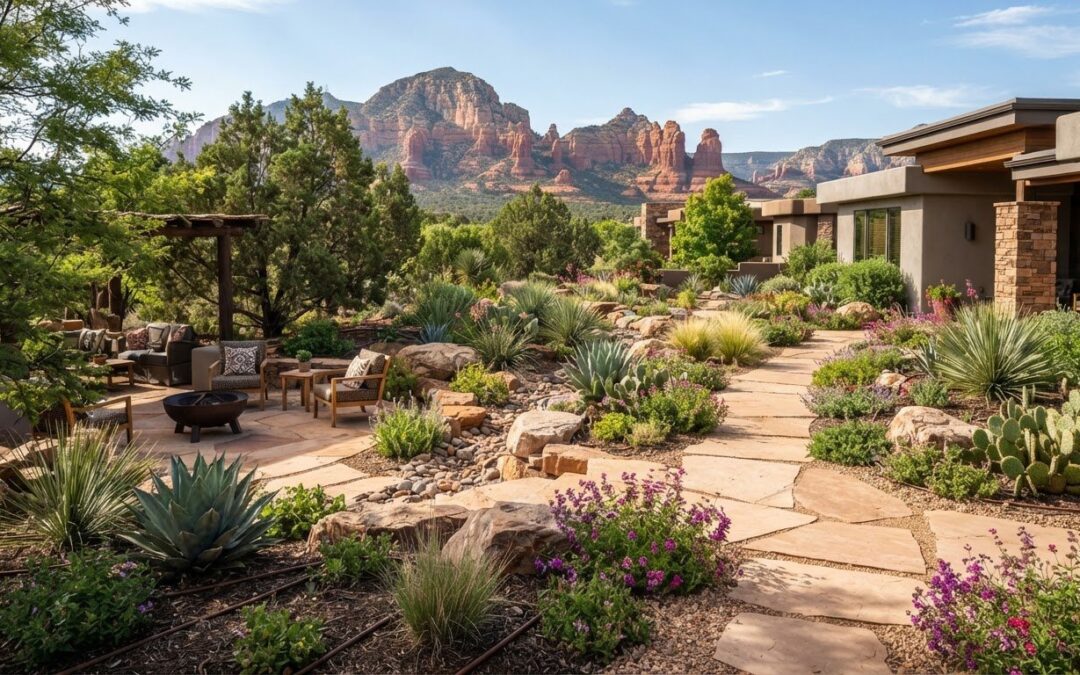
What if a water-wise yard could feel layered, welcoming, and distinctly Northern Arizona, rather than like a bare stretch of gravel? A thoughtful xeriscape design Northern Arizona homeowners can build starts with the property’s conditions and how they want to use the space.
It’s reasonable to wonder which plants can handle local weather and soil, or how to combine greenery, hardscape, and irrigation without making a yard feel sparse. There’s no one-size-fits-all plant list. Elevation, sun exposure, drainage, and available space all influence what will thrive and where water is useful.
This guide will help you plan a cohesive, water-conscious landscape around your site and priorities. You’ll learn how to create practical landscape zones, choose plants suited to local conditions, and coordinate irrigation with hardscape and outdoor living areas. The goal is a landscape that feels intentional, works for everyday life, and makes responsible use of water.
Key Takeaways
- Think of xeriscaping as a coordinated design approach, not a prescribed look or a gravel-only yard.
- Shape xeriscape design northern arizona around what you observe on site, including drainage, existing features, and the places you use most.
- Match planting, irrigation zones, paths, and hardscape to their purpose and the conditions of each area.
- Turn your priorities for gathering, circulation, shade, and views into a practical plan before choosing materials and installation steps.
- Coordinated landscape design and installation can bring planting, drip irrigation, hardscape, and grading together.
What Does Xeriscape Design Mean in Northern Arizona?
“Xeriscape design is the coordinated planning of plants, water, soil, and outdoor spaces to make a landscape appealing and water-conscious.” It’s a design method, not a prescribed style, and it doesn’t mean covering the yard with gravel. The What is Xeriscaping? overview introduces the general principles. Applying them in Northern Arizona means adapting them to the specific property.
Plant selection, irrigation, soil conditions, layout, and maintenance all affect how a landscape uses water and develops over time. Grouping plants with similar watering needs, for example, helps you plan irrigation zones around their needs. Thoughtful grading can guide runoff instead of letting water collect in the wrong places. Paths, pavers, and other functional surfaces shape how people move through and use the yard.
A considered plan can bring together varied foliage textures, seasonal interest, open space, and hardscape. Repeated plant forms create visual rhythm, while contrasting shapes and surface materials add definition. The result can feel full and cohesive without relying on a thirsty lawn or making every area a planting bed.
Does xeriscaping mean a yard without plants?
No. Plants remain central to a considered xeriscape. The aim is to choose and arrange planting to suit the site, then balance it with functional surfaces for paths, gathering areas, and comfortable circulation.
A bare, unstructured yard can feel unfinished. A planned mix gives each area a purpose. Repeating selected plant forms and grouping them into intentional beds helps connect different parts of the landscape. Foliage shape, height, texture, and the edges between planting and hardscape can add visual interest without making the design complicated.
Why does Northern Arizona’s location matter?
Northern Arizona includes varied elevations and local conditions, so a design suited to one place may not fit another. Flagstaff and the Verde Valley, for example, are different settings and shouldn’t be treated as though they call for identical landscapes. Even within one community, sun exposure, wind, slope, and drainage can vary across a property.
Regional guidance is a starting point, not a substitute for observing the site. Sheltered corners and hotter, exposed areas create different microclimates that affect plant placement and irrigation planning. A strong xeriscape design northern arizona homeowners can rely on starts by identifying those differences before choosing plants or materials.
Water efficiency depends on several choices working together, not on a plant list or gravel covering alone. Design, installation, weather, and ongoing care all affect how a landscape performs. Irrigation may need adjustment as plants establish or conditions change, and maintenance helps keep beds, surfaces, and drainage functioning as intended. Build that care into the plan from the beginning.
How to Assess a Northern Arizona Site Before Choosing Xeriscape Plants
Before selecting plants, take time to understand how the property behaves. A sunny, exposed slope and a sheltered area beside a building may need different plants, soil preparation, and irrigation. A site assessment turns those differences into useful design information and helps you avoid relying on a regional plant list alone.
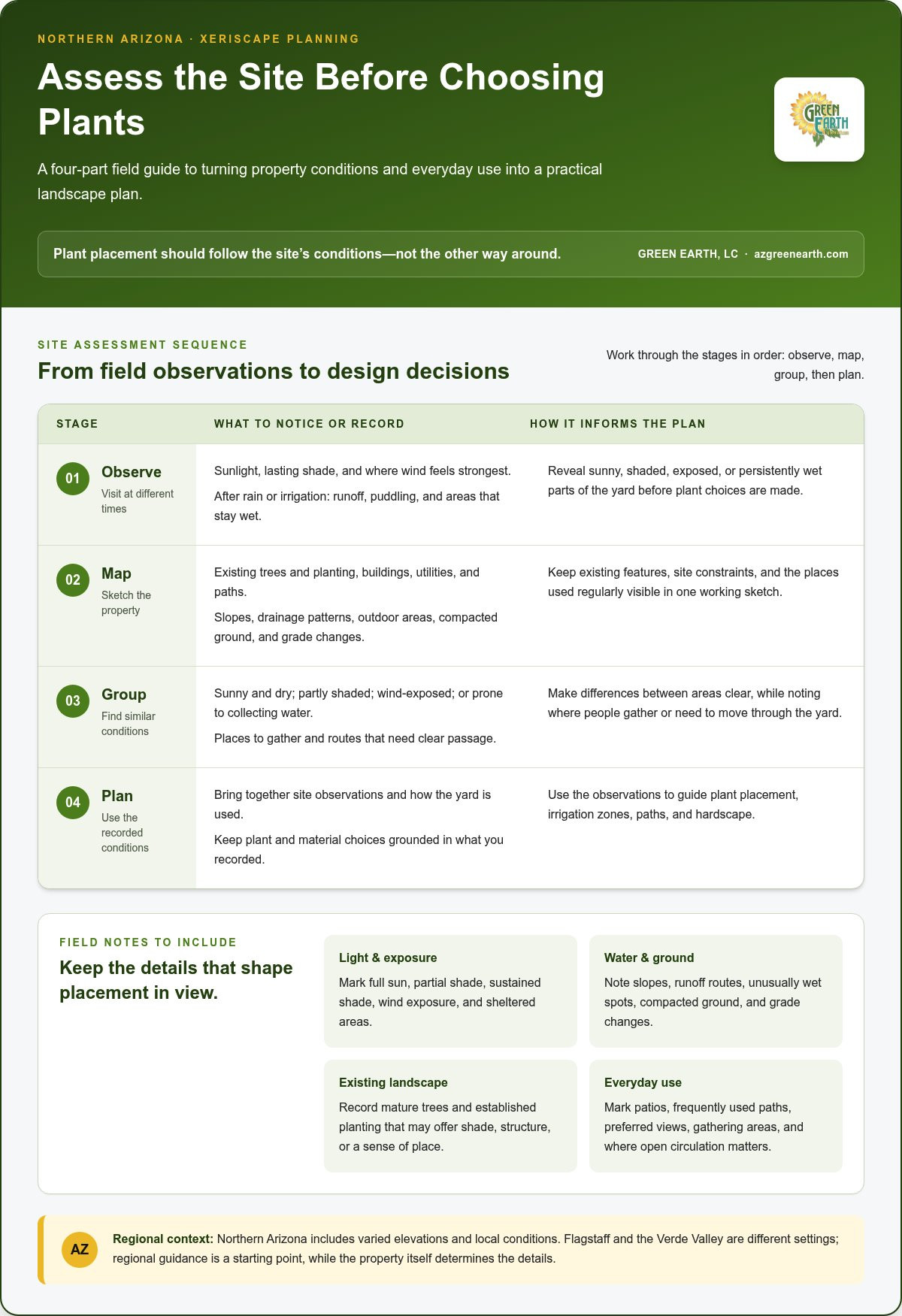
Plant placement should follow the site’s conditions, not the other way around. To tailor xeriscape design northern arizona to your property, use a simple sequence: observe, map, group, then plan.
- Observe. Visit the yard at different times of day. Notice where sunlight falls, where shade lasts, and where wind feels strongest. After rain or irrigation, look for runoff, puddling, and areas that stay wet.
- Map. Sketch the property and mark existing trees and planting, buildings, utilities, paths, slopes, drainage patterns, and outdoor areas you use regularly. Note compacted ground and changes in grade.
- Group. Identify areas with similar conditions, such as sunny and dry, partly shaded, wind-exposed, or prone to collecting water. Mark places where people gather or need a clear route through the yard.
- Plan. Use your observations to guide plant placement, irrigation zones, paths, and hardscape. Base plant and material choices on the conditions you’ve recorded.
This site-first approach also gives you a stronger foundation for choosing materials and setting the layout. The broader Desert Landscape Design Northern Arizona guide offers additional context for shaping a landscape around regional conditions.
What should a xeriscape site assessment include?
Record where the yard receives full sun, partial shade, and sustained shade, then connect those areas to what you observe on the ground. Mark slopes and likely runoff routes, along with spots that remain unusually wet or appear compacted. These details can point to drainage or soil conditions that affect plant establishment. Note mature trees and established planting that provide shade, structure, or a sense of place worth retaining.
Include how you use the yard. A patio, frequently used path, or preferred view may influence where planting should provide enclosure and where open circulation matters more. A clear drawing keeps these functional priorities visible alongside sunlight and drainage.
How do Northern Arizona elevation and exposure affect the plan?
Regional location is a starting point, not a planting prescription. Elevation and exposure can influence cold, heat, shade, and wind, but conditions can shift across a single property. A building may shelter one bed while another area remains exposed; a slope may drain differently from a level corner. Use these differences to guide plant selection and placement.
For a property-specific design, Green Earth connects site observations with custom landscape planning and installation. Explore custom landscape design and installation to see how grading, irrigation, planting, and hardscape can work together.
How to Balance Plants, Irrigation, and Hardscape in Xeriscape Design
Xeriscape works best when planting, irrigation, and surfaces are planned together. Each choice affects the others: plant placement influences irrigation layout, paths shape circulation, and hardscape can change how water moves across a site. For xeriscape design northern arizona property owners can adapt to local conditions, consider the purpose and site fit of each element before settling on materials or plants.
A useful plan gives every area a job. Planting can add texture, seasonal interest, and shade; paths and patios make movement and outdoor use more comfortable. Surface choices also affect the look and function of the landscape:
- Planting beds bring living texture and seasonal change. Their location and size should suit site conditions and allow for mature plant growth.
- Gravel or other loose surfaces can define open areas or connect planting beds, but large uninterrupted expanses may feel stark if they dominate the design.
- Pavers and paths provide defined routes and usable gathering areas. Place them according to how people move through the yard.
- Permeable surfaces may allow water to pass through, depending on the material, installation, and underlying soil. Consider how each surface affects runoff and drainage.
Hardscape should support the landscape, not simply fill space. A path that follows a natural route can make a yard easier to use, while a patio can establish a gathering area. On a slope or near a spot where water collects, account for grading and drainage when placing surfaces. The right balance depends on the property and how you plan to use its outdoor areas.
How should plants be grouped in a water-wise design?
Group plants with similar water needs so irrigation zones can serve them appropriately. Within each bed, consider mature size, spacing, seasonal interest, and the care the planting will need as it grows. Native and adapted plants can both be options, but suitability depends on elevation, exposure, soil, and drainage. Choose species for the conditions of the specific site.
Grouping also strengthens the visual composition. Repeating forms can distinguish one area from another while keeping the overall design cohesive. Leave room for plants to develop instead of crowding them based on their appearance at installation.
How can hardscape support xeriscape without dominating it?
Start with a clear use: a path for circulation, a patio for gathering, or another surface that supports everyday activity. Then consider how its color, texture, and scale relate to nearby plants and materials. Planted areas can soften hard edges; gravel can define a bed or open space; pavers can create a firm route or seating area.
Check drainage as well as appearance. A surface that redirects runoff toward a building or traps water beside planting may create problems. Coordinating surface choices with grading and irrigation helps the landscape function as a unified whole. Green Earth brings these elements together through coordinated landscape design and installation.
How to Turn a Xeriscape Concept into a Buildable Northern Arizona Plan
A clear plan connects what you want from your yard with what the property can support. Before choosing finishes or beginning installation, translate your goals and site observations into a layout that coordinates planting, irrigation, hardscape, and grading. This gives each decision a place in the larger design and prevents essential features from becoming afterthoughts.
Start by prioritizing how you want to use the outdoor space. Is gathering with family or friends most important? Do you need comfortable circulation between the house and yard, shade in a particular area, or an open view you want to preserve? Rank the essentials, then separate them from features you’d enjoy but could add later.
- Gather your goals and site map. Mark existing features, drainage patterns, paths, and areas of regular use.
- Set the landscape zones. Locate planting beds, gathering spaces, routes, and open areas according to their purpose and site conditions.
- Coordinate the technical choices. Align plant groupings with irrigation zones, and plan hardscape alongside grading and drainage.
- Select materials and plan installation. Choose surfaces and other elements that support the layout, then decide whether to build everything at once or in phases.
Resolve grading and runoff considerations before installation begins. A patio, path, or planting bed can affect where water travels, so account for slopes and areas where water collects. If runoff is a concern, the Arizona drainage grading guide offers relevant context for understanding how drainage decisions fit into site planning.
What belongs in a practical xeriscape design plan?
A useful plan can begin as a scaled sketch, as long as it clearly locates planting zones, paths, gathering areas, and features you intend to retain. Add irrigation zones and show how they coordinate with plant groupings. Include proposed hardscape and grading decisions on the same layout rather than treating each as a separate project. Label essential needs, such as a clear route, separately from optional details, such as an additional decorative feature.
Can a xeriscape project be completed in phases?
Phasing can make a larger landscape transformation more manageable, but plan the whole layout first. That way, an initial area can connect to future paths, irrigation, and planting instead of needing rework as the project grows. A first phase might address a high-use gathering space or a drainage priority, while later work completes other zones. If fire-conscious planning is relevant to your property, consider how it relates to the broader layout and the Firewise landscaping guide.
There’s no single schedule that fits every property. The scale of the work, site conditions, and priorities determine whether a complete redesign or staged installation makes sense. For xeriscape design northern arizona homeowners can carry from concept through construction, Green Earth coordinates custom landscape design and installation with irrigation, hardscape, and drainage grading. Plan your Northern Arizona landscape project.
How Green Earth Brings Northern Arizona Xeriscape Designs to Life
A successful xeriscape moves from site observations to a coordinated plan, then into installation. Green Earth, LC connects custom landscape design with the practical elements that shape how a property looks and functions: planting, drip irrigation, hardscape, and drainage grading. Each choice is considered in relation to the others and to the property’s conditions, rather than treated as a separate upgrade.
That coordination matters during installation. Planting areas need to align with irrigation zones; paths and patios should support everyday use; and grading should account for how water moves across the site. When runoff influences the layout, drainage grading can address it as part of the landscape plan. The aim is a cohesive outdoor space that works for its intended uses and reflects responsible, water-conscious choices.
How does integrated landscape work support a cohesive design?
Design and installation provide a connected path from the overall layout to the details on the ground. Plant groupings can inform drip irrigation placement, while pavers and other hardscape can define routes or gathering areas. Where slope or runoff affects the site, grading can be incorporated into the plan before those elements are installed.
This integrated approach supports visual continuity while keeping function in view. It also gives each part of the landscape a clear role, from planting beds that add texture to paths that support circulation. For homeowners planning xeriscape design northern arizona properties, aligning these decisions can help create a landscape suited to local conditions and daily life.
What makes Green Earth, LC a Northern Arizona landscape partner?
Green Earth, LC is locally owned and based in Cornville, with experience serving the Verde Valley and Northern Arizona communities including Sedona, Camp Verde, Cottonwood, Flagstaff, and Prescott. The company brings more than 47 years of landscaping and construction experience to its projects.
Green Earth, LC’s sustainability work has also received statewide recognition: the company was a runner-up in Green Living Magazine’s Best Sustainable Landscape Designer category. That recognition complements a practical approach to design, where project details are shaped around the site rather than a one-size-fits-all template.
Whether you’re planning a residential landscape or improvements to a commercial property, Green Earth, LC brings design and installation together around your goals. For a tailored landscape project, explore Green Earth, LC’s landscape services.
Start Shaping a Landscape That Fits Your Life
Your next step doesn’t have to be a complete redesign. Begin by deciding what you want your outdoor space to make possible, then consider how the property’s conditions can support those priorities. A well-planned xeriscape design northern arizona can grow from one clear goal, whether that’s creating a welcoming place to gather, improving circulation, or making better use of a challenging area.
Bring those priorities into a landscape plan that connects design with practical installation. Green Earth can shape a tailored project around your property, with planting, irrigation, hardscape, and grading considered as parts of a cohesive whole. That thoughtful start can help turn a broad idea into a landscape that feels purposeful, inviting, and suited to Northern Arizona.
Explore Green Earth’s landscape design and installation services and take the next step toward an outdoor space that works beautifully for you.
Frequently Asked Questions
Can xeriscape design work in a shaded Northern Arizona yard?
Yes. Shade can shape plant choices and watering needs, so note when an area is shaded and whether nearby trees compete for space and moisture. In xeriscape design northern arizona, a shaded bed beside a building may have different conditions from one beneath a tree. Observe how the area responds after watering, then tailor plant selection and irrigation to its conditions.
How long does a new xeriscape landscape take to establish?
There’s no single establishment period. Plant type, weather, planting conditions, and care all affect how quickly new landscaping settles in. Don’t assume that a water-conscious design needs no irrigation after installation. Follow care guidance suited to the selected plants, and check that water reaches the intended planting areas. If plants show stress or the soil stays unusually wet, use those observations to guide adjustments to care.
Can xeriscape design include a lawn?
Yes. Consider what the lawn is for, such as a play area or a comfortable surface for a particular outdoor activity, and whether that use justifies keeping it. A defined lawn area can sit alongside planting beds and paths instead of extending across the entire yard by default. This also makes it easier to plan its irrigation separately from areas with different landscape needs.
Do I need to replace all my landscaping to create a xeriscape?
No. Start by noting which existing features are healthy, which areas are difficult to use, and where irrigation may need attention. Then decide whether to update selected beds, surfaces, or other parts of the landscape. If you work in stages, plan for future connections, such as paths or irrigation, so new improvements relate to one another rather than feeling piecemeal.
Should xeriscape plants be native to Northern Arizona?
Native plants are one option, but being native doesn’t automatically make a plant right for every yard. Consider whether its mature size, exposure needs, and growing conditions suit the space. From Flagstaff to Sedona, Camp Verde, Cottonwood, and Prescott, local context matters, and conditions can vary within each property. Adapted plants may also be suitable; choose each plant for the conditions of its specific site.
Recent Comments