
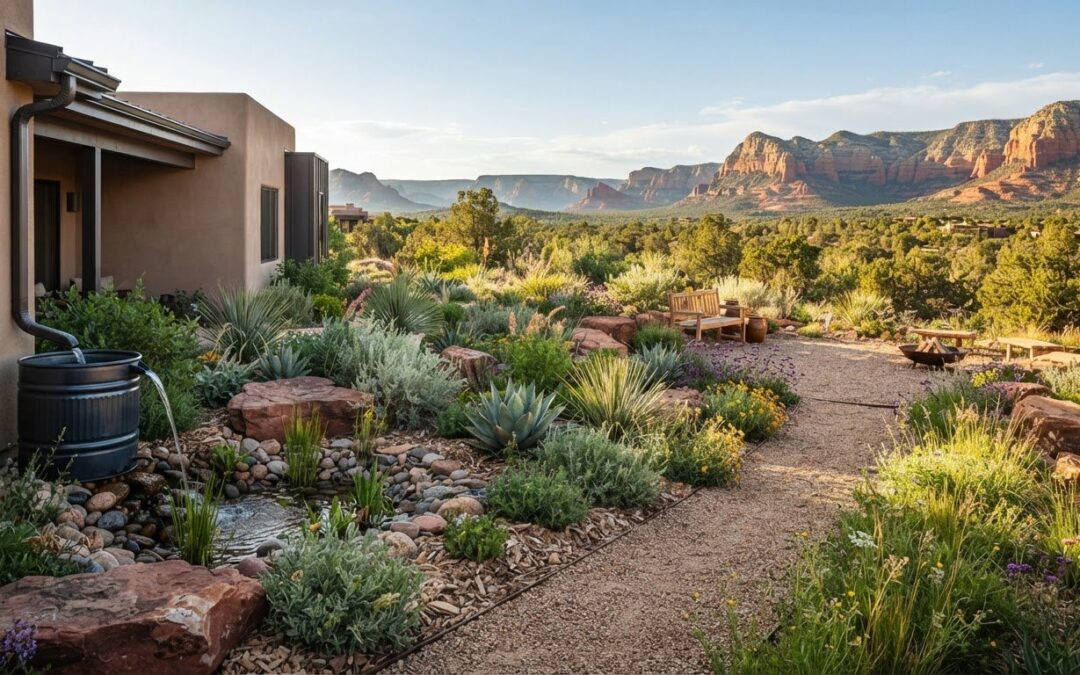
A sustainable backyard isn’t defined by how little it has in it, but by how thoughtfully it works with its surroundings. Sustainable backyard design considers local climate, soil, weather, and wildlife, then uses planting and water-wise features to conserve water and support a healthier landscape. A beautiful garden can also be practical and resilient.
Sustainable backyard design looks beyond the plants: how water moves through the yard, what the soil needs, and which materials shape outdoor spaces all matter. The goal is a garden that suits its setting while reducing unnecessary water use and pressure on the local environment.
This guide explains what sustainable landscape design involves, how xeriscaping combines drought-tolerant plants with suitable ground covers, and how rainwater harvesting can support garden irrigation. You’ll also find practical ways to bring these ideas together in a backyard.
Key Takeaways
- Start by mapping how you use the yard, where water flows, and which sustainability goals matter most.
- Combine drought-tolerant plants with gravel, sand, or mulch to shape a water-conscious garden that still feels inviting.
- Choose hardscape materials and planting arrangements that suit your site while supporting soil health and local wildlife.
- Explore how rain barrels, rain gardens, and permeable surfaces can capture runoff and put more water to work in the garden.
1. What is Sustainable Landscape Design?
Sustainable backyard design treats a landscape as an ecological system, matching planting, soil, climate, and wildlife. Start by noting sun exposure, runoff, compacted ground, and how you want to use the yard. Then choose actions, such as adding shade trees, permeable paths, or a rain garden.
Project cost depends on yard size, grading, materials, planting, and irrigation scope; a price follows a quote request. Set goals first, such as reducing lawn, improving drainage, or creating habitat, so the plan addresses specific needs.
Small yards can support an herb garden or butterfly garden in a defined corner. For larger spaces, plan gathering areas: a sitting space for two people is about 25 square feet, while one for four to eight people is 64-100 square feet.
Connect landscape areas by overlapping their edges by at least one-third to make movement easier. Draw the yard to scale, then arrange paths, planting beds, and seating around how people will use and move through the space.
Choose durable structures suited to their purpose. Natural stone can form paths and retaining structures, while reclaimed materials can reduce the need for newly made building materials.
Choose plants by function: trees provide canopy, shrubs add structure, and flowering plants can attract pollinators. Layered planting supports habitat from the ground to the tree canopy.
To compost food scraps and yard waste, collect kitchen scraps and suitable garden material in a compost bin or pile. A three-compartment system, with each compartment measuring 3 feet by 3 feet, can organize the process; use fully broken-down compost to return nutrients to garden beds.
2. Xeriscaping with gravel, sand, mulch, and drought-tolerant plants
Xeriscaping is a landscape approach that can use drought-tolerant plants and water-conscious ground covers. Group plants by water needs, then place the most drought-adapted species in the sunniest, driest areas. Mulch helps soil capture and retain moisture; gravel and sand add contrasting textures around planting beds.
Choose native plants suited to local soil and climate, since they’re adapted to regional growing conditions. Perennials, small shrubs, and groundcovers typically occupy 1-5 feet in diameter, helping you plan spacing before installation. Layering them creates habitat from ground level upward, while flowering varieties can provide blooms across seasons and support native pollinators.
Dense, low-growing plants help suppress weeds and erosion while limiting open ground where invasive species can take hold. A mix of flowering plants also provides wildlife with food and cover across different seasons. Avoid routine fertilizer and pesticide use: excess chemicals can affect soil health, pollinators, and nearby water.
Invasive plants can crowd out native vegetation and reduce habitat diversity. Standing water can contribute to erosion or provide a breeding place for mosquitoes, while pesticides may harm beneficial insects and pollute runoff. Choose plants suited to the site, correct drainage problems, and limit chemical inputs.
For hardscape, consider natural stone paths or pavers rather than expanding a concrete surface. Native plant landscaping can require less maintenance, fertilizer, and pesticide than non-native planting. Durable pavers and hardscape can define walking areas while leaving planting space for drought-tolerant vegetation.
3. Rainwater harvesting for garden irrigation
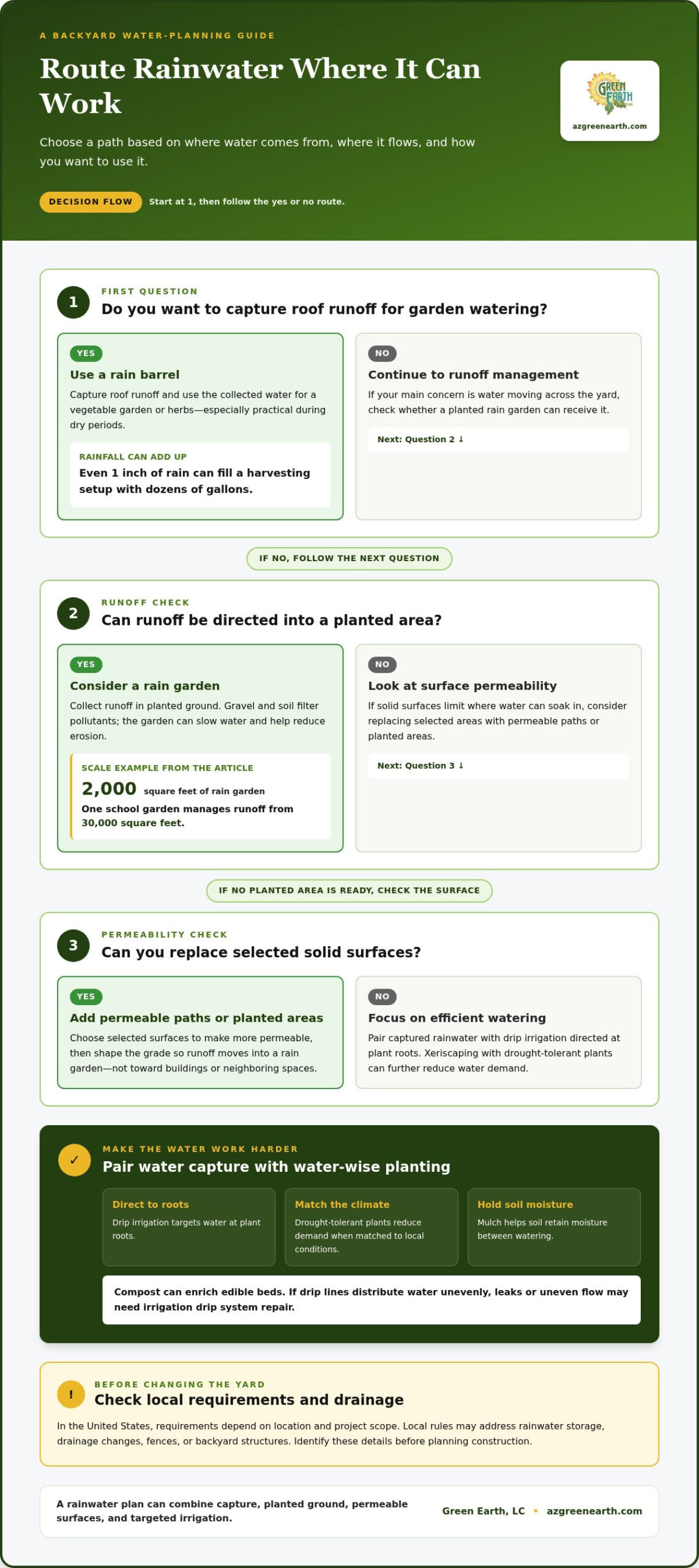
A rain barrel can capture roof runoff for watering a vegetable garden. Even one inch of rainfall can fill a harvesting setup with dozens of gallons. Using collected water for edible beds or herbs is a practical first step, especially in places with dry periods.
Rain gardens manage runoff differently: they collect water in planted ground, where gravel and soil filter pollutants. One school rain garden covers 2,000 square feet and manages runoff from 30,000 square feet. This example shows how planted spaces can slow water, filter it, and help reduce erosion.
To make a backyard more permeable, replace selected solid surfaces with permeable paths or planted areas. Shape the grade to direct runoff into a rain garden, not toward buildings or neighboring spaces. Add flowers suited to local conditions to attract butterflies and make the garden more welcoming to wildlife.
For efficient watering, pair captured rainwater with drip irrigation directed at plant roots. Xeriscaping with drought-tolerant plants further reduces demand by matching planting to the climate. Compost can enrich edible beds, while mulch helps soil retain moisture between watering.
In the United States, local requirements depend on location and project scope. Rules may address rainwater storage, drainage changes, fences, or backyard structures, so identify these details before planning construction.
If drip lines aren’t distributing water evenly, schedule irrigation drip system repair to address leaks or uneven flow and support more targeted garden watering.
Green Earth, LC: HOA Landscape Maintenance
Green Earth, LC provides HOA Landscape Maintenance to help communities care for shared outdoor spaces. Its Commercial Landscape Maintenance supports the ongoing needs of commercial properties, while Firewise Defensible Space addresses vegetation management around structures.
If irrigation problems affect your landscape, Green Earth, LC also provides Irrigation Drip System Repair and Irrigation Controller Troubleshooting. These services address practical system issues as you maintain a water-conscious landscape.
Contact Green Earth, LC or visit azgreenearth.com to discuss your landscape needs.
Shape a Landscape That Works for the Long Term
Choose the outdoor improvement that matters most now, then build a practical plan around it. Sustainable backyard design can evolve over time, with each decision supporting how you use and care for the space.
For shared properties, Green Earth, LC provides HOA Landscape Maintenance and Commercial Landscape Maintenance. Firewise Defensible Space can address vegetation around structures. These services support ongoing landscape needs while helping property managers focus on site priorities.
Start a conversation about the landscape challenges or goals you’d like to address. Contact Green Earth, LC today to discuss a thoughtful next step for your property.
Frequently Asked Questions
What is Sustainable Landscape Design?
Sustainable landscape design plans outdoor spaces to work with local conditions while limiting avoidable resource use. In Sedona, Camp Verde, Cottonwood, Flagstaff, or Prescott, assess a design by whether established plants thrive, runoff moves away from structures, and the yard remains useful through changing seasons. Track these practical outcomes after installation to guide future adjustments.
What native plants are best for a sustainable backyard in my region?
Choose native plants suited to your region’s soil and climate. Group plants by water needs and place the most drought-adapted species in the sunniest, driest areas.
How do permeable pavers compare with concrete for sustainable patios?
Consider permeable paths or pavers instead of expanding concrete. Permeable surfaces can help capture runoff; selected solid surfaces can also be replaced with permeable paths or planted areas.
Recent Comments