
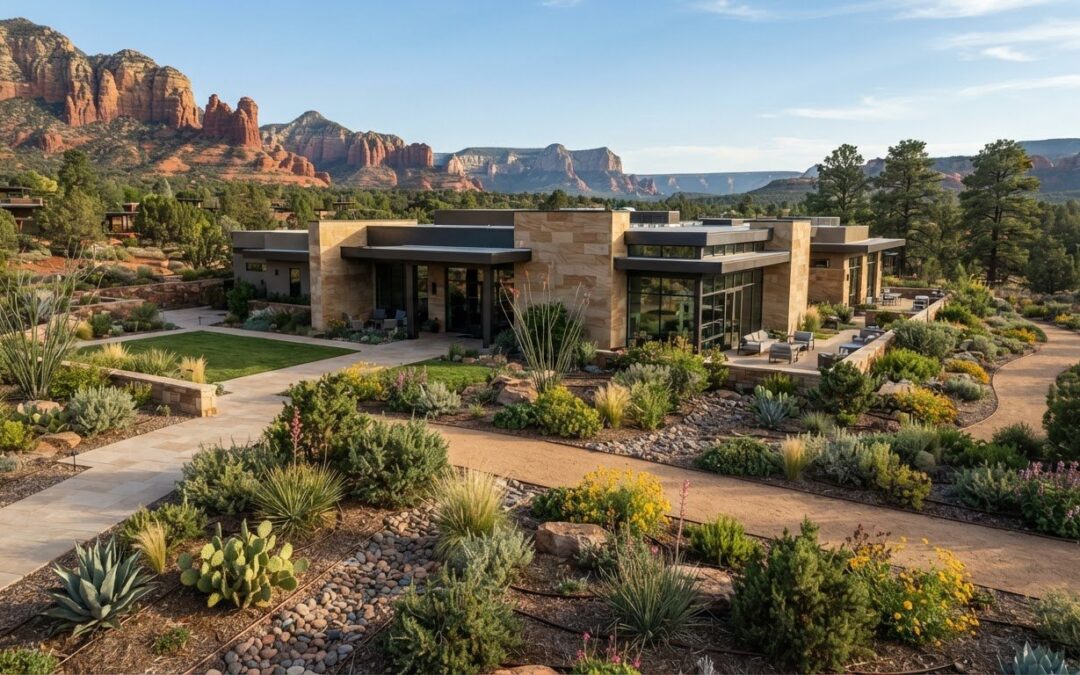
A landscape that looks easy to maintain on paper can become a steady drain on time and water if it doesn’t suit the site. Low maintenance commercial landscaping in Northern Arizona starts with more than drought-tolerant plants: heat, elevation, drainage, and how people use the property all shape the right design.
Recurring pruning, irrigation repairs, and replacement planting can put pressure on a property’s budget and staff. Reducing planted areas may help, but every choice has trade-offs. Turf, hardscape, and planting each bring different upkeep needs, and the irrigation system has to suit the layout and local conditions.
This guide compares practical design and maintenance strategies for commercial properties and HOAs across Northern Arizona. You’ll learn how planting, turf, pavers, and irrigation choices affect routine work, and what to consider before changing an established landscape. The goal is an attractive, functional property with a maintenance plan that fits its conditions, not a one-size-fits-all formula.
Key Takeaways
- Assess how property size, use, visibility, access, and current landscape condition shape recurring maintenance needs.
- See how plant spacing, mature size, and irrigation layout can influence pruning, repairs, and replacement work.
- Compare planted beds, turf, groundcover, and hardscape by upkeep, water needs, appearance, and site suitability.
- Use a practical sequence to document problem areas, set priorities, weigh design options, and plan ongoing care.
- Connect low maintenance commercial landscaping with site-specific design, maintenance, construction, and irrigation needs.
What Makes Commercial Landscaping Low Maintenance in Northern Arizona?
A low-upkeep landscape isn’t one that needs no care. It’s designed to reduce recurring work without sacrificing function or curb appeal. For a commercial property, that may mean fewer demanding planting areas, easier access for routine care, or an irrigation layout that is straightforward to manage. The right balance depends on the site, not a single formula.
Property size matters, but so do visibility, use, access, and existing conditions. A small entrance bed in full view of customers may need more attention than a larger, less prominent area. Poor drainage, aging irrigation, or plants that have outgrown their space can also create recurring work. Identifying these conditions helps managers define what “low maintenance” should mean for their property.
Which commercial properties benefit from a lower-upkeep landscape?
Different properties have different priorities. An office landscape may need a welcoming entrance and tidy paths for employees and visitors. Retail sites often focus on visible frontage and clear pedestrian routes. Shared-use properties and HOAs must account for common spaces, resident expectations, and the work required to keep the grounds consistent.
Traffic and visibility help determine where upkeep matters most. Areas beside entrances, sidewalks, and gathering spaces may need durable choices and clear sightlines, while less-used edges can serve another purpose. Managers should also consider who oversees routine care and how much time is available. A design that looks attractive but requires frequent attention may not fit the property’s capacity.
Why does Northern Arizona’s setting matter?
Northern Arizona’s conditions vary across Sedona, Camp Verde, Cottonwood, Flagstaff, and Prescott. Elevation, sun exposure, wind, drainage, and water availability can differ between locations and individual properties. Even on one site, a sunny parking-lot edge may have different needs from a shaded courtyard. A regional label alone doesn’t predict how a planting will perform.
Choose plants to suit the site’s exposure, soil, water conditions, and the level of care managers can sustain. A water-conscious approach such as Xeriscaping for low-maintenance commercial landscaping can inform the design, but it doesn’t mean removing all greenery or eliminating upkeep. The aim is to use resources thoughtfully while keeping the property welcoming.
Less work doesn’t have to mean a sparse or unfinished appearance. A clear layout, thoughtfully placed planting, and well-defined paths can create a polished impression while keeping routine care manageable. For property managers in Prescott and across the region, low maintenance commercial landscaping begins by matching design choices to the site and the people who use it.
How Planting, Layout, and Irrigation Shape Ongoing Landscape Work
Planting, circulation, and irrigation work as a system. A bed can look simple but still create recurring labor if plants crowd each other, access is awkward, or water reaches some areas unevenly. For a property in Flagstaff, Cottonwood, or elsewhere in the region, low maintenance commercial landscaping depends on how the site is used and how plants will grow, not just how the landscape looks on installation day.
A straightforward layout helps crews reach planting areas, inspect irrigation, and complete routine tasks without working around unnecessary obstacles. Clear bed edges make it easier to distinguish planted areas from paths and turf. Grouping plants with similar water needs can also help align irrigation with the landscape, rather than treating the entire property as if every area needs the same care.
How does plant selection affect maintenance?
Choose plants according to local climate, site exposure, available water, mature size, and expected care needs. A plant suited to one part of Northern Arizona may not suit every site in Prescott or Sedona. Sun, shade, soil, drainage, and wind exposure can vary across one property, so select plants for the conditions where they will grow.
Mature size matters. Shrubs planted too close to walkways, windows, or one another may need frequent pruning to maintain clearance and shape. Crowded plants can also make beds harder to access for irrigation checks and other care. Slow-growing plants may require less frequent pruning once established, but they still need appropriate care as they establish. Don’t select by growth rate alone: the plant must also suit the site and intended appearance.
Planting beds, groundcover, and turf each involve different tasks. Beds may need pruning, weeding, and irrigation attention. Groundcover can reduce exposed soil but still needs care suited to its growth and location. Turf needs maintenance that supports its condition and use. None is automatically the lowest-effort choice in every setting.
What role do irrigation and bed design play?
Irrigation should reflect plant needs and site conditions. A system designed around the layout can deliver water where it’s needed and make it easier to spot areas that need adjustment. Grouping plants with similar water needs can simplify scheduling. Separating areas with different exposures or planting types can also avoid treating unlike spaces the same way.
Drip irrigation may suit planting beds where targeted watering supports the design. Its value depends on proper placement and upkeep: emitters need to serve plants as they grow, and the system should remain accessible for inspection and repair. Clear bed edges and practical access paths make checks easier and help crews complete routine work without disturbing nearby areas.
Aligning the planting plan with commercial landscape maintenance helps connect design decisions to the care a property will need over time.
Commercial Landscaping Options Compared: Planting, Turf, and Hardscape
No single surface offers the same balance of appearance, water use, and routine care on every commercial property. Compare the tasks each option brings with the role it serves. Planted beds can add seasonal interest, turf provides a familiar green area, groundcover can soften open spaces, and hardscape supports circulation or gathering. Combining them thoughtfully can preserve curb appeal while concentrating maintenance where it matters most.
| Option | Routine tasks | Water considerations | Appearance and access | Potential fit |
|---|---|---|---|---|
| Planted beds | Weeding, pruning, and checking irrigation | Needs depend on plant selection and bed layout | Adds texture and seasonal interest; keep edges accessible | Entrances and visible areas where a planted focal point is useful |
| Turf | Mowing and care to maintain its condition | Water demand depends on site conditions and management | Provides a familiar, open surface for use | Areas where people benefit from a lawn-like space |
| Groundcover | Weeding and care to manage growth | Water needs vary with plant choice and establishment | Softens a site; access depends on placement and coverage | Open areas where a low-growing planted surface suits the site |
| Hardscape | Cleaning and attention to surface condition | Doesn’t need landscape irrigation, though adjacent planting may | Defines routes and gathering areas with firm access | Walkways, gathering spaces, and select difficult-to-maintain zones |
Use the comparison to identify where each option solves a real site need, rather than converting the entire property to one surface. A planted bed can frame an entrance, a path can connect destinations, and a smaller turf area can serve a specific use. Hardscape still requires upkeep: debris, surface condition, and the surrounding landscape remain part of ongoing care. Low maintenance commercial landscaping means choosing an appropriate mix, not eliminating every maintenance task.
When can hardscape reduce routine work?
Pavers and other hardscape can replace planting along circulation routes, create defined gathering areas, or simplify awkward spaces that are difficult to maintain. Their purpose should be clear. Adding paved area without considering water movement can create drainage concerns, so changes to surfaces may call for drainage grading as part of the plan. Green Earth’s hardscape construction in Cottonwood connects hardscape choices with practical site use.
How should property managers weigh appearance and upkeep?
A high-visibility entrance may benefit from a carefully maintained planted feature that supports a welcoming first impression. Peripheral areas may call for a simpler treatment that still looks intentional. Weigh the desired appearance against the recurring tasks each choice creates, including seasonal care, surface cleaning, and access needs. The right balance depends on the site, not a universal ranking of plants, turf, groundcover, or hardscape.
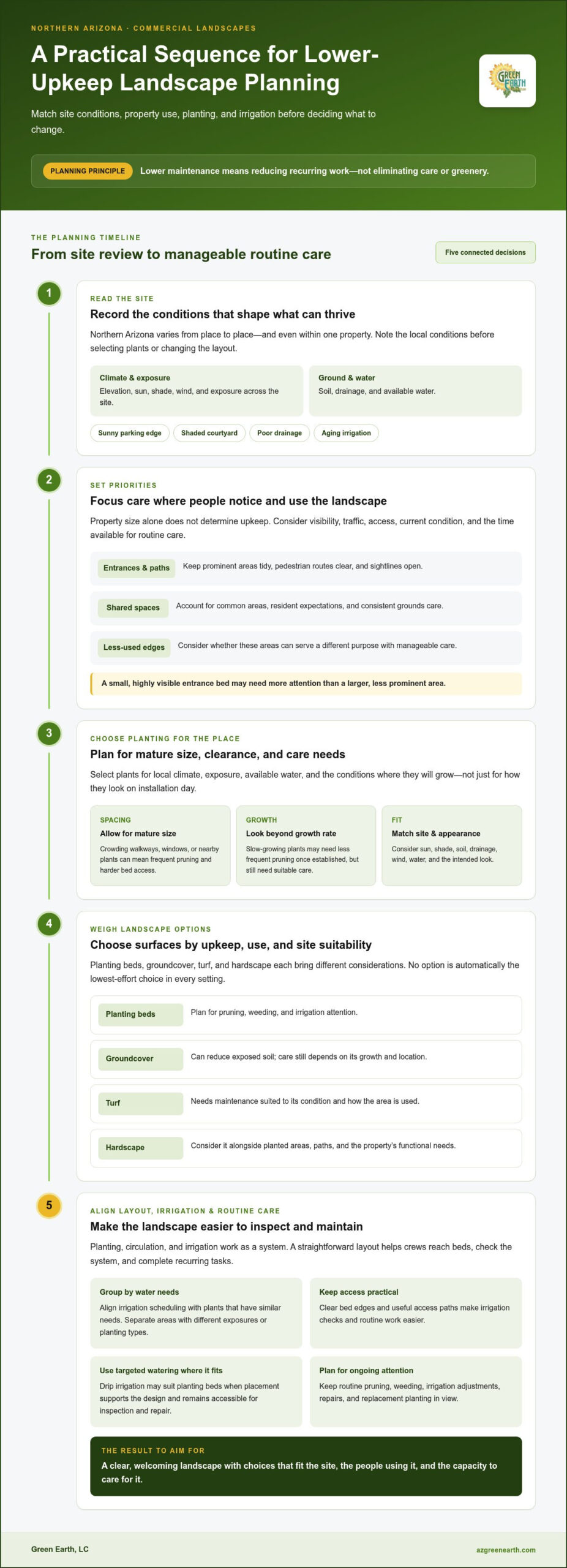
How to Evaluate a Low-Maintenance Commercial Landscape Plan
A useful plan starts with what the property needs, not a preferred material or plant palette. Before discussing a redesign, document recurring work and the places where the landscape creates friction. Note tasks such as repeated pruning, irrigation troubleshooting, or replacing plants, along with where and how often they occur. This gives managers a practical baseline for comparing options and setting priorities.
Use a clear sequence to turn observations into a workable scope:
- Assess the site. Record sun exposure, slopes, drainage concerns, existing irrigation, pedestrian routes, and high-traffic areas. Note where recurring care interferes with access or property use.
- Set priorities. Decide what matters most, such as a polished entrance, water-conscious design, accessible paths, or a workload that fits available staff capacity.
- Compare options. Weigh planting, turf, groundcover, and hardscape against appearance, water needs, user needs, and the routine tasks each will require.
- Plan ongoing care. Define how the landscape will be maintained after improvements, including irrigation oversight and the recurring tasks that will remain.
What should a site assessment cover?
Walk the property during normal use, not just from a plan or vehicle. Note where visitors gather, where staff need clear access, and which areas are most visible. Include drainage patterns and slopes: changing a bed or adding hardscape can affect how water moves across the site. Existing drainage grading and irrigation conditions should inform design decisions, rather than being treated as separate issues.
Map problem spots with brief notes or photos. For example, identify a bed that repeatedly needs pruning to keep a walkway clear, or an area where watering or plant replacement disrupts use. These details help distinguish a design issue from a maintenance task that may simply need a different schedule.
How can managers plan for sustainable upkeep?
Agree on priorities before comparing design alternatives. A property may need a consistent appearance at its entrance, lower water demand in less prominent areas, and clear access throughout. Those goals can coexist, but the plan should make trade-offs visible. Consider whether staff can manage seasonal tasks and irrigation checks, then record the care that will continue after the redesign.
Large properties may benefit from phased improvements if the scope and site conditions support them. Managers can prioritize areas with recurring problems or high visibility, then plan later changes to fit the overall design. This keeps improvements connected instead of creating disconnected patches.
For a site-specific plan that connects landscape design with irrigation and maintenance, discuss your commercial landscape needs with Green Earth.
Green Earth’s Approach to Commercial Landscape Maintenance
Landscape performance depends on how maintenance, irrigation, and site improvements work together. Green Earth, LC provides commercial landscape maintenance, irrigation services, hardscape, drainage grading, and landscape construction. Bringing these needs together helps property managers consider recurring care alongside the physical conditions and intended use of the site, rather than treating each concern in isolation.
Green Earth has served the Verde Valley region for more than 47 years. The company was a Statewide runner-up in Green Living Magazine’s Best Sustainable Landscape Designer category, reflecting its emphasis on sustainable practices. Local experience informs an understanding of Northern Arizona’s varied landscapes, while each property’s needs guide the work.
How can maintenance and landscape improvements work together?
Recurring care can reveal which parts of a landscape need a closer look. Repeated pruning, irrigation issues, or hard-to-maintain areas can help shape future design and installation priorities. Green Earth repairs drip irrigation systems and troubleshoots controllers to support landscape irrigation needs. Hardscape construction and drainage grading address other site requirements. HOA managers can also consider how HOA landscape maintenance in Arizona fits the community’s design and ongoing care priorities.
An integrated plan connects daily operations with longer-term improvements. Maintenance observations may point to a bed that needs a different layout, while irrigation troubleshooting can help identify a system concern affecting planted areas. Any change should account for the surrounding landscape, including drainage, paths, and how people use the property. That keeps improvements grounded in actual site conditions.
- Maintenance: Use recurring tasks and problem areas to identify where care takes the most attention.
- Irrigation: Consider repairs and controller troubleshooting as part of maintaining the existing landscape.
- Construction: Evaluate hardscape or drainage grading where circulation or site conditions call for a physical improvement.
These are connected considerations, not a promise of a particular reduction in labor, water use, or expense. The right scope depends on the property and the priorities managers set for it.
What is a practical next step for a commercial property?
Before planning, summarize how the site is used, the recurring challenges staff observe, and which goals matter most. Include visible areas, irrigation concerns, access needs, and the maintenance workload the property can support. Green Earth is a locally owned Northern Arizona company providing commercial and HOA landscape maintenance and landscape construction, with work shaped around site needs.
For a focused discussion about the property’s goals and landscape needs, discuss your commercial landscape goals with Green Earth.
Turn Your Landscape Priorities Into a Practical Plan
A useful next step doesn’t have to be a property-wide redesign. Choose one area where recurring care, site use, or appearance is falling short, then define what you’d like to improve. This gives property managers a clear starting point for shaping low maintenance commercial landscaping around operational needs, rather than changing features simply for the sake of change.
Bring your observations into the planning conversation: which areas matter most to visitors, what tasks repeatedly take staff attention, and what the landscape needs to support over time. Green Earth can connect those priorities with commercial landscape maintenance, irrigation, and construction for your property. Each decision can help create a welcoming landscape that remains workable for the people responsible for its care.
Discuss your commercial landscape goals with Green Earth and take a practical next step toward a landscape that fits your property.
Frequently Asked Questions
Does low-maintenance commercial landscaping mean no ongoing care?
No. Even a well-planned landscape needs attention, though the tasks and their frequency vary by design and site conditions. A property may still need irrigation checks, seasonal cleanup, or occasional pruning. The goal of low maintenance commercial landscaping is to make routine care practical and predictable, not to remove all responsibility for the landscape. Plan for ongoing care from the start.
Can an existing commercial landscape be converted in phases?
Yes. Improvements can be phased when the property’s layout and project scope support a coordinated approach. A manager might begin with an area that has recurring irrigation or drainage issues, then address other sections later. Before work begins, consider how each phase will connect visually and functionally with areas that remain unchanged. An overall plan helps prevent temporary improvements from working against the long-term design.
How much does low-maintenance commercial landscaping cost?
There’s no single cost that applies to every commercial landscape. Scope depends on factors such as the area involved, existing site conditions, selected materials, irrigation needs, and whether the work includes construction or drainage improvements. Identify priority areas and document existing issues before discussing a project scope. Green Earth plans landscape construction and maintenance around property needs, rather than a one-size-fits-all package.
Can a low-maintenance landscape still look polished and welcoming?
Yes. A polished landscape comes from deliberate composition, clear transitions, and choices that suit how people use the property. A defined entry feature, for example, can provide a welcoming focal point while simpler treatments elsewhere keep the overall design cohesive. Consistent edges, clear paths, and well-kept surfaces also support a cared-for appearance. Seasonal interest can be included when its ongoing care fits the property’s maintenance capacity.
Is low-maintenance landscaping suitable for every commercial property?
It can be considered for many property types, but the best design depends on the site’s purpose and constraints. A retail property may need prominent customer-facing areas, while an office campus may prioritize employee access and shared outdoor spaces. Existing drainage, landscape condition, and available maintenance capacity also affect what’s practical. The right plan balances appearance with use, rather than applying one approach everywhere.
What happens if drought-tolerant plants are poorly matched to a site?
Drought tolerance alone doesn’t guarantee that a plant will thrive in a particular location. A plant poorly suited to the site’s exposure, soil, drainage, or available water may struggle, need extra attention, or require replacement. That can add work rather than reduce it. Assess the conditions of each planting area and consider how mature plants will fit beside paths, buildings, and other landscape features before choosing plants.
Can commercial landscape design account for different conditions across Northern Arizona?
Yes. Landscape planning can respond to local conditions and differences between sites. Elevation, sun exposure, drainage, and water availability all matter, so a plan for Prescott may need different considerations from one in Sedona, Camp Verde, Cottonwood, or Flagstaff. Conditions can also vary within one property. A site-specific assessment helps guide planting, irrigation, and surface choices for the landscape’s actual setting.
Recent Comments