
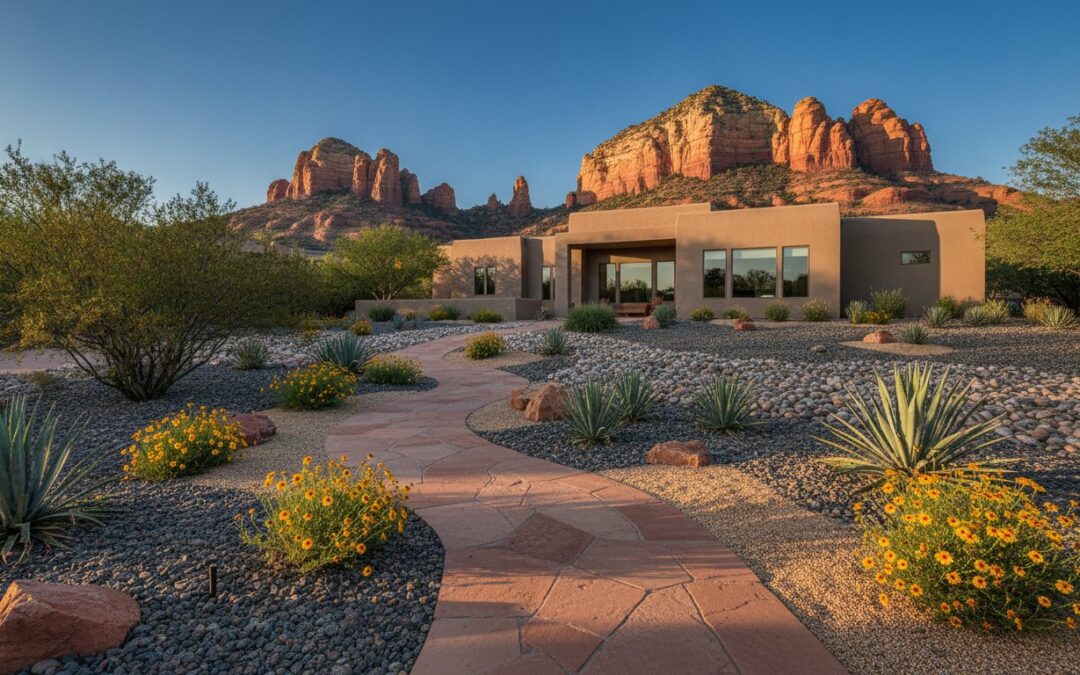
Did you know that over 12% of property owners in Yavapai County are currently facing higher insurance premiums or outright policy cancellations due to wildfire risk? For Arizona HOA board members, this statistic highlights a growing challenge. You’re tasked with maintaining the community’s aesthetic appeal while managing the very real fear of wildfire liability. It’s often difficult to balance the desire for lush greenery with the urgent need for safety, especially when residents worry that fire mitigation might lead to a barren or unattractive landscape.
We believe that firewise landscaping for HOAs Arizona should be viewed as a strategic asset management tool rather than a defensive chore. You can protect your community from the 1,300 wildfires recorded so far this year while actually enhancing property values. This guide provides a professional roadmap to achieving Firewise certification and creating a sustainable, beautiful environment that satisfies both insurance providers and homeowners. We’ll explore the three-zone defensible space framework, discuss fire-resistant plant selection, and show you how to transition your neighborhood into a resilient, high-status sanctuary that stands the test of time.
Key Takeaways
- Understand how Arizona’s unique cycle of monsoon growth and extreme dry seasons creates a specific wildfire fuel risk that requires a systematic management approach.
- Discover how to implement firewise landscaping for HOAs Arizona using a three-zone framework that protects shared walkways and parks without sacrificing beauty.
- Learn how to modernize your community’s CC&Rs to allow for fire-resistant materials that maintain the iconic “Sedona look” and satisfy insurance requirements.
- Adopt a phased, multi-year transition plan starting with a professional audit to manage costs effectively while ensuring long-term community support.
- Leverage 47 years of local expertise to balance ecological health with rigorous safety standards through sustainable and innovative landscape design.
What is Firewise Landscaping for Arizona HOAs?
Firewise landscaping is more than just a seasonal cleanup; it’s a comprehensive, science-based infrastructure strategy designed to reduce the volume of flammable vegetation around community structures. For Arizona communities, this means looking at common areas, entryways, and perimeter boundaries as critical lines of defense. Rather than simply removing plants, firewise landscaping for HOAs Arizona focuses on strategic spacing and moisture management to ensure that a wildfire has less “fuel” to consume as it approaches homes.
Arizona HOAs face a distinct “growth and burn” cycle that complicates traditional maintenance. Heavy monsoons often trigger a surge in invasive grasses and brush. When the extreme dry seasons of spring and early summer arrive, this lush growth transforms into brittle fuel. The Arizona Department of Forestry and Fire Management (DFFM) oversees community-level certification, providing a framework for boards to document their mitigation efforts and improve neighborhood resilience.
The Legal and Financial Stakes for HOA Boards
As of 2026, the financial landscape for community associations has shifted. Major insurance providers are increasingly requiring proof of Defensible Space inspections before renewing master policies. Boards have a clear fiduciary duty to protect community assets from foreseeable wildfire risks, and failing to address overgrown common areas can lead to significant liability. Defensible Space is the buffer created between a building and the surrounding vegetation to slow the spread of fire. By maintaining this buffer, boards protect the physical structures of the community and the financial stability of the association’s insurance premiums.
Why Northern Arizona Requires a Specialized Approach
A “one-size-fits-all” fire safety plan doesn’t work in our diverse climate. In Flagstaff, the focus remains on thinning dense ponderosa pine stands and removing “ladder fuels” that allow fire to climb into the canopy. In contrast, communities in Sedona and Cottonwood must manage high-desert scrub and resinous plants like junipers that burn with intense heat. We believe that safety should never come at the cost of aesthetics. By integrating fire-safe principles with desert landscape design Northern Arizona, boards can create environments that are both ecologically responsible and visually stunning. This specialized approach ensures that the “Sedona look” remains intact while meeting the rigorous safety standards required for modern wildfire mitigation.
The Three-Zone Framework for HOA Common Areas
Managing firewise landscaping for HOAs Arizona requires a disciplined approach to space and vegetation. The framework, popularized by the National Fire Protection Association’s Firewise USA® program, divides the landscape into three distinct zones based on their distance from structures. For community boards, the challenge lies in the fact that these zones often cross property lines, moving from a resident’s backyard into a shared canyon or park. Effective management ensures that these zones work together to disrupt the path of a wildfire, protecting both individual homes and community assets.
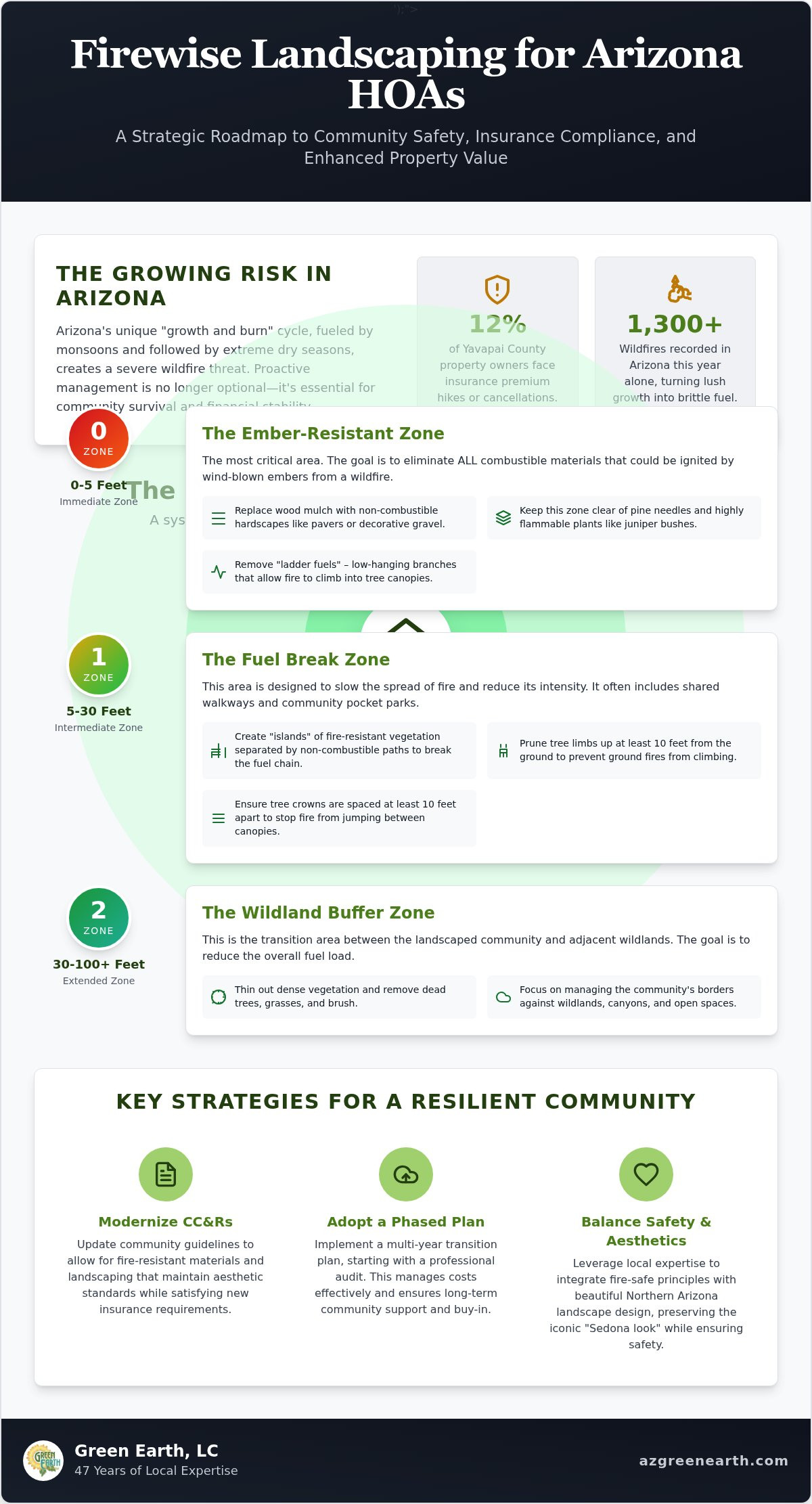
Zone 0: The Non-Combustible Immediate Buffer
This is the “Ember-Resistant Zone,” extending five feet from any structure like a clubhouse, pool house, or residence. In this critical area, the goal is to eliminate all combustible materials that could be ignited by wind-blown embers. We recommend replacing wood mulch and resinous plants with hardscape construction Cottonwood AZ options such as pavers, decorative gravel, or river rock. It’s also vital to remove ladder fuels, which are low-hanging branches or tall grasses that allow flames to climb from the ground into the tree canopy. In the 2026 standards, keeping this zone clear of juniper bushes and pine needles is a top priority for insurance compliance.
Managing the Shared Intermediate and Extended Zones
The Intermediate Zone (5 to 30 feet) often encompasses the community’s shared walkways and pocket parks. Instead of continuous hedges that act as a fuse, we design “islands” of fire-resistant vegetation separated by non-combustible paths. This breaks the fuel chain. Trees in this zone should be pruned up at least 10 feet from the ground, with crowns spaced 10 feet apart to prevent fire from jumping between them. The Extended Zone (30 to 100+ feet) is where the HOA manages borders against wildlands or steep canyons. Here, the focus shifts to thinning overcrowded thickets and clearing dead organic matter. When clearing large areas of brush in our hilly terrain, it’s essential to consider how drainage grading Arizona can prevent soil erosion during the monsoon season.
Northern Arizona’s terrain varies significantly, from the dense ponderosa forests of Flagstaff to the scrub-heavy slopes of Sedona. Each environment requires a tailored thinning strategy to stay compliant with current safety standards. If your board isn’t sure where the common area ends and the risk begins, we can help you with a professional assessment of your firewise defensible space to ensure your community remains both beautiful and resilient.
Balancing HOA Aesthetic Standards with Firewise Compliance
Many board members fear that implementing firewise landscaping for HOAs Arizona will result in a barren, desolate environment that ruins curb appeal and property values. This is a common misconception. Modern fire science doesn’t demand “clear-cutting” or turning every yard into an ugly gravel pit. Instead, it focuses on “lean, clean, and green” principles. You can maintain the lush, high-desert beauty of the Verde Valley while significantly reducing fuel loads. The goal is to create a landscape where fire cannot easily spread from the surrounding wildlands to the community’s structures.
The “Sedona look” relies on a blend of natural textures and earthy tones, which can be achieved through fire-resistant plant selection. Species like Agave, Yucca, and various native succulents provide structural elegance while maintaining high moisture content. However, it’s vital to remember that even fire-resistant plants will burn if they are neglected or surrounded by dead debris; plant health is just as critical as the species itself. Consistent HOA landscape maintenance Arizona acts as a safety insurance policy, ensuring that vegetation remains hydrated, properly pruned, and free of the dry “kindling” that fuels fast-moving fires.
Updating Design Guidelines for Fire Resilience
Boards should consider updating their CC&Rs to encourage the use of hardscape elements as functional design features. Stone paths, decorative pavers, and masonry walls serve as elegant fire breaks that complement Northern Arizona architecture. Transitioning from flammable organic mulches, such as shredded cedar or pine bark, to inorganic options like decomposed granite or river rock is another high-impact change. These materials retain soil moisture more effectively than wood mulch and won’t ignite when exposed to wind-blown embers. By integrating these elements, the board can enhance the community’s aesthetic while meeting modern safety standards.
Education vs. Enforcement for Residents
Conflict often arises when residents feel that new safety rules are being “forced” upon them without context. Successful boards bridge this gap by prioritizing community education over strict enforcement. Hosting “Firewise Days” or neighborhood clean-up events allows residents to work together toward a shared goal of safety. During these events, the HOA can provide dumpsters for green waste or invite local fire officials to demonstrate how defensible space works. When homeowners understand that firewise landscaping for HOAs Arizona protects their largest financial investment, they are much more likely to support updated design guidelines and participate in fuel reduction efforts.
A Multi-Year Firewise Transition Plan for HOA Boards
Implementing firewise landscaping for HOAs Arizona shouldn’t be an overnight upheaval. For boards managing dozens or even hundreds of acres of common space, a phased transition is the most fiscally responsible path. This methodical approach prevents budget shock. It also allows residents to adjust to the evolving aesthetic of the community without feeling overwhelmed by sudden changes to the landscape.
The first step involves a professional Firewise audit of all common areas and perimeter boundaries. This assessment identifies high-risk zones, such as steep slopes or canyons, where fire behavior is most aggressive. Once identified, boards should prioritize buildings with fuel ladders. These are areas where vegetation allows ground fires to climb into the tree canopy. By tackling these hazards first, you achieve the greatest safety gain for your investment.
Long-term success relies on consistency. Rather than treating fire mitigation as a one-off project, integrate these standards into your annual HOA landscape maintenance contract. This ensures that thinning and clearing happen as part of the regular workflow. Over time, these efforts lead to official Firewise USA recognition. This status is a mark of community excellence and can potentially lower insurance rates for the entire association.
The Role of Irrigation in Fire Mitigation
Hydration is a powerful, often overlooked defense mechanism. Well-hydrated plants are significantly more fire-resistant than drought-stressed ones because their tissues contain more moisture. Ensuring your irrigation repair Flagstaff or Sedona systems are up to date is vital for maintaining these moisture levels. We recommend using smart irrigation controllers to precisely manage water delivery, ensuring your landscape remains resilient during the peak of the dry season.
Seasonal Maintenance and Debris Management
The window between the spring thaw and the intense heat of June is the most critical time for maintenance. This Spring Cleaning phase focuses on removing the dead organic matter that accumulated over the winter. Managing the disposal of large quantities of brush and slash requires a professional plan to avoid creating new fire hazards on-site. If your board is ready to protect your community’s assets, we can help you develop a professional firewise defensible space plan that balances safety with sustainability.
Professional Firewise Management with Green Earth, LC
With over 47 years of experience in Northern Arizona, Green Earth, LC has established itself as a trusted guardian of our local landscapes. We’ve spent decades refining a specialized approach that we call the “Authoritative Environmentalist” method. This philosophy ensures that your community doesn’t have to choose between safety and sustainability. We believe that fire mitigation should be a seamless part of a beautiful, eco-friendly design rather than a disruptive afterthought. Our team handles the complex heavy lifting of fuel reduction while maintaining a visionary eye on your community’s long-term aesthetic goals.
Implementing firewise landscaping for HOAs Arizona requires a partner who understands the nuances of our regional terrain. Whether your community is nestled in the red rocks of Sedona or the pine forests of Flagstaff, we provide the expertise needed to navigate evolving safety standards. From specialized firewise landscaping Cottonwood AZ to comprehensive, year-round maintenance, we offer solutions tailored to the unique risks of each neighborhood.
Custom Firewise Audits and Design
Every HOA has a unique footprint that dictates how fire might move through the area. We don’t rely on generic templates. Instead, we conduct deep-dive audits that assess local topography, such as steep slopes where fire accelerates, and prevailing wind patterns that could carry embers into common areas. As your “Visionary Partner,” we bridge the gap between technical fire science and high-end horticulture. We understand how different plant species interact with our soil and climate, ensuring that your fire breaks are as healthy as they are functional. This level of detail is what sets a professional management plan apart from a simple cleanup crew.
Contact Us for a Community Consultation
Board members have a significant responsibility to protect both lives and property values. You don’t have to navigate these complex requirements alone. Our deep roots in the Verde Valley and Northern Arizona heritage mean we care about your community’s safety as much as you do. We’re committed to using eco-friendly practices that preserve the natural beauty of our state for future generations. Don’t wait for the next dry season to address your community’s vulnerabilities. Take a proactive step toward a more resilient future today.
Contact Green Earth, LC for an HOA Firewise Consultation to begin your community’s professional assessment.
Securing Your Community’s Future with Sustainable Safety
Proactive land management is the most effective way for HOA boards to fulfill their fiduciary duty while protecting the natural beauty of their neighborhoods. By implementing a structured three-zone framework and transitioning to fire-resistant plant species, communities can significantly reduce wildfire risk without sacrificing the iconic Sedona or Flagstaff aesthetic. We’ve seen how integrating these safety measures into annual maintenance cycles creates a resilient landscape that satisfies both residents and insurance providers. It’s about protecting your investment.
Expertly managed firewise landscaping for HOAs Arizona transforms a defensive necessity into a long-term community asset. With 47+ years of local experience and award-winning sustainable landscape design, Green Earth, LC provides the specialized knowledge required to navigate the unique terrain of the Verde Valley and Northern Arizona. We’re here to help you. Our team balances rigorous safety standards with the environmental stewardship your residents value.
Don’t wait for the next dry season to evaluate your community’s defenses. Schedule Your HOA Firewise Assessment with Green Earth, LC today to ensure a safer, more beautiful tomorrow for your neighborhood.
Frequently Asked Questions
Does Firewise landscaping actually lower our HOA insurance premiums?
Many insurance carriers in Arizona now view Firewise certification as a prerequisite for coverage or a way to access lower premiums. As of 2026, providers are increasingly auditing master policies for proof of defensible space. While specific discounts vary by company, maintaining firewise landscaping for HOAs Arizona demonstrates that the board is actively mitigating risk. This proactive stance often prevents the policy cancellations that have recently affected 12.6% of property owners in Yavapai County.
Can we maintain our “natural look” while following Firewise standards?
You don’t have to choose between a beautiful aesthetic and safety. The “natural look” of Northern Arizona is preserved through strategic plant spacing rather than total removal. By creating clusters of fire-resistant vegetation separated by non-combustible pathways or rock features, you maintain the iconic high-desert vibe. We focus on removing dead debris and thinning thickets, which actually improves the health and visual clarity of your community’s landscape.
Are HOAs legally required to follow Firewise guidelines in Arizona?
There is currently no statewide mandate in Arizona that legally requires every HOA to follow Firewise standards. However, local fire codes in cities like Flagstaff and Sedona often include specific defensible space requirements. Beyond local laws, HOA boards have a fiduciary duty to protect community assets from foreseeable risks. Failing to address clear wildfire hazards can lead to significant legal liability and financial exposure if a fire occurs.
What are the best fire-resistant plants for Northern Arizona high-altitude communities?
For high-altitude communities in Northern Arizona, fire-resistant plants usually have high moisture content and low resin. Excellent choices include:
- Native succulents like Agave and Yucca
- Deciduous trees such as Aspen or Gambel Oak
- Low-growing perennials like Blanketflower or Penstemon
Avoiding resinous species like junipers or pines within the immediate buffer zone is critical for safety in areas like Flagstaff and the Verde Valley.
How often should an HOA perform fire mitigation maintenance?
We recommend that HOAs perform fire mitigation maintenance at least once a year. The most critical period is the “Spring Cleaning” window before the extreme dry heat of June arrives. This annual upkeep involves clearing leaf litter, pruning dead wood, and ensuring that ladder fuels haven’t regrown. Regular firewise landscaping for HOAs Arizona prevents the accumulation of volatile organic matter that turns a small spark into a major community threat.
What is the first step for a board to become a Firewise USA recognized community?
The first step is conducting a professional risk assessment of your common areas and perimeter boundaries. This audit identifies specific vulnerabilities, such as steep slopes or dense vegetation near structures. Once the risks are documented, the board can form a Firewise committee and develop a multi-year action plan. We help boards navigate this process by providing the technical data and design expertise required for official Firewise USA recognition.
How does irrigation play a role in fire prevention for our common areas?
Irrigation is a vital defensive tool because well-hydrated plants have higher ignition temperatures. Drought-stressed vegetation becomes brittle and highly flammable, especially during our intense dry seasons. We utilize smart irrigation controllers and drip system repairs to maintain precise moisture levels throughout your common areas. This ensures that your landscape remains a green buffer rather than a fuel source, protecting homes in Sedona and Prescott from wind-blown embers.
Can Green Earth help us update our HOA CC&Rs for Firewise compliance?
Yes, Green Earth, LC acts as a visionary partner for boards looking to modernize their governing documents. We provide expert guidance on which materials and plant species satisfy both aesthetic goals and fire safety requirements. By updating your CC&Rs to allow for inorganic mulches and fire-resistant hardscapes, you empower residents to protect their homes. Our 47 years of local experience ensures these updates reflect the unique heritage of Northern Arizona.
Recent Comments