
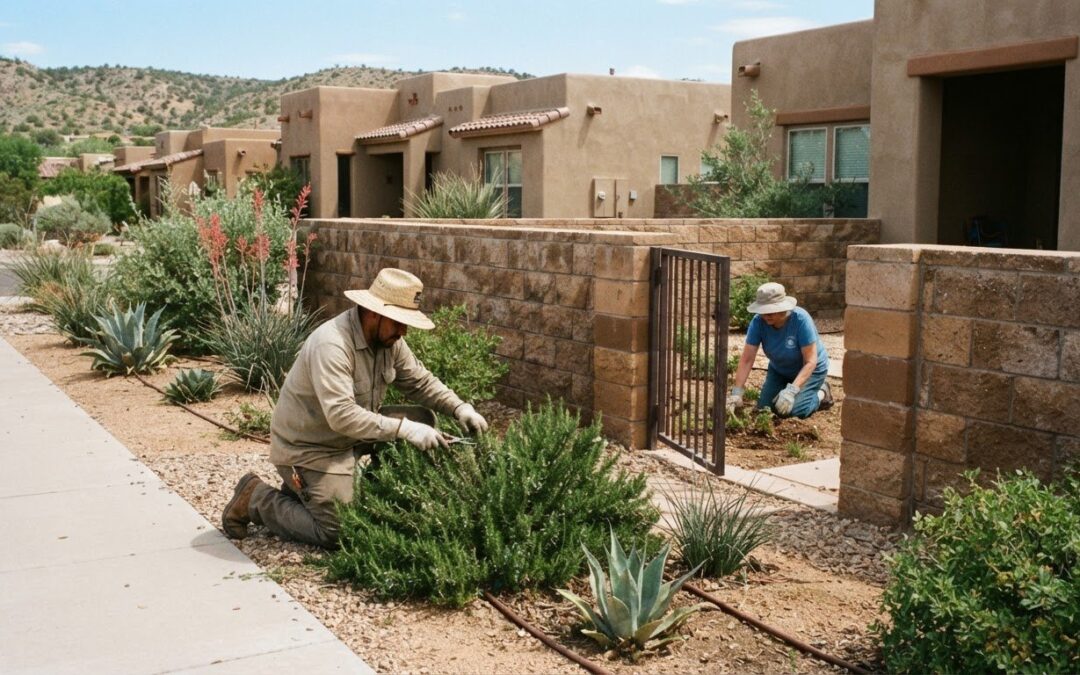
HOAs do not automatically maintain every patch of green. For HOA landscape maintenance in Camp Verde, responsibility depends on the association’s governing documents and whether an area is shared or part of a private lot. Associations commonly care for shared spaces, while homeowners maintain their own yards, though some communities divide the work differently.
That distinction can be easy to miss until a lawn needs attention, an irrigation issue arises, or a landscaping change requires approval. Clear responsibilities help homeowners and boards avoid confusion and keep community grounds cared for.
This guide explains how to identify who maintains each area, what a maintenance contract and ongoing monitoring should cover, and where homeowner duties begin. It also looks at choosing plants suited to Camp Verde’s local conditions and water needs, so landscaping decisions support an attractive, sustainable community.
Key Takeaways
- Use the HOA’s governing documents to distinguish shared spaces from areas maintained by individual homeowners.
- Clear contract expectations and routine site monitoring help identify maintenance needs before they grow.
- Know which parts of your property you’re responsible for and which landscaping changes may need approval.
- Choose plants suited to local conditions to support a resilient, water-conscious community landscape.
1. Who is responsible for HOA landscape maintenance?
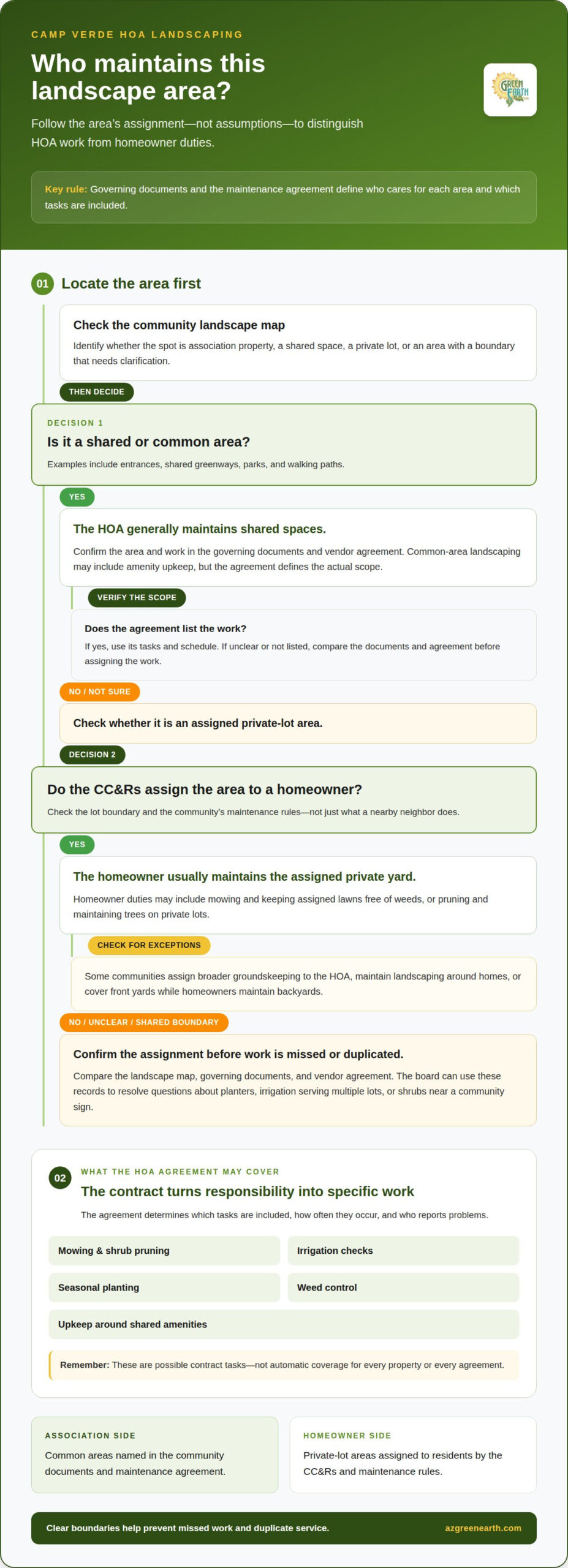
In Camp Verde, the association’s governing documents and maintenance agreement define who cares for each landscaped area. Common areas, such as entrances, shared greenways, parks, and walking paths, are generally maintained by the association. Homeowners usually handle private yards, but some communities assign the association broader groundskeeping duties.
For HOA landscape maintenance in Camp Verde, AZ, the work typically covers shared property named in the agreement. The scope may include mowing, pruning, irrigation, seasonal planting, weed control, and upkeep around amenities. The contract and community documents determine which tasks are included, how often they occur, and who reports problems.
Camp Verde HOAs typically cover common-area landscaping and amenity upkeep, rather than every homeowner’s entire yard. For example, an agreement might include care for an entrance planting bed while leaving a private backyard to its homeowner. A community may also divide responsibility by area, maintaining front yards but not backyards.
Specific boundaries matter. A landscape map can identify association property, shared spaces, and homeowner-maintained areas, while governing documents explain the related expectations. The HOA board can use these records to resolve questions about a planter beside a walkway, irrigation serving multiple lots, or shrubs near a community sign. Clear assignments also help prevent missed work and duplicate service.
California rules don’t set Camp Verde’s Arizona responsibilities. As a separate state example, California Legislative Information says architectural review generally should be completed within 45 days under the Davis-Stirling Act process. That timeline concerns California HOA reviews, not a Camp Verde maintenance schedule.
To clarify responsibility, identify the area, compare it with the community’s maintenance map, then review the governing documents and vendor agreement. This gives homeowners and the board a practical way to distinguish common-area maintenance from private-lot duties, including upkeep near shared amenities.
California Civil Code §4775 assigns HOAs responsibility for maintaining common areas. Responsibility for these areas can vary by community, so homeowners should check the governing documents.
2. Landscape contract requirements and performance monitoring
A useful contract turns community expectations into scheduled, observable work. It should define service areas, tasks, timing, reporting, and payment terms. Name specific tasks, such as mowing, shrub trimming, irrigation checks, weed control, seasonal planting, and hardscape upkeep. State how additional work is approved and documented, so residents and the association understand what routine service covers.
Payment terms should match the agreed scope. The contract can distinguish recurring maintenance from separately approved repairs or enhancements, with invoices tied to completed work and clear service records. It should also explain how the association reports missed tasks, how the contractor responds, and how changes are recorded. This structure supports a productive relationship and leaves expectations clear.
Professional management can oversee performance through scheduled walkthroughs and written observations. A manager or board representative can record overgrowth, irrigation leaks, missed trimming, and damage near paths or amenities. Compare those observations with contract tasks, then send specific corrections through the named contact. Residents can also report visible concerns through the association’s established process.
Regular monthly irrigation system checks can reveal broken heads, clogged nozzles, poor spray patterns, and controller problems. Recording findings and completed repairs helps management track recurring issues. Systematic landscape and irrigation improvements can reduce water costs by 30-40% in some communities, while plant choices, irrigation condition, and site needs shape results.
For contractor risks and insurance, define responsibility for site damage, incident reporting, and documentation in the contract. Specify the insurance documents the association requires and how current records are maintained, rather than assuming a single standard suits every agreement.
Camp Verde HOA landscaping providers can handle work listed in a clear service scope, from lawn and shrub care to irrigation and hardscape maintenance. Choose based on the community’s actual needs, restrictions, service schedule, and reporting process.
Arizona water restrictions can depend on the applicable rules and water source. A Camp Verde landscape plan can prioritize drought-tolerant planting, efficient irrigation, and monitoring for leaks; the contract should define who maintains each system. A documented landscape maintenance approach helps connect those responsibilities with ongoing oversight.
3. HOA landscaping coverage and homeowner responsibilities
The community’s CC&Rs set boundaries between association work and homeowner duties. They may assign shared entrances, parks, and walking paths to the association, while residents care for private yards. Some communities also maintain landscaping around homes, or cover front yards while leaving backyards to homeowners. Check each area’s assignment alongside its listed maintenance tasks.
Homeowners are commonly responsible for mowing and keeping assigned lawns free of weeds. Rules may also require them to prune and maintain trees on private lots. For example, a resident could be responsible for a backyard tree even when the association maintains nearby greenways. The CC&Rs and maintenance rules establish the actual boundary, not assumptions based on a neighbor’s responsibilities.
The HOA board sets community landscaping expectations through governing documents and approved guidelines. A property manager can organize service records, direct resident reports, and document concerns such as overgrown shrubs beside a walkway. Homeowners maintain their assigned areas and follow the community’s process for proposed changes. Clear records help distinguish a maintenance request from a rule concern.
Garden plans and landscape alterations may need approval before work begins. HOA rules can restrict the size, placement, or types of vegetable and flower gardens. A homeowner planning a new planting bed should submit the proposal through the association’s review process before changing common grounds or an assigned landscape area. Major landscaping changes will likely require HOA approval.
Guidelines may also address artificial turf, tree care, and irrigation. Some HOAs restrict artificial turf, while some bylaws require drip irrigation along curbs and sidewalks. These rules can shape how residents maintain water-wise landscapes without changing who is responsible for the work. The association’s documents can clarify the applicable guideline and homeowner duties.
For a practical boundary check, identify the property area, find the assigned party in the CC&Rs, then match the responsibility to the specific task. A curbside planting, for instance, may have separate rules for irrigation and pruning. Homeowners and board representatives can use this distinction to direct upkeep and report needs through the proper channel.
4. Native and drought-tolerant plant selection
Camp Verde’s heat and limited water make plant choice central to a resilient community landscape. Native plants are adapted to local conditions and can need less maintenance over time. Start with the site: note sun exposure, soil, drainage, available irrigation, and the space plants will occupy at maturity. These factors help avoid placing a water-demanding flower bed in a hot, exposed area.
HOA approval matters too. Some associations require plants or trees to come from an approved list. Compare proposed selections with that list before planning a shared entrance or resident garden. If a desired plant isn’t approved, choose an allowed alternative with similar size, texture, or seasonal color. This keeps the design aligned with community guidelines and supports water-wise landscaping.
Seasonal flower beds can add color without redesigning the entire grounds. Group plants with similar sunlight and watering needs, then place taller selections where they won’t block signs or walkways. A consistent palette across entrance beds and amenity areas helps the neighborhood feel cohesive. Choose flowers for their appearance across the planned season, and leave room for mature growth.
Native planting still needs thoughtful care. Newly installed plants need attention as they establish, while established areas benefit from irrigation suited to their needs. During routine grounds care, monitor for stressed plants, weeds, and irrigation problems. Replace struggling selections with approved options better suited to the site, rather than repeating the same mismatch.
For commercial grounds and HOA common spaces, evaluate each bed separately. A sunny entrance, shaded walkway, and open community lawn have different growing conditions. Match plant placement to those conditions, preserve clear sightlines, and coordinate seasonal planting with pruning and irrigation schedules. This creates a practical plan that supports visual appeal and long-term landscape health.
Build a planting plan around approved selections, local adaptation, and site conditions. Plan seasonal landscape maintenance that supports your community’s beds and shared grounds.
Green Earth, LC
Green Earth, LC helps HOA boards and property managers turn landscape responsibilities into a clear, maintained plan. Its HOA and commercial landscape maintenance supports shared grounds, while irrigation drip system repair addresses water delivery issues in those areas. For communities managing vegetation around buildings or shared spaces, Firewise Defensible Space can also support broader landscape planning.
Turn to Green Earth, LC when your association needs ongoing care, irrigation repairs, or help aligning landscape work with community priorities. Clear service areas and maintenance expectations give the team a practical starting point for caring for shared grounds.
Contact Green Earth, LC to discuss your community’s landscape maintenance needs.
Set a clear direction for your community landscape
A thoughtful HOA landscape maintenance plan in Camp Verde can do more than keep shared grounds tidy. It can help a community shape a landscape that reflects its priorities, supports water-conscious choices, and remains manageable over time. The next step is to agree on what the association wants its outdoor spaces to provide, from welcoming entrances to well-kept common areas.
Green Earth, LC provides HOA Landscape Maintenance and Commercial Landscape Maintenance, as well as Firewise Defensible Space. These services can support associations planning ongoing grounds care or addressing landscape priorities across shared properties. A focused conversation about your community’s needs can help clarify a practical path forward.
Contact Green Earth, LC to discuss your HOA’s landscape goals. A well-planned landscape can help your community feel cared for and connected to its surroundings.
Frequently Asked Questions
Who is responsible for HOA landscape maintenance?
The association is generally responsible for shared grounds, while homeowners usually care for private yards. The governing documents and maintenance agreement determine the exact division. For example, a community entrance may be association-maintained, while a planting bed inside a homeowner’s lot may belong to that resident. Shared irrigation or boundary areas should also have a clearly assigned responsible party.
Does HOA Cover Landscaping?
An HOA may cover landscaping in the areas assigned to the association, but that doesn’t automatically include every yard. Coverage depends on the community’s governing documents and contracted work. A board-approved plan might include a shared entrance and walking paths, for example, while individual gardens remain outside the association’s service scope. The documents define both the covered property and maintenance tasks.
What Restrictions Might A Homeowner Face With HOA Landscaping?
Homeowners may need to follow rules for plant selection, garden placement, artificial turf, and landscaping changes. An association might require approved plants or review a proposed garden before installation. Rules can also address the appearance of front-yard beds or changes near shared paths. Review the relevant community guidelines before buying plants or altering a landscaped area.
Recent Comments