
Imagine watching a summer monsoon downpour from your porch, only to see your carefully curated landscape wash away while water pools dangerously close to your home’s foundation. For many homeowners in the high desert, this isn’t just a hypothetical fear; it’s a recurring reality that brings immense stress and the threat of costly repairs. Finding effective yard drainage solutions Prescott AZ requires more than just digging a simple trench. It demands a professional understanding of our unique topography, alkaline clay soils, and the intense nature of our seasonal rainfall.
We recognize the anxiety that comes with heavy storms and the frustration of seeing your property’s value literally eroded by runoff. You deserve a dry, stable foundation and a functional yard that handles heavy rain beautifully without wasting precious water. This guide shares the most effective, sustainable drainage strategies to safeguard your home from foundation seepage and landscape loss. We’ll explain how professional grading, strategic retaining walls, and award-winning design principles work together to transform your property into a resilient, water-wise sanctuary. With over 47 years of local experience, we’ve refined the balance between structural engineering and environmental stewardship to protect your investment for the long term.
Key Takeaways
- Understand how Prescott’s unique clay-heavy soils and intense monsoon cycles necessitate a customized approach to water management and erosion control.
- Explore the most effective yard drainage solutions Prescott AZ has to offer, including subsurface French drains and natural dry creek beds that enhance your property’s aesthetic.
- Learn why professional drainage grading serves as your primary defense against foundation seepage and long-term structural damage.
- Discover how to pair structural elements like retaining walls with permeable pavers to manage runoff while increasing your home’s outdoor functionality.
- Gain insight into the long-term benefits of sustainable design practices and expert intervention to ensure your landscape remains resilient for decades.
Understanding Prescott’s Unique Drainage and Erosion Challenges
Prescott’s rugged beauty comes with a specific set of environmental demands that can quickly overwhelm standard landscaping. Unlike the steady, gentle rains found in many other regions, our local climate is defined by dramatic extremes. This makes implementing effective yard drainage solutions Prescott AZ a necessity for property longevity. When water isn’t managed correctly, it doesn’t just sit; it transforms the landscape, often at the expense of your home’s structural integrity. To truly protect a property, one must first understand the fundamental principles found in a comprehensive overview of drainage and how they apply to our specific high-desert terrain.
The Monsoon Factor: High-Intensity Rainfall
The North American Monsoon, occurring from July through September, delivers the bulk of Prescott’s 16.46 inches of annual precipitation in short, violent bursts. These storms create a phenomenon known as sheet flow. Sheet flow is the uniform movement of water across a surface in a thin layer, which often strips away topsoil and destabilizes slopes before the ground can absorb a single drop. On sloped Northern Arizona lots, you’ll see the evidence of this in the form of deep rills carving through the dirt, exposed roots of expensive ornamental plants, and thick layers of sediment washing onto driveways or patios.
Soil Composition and Drainage Rates
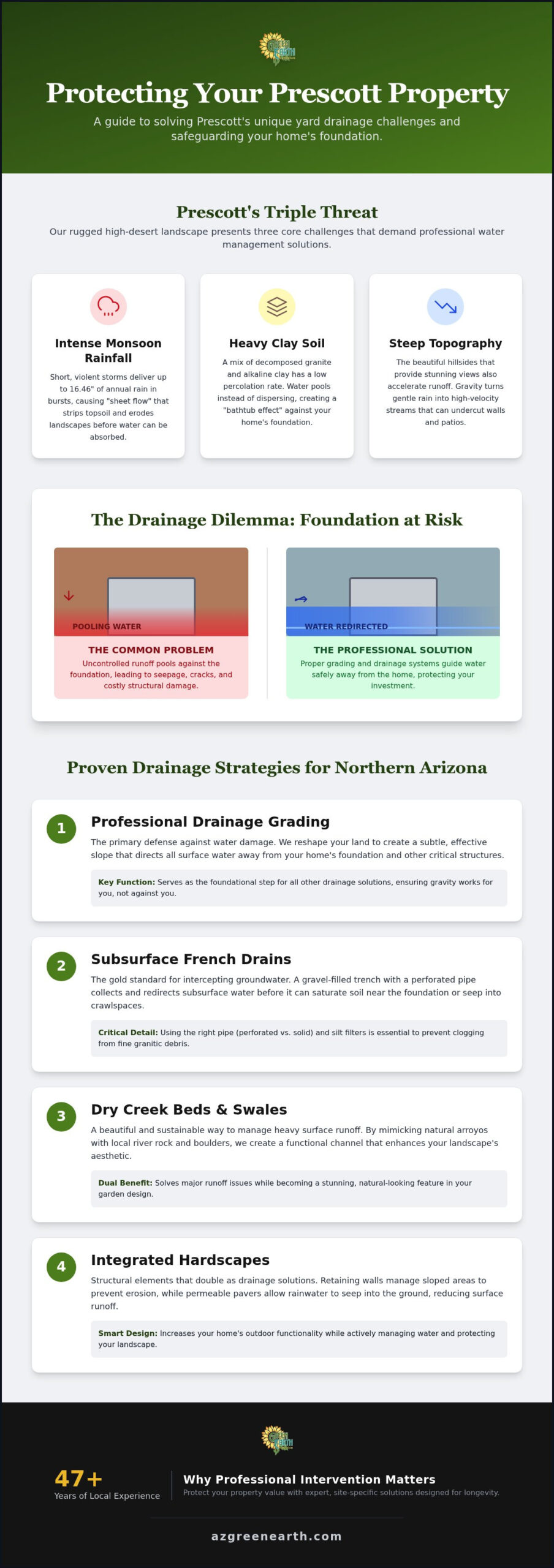
Prescott’s soil is frequently a difficult mix of decomposed granite and heavy, alkaline clay. These materials have notoriously low percolation rates, meaning water penetrates the surface very slowly. Many “standard” drainage solutions designed for loamy or sandy soils in other states fail here because they don’t account for this lack of absorption. A simple gravel pit in clay soil often acts like a bathtub, holding water against the foundation rather than dispersing it. This is why site-specific soil testing is vital before any installation. Without it, you risk creating a “ponding” effect where water saturates the earth near your stem walls, leading to foundation cracks or damp crawlspaces that compromise the safety of your home.
The dramatic slopes and hillsides that provide our stunning views also complicate water management. Gravity accelerates runoff, turning a minor drizzle into a high-velocity stream that can undercut retaining walls and patios. Specialized grading is the only way to redirect this energy safely, ensuring water follows a controlled path away from the building envelope. By addressing these factors with professional precision, you can stop erosion before it starts and keep your foundation dry and stable throughout the storm season.
Effective Yard Drainage Solutions for Northern Arizona
Implementing effective yard drainage solutions Prescott AZ requires a multifaceted approach that addresses both visible surface runoff and hidden subsurface saturation. While every property presents unique challenges, several proven methods offer the reliability needed to withstand our intense monsoon cycles. By choosing the right combination of engineering and natural design, we can protect your foundation while enhancing the ecological health of your landscape. These strategies move beyond simple water removal, focusing on sustainable management that respects the local environment.
Subsurface Drainage: French Drains and Pipes
French drains remain the gold standard for managing groundwater that threatens foundations. These systems utilize a gravel-filled trench and a perforated pipe to intercept water and redirect it before it can seep into crawlspaces. In the high desert, choosing between solid and perforated piping is a critical decision. Perforated pipes are ideal for collecting water along a slope, while solid pipes are better suited for carrying that water rapidly to a safe discharge point without allowing it to re-absorb into the clay soil. To keep these systems functional, we often include silt filters or accessible clean-outs to prevent fine granitic debris from causing clogs over time.
Surface Solutions: Dry Creek Beds and Swales
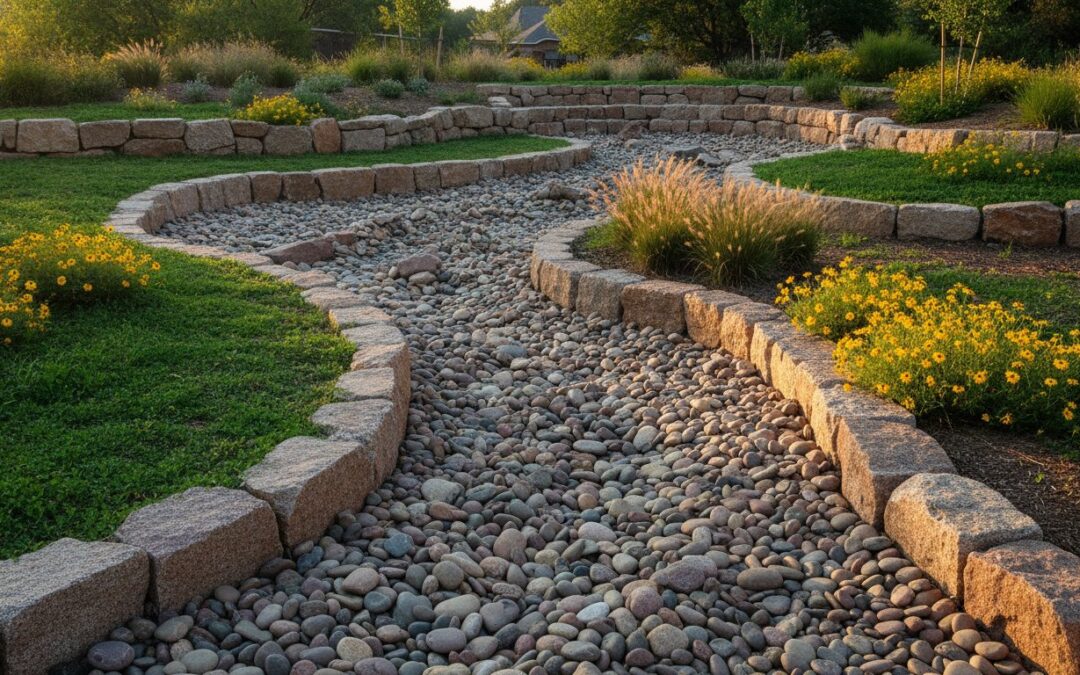
Dry creek beds offer a beautiful, sustainable alternative to concrete ditches by mimicking the natural “arroyos” found in our desert environment. By using varying sizes of local river rock and strategically placed boulders, we can guide heavy runoff along a predetermined path that looks like a natural landscape feature. These beds don’t just move water; they slow it down, reducing the erosive power of sheet flow. For homeowners looking to capture and use rainwater, rain gardens can be integrated at the end of these swales. These shallow, vegetated depressions allow water to slowly filter into the root zones of native plants, turning a drainage problem into a resource for your garden.
For areas where water pools against patios or driveways, catch basins and NDS systems provide immediate relief. These grates capture localized water and funnel it into a subsurface network, preventing the standing water that attracts pests and damages hardscapes. Because every lot in Yavapai County has a different slope and soil density, it’s vital to choose a system that can handle the specific volume of your roof and landscape runoff. If you are unsure which system fits your property’s specific needs, consulting with an expert in sustainable yard drainage design can help you avoid costly trial and error while ensuring your landscape remains both functional and beautiful.
Drainage Grading vs. Surface Drains: Choosing the Right Approach
When evaluating yard drainage solutions Prescott AZ, homeowners often choose between re-shaping the land or installing mechanical hardware. While both serve to move water, they function on different timelines and engineering principles. Grading is a permanent, passive solution that uses gravity to direct runoff, whereas surface drains like catch basins or channel drains require ongoing maintenance to remain clear of desert silt. Choosing the right path depends on your property’s specific elevation and the volume of water your landscape must process during a storm.
The Science of Drainage Grading
Professional grading is the most reliable first line of defense for any property. It involves establishing a “positive slope,” which typically requires a drop of at least 6 inches within the first 10 feet away from the home’s foundation. This subtle contouring ensures that water never has the opportunity to pool against stem walls, which prevents moisture intrusion and foundation settling over time. At Green Earth, LC, we specialize in drainage grading Arizona, using precision equipment to create these critical slopes without sacrificing the natural beauty of your lot. Attempting this as a DIY project often leads to “neighbor disputes” when runoff is inadvertently directed onto adjacent properties, potentially creating legal liabilities and drainage violations.
When Mechanical Drains are Necessary
Even the best grading cannot overcome every obstacle. Mechanical drains become essential in “low spots” where the surrounding terrain is higher than the problem area, making gravity-fed grading impossible. You’ll often find these issues where existing hardscapes, such as driveways or retaining walls, act as dams that trap water. In these scenarios, a hybrid strategy is often the most effective choice. We might use grading to move water toward a central collection point, then employ a trenching system to carry it the rest of the way to a safe discharge zone. While mechanical drains involve higher upfront costs for parts and installation, they’re frequently more cost-effective than a massive re-grading project that would require removing established trees or structures.
A successful drainage strategy doesn’t rely on a one-size-fits-all fix. It requires a detailed analysis of your property’s specific elevation changes and soil density. By combining the longevity of professional grading with the precision of mechanical drains, you can create a resilient system that protects your foundation for decades. This balanced approach keeps your yard functional and beautiful, even during the most intense Northern Arizona monsoons.
Integrating Drainage with Hardscape and Landscape Design
A truly resilient property doesn’t treat water management as an afterthought. Effective yard drainage solutions Prescott AZ often involve a seamless blend of structural engineering and aesthetic design. When we design a patio or a garden path, we aren’t just creating a space for relaxation; we’re building a system that directs water away from your most valuable assets. This integrated approach ensures that your outdoor kitchens, fire features, and custom stonework remain protected from the erosive power of our seasonal storms.
Retaining Walls as Drainage Tools
On the steep hillsides common in Northern Arizona, retaining walls are essential for preventing mass soil movement. However, a wall without proper drainage is simply a dam waiting to fail. We prioritize the installation of “weep holes” and high-quality gravel backfill in every project. These features allow hydrostatic pressure to escape, preventing the wall from leaning or cracking under the weight of saturated clay soil. Terracing a slope also helps by breaking up the vertical fall of water, slowing down runoff before it gains the velocity needed to cause damage. By using materials that withstand our local freeze-thaw cycles, such as reinforced masonry or natural stone, we create structures that maintain their integrity for decades.
Permeable Surfaces and Sustainable Design
Traditional concrete driveways and patios create “impermeable” surfaces that force water to run off rapidly, often toward your home’s foundation. Permeable pavers offer a sophisticated, eco-friendly alternative. These systems allow water to filter through the joints and into a subsurface reservoir, where it can slowly soak into the ground or be redirected. This sustainable approach reduces the burden on Prescott’s municipal storm systems and helps keep moisture in the soil where your plants need it most. Many of the techniques we highlight in our guide to hardscape construction Cottonwood AZ apply directly here, focusing on durability and water-wise planning.
By choosing a design that balances beauty with function, you can create a yard that handles heavy rain beautifully. You might find inspiration in our resources for desert landscape design Northern Arizona, which showcase how to use native elements to manage water naturally. Protecting your investment starts with a plan that respects the local terrain and climate. If you’re ready to transform your property into a functional, water-wise sanctuary, reach out to the experts at Green Earth, LC for a professional site evaluation.
Why Professional Drainage Intervention Matters in Prescott
Choosing the right yard drainage solutions Prescott AZ involves more than just moving dirt or laying pipe. It requires a deep understanding of local hydrology and structural engineering to ensure water moves safely without compromising your home or your neighbors’ properties. While DIY projects might seem cost-effective initially, they often fail to address the root cause of water accumulation. Professional intervention ensures that every trench, grade, and wall works in harmony with the natural desert landscape, providing a permanent solution rather than a temporary fix.
Avoiding Local Regulatory Pitfalls
Water management is heavily regulated in Northern Arizona to prevent erosion and flash flooding. In the City of Prescott, a Grading and Drainage permit is mandatory for projects where the cut or fill of dirt exceeds 50 cubic yards or if the work impacts drainage on adjacent properties. Ignoring these codes can lead to significant legal issues and costly fines. Perhaps more importantly, redirecting water onto a neighbor’s lot is a common source of legal disputes. A licensed, bonded, and insured contractor understands these municipal requirements and ensures that your project remains compliant. This professional oversight protects you from liability and ensures the work meets the high standards required for our unique terrain.
The Green Earth, LC Difference
With a 47 year legacy in Northern Arizona, Green Earth, LC brings a level of expertise that is unmatched in the region. We don’t just solve drainage problems; we transform them into beautiful, sustainable landscape features. As statewide runners-up for “Best Sustainable Landscape Designer,” we take pride in our role as a visionary partner for homeowners. We look beyond the immediate pooling of water to see how a property can be optimized for long-term health. Our disciplined approach to craftsmanship means that every retaining wall is built to last and every drainage grade is calculated with precision.
Getting started with a professional drainage assessment is the first step toward peace of mind. We analyze your soil composition, property slopes, and existing hardscapes to develop a custom design-build plan that fits your specific needs. Whether you’re dealing with foundation seepage or the loss of expensive landscaping, our team provides the reliable, high-status results you expect. Don’t wait for the next heavy monsoon to test your property’s limits. Reach out to Green Earth, LC today to schedule a consultation and discover how we can safeguard your Prescott home with excellence and integrity.
Protect Your Property with Resilient Landscape Design
Securing your Prescott home against the elements requires a proactive strategy that respects our unique high-desert environment. By integrating professional drainage grading with aesthetic features like dry creek beds and permeable pavers, you don’t just move water; you manage it sustainably. These proven strategies safeguard your foundation from intense monsoon cycles while simultaneously enhancing the natural beauty of your outdoor living space. Finding the right yard drainage solutions Prescott AZ is the most effective way to ensure long-term peace of mind for your property.
Green Earth, LC offers the expertise of licensed drainage and grading specialists who bring 47+ years of Northern Arizona experience to every project. We’re proud of our history and our reputation for delivering award-winning sustainable designs that stand the test of time. If you’re ready to transform your landscape into a functional, storm-ready sanctuary, we’re here to help. Schedule Your Professional Drainage Assessment with Green Earth, LC and take the first step toward a drier, more stable future. Your property is a significant investment; let’s work together to protect it beautifully.
Frequently Asked Questions
How much do yard drainage solutions typically cost in Prescott?
Cost varies based on soil density, property slope, and the complexity of the yard drainage solutions Prescott AZ requires for your specific lot. Factors include the total linear footage of piping needed and the choice between subsurface systems or extensive surface grading. While a simple catch basin is a smaller investment, a comprehensive site-wide drainage plan involves specialized equipment and engineering. We recommend a professional assessment to determine the precise scope of your project.
Do I need a permit for yard drainage or grading in Yavapai County?
In the City of Prescott, a Grading and Drainage permit is required if your project involves moving more than 50 cubic yards of dirt. You also need one if you are clearing more than 10,000 square feet of land or if the work impacts adjacent properties. Yavapai County has different regulations for unincorporated areas, specifically for watercourses with drainage areas greater than 80 acres. Always verify local municipal codes before starting construction.
Will a French drain ruin the look of my landscaping?
A professionally installed French drain is almost entirely invisible once completed. Because the perforated pipe and gravel are buried beneath the surface, you can cover the area with turf, decorative rock, or mulch. This allows the system to manage groundwater without interrupting the flow of your landscape design. We often integrate these systems with award-winning sustainable practices to ensure functionality doesn’t compromise your property’s curb appeal.
How do I know if my foundation issues are caused by poor yard drainage?
Look for signs like horizontal cracks in your stem wall, damp spots in crawlspaces, or white, powdery mineral deposits known as efflorescence. These often indicate that water is pooling against the concrete rather than being directed away. If you notice doors sticking or new drywall cracks inside after a heavy monsoon, poor yard drainage is likely the culprit. A professional evaluation can confirm if water pressure is undermining your home’s structural stability.
Can I use a dry creek bed as my primary drainage solution?
Yes, a dry creek bed can serve as a highly effective primary solution for managing surface runoff. These features are designed to mimic natural desert washes, providing a high-capacity channel for heavy monsoon rainwater. By using varying sizes of local river rock and boulders, we create a path that slows down rushing water and prevents erosion. They work best when combined with professional grading to ensure the water enters the creek bed correctly.
What is the best time of year to install a drainage system in Prescott?
The ideal time for installation is during the spring or early summer, well before the July monsoon season begins. Completing the work during these dry months ensures that your new system is fully stabilized and ready to handle the first major downpour. Fall is also an excellent time for installation, as it allows for grading work to be finished before the winter snow and spring melt cycles arrive in Northern Arizona.
How often should I maintain my yard drainage system?
You should inspect your drainage system at least twice a year, specifically before and after the summer monsoon season. Maintenance tasks include clearing debris from catch basin grates, checking discharge outlets for blockages, and ensuring that swales haven’t filled with silt. After an exceptionally heavy storm, it’s wise to walk your property to verify that water is still flowing along its intended path and that no new erosion rills have formed.
What happens if I ignore standing water in my yard?
Ignoring standing water leads to several serious issues, including foundation damage and the creation of breeding grounds for mosquitoes. Over time, stagnant water saturates the soil, causing it to expand and put immense pressure on your home’s structural elements. It also causes root rot in expensive landscaping and can lead to the death of native plants that aren’t adapted to wet feet. Addressing these pools early prevents much more expensive repairs later.
Recent Comments