
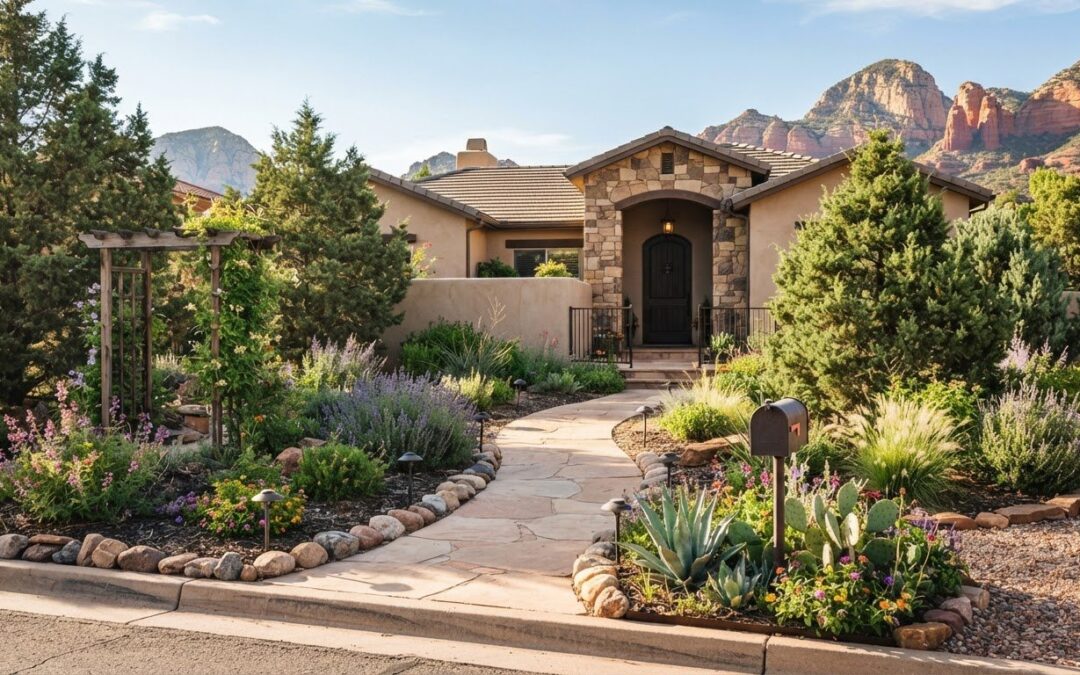
Yes, landscaping can contribute to a home’s value: a landscaped yard can give a property a price advantage of 5.5 to 12.7% over one without landscaping. Well-planned front yard landscaping ideas for curb appeal can also make the entrance feel welcoming and connect the home visually to its surroundings.
A striking plant or new path can catch the eye, but curb appeal depends on how the whole front yard works together. Plant size, hardscape, lighting, and the route to the front door shape the view from the street. Practical choices also affect ongoing care. Select plants for their mature size, repeat a few materials to create visual order, and keep the walkway clear and well lit so the approach is easy to follow after dark.
This guide covers ways to coordinate planting and hardscape, use vertical space, clarify the entry and walkway, and plan a cohesive project. You’ll learn how to create a balanced landscape that suits your home and makes a thoughtful first impression, without treating each feature as a separate decision.
Key Takeaways
- Choose plants for their mature size, then repeat forms and materials to create a balanced look that complements the home.
- Use vertical planting and a thoughtfully arranged mailbox bed to add interest without crowding the yard.
- Make the front door easy to see and the approach easy to follow; a primary walkway should be 36-48 inches wide.
- Plan planting, paths, lighting, and drainage as one design so each feature supports the overall landscape.
1. Coordinating planting, hardscape, and lighting
Choose plants that suit the scale of your home and leave room for their mature size. Read nursery tags, then space plants so they won’t crowd windows or paths as they grow. Repeat a few forms or colors to connect separate areas, and vary height and texture for interest. Evergreens can anchor beds year-round, while lavender or ornamental grasses add texture and suit lower-water planting. Echo trim or stone colors in flowers and pavers for a coordinated palette.
Plan hardscape and lighting alongside the planting. Pavers can define a route through a bed, while gravel or stepping stones create a lighter transition. Use lights to highlight the entry, a distinctive plant, or the edges of a walkway. Keep the front door as the main destination rather than adding competing focal points. A clearly lit path and repeated plant groupings help the elements feel intentional.
Replacing part of a lawn with layered planting or a pollinator-supporting meadow can reduce mowing and irrigation needs. Place taller shrubs and perennials behind lower ornamentals and groundcovers, while keeping sightlines open near the home. Group plants with similar growing requirements, and choose native or climate-adapted varieties suited to local conditions.
In a small front yard, choose compact, low-maintenance plants and make use of vertical space. A window box, planter, or hanging basket adds color without taking up much ground area. Match containers to nearby hardscape, and repeat a plant or color from the garden bed to tie the entry together.
Use your USDA hardiness zone as a starting point, then account for local sun, soil, and water conditions. Compare plant tags with your zone and match each plant to the actual light and moisture in its bed. Where the site suits them, succulents, lavender, and ornamental grasses are options for lower-water planting.
Before planting, sketch the house, beds, path, and lighting in one plan. Mark mature plant sizes and decide which features should stand out. This simple step can prevent overcrowding and help every element contribute to a cohesive first impression.
2. Vertical gardening and mailbox garden beds
A trellis, wall-mounted planter, or hanging basket adds flowers without taking over a narrow front garden. Train climbing plants upward and balance their height with groundcovers or compact flowers. Choose containers that echo the home’s trim or nearby pavers, and repeat colors in the mailbox bed for visual continuity. Keep the arrangement simple: one climbing plant and a few repeated blooms can look more composed than unrelated colors competing for attention.
A mailbox bed can turn an everyday feature into a small garden focal point. Frame the post with low-growing flowers and groundcover, keeping the mailbox and its number visible and accessible. Before planting beyond your property, check whether the road verge is available for gardening, since ownership and planting rules vary by location. A neat edge of gravel, pavers, or mulch can separate the bed from the lawn and guide visitors toward the entry.
Specialty gardens can add purpose as well as color. A butterfly garden can bring together pollinator plants suited to the local area, while a rain garden organizes planting around water movement. In a small vegetable garden, mix vegetables with perennials and annual flowers to maintain interest beyond harvest season. A water feature, such as a koi pond, can create a strong focal point; position it so paths and planting still feel connected.
Define paths and beds with consistent materials. Gravel, pavers, and mulch can mark a route or separate flowers from turf, while keeping access to utility meters clear. If the front yard includes a place to gather, connect its garden beds and paths with outdoor kitchens and fire features so the hardscape and planting feel considered together. Select a clear focal point, then let surrounding flowers, containers, and vertical greenery support it rather than compete for attention.
3. Entryway and walkway landscaping
Make the front door the visual destination. A clear view helps visitors orient themselves, and a direct route makes the entrance feel welcoming and functional. Keep plants and decorative features from obscuring the doorway. Choose one or two focal points, such as a pair of containers or an arbor, sized to complement rather than overwhelm the entry.
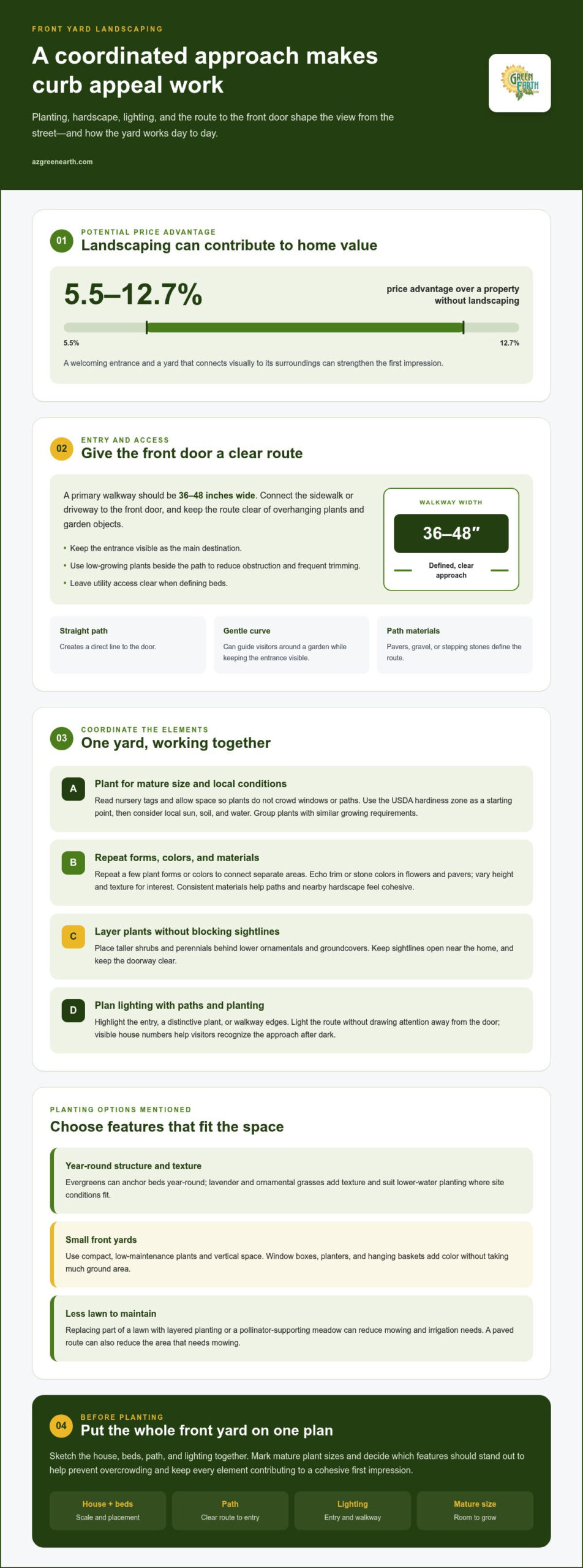
A primary walkway should be 36-48 inches wide, providing a defined approach to the home. Pavers, gravel, or stepping stones can establish its edges and distinguish the route from planting beds. A straight path gives a direct line to the door; a gentle curve can guide visitors around a garden while keeping the entrance visible. Consistent materials help the path and nearby hardscape feel cohesive.
Connect the sidewalk or driveway to the front door, then keep the route clear of overhanging plants and garden objects. Low-growing plants beside the path reduce visual obstruction and the need for frequent trimming. Replacing part of a lawn with a paved route can also reduce the area that needs mowing. Leave utility access clear when defining beds with pavers or mulch.
Lighting, walkways, and visible house numbers make the approach easier to recognize after dark. Use lights to mark the path and entrance or highlight a feature without drawing attention away from the door. Path lighting can help make the entrance easier to navigate after dark. Keep house numbers visible from the approach, and choose a finish that contrasts with its background. Together, these details make arrival clearer and create a polished first impression.
4. Planning a front yard landscaping project
Start with a simple site plan. Sketch the house, driveway, existing trees, sunny areas, slopes, and routes to the front door. Group proposed features by purpose: planting for color and texture, pavers for a durable path, and open space for clear access. This helps the front yard feel balanced instead of crowded with separate ideas. Compare materials with the home’s exterior for a cohesive look. Also mark where water flows after rain, since grading affects planting choices and hardscape placement.
For a budget-conscious update, refresh an existing bed, add climate-adapted plants, or extend a path with gravel or stepping stones. These changes can improve the layout without requiring a redesign of every space. Project costs depend on the scope of work, including site preparation, materials, planting, grading, and the scale of hardscape installation.
Plan for mature plant size and site conditions before installation. Plant trees at least six feet from a house to help avoid damage to gutters, the foundation, and the roof. Retaining walls need proper drainage behind them to prevent water buildup and support slope stability. Oversized privacy screens can block light or views, so scale barriers to the home’s street exposure and neighboring sightlines.
Next, decide what to install first. Resolve drainage and grading before laying pavers or planting beds, then add plants and finishing details. This sequence helps prevent later work from disturbing completed areas. Keep a written plan of materials, plant locations, and maintenance needs; it makes future changes easier to coordinate. For a project that includes a defined paved route or outdoor gathering area, plan your pavers hardscape project as part of the overall landscape design.
Green Earth, LC: HOA Landscape Maintenance
Green Earth, LC maintains shared HOA landscapes and commercial properties. HOA Landscape Maintenance and Commercial Landscape Maintenance support ongoing upkeep as part of a curb appeal plan. For properties where firewise care is a priority, Firewise Defensible Space addresses that landscape need. Irrigation Drip System Repair and Irrigation Controller Troubleshooting can help resolve issues affecting landscape watering.
These services are suited to property managers and associations looking to keep outdoor spaces functional and well maintained. For a watering issue, irrigation repair or controller troubleshooting may be the practical next step. For shared grounds, landscape maintenance can support consistent care.
Contact Green Earth, LC or visit azgreenearth.com to discuss your landscape needs.
Give Your Front Yard a Clear Next Step
A lasting landscape starts with deciding what matters most at home. Choose the priority you want the design to serve, such as a more welcoming arrival, easier upkeep, or a stronger connection between the house and garden. That decision can guide which front yard landscaping ideas for curb appeal suit your property and which features can wait.
Before making changes, walk the property at different times of day. Notice where sunlight falls, how people approach the front door, and where water flows after rain. Record details that affect your plans, then use them to set a practical order for the work. A clear sequence helps you coordinate design choices instead of treating each improvement as a separate project.
For a landscape plan shaped around your property and its needs, contact Green Earth, LC. A thoughtful first step can turn your ideas into a more cohesive, welcoming entrance.
Frequently Asked Questions
Does Landscaping Increase Home Value?
Yes. Well-maintained landscaping can improve a home’s visual appeal and make its outdoor spaces feel more usable. A cared-for front garden can create a positive impression for prospective buyers, while thoughtful planting and hardscape help the property feel cohesive. Treat landscaping as part of the home’s overall presentation, not as a guaranteed increase in sale price.
What are the best front yard landscaping ideas for curb appeal?
Choose improvements that make the property look cared for and easy to approach. Put away visible hoses and garbage cans, tidy bed edges, and refresh a weathered planter with seasonal flowers. Match colors and materials to the home instead of adding unrelated accents. One small, well-maintained detail can make a stronger impression than several competing decorations.
Which low-maintenance plants are best for front yard landscaping?
Perennials such as coneflowers, black-eyed Susans, and yarrow can grow in beds, pots, or planters. For a locally suited garden, choose pollinator plants native to your area and group varieties with similar growing needs. Check each plant’s mature size and light requirements before planting. A suitable match can reduce replacement and upkeep.
What are the steps to plan and install a front yard landscape?
Start by defining the main goal, such as improving the entry or reducing routine upkeep. Set a manageable project scope, then choose a consistent palette of plants and materials. Plan the transitions between beds, lawn, and hardscape so the different areas connect. If you’re working in phases, complete one defined area before carrying the same design choices into the next.
Do local rules, HOA guidelines, or utility easements restrict front yard landscaping?
Rules and property conditions can affect where and how you landscape. Review applicable HOA guidelines and property documents for requirements that may shape planting or construction. Road-verge ownership and planting rules vary, so determine whether the strip can be planted before creating a mailbox garden there. Plan around easements, and keep utility features accessible rather than covering them with permanent landscaping.
What front yard landscaping ideas work well on a budget, and what do they cost?
Refresh an existing bed, add climate-adapted plants, or extend a path with gravel or stepping stones to improve the layout without redesigning the whole yard. Professional costs depend on site preparation, materials, planting, grading, and hardscape scale; a quote is provided after a request.
Recent Comments