
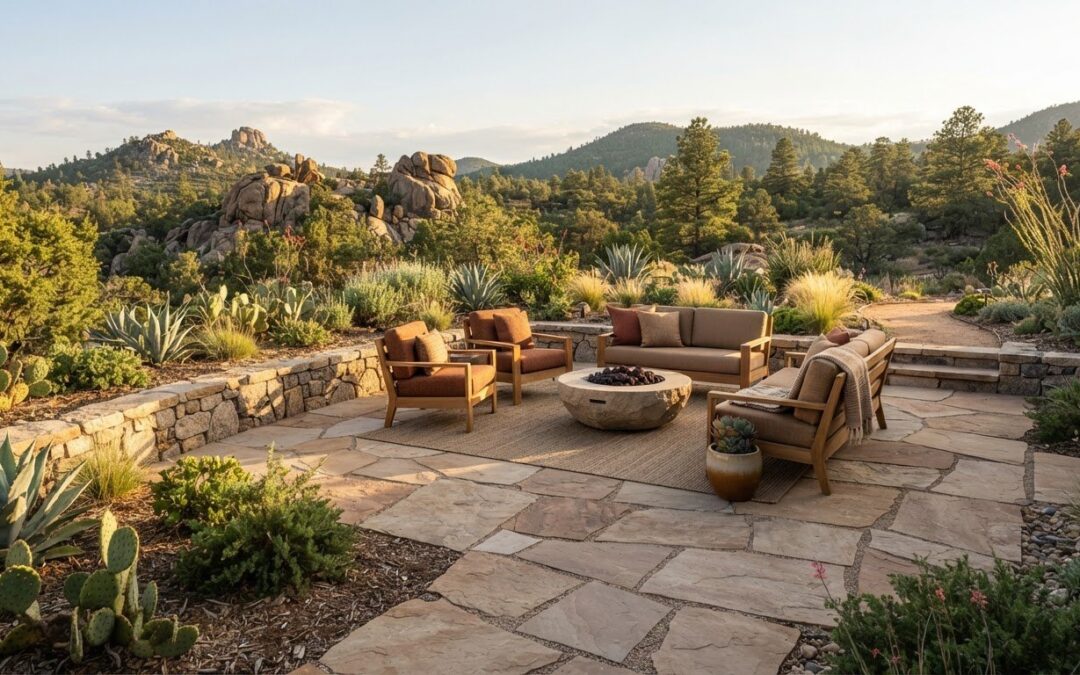
A greener patio starts below the pavers, not just with their color. Environmentally considerate choices can include reused pavers, permeable surfaces, and a layout that works with the site’s drainage and existing landscape. Experienced hardscape patio builders in Prescott can bring these elements together in a durable outdoor space suited to your property.
A patio can feel inviting while respecting the high-desert surroundings. A thoughtful plan balances appearance and everyday use with material selection, ground preparation, and water flow. This guide explains how to compare climate-suitable materials, plan a paver patio around your needs and site conditions, and understand what shapes an installation estimate. It also shows how custom hardscape design can bring patios, retaining walls, and outdoor living features together in a cohesive landscape.
Key Takeaways
- Plan the patio around how you’ll use it, the available space, and how water moves across the site.
- Compare material choices for local climate conditions, appearance, upkeep, and how they fit the surrounding landscape.
- Understand how project scope, site preparation, drainage, and added features shape the installation plan and estimate.
- For ongoing care of a community property, explore HOA landscape maintenance as a way to support a well-kept outdoor environment.
Paver patio design and uses
Start by sketching how people will move between the house, patio, and yard. A paver patio creates a level outdoor surface that can extend your living space. For example, place dining near the kitchen door and lounge seating farther away. This separates activities while keeping a clear route between them.
Prescott patios can serve different purposes, from quiet seating to entertaining. A fire feature can make outdoor gatherings more inviting on chilly evenings. Leave room for chairs and circulation, then orient the seating toward a view or focal point. In a small yard, a simple rectangular layout can make furniture placement easier. Curves or contrasting borders can define a separate sitting area.
Permit and HOA approval requirements depend on the project scope and property rules. Review the proposed work against City of Prescott guidance and the HOA’s governing documents before construction. When choosing a contractor for a paver patio, look for a clearly defined scope that addresses layout, ground preparation, and drainage planning.
Poor drainage can leave standing water, wash out bedding, and destabilize patio edges. An inadequate foundation can contribute to shifting pavers, uneven joints, and low spots. These problems can affect furniture stability and make the surface harder to use. Plan the finished slope so water moves away from the home and toward an appropriate drainage area.
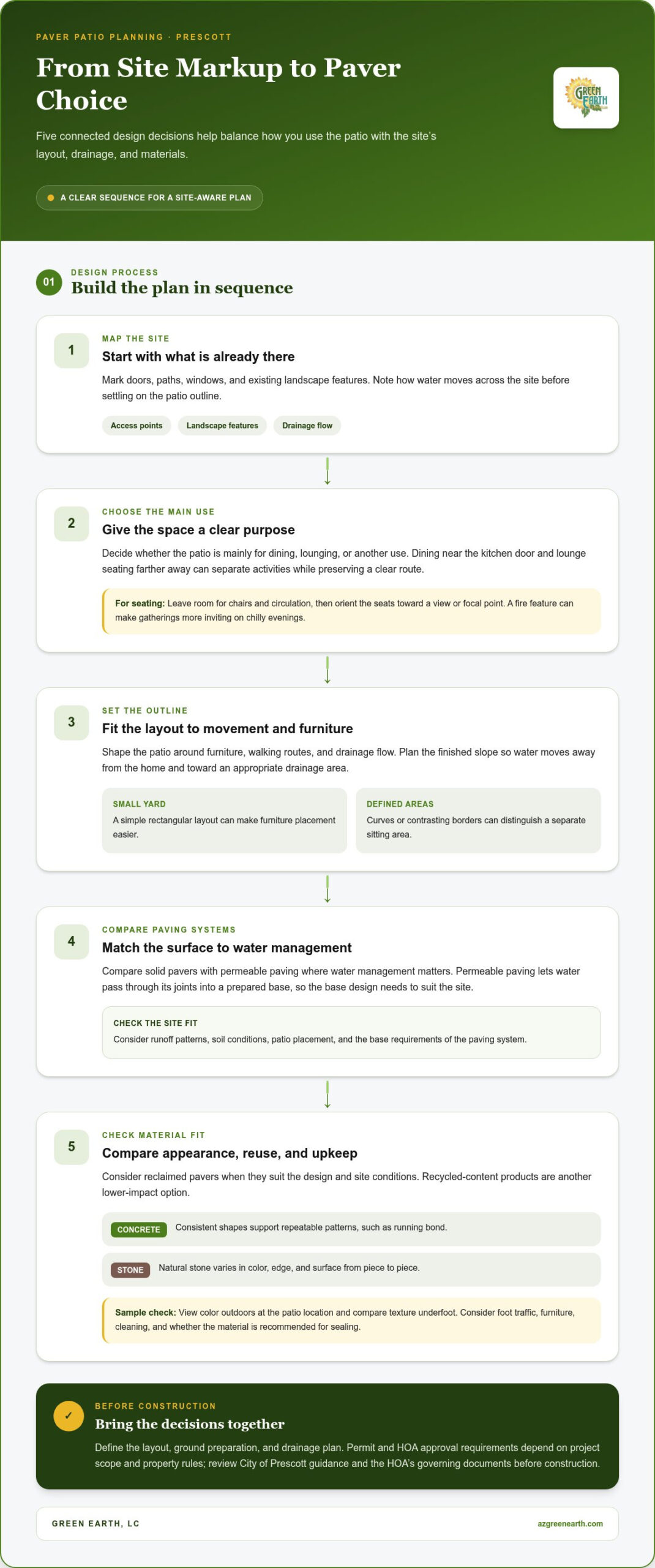
Use this sequence to shape the design:
- Mark doors, paths, windows, and existing landscape features.
- Choose the patio’s main use, such as dining or lounging.
- Set the outline around furniture, walking routes, and drainage flow.
- Compare solid pavers with permeable paving where water management matters.
- Consider reused materials when they suit the design and site conditions.
Bring these decisions together before installation. A clear plan helps Prescott homeowners compare layouts, surfaces, and site preparation. It also gives hardscape patio builders in Prescott a practical basis for developing a custom patio design.
Choosing durable, climate-suitable materials
Choose pavers by considering the site’s exposure, drainage, and intended use. In Prescott, a sunny patio and a shaded entry can face different conditions. Check color samples outdoors, because direct light changes how surfaces appear. Compare texture underfoot, especially near dining areas and walkways.
Concrete pavers offer consistent shapes and repeatable patterns, such as running bond. Natural stone varies in color, edge, and surface from piece to piece. Those differences shape the finished look and how closely the units fit. Review samples beside the home’s siding, trim, and existing stone. Earth tones can echo the surrounding landscape, while cooler tones create contrast.
For lower-impact choices, consider reclaimed pavers or products made with recycled content. Reusing sound existing units gives them another purpose and can reduce discarded material. Permeable paving allows water to pass through its joints into a prepared base. It can support site water management, but requires a suitable base design. Match the paving system to runoff patterns, soil conditions, and patio placement.
Durability depends on installation details as well as the visible surface. Compare how each option handles regular foot traffic, outdoor furniture, and routine cleaning. Check the manufacturer’s guidance on local climate suitability and care requirements. A surface near a grill, for example, may need different cleaning attention than a quiet garden path. Ask whether the selected material is recommended for sealing, and factor that upkeep into your decision.
Use this short comparison before settling on a surface:
- Check color and texture outdoors at the patio’s actual location.
- Compare concrete, natural stone, reclaimed units, and recycled-content options.
- Review permeability and base requirements against the site’s drainage pattern.
- Consider foot traffic, furniture placement, cleaning, and ongoing care.
Compare a few samples with the home’s exterior finishes. This simple step helps balance appearance and maintenance with the environmental character of the Prescott landscape.
Custom hardscape design and installation
A custom plan can coordinate pavers, retaining walls, and outdoor living features. For Prescott projects, compare patio-specific reviews, experience with similar projects, and written warranty terms.
Custom Hardscape Design
Begin with a site plan marking doors, slopes, existing trees, utility routes, and gathering areas. Give each feature a clear purpose: a retaining wall can level uneven terrain or form a terraced garden. A cooking zone might combine a grill, prep counter, sink, and storage. Review how these elements relate to walking routes, drainage, and home access before settling on a layout.
Hardscape Installation
Installation turns the approved layout into a finished surface. Work typically includes preparing the area, shaping the base, setting edges, laying pavers, and filling joints. For a wall, placement and drainage matter alongside the finished face. For an outdoor kitchen, coordinate the hardscape footprint with the planned appliances and counters. Clean transitions between the patio, wall, and planted areas help unify the design.
Before approving a plan, check how it handles grade changes and movement between features. Confirm, for example, that the route from a back door to the dining area stays clear. Make sure proposed walls fit the intended terrace without interrupting access. A marked layout can show where seating, counters, and paths meet, helping you catch awkward transitions before installation.
- Compare reviews that describe patio or wall projects, not just general landscaping.
- Look for examples with a similar site layout and feature combination.
- Read warranty terms for their stated scope, duration, and exclusions.
- Review the project drawing for access, grading, and feature placement.
Ask for the proposed scope and sequence in writing. A clear plan shows how design decisions translate into installation details and how each hardscape feature fits the property.
Free estimates
A useful estimate connects the proposed design with the work required on site. Before requesting one, note the patio’s approximate shape, intended use, preferred materials, and existing site conditions. A sketch showing the house, access points, and proposed patio helps explain the project. Photos can show slopes, tight access, existing paving, and areas where water collects.
Scope affects the estimate. A simple paver surface differs from a plan that also includes a retaining wall, steps, or an outdoor kitchen. Ground conditions and drainage needs can affect preparation, while material selection shapes the project specification. The quoted price depends on project scope and site conditions and is provided after a quote request.
Review the written estimate for a clear description of the included work. Check whether it covers site preparation, base installation, paver placement, edging, and cleanup. If the design includes a wall or cooking area, make sure those features appear in the scope. A clear breakdown helps you compare the proposed work with your priorities.
Prepare these details before requesting an estimate:
- Mark the desired patio location and approximate outline.
- Describe how you plan to use the space, such as dining or relaxing.
- Note visible slopes, drainage concerns, and access limitations.
- List preferred paving materials and any additional hardscape features.
Use the estimate review to resolve differences between your initial idea and the written scope. If one proposal includes a retaining wall and another describes only paving, they do not cover the same work. Compare project details, materials, preparation, and stated exclusions rather than relying on the total alone.
Have a Prescott patio project in mind? Request a free hardscape estimate to begin discussing the design, site needs, and installation scope.
Green Earth, LC: HOA Landscape Maintenance
Green Earth, LC provides HOA Landscape Maintenance for communities and shared outdoor spaces. After patio planning, ongoing care can help keep landscaped grounds orderly and usable, including surrounding planted areas. Commercial Landscape Maintenance supports grounds at commercial properties, while Firewise Defensible Space addresses landscape management around properties.
For water delivery concerns, Green Earth, LC also provides Irrigation Drip System Repair and Irrigation Controller Troubleshooting. These services can help property managers address a drip line issue or a controller that needs troubleshooting. Matching the service to the property’s maintenance needs keeps the next step practical.
Contact Green Earth, LC to discuss landscape maintenance or irrigation service for your property.
Turn Your Patio Vision Into a Practical Plan
Before moving forward, decide what you want the finished space to make easier. You might want a quieter place to unwind, a welcoming area for guests, or a more connected path between the house and yard. A clear priority keeps design choices focused and gives the project a purpose beyond appearance.
As you move from inspiration to a project plan, choose hardscape patio builders in Prescott who can connect your goals with the property’s conditions. Bring reference images, note how you expect to use the space, and identify essential features. That preparation can make conversations about design and scope more productive.
Green Earth, LC also provides landscape services for residential communities and commercial properties, including HOA Landscape Maintenance, Commercial Landscape Maintenance, and Firewise Defensible Space. If you’re considering a patio project or need support for a landscaped property, contact Green Earth, LC to discuss your next step. A thoughtful plan can help you create an outdoor space that feels connected to its setting and ready for everyday use.
Frequently Asked Questions
Are there environmentally friendly options for hardscaping materials?
Yes. Consider reusing sound pavers already on the property or choosing products made with recycled content. Think about how the selected material’s production, transport, and future reuse fit your environmental priorities. Salvaged units, for example, may suit a garden path or patio border, while new pavers can create a consistent finish. Balance resource choices with the site’s drainage, intended use, and overall design.
Are you licensed and insured?
Evaluate licensing and insurance through current documentation, not by inferring from project examples or a service list. Before signing an agreement, review the license information relevant to the work and proof of insurance for the business performing it. Check that the business name matches the agreement and that coverage dates apply to the project period. This helps clarify responsibility before construction begins.
How do I get a free estimate for my landscaping project?
Contact Green Earth, LC to discuss an estimate and describe the work you’re considering. Include the property location, project purpose, and related features, such as a patio edge or retaining wall. Photos of the site and a simple sketch can help explain the scope. Ask for the proposed work to be described clearly so you can compare it with your priorities.
How should I select materials and keep up with design trends for my hardscaping project?
Choose materials that suit your home and how you use the outdoor space, treating trends as accents rather than the foundation. Keep the main paving color complementary to the house, for example, and bring a current look into cushions or movable planters. Compare samples outdoors at different times of day to judge color and texture in the actual setting before choosing.
What is the expected duration of a typical hardscaping project?
A simple patio in Prescott may take a few days to complete or up to a week. A larger project may take several weeks or several months. The scope and site work shape the schedule: adding a wall, drainage work, or an outdoor kitchen involves more coordination than paving alone. Include these features in the project plan so the expected sequence reflects the full scope.
What preparation steps should homeowners take before the hardscaping project begins?
Before work starts, clear personal items and movable furniture from the planned work area. Mark the patio location and note gates, access routes, and features to protect, such as planting beds. Keep the approved design and project scope available for reference. If household members or pets use the yard, plan how they will stay clear of the active work zone during installation.
Recent Comments