
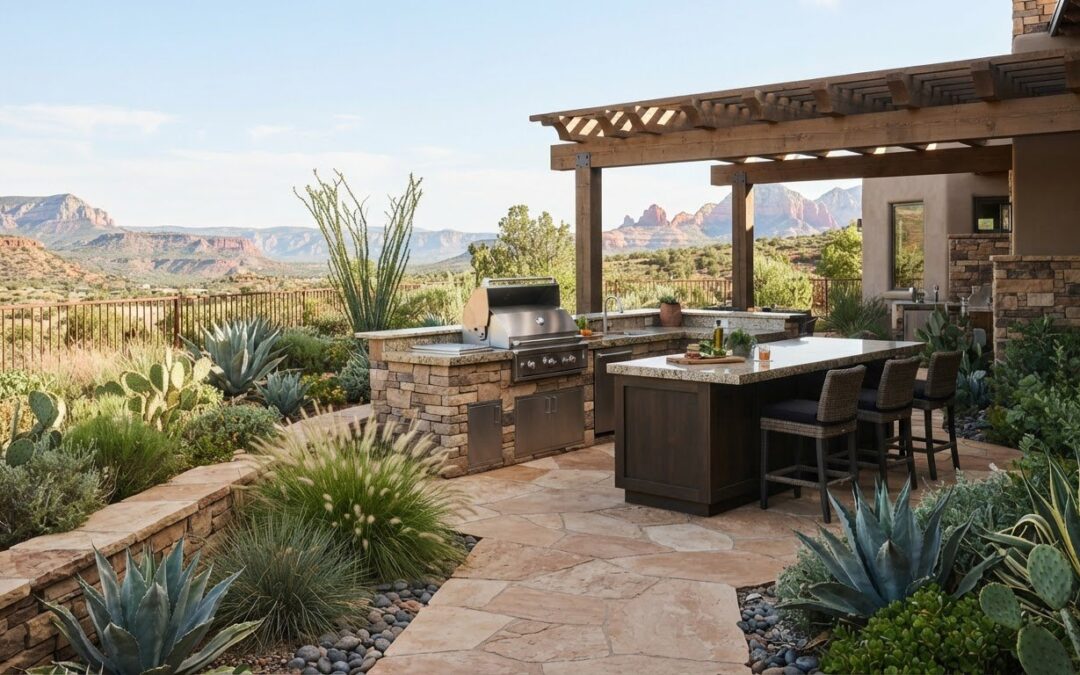
Outdoor kitchens can trigger permit requirements before construction begins. Yavapai County permits are required for outdoor-kitchen gas lines or electrical work, and for covered patio additions attached to a home. For homeowners comparing outdoor kitchen builders in Camp Verde, understanding these requirements is a practical first step toward planning a project that fits the property.
A well-designed kitchen also needs to suit the Verde Valley’s conditions, from strong sunshine to seasonal temperature changes. The layout, materials, utilities, and any patio cover all affect how the finished space functions and holds up over time.
This guide explains permit considerations, what outdoor kitchen construction can involve, and how to choose materials for the local climate. It also covers what to look for in completed project experience and how landscape construction can connect the kitchen with pavers, retaining walls, drainage, and the surrounding yard.
Key Takeaways
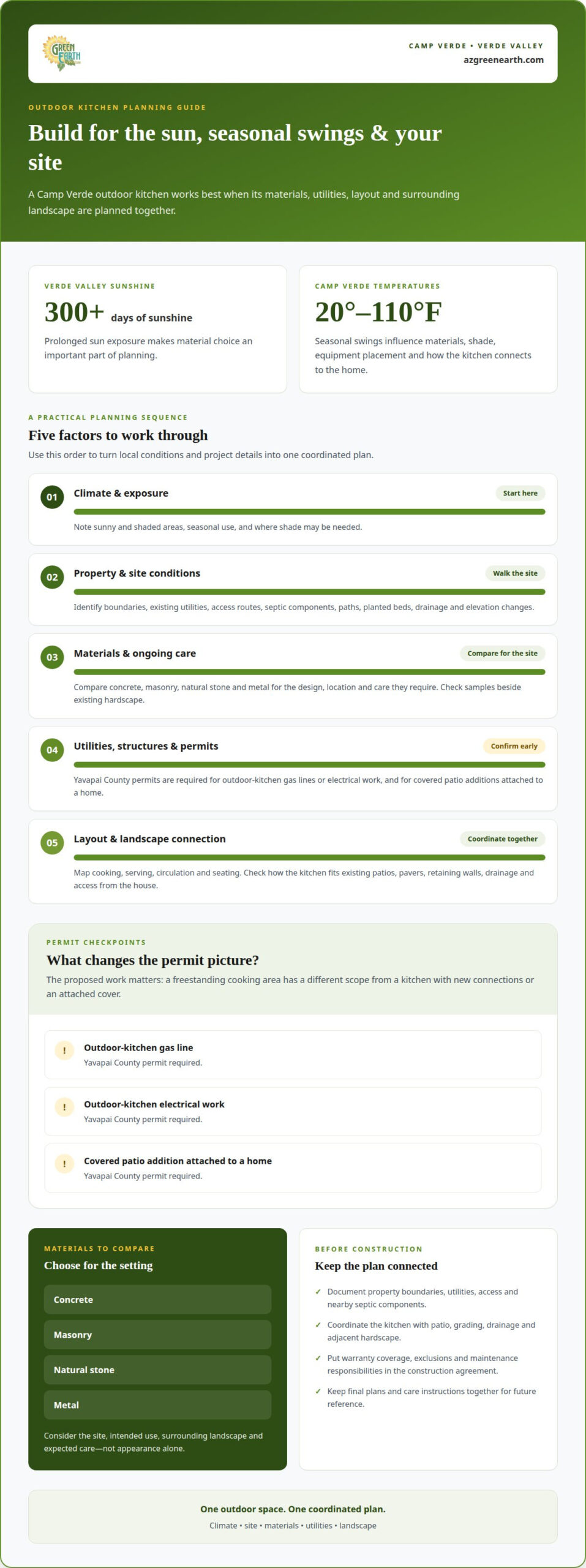
- Plan for Yavapai County permits when your project includes outdoor-kitchen gas lines or electrical work, or an attached covered patio addition.
- Match the kitchen’s layout and construction details to the property, local climate, and how you plan to use the space.
- With more than 300 days of sunshine in the Verde Valley, material selection matters for a kitchen built to weather local conditions.
- Review completed projects and relevant construction experience to understand how a builder approaches the details of an outdoor kitchen.
Do outdoor kitchens require permits in Yavapai County?
Yes. Yavapai County permits are required for outdoor-kitchen gas lines or electrical work, and for covered patio additions attached to a home. These requirements make the utility plan and any attached structure important parts of early design. A freestanding cooking area without those elements has a different scope from a covered kitchen with new connections.
Outdoor kitchen construction in Camp Verde has no single standard timeline. Design complexity, site preparation, utility work, and permit-related requirements shape the schedule. A simple cooking station differs from a covered kitchen that also needs gas, electrical work, or grading. Planning these details together helps clarify the construction sequence.
Custom design should connect the kitchen to the home and existing yard. Start by mapping the cooking area, serving surface, circulation routes, and nearby seating. Then consider how the project fits with existing patios, drainage, and access from the house. These choices help define the construction scope and identify where utilities or a patio cover affect permit needs.
Whole-home remodels and custom home building involve broader work than an outdoor kitchen. Still, coordination matters when a kitchen project touches an attached patio, home utilities, or other exterior improvements. Define the proposed work clearly so design decisions, site preparation, and construction follow the same plan.
When reading reviews of local contractors, look for specific details rather than general praise. Useful comments explain whether the finished layout matched the plan, how the crew handled site conditions, and whether outdoor features worked together. Reviews about a completed kitchen, patio, or connected living space offer more relevant context than comments about unrelated projects.
Custom outdoor living features can extend beyond the cooking station. A design might connect a kitchen with a covered patio, seating area, or fire feature. Consider these elements as one outdoor space, while noting which additions affect the structure or utility requirements. This distinction helps keep the design attractive, functional, and aligned with permit requirements.
Outdoor kitchen construction professionals serving Camp Verde
Camp Verde homeowners need outdoor spaces planned for local conditions, not copied from another climate. Verde Valley construction must account for temperatures from 20°F to 110°F, with warm summers and cool winters. Those swings influence material selection, shade, equipment placement, and how the kitchen connects with the home. A layout used through changing seasons should also leave clear paths between cooking, serving, and seating areas.
Local projects can involve more than the kitchen footprint. Camp Verde properties may have rural residential conditions, septic systems, neighborhood style rules, and applicable building codes. Before construction, document property boundaries, existing utilities, access routes, and nearby septic components. Then coordinate the design and site work around those conditions. This helps organize the kitchen, patio, and other spaces into one practical plan.
Concrete offers a non-combustible option for outdoor kitchen construction. Consider it alongside the appliance layout, work surfaces, and surrounding materials. For example, a concrete base can define the cooking zone while leaving room for circulation and seating. Specify how the material fits the design, and coordinate the finished structure with adjacent paving or retaining walls. Choose materials for the site and intended use, not appearance alone.
Warranty coverage and ongoing maintenance responsibilities should be written into the construction agreement. Ask for clear terms covering the installed work, exclusions, and care tasks, such as cleaning surfaces or maintaining adjacent landscape areas. Keep the final plans and care instructions together for future reference. For a coordinated approach to the broader yard, explore outdoor kitchen construction alongside the surrounding landscape.
What materials hold up best in the Verde Valley?
The Verde Valley receives more than 300 days of sunshine, so material choice should account for prolonged exposure. For a Camp Verde kitchen, compare concrete, masonry, natural stone, and metal by how they suit the site, design, and expected care. Consider how surfaces will look beside existing pavers and planting, then choose finishes that fit the surrounding landscape rather than treating the kitchen as a separate feature.
Use a project consultation to review the property itself, not just photos of finished kitchens. Bring a layout sketch and note where cooking, seating, and shade should go. Walk the proposed area to identify existing paths, planted beds, drainage patterns, and changes in elevation. These details help narrow material choices and show how the kitchen can connect with the rest of the yard.
For a local consultation, focus on the Camp Verde property and its connection to nearby Verde Valley communities, including Sedona and Cottonwood. Discuss the site and planned work, especially if the outdoor kitchen connects with existing landscape features. A clear conversation about the property keeps design decisions grounded in the setting and intended use of the space.
Nearby Verde Valley properties may share regional conditions, but each site has its own exposure and layout. A sunny cooking zone may call for a different surface than a shaded seating area. Compare samples beside existing hardscape, and consider how their color and texture work with the home. Record the selected materials in the project plan so design and construction follow the same direction.
Plan for upkeep when choosing materials. Ask what routine cleaning each surface needs and how to care for it through seasonal use. A material that complements the house but requires more maintenance than the household wants may not be the right fit. Matching appearance, site conditions, and care expectations creates a more cohesive outdoor living space.
Contractor experience and completed projects
Compare a contractor’s relevant work, construction process, and finished results, not just design images. For Camp Verde homeowners, experience with outdoor kitchens and connected landscape features can show how a project moves from plan to installation.
Contractor Experience
Ask how the contractor approaches each phase, from site review and layout through construction and final details. Look for clear examples involving cooking areas, patios, utilities, or fire features. A contractor who explains how these elements fit together can help you understand the project scope. Compare how they communicate decisions and document agreed changes as work progresses.
Relevant experience depends on your property and goals. A kitchen beside an existing patio presents different coordination needs from a new outdoor living area. Discuss your intended layout, access, and connections to the home. Then compare proposed construction sequences and how they address those specific conditions.
Completed Projects
Review completed projects for details that matter in daily use. Look at how the cooking zone, counter space, seating, and circulation fit together. For example, people should be able to move between the grill and dining area without crossing the main work zone. Photos show appearance, while project descriptions can clarify the construction involved.
Use a consistent comparison process: examine similar project types, note the materials and features shown, and compare the finished layout with your needs. Customer reviews can add context when they describe a specific outdoor kitchen or related landscape work. Focus on comments about communication, construction details, and whether the result matched the homeowner’s goals.
Before choosing, write down your priorities, such as a covered cooking area, integrated fire feature, or connection to existing pavers. Compare how each contractor’s approach addresses those items, and keep the proposed scope in writing. To take the next step, discuss your outdoor project.
Green Earth, LC: HOA Landscape Maintenance
Green Earth, LC can maintain the landscape around an outdoor living area after construction. HOA Landscape Maintenance supports cared-for shared grounds, while Commercial Landscape Maintenance serves business properties. Firewise Defensible Space can address vegetation management around structures, and Irrigation Drip System Repair can help resolve issues affecting planted areas near a kitchen.
These services are useful when a project is part of a wider property plan, such as maintaining common spaces or caring for landscaping around a home or commercial site. Coordinating landscape upkeep with the surrounding property helps maintain a cohesive outdoor setting.
Contact Green Earth, LC to discuss landscape needs for your property.
Shape an outdoor space that works beyond the kitchen
Before moving from ideas to construction, decide how the surrounding property should function once the kitchen is complete. Consider who will use the space, how the landscape should connect with it, and what ongoing care the property needs. Those priorities can help you choose outdoor kitchen builders in Camp Verde whose approach fits the full setting, not just the cooking area.
For community and commercial properties, Green Earth, LC offers HOA Landscape Maintenance and Commercial Landscape Maintenance. Firewise Defensible Space can also support property planning where vegetation management around structures matters. These services address broader landscape needs alongside outdoor living improvements.
A clear next step is to discuss the project’s setting and the landscape work that will support it. Contact Green Earth, LC to talk about your property and its needs. Thoughtful planning can help turn an outdoor kitchen concept into a welcoming part of the landscape.
Frequently Asked Questions
Which contractors build outdoor kitchens in Camp Verde, Arizona?
Green Earth, LC builds custom outdoor kitchens and fire features for Camp Verde properties. Homeowners comparing outdoor kitchen builders in Camp Verde can consider the company’s custom design-build approach and Northern Arizona service area, which includes Sedona, Cottonwood, Flagstaff, and Prescott. Its landscape construction and outdoor living services help homeowners plan a kitchen that fits the property and their priorities.
What outdoor kitchen services do Camp Verde builders offer?
Outdoor kitchen builders in Camp Verde may offer different project scopes. Green Earth, LC’s custom outdoor kitchens include built-in grills, prep areas, countertops, storage, and seating. Related fire features include gas or custom fire pits and fireplaces. The design can also incorporate pavers, seating walls, lighting, gas lines, and electrical systems, bringing cooking and gathering areas together.
What are the reviews and ratings of outdoor kitchen builders near Camp Verde?
Green Earth, LC has a 4.5-star rating based on 41 reviews. Testimonials describe friendly, courteous crews, attention to detail, and consistent quality over multiple years. Read reviews for examples tied to outdoor construction or landscape work, then compare comments about communication and finished details. A rating offers a snapshot, while project-specific feedback can show what customers valued in completed work.
Do Camp Verde outdoor kitchen contractors offer free estimates and design consultations?
Don’t assume a free estimate or consultation is included. Green Earth, LC uses a custom design-build process managed by one team. For an outdoor kitchen discussion, bring a rough layout and identify desired elements, such as a built-in grill, prep area, storage, or seating. Clarify the proposed scope and what the estimate covers before making project decisions.
What materials and appliances are best for an outdoor kitchen in Camp Verde’s climate?
Choose materials based on sun exposure, upkeep, and how the kitchen joins existing hardscape. Green Earth, LC describes its materials as “commercial-grade materials built for Arizona’s extreme heat.” Plan appliances around the functions you’ll use, such as a built-in grill and prep space. Choose specific models to suit your cooking needs and design after establishing the layout.
Do outdoor kitchens in Camp Verde require building, electrical, gas, or plumbing permits?
Include these elements in the early project scope because they affect the construction plan. Identify any proposed plumbing work separately rather than assuming it follows the same permit requirements as gas or electrical work.
Recent Comments