
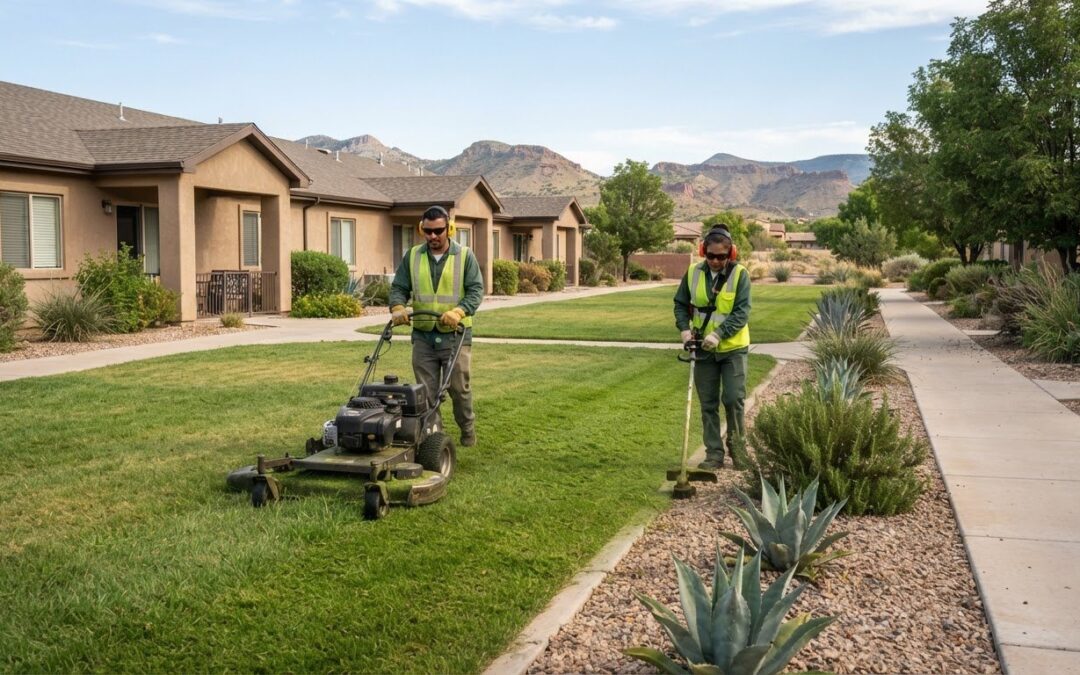
Clear responsibilities are the foundation of effective HOA common area landscape maintenance. Governing documents should define which shared areas the association maintains, while the landscape contract specifies the work, schedule, payment terms, performance standards, and process for addressing missed work. That clarity helps boards set expectations and keep shared grounds consistently cared for.
It’s understandable to focus on the visible results: healthy planting beds, tidy lawns, and welcoming common spaces. But the decisions behind those results matter, too. This article explains how bylaws and service scopes shape maintenance responsibilities, which seasonal tasks to include, and how payment terms and schedules can support reliable upkeep. You’ll also see how thoughtful landscaping can contribute to the appearance and long-term appeal of a community, and what to consider when planning maintenance around local conditions and shared property needs.
Key Takeaways
- Make maintenance schedules easy for residents to understand by explaining when work will happen and which shared areas are affected.
- Plan irrigation inspections around seasonal needs so issues such as broken sprinkler heads, clogged nozzles, and controller problems can be identified.
- Use contract terms that clearly define service scope, payment arrangements, performance standards, and remedies for incomplete work.
- Connect landscape upkeep to the community’s long-term appeal by planning ahead for asset improvements and replacements.
1. Communicating maintenance schedules to residents
A shared calendar gives residents a practical view of planned landscape work. The HOA board can publish seasonal windows for mowing, pruning, irrigation adjustments, and planting-bed refreshes. Identify affected areas, such as the entrance, paths, or courtyard, so residents know where crews will work. If weather changes a visit, update the calendar through the same channel. A notice board, resident portal, or email bulletin can keep changes visible. Before larger improvements, explain the work, timing, and any temporary access changes. These details help residents distinguish scheduled activity from an unreported problem.
Landscaping policies should reflect the community’s governing documents and applicable local requirements. These documents guide decisions about pesticide use, water use, and tree work, including which changes need association approval. States may require licensing for workers who apply pesticides and fertilizers, according to the U.S. Bureau of Labor Statistics. A written policy can explain how residents request changes, such as planting near a shared path. Consistent procedures help the board address requests fairly across the neighborhood.
Set expectations by naming the task, location, and reporting route. For example, a resident who spots a broken sprinkler beside a walkway can submit its location, a brief description, and a photo through the association’s designated channel. The board or property manager can log the request, assign follow-up, and share status updates. A complaint record should note the date, issue, response, and resolution. This history helps identify recurring concerns and document how the association handled each report. Residents should also know where to direct concerns about work quality or missed visits.
Poorly maintained landscaping can create hazards, such as obstructed paths, surfaces concealed by overgrowth, or irrigation leaks that leave walkways wet. An injury may lead to a liability claim, so regular inspections and prompt repairs matter. Assign responsibility for site checks, record hazards, and track corrective work through completion. Residents should have a clear way to report urgent access or safety concerns. For example, staff can document a blocked sidewalk, assess the obstruction, and arrange corrective action rather than waiting for the next routine visit.
2. What Grounds Maintenance Services Do HOAs Typically Provide?
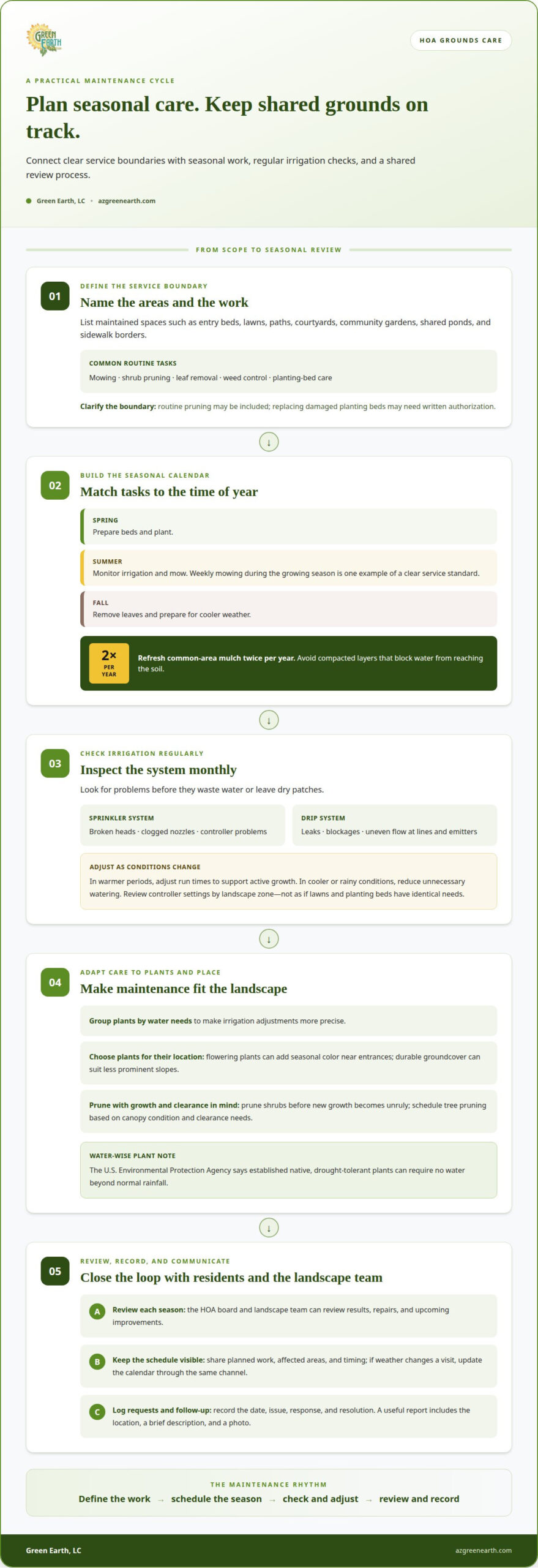
HOA grounds programs commonly cover mowing, shrub pruning, leaf removal, weed control, and planting-bed care. They may also include community gardens, shared ponds, and landscape borders beside sidewalks. Weekly mowing during the growing season is one example of a clear service standard. The right frequency depends on growth, weather, site conditions, and the appearance the association wants to maintain. Define seasonal obligations in the maintenance plan so routine care and repairs are not confused.
Irrigation needs change with weather and plant growth. Schedule monthly system checks to find broken sprinkler heads, clogged nozzles, and controller problems before they waste water or leave dry patches. In warmer periods, adjust run times to support active growth; during cooler or rainy conditions, reduce unnecessary watering. Check drip lines and emitters for leaks, blockages, or uneven flow. Review the controller schedule by landscape zone rather than treating lawns and planting beds alike.
Seasonal planning connects maintenance tasks to curb appeal. Spring work can include bed preparation and planting; summer calls for irrigation monitoring and mowing; fall brings leaf removal and preparation for cooler weather. Refresh common-area mulch twice per year, avoiding compacted layers that block water from reaching the soil. Prune shrubs before new growth becomes unruly, and schedule tree pruning based on canopy condition and clearance needs. A seasonal meeting between the HOA board and landscape team can review results, repairs, and upcoming improvements, strengthening their working relationship.
Plant selection shapes long-term care. According to the U.S. Environmental Protection Agency, established native, drought-tolerant plants can require no water beyond normal rainfall. Grouping plants with similar water needs also makes irrigation adjustments more precise. Flowering plants can add seasonal color near entrances, while durable groundcover can suit less prominent slopes. For persistent controller or drip-system problems, irrigation system troubleshooting can help identify the issue affecting landscape performance.
3. Landscape maintenance contract scope and payment terms
A useful contract turns the association’s expectations into specific, reviewable work. Describe each maintained area, such as entry beds, lawns, paths, and shared courtyards. List included tasks, seasonal timing, and work requiring separate approval. For example, routine pruning may be included, while replacing damaged planting beds may need written authorization. Clear boundaries reduce disputes over whether a task belongs to the regular scope or counts as additional work.
Payment terms should explain how invoices are submitted, when payment is due, and how the board approves extra work. Specify the documentation required for added tasks, such as a written estimate and approval before work begins. A multi-year landscape contract can include annual price adjustments, performance reviews, and possible termination for poor work. These terms give boards a planned review point and connect payments to agreed services rather than unclear expectations.
Performance standards make monitoring more consistent. Define observable outcomes, such as clear sidewalks after scheduled leaf removal or planting beds kept free of visible weed growth. Assign a board representative or property manager to record missed work, hazards, and repair requests. Regular site reviews can compare completed work with the contract scope. A shared log also gives the landscape team and association a common record when concerns arise.
When comparing proposals, boards can assess them against the same scope, seasonal schedule, communication process, and payment terms. A proposal that omits irrigation checks, debris removal, or responsibility for reporting hazards may not allow a like-for-like comparison. Ask each bidder to describe its reporting and review process, then weigh clarity and coverage alongside cost rather than assuming the lowest figure is the best fit. In-house staff may suit communities with the necessary staff capacity and equipment; contractors can provide a defined external scope. The decision depends on workload, oversight, and the association’s obligations.
Individual-lot landscaping needs clear boundaries, too. Governing documents should explain which changes homeowners may make, which require approval, and who maintains shared edges or easements. A written process for plant changes or visible improvements helps protect neighborhood appeal while limiting conflicts between private yards and common grounds.
4. HOA common area maintenance and property values
Shared grounds shape a buyer’s first impression before they reach a home. A cared-for entrance, trimmed planting beds, and clear paths signal attention to the neighborhood’s common areas. Neglected edges, dead plants, or overgrowth can make the entire community appear less cared for. Consistent upkeep supports visual appeal, but cannot guarantee a particular sale price or property value.
Maintenance also protects the practical use of shared spaces. Overgrown branches can obstruct sidewalks, while poor drainage can leave paths muddy or erode planting beds. Prompt debris removal and timely repairs help preserve access and prevent small problems from spreading. Boards can record recurring issues, note their locations, and use those records to prioritize action. This turns resident reports and inspection findings into a practical maintenance plan.
Local and state rules affecting common-area landscaping depend on the property’s governing documents and applicable local requirements. Boards should account for accessibility requirements when maintaining sidewalks and pathways, and review relevant local rules before changing shared landscaping. These considerations guide decisions about access, planting, water practices, and tree work.
A multi-year plan helps the association balance routine care with larger improvements. Work with the property manager to list major landscape assets, note their condition, and anticipate replacements or upgrades. For example, the plan can distinguish recurring bed care from a future redesign of a worn entrance. Reserve accounts are commonly used for major capital improvement projects. Scheduling improvements across budget years helps boards weigh priorities alongside other community needs instead of reacting only after visible decline.
Use clear updates to explain why each project matters. A notice about drainage repairs can describe the affected path, expected access changes, and how the work supports safe use. That context helps residents connect maintenance decisions with everyday function and neighborhood appeal. For community-wide planning, discuss landscape maintenance needs and priorities for shared grounds.
Green Earth, LC: HOA Landscape Maintenance
Green Earth, LC provides HOA Landscape Maintenance for associations managing shared outdoor spaces. Consider this service when common grounds need consistent care aligned with the board’s priorities, maintenance schedule, and community standards. Green Earth, LC also provides Commercial Landscape Maintenance for commercial properties.
When irrigation issues affect planting beds or landscaped areas, Green Earth, LC provides Irrigation Drip System Repair for problems in drip systems. Firewise Defensible Space is another service for communities focused on maintaining defensible space. Matching the work to the landscape’s needs helps boards plan practical improvements while supporting the appearance and function of common areas.
Contact Green Earth, LC to discuss landscape maintenance for your association.
Set a Clear Direction for Your Community’s Landscape
Give your next landscape decision a longer view. Consider how shared outdoor spaces should function as the neighborhood changes, which areas deserve careful preservation, and where thoughtful improvements could make daily use more comfortable. Effective HOA common area landscape maintenance supports the community’s character and practical needs, rather than treating each season as a separate reset.
Bring those priorities into a focused conversation before shaping the next maintenance plan. A clear direction connects landscape care with the experience residents want from shared spaces, while leaving room for responsible adjustments as conditions evolve. Green Earth, LC can help your association turn broad priorities into a workable landscape plan.
Share your community’s landscape priorities with Green Earth, LC, and take the next step toward outdoor spaces residents can enjoy with confidence.
Frequently Asked Questions
How Should HOA Bylaws Address Grounds Maintenance?
HOA bylaws should define the association’s authority over shared landscaping and explain how decisions are approved. They can also set boundaries for homeowner changes near common property, such as adding plants beside a shared walkway. A clear approval process helps the board apply rules consistently. Keep the language aligned with the community’s governing documents and specify who handles routine care, improvement decisions, and resident requests.
What Grounds Maintenance Services Do HOAs Typically Provide?
HOAs commonly arrange care for shared lawns, shrubs, planting beds, trees, and irrigation systems. The work varies by property: a landscaped entrance may need seasonal planting, while a courtyard may need regular debris removal and access upkeep. The association can set service priorities by location, giving high-visibility areas distinct attention while maintaining a consistent standard throughout the community.
What is HOA maintenance?
HOA maintenance is the work an association organizes for property and shared features under its responsibility. Depending on the governing documents, it can include outdoor upkeep alongside care for common facilities. For example, the association may coordinate care for a shared garden, while a homeowner handles landscaping within a private yard. Defined responsibilities help residents direct requests to the right party.
What landscaping maintenance is an HOA responsible for in common areas?
The association’s duties depend on its governing documents and the boundaries of the common property. A site plan can show which lawns, beds, and paths are shared, helping residents understand where association work applies. For HOA common area landscape maintenance, identifying who handles the transition between common grounds and private lots can prevent missed tasks and confusion about ownership.
What costs are typical for HOA common area landscape maintenance?
There is no single typical cost for every association. The amount depends on the property’s layout, landscape features, irrigation needs, service frequency, and work included. A community with extensive planting beds has different requirements from one with simpler grounds. The price depends on the case and is given after a quote request; the defined scope and schedule shape the estimate for HOA common area landscape maintenance.
What should an HOA landscape maintenance contract include?
An HOA landscape contract should identify the areas covered, services, schedule, payment terms, performance standards, and process for approving additional work. A map can clarify boundaries, while a written reporting process helps document completed tasks and damage. For example, the agreement can explain how the association records an incomplete visit and communicates the required correction, keeping oversight consistent throughout the contract term.
Recent Comments