
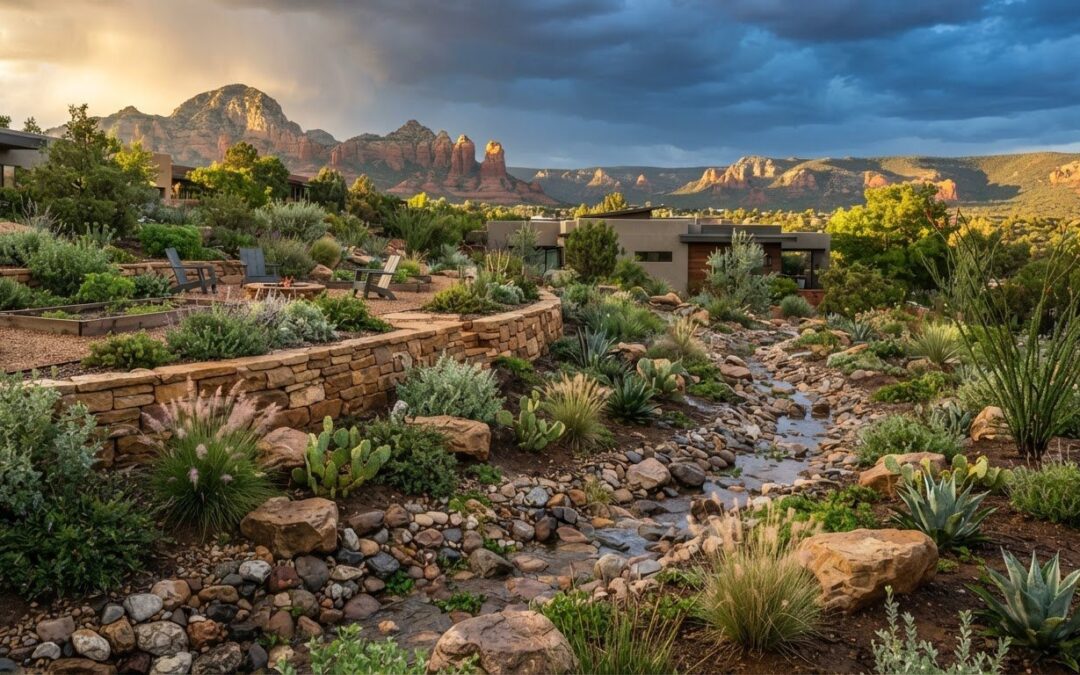
More rock isn’t always the answer to a moving slope. If runoff carries soil, gravel, or mulch downhill during Cottonwood’s intense monsoon storms, erosion control landscaping Cottonwood homeowners can rely on needs to manage where water goes, not just cover the ground. A barrier or grade change in the wrong place can redirect runoff and create a new problem somewhere else.
It’s frustrating to watch a bare slope or drainage channel wash out after a storm, especially when it’s unclear whether planting, grading, rock, or a retaining wall is the right fix. A durable plan starts by tracing how water moves across the property, then choosing measures to slow it, guide it, and protect vulnerable soil.
This guide explains common causes of erosion and how grading, drainage, suitable planting, and hardscape can work together in a landscape designed for Cottonwood conditions. You’ll learn how to compare options for slopes and channels, reduce soil loss without creating a new drainage problem, and support a landscape that’s both functional and attractive. Green Earth, LC brings more than 47 years of Verde Valley experience to landscape construction and drainage grading.
Key Takeaways
- Look for exposed roots, small channels, sediment deposits, washed-out mulch, and pooling to identify where erosion is occurring.
- Trace runoff from roof outlets and paved areas across slopes and channels before choosing how to redirect or slow it.
- Choose planting, ground cover, rock, grading, or retaining walls according to the job each area needs done, and consider how the options can work together.
- A practical erosion control landscaping cottonwood plan starts by mapping symptoms, observing water flow, and identifying vulnerable areas before setting up regular maintenance.
- Green Earth coordinates landscape design, drainage grading, retaining walls, and irrigation, drawing on more than 47 years serving the Verde Valley.
Erosion Control Landscaping in Cottonwood, AZ: Identify the Problem Before Choosing a Fix
Effective erosion control starts with understanding how water moves through a property. Landscape erosion control reduces soil movement by managing runoff, stabilizing exposed surfaces, and protecting planting areas. As the general overview of Erosion Control explains, measures range from vegetation to engineered structures. The right choice depends on what’s happening at the site, not simply on where the ground looks bare.
Look for clues after rainfall: exposed roots, narrow channels called rills, sediment collecting at the bottom of a slope, washed-out mulch, or water pooling where it usually doesn’t. These signs help show how water interacts with the landscape. A slope may lose soil because runoff crosses it too quickly. Pooling may point to a low area or a route where water cannot drain easily.
There may be several contributing factors. Steep or poorly directed slopes can speed surface flow; compacted ground may absorb less water; and bare soil has little to hold it in place. Roof drainage or paved areas can also concentrate water and direct it toward vulnerable ground. Erosion is the visible symptom; the underlying drainage pattern is often why it keeps returning. That distinction is central to erosion control landscaping cottonwood property owners can plan with confidence.
How Cottonwood rainfall and terrain can shape runoff
Seasonal storms can bring concentrated runoff, so conditions during and after rainfall are useful to observe. Trace the water’s route: where does it start, where does it travel, where does it slow, and where does it leave the site? Note how slope direction, driveways, patios, and other hard surfaces shape that path. Roof outlets matter, too, particularly when discharge lands near bare soil or a slope.
Which erosion signs deserve attention first?
Prioritize channels that are getting wider or deeper, edges that appear undermined, roots newly exposed by washout, and sediment reaching walkways or structures. A light, temporary surface wash differs from recurring concentrated flow that follows the same route after rainfall and may call for designed drainage. Don’t rely on a single snapshot: take photos after rain and note where water flowed, where soil moved, and where deposits collected. Those records can help reveal a pattern before you choose a fix.
How Drainage, Grading, and Plants Work Together to Stabilize Cottonwood Landscapes
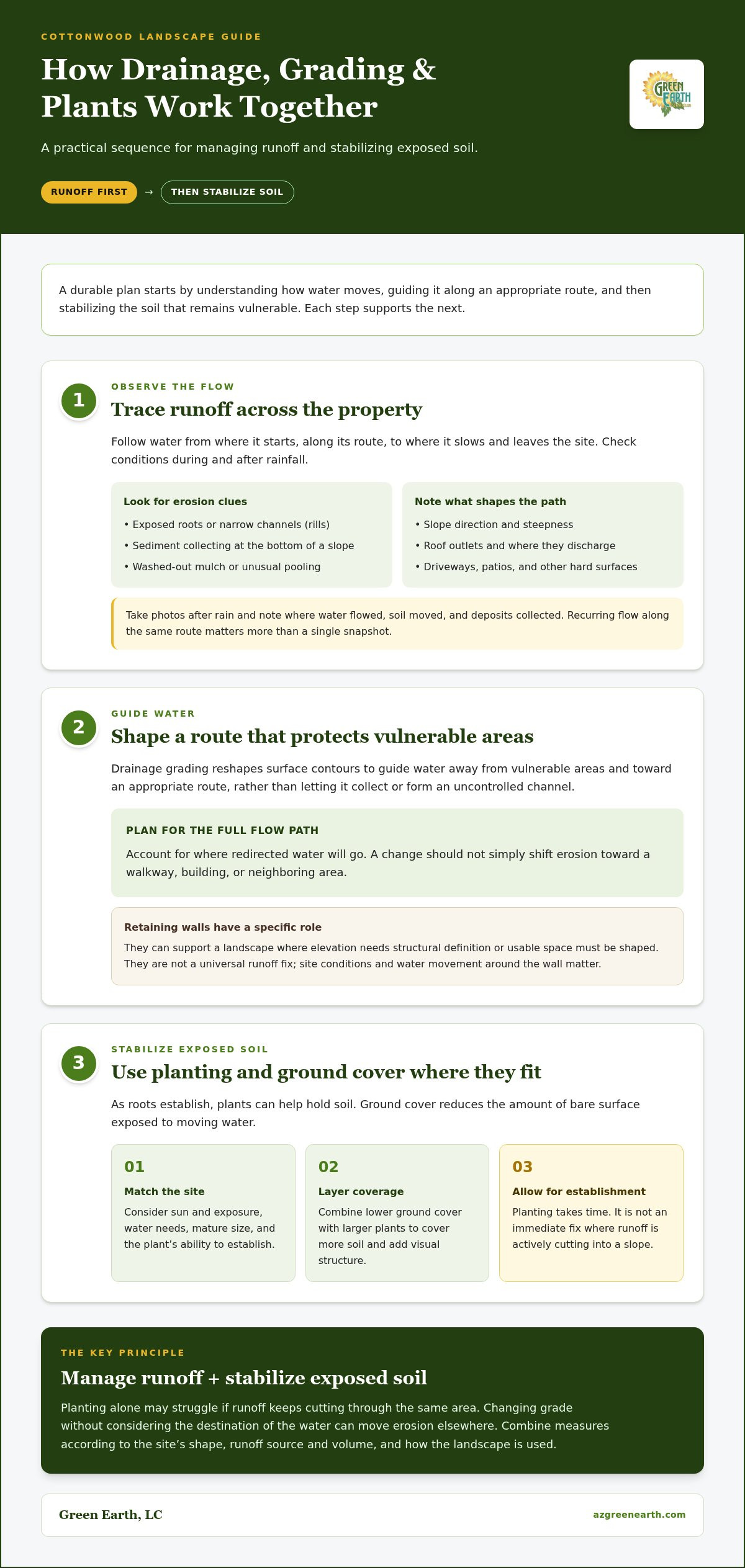
A lasting plan follows a practical sequence: understand how water moves, guide it along an appropriate route, then stabilize soil that remains vulnerable. Each step supports the next. Planting on a slope may improve surface cover, for example, but if runoff continues cutting through the same area, plants can struggle to establish. Changing the grade without considering where the water will go can shift erosion to another part of the property.
Erosion control works best when runoff is managed and exposed soil is stabilized together. The right combination depends on the site’s shape, the source and volume of runoff, and how the landscape is used. That coordinated approach is central to erosion control landscaping cottonwood properties can benefit from over time.
What grading and drainage features contribute
Drainage grading reshapes surface contours to guide water away from vulnerable areas and toward an appropriate route, rather than letting it collect or form an uncontrolled channel. The design should account for the full flow path so water isn’t simply redirected toward a walkway, building, or neighboring area. An Arizona drainage grading guide offers more detail on how grading and drainage planning work together.
Retaining walls can support a landscape plan where a change in elevation needs structural definition or where usable space must be shaped. They aren’t a universal fix for runoff; their role and design depend on site conditions and how water will move around the wall. Pairing a wall with thoughtful grading and planting helps the whole area function as one landscape.
How vegetation and ground cover support soil stability
Plants can help hold soil as their roots establish, while ground cover reduces the amount of bare surface exposed to moving water. Choose planting based on the area’s sun and exposure, water needs, mature size, and ability to establish at the site. A layered arrangement can combine lower ground cover with larger plants, adding visual structure while covering more soil. For broader design considerations, explore this Northern Arizona desert landscape design guide.
Planting takes time to establish, so it shouldn’t be treated as an immediate fix where runoff is actively cutting into a slope. Depending on the site, a plan may combine vegetation with surface cover, drainage grading, or a retaining wall. Green Earth coordinates landscape design, drainage grading, and retaining walls as part of landscape projects. Explore Green Earth landscape services for more about its work.
Rock, Plants, or a Retaining Wall? Compare Erosion-Control Options for Cottonwood
No single material is right for every slope or drainage path. The best erosion control landscaping cottonwood plan matches each measure to its purpose: guiding water, covering soil, protecting a surface, or managing a change in elevation. Use this comparison as a starting point, then consider how the options could work together.
| Approach | Intended role and site suitability | Establishment or maintenance | Design considerations |
|---|---|---|---|
| Planting | Cover suitable slopes and exposed areas where plants can establish. | Plants need time and appropriate care to develop; establishment depends on site conditions. | Match choices to sun, water needs, mature size, and exposure. |
| Mulch or ground cover | Cover vulnerable soil and reduce exposed surface between plants or across planting areas. | Check for displacement or thinning after runoff and replenish or repair as needed. | Choose coverage that fits the slope and landscape appearance; loose material may wash from active flow paths. |
| Rock | Protect selected surfaces or help manage flow in a deliberately designed area. | Inspect for displaced stones, exposed soil, or sediment buildup. | Rock can armor a surface, but it doesn’t automatically correct the source or route of runoff. |
| Grading | Adjust surface contours to guide water along a planned route. | Observe how the revised surface performs and maintain its intended shape. | Plan the full flow path to avoid shifting runoff toward another vulnerable area. |
| Retaining wall | Support a change in level as part of a broader landscape plan. | Keep the surrounding area clear enough to notice changes in drainage or soil movement. | Wall design depends on site conditions and how water will move around the structure. |
When do plants, rock, or ground cover make sense?
Planting can suit exposed soil or slopes where selected plants can establish under the site’s conditions. Ground cover and mulch help reduce bare patches, but loose material may need attention if it shifts during runoff. Rock or riprap may protect a selected area or form part of a flow-management approach. It still needs to fit the water’s path and the surrounding design. No option is maintenance-free, so consider appearance, coverage, and ongoing upkeep together.
When might grading or a retaining wall be part of the solution?
Grading addresses the shape of the ground and where surface water travels. A retaining wall can support a planned change in level, but it doesn’t replace drainage planning. Repeated channels, undermined edges, sediment returning after each storm, or several areas affected by the same flow suggest the issue may need a coordinated construction and drainage plan rather than a cosmetic patch. Explore this Cottonwood hardscape construction guide for related design considerations. Green Earth brings drainage grading and retaining wall work together within landscape projects. Explore Green Earth landscape and construction services for an overview.
A Practical Erosion-Control Landscaping Plan for Cottonwood Properties
A clear plan turns scattered signs of soil loss into useful information for design. Before choosing materials or reshaping a slope, document what’s happening, trace the water’s path, and identify what the project needs to protect. This makes erosion control landscaping cottonwood properties more purposeful, whether the site is a home, an HOA common area, or a commercial landscape.
- 1. Map the symptoms. Mark channels, exposed soil, displaced ground cover, and places where sediment collects. Note slope direction, existing planting, and visible drainage routes.
- 2. Observe runoff. Track water from roof outlets across paved areas, slopes, and channels. Record where it begins, where it concentrates, and where it exits the site.
- 3. Identify assets at risk. Mark walkways, structures, planting areas, and landscape features that need protection. Include places where water or sediment could affect daily use.
- 4. Plan interventions. Match measures to the observed flow and site needs. A plan may combine grading, drainage, planting, ground cover, rock, or a retaining wall rather than relying on a single fix.
- 5. Maintain and reassess. Inspect after storms, note any new movement, and adjust upkeep based on what the landscape shows over time.
What to document before landscape work begins
Create a simple site record. Photograph problem areas in dry conditions and again after rainfall, using consistent viewpoints when possible. Add brief notes about where water traveled and where sediment settled. Include nearby hard surfaces, slopes, channels, roof outlets, existing planting, and features or property areas that should remain protected. Comparing observations helps distinguish a one-time surface wash from a recurring flow pattern.
How to plan for establishment and ongoing care
New planting needs time to establish, so don’t treat it as immediate erosion resistance. Build appropriate care into the plan, including irrigation checks where relevant and attention to ground cover that becomes displaced. After storms, inspect for fresh channels, sediment buildup, or changes around hardscape and planted areas. Maintenance supports a durable design, but it can’t replace addressing the runoff pattern that caused repeated soil movement.
Site use also shapes the plan. A residential yard may prioritize access and protecting garden areas; HOA landscapes need consistent care across shared spaces; commercial properties may need to account for pedestrian routes and active-use areas. Substantial changes to drainage or structures call for project-specific review, with applicable requirements considered for the site and scope.
For a coordinated approach, plan your landscape and drainage project with Green Earth.
Plan Erosion-Control Landscaping with Green Earth in Cottonwood
A durable erosion-control plan considers the whole landscape, not just the spot where soil has washed away. Green Earth, LC brings landscape design, drainage grading, retaining walls, and irrigation together in coordinated projects. Considering visible erosion alongside water movement, planting, and hardscape needs helps the plan support both site function and visual appeal.
What an integrated landscape project can address
Each property has its own layout, use, and drainage patterns. A residential slope, an HOA common area, and a commercial walkway may call for different priorities, access, and maintenance approaches. Green Earth considers how these elements fit together, then shapes the project around site conditions and the desired landscape. With more than 47 years serving the Verde Valley, the company brings local project familiarity to its work. Its sustainable landscape practices recognition reflects a commitment to thoughtful design, not a promise of a particular result.
Green Earth was the statewide runner-up in Green Living Magazine’s Best Sustainable Landscape Designer category. That recognition aligns with an approach that considers long-term function as well as appearance. The appropriate mix of grading, planting, irrigation, and hardscape depends on the property and project conditions, so recommendations should follow a site-specific assessment rather than assume one solution fits every slope.
Take the next step toward a more stable landscape
Before discussing your project, gather photos and notes about where erosion appears, how water moves, and which areas or features you want to protect. Include your main priorities, such as improving a channel, protecting a slope, or coordinating drainage with a landscape update. These observations create a useful starting point for planning.
As a local partner for residential, commercial, and HOA landscape construction, Green Earth can bring the relevant design and construction elements into one plan. For erosion control landscaping Cottonwood property owners can shape around their site’s needs, discuss your Cottonwood landscape project.
Build a More Resilient Cottonwood Landscape
Lasting erosion control starts with understanding how water moves across your property. From there, grading and drainage can guide runoff, while suitable planting, ground cover, rock, or a retaining wall can help protect vulnerable areas. The right combination depends on site conditions, and ongoing maintenance helps keep the landscape working as intended.
For erosion control landscaping cottonwood property owners can plan with confidence, Green Earth, LC brings together landscape design, drainage grading, retaining walls, irrigation, and construction. The company has served the Verde Valley for more than 47 years and was the statewide runner-up in Green Living Magazine’s Best Sustainable Landscape Designer category.
Start by noting where erosion appears and which areas matter most to protect. Then discuss your Cottonwood landscape project with Green Earth. With a coordinated, site-conscious plan, you can move toward a landscape that’s both more functional and beautiful.
Frequently Asked Questions
What is the best way to control erosion in a Cottonwood yard?
The best approach is to manage runoff and stabilize the soil together, based on how water actually moves through your yard. Start by tracking where it enters, flows, and collects, then consider a combination of drainage grading, suitable planting, ground cover, rock, or a retaining wall. Erosion control landscaping cottonwood properties need is site-specific, so avoid adding a surface material before understanding the flow causing the soil loss.
Can landscaping stop soil erosion on a slope?
Landscaping can reduce soil movement on a slope, but the plan needs to suit the grade, runoff pattern, and planting conditions. Ground cover and well-suited plants can help stabilize exposed soil as roots establish, while grading or drainage measures may be needed if water repeatedly cuts across the slope. Planting alone won’t provide immediate stabilization, and new growth needs appropriate care while it becomes established.
Do rocks or plants work better for erosion control?
Neither is universally better; rock and plants serve different roles. Plants and ground cover can protect soil as they establish and contribute a softer, living landscape. Rock may protect selected surfaces or form part of a plan to manage flow, but it doesn’t automatically correct where runoff comes from or where it travels. Site conditions, upkeep, desired appearance, and water movement should guide the choice, and a combined approach may fit complex areas.
How does monsoon rain affect erosion in Cottonwood?
Seasonal monsoon storms can bring runoff that moves soil, mulch, and gravel, especially where water becomes concentrated along a slope or drainage route. Observe your property during and after rainfall, noting roof outlets, paved areas, channels, and places where sediment collects. Repeated flow along the same path deserves attention. A landscape plan should account for how water moves across the site rather than simply covering the spot where soil has washed away.
When might a retaining wall help with landscape erosion?
A retaining wall may help where a landscape plan needs to support a change in elevation or define usable areas on a sloped property. It isn’t a stand-alone fix for runoff. The wall’s role and design depend on site conditions and how water will move around it. If erosion recurs near a slope or wall location, consider the grading and drainage pattern as part of the same project.
How can I tell whether runoff is causing erosion in my yard?
Look for evidence that water repeatedly follows a route: narrow channels, exposed roots, washed-out mulch, sediment deposits, or pooling after rainfall. Compare the area before and after storms, and note whether flow comes from a roof outlet, paved surface, slope, or another part of the yard. Photos and brief site notes can reveal recurring patterns and help distinguish concentrated runoff from a temporary surface wash.
Can erosion-control landscaping still look attractive?
Yes. Erosion control can be part of a thoughtful landscape design, not just a functional repair. Planting, ground cover, rock, grading, and hardscape can be selected and arranged to suit the property while helping manage water and protect soil. Green Earth, LC serves Cottonwood and communities including Sedona, Camp Verde, Flagstaff, and Prescott, bringing landscape design and construction experience to projects where practical performance and visual appeal both matter.
Recent Comments