
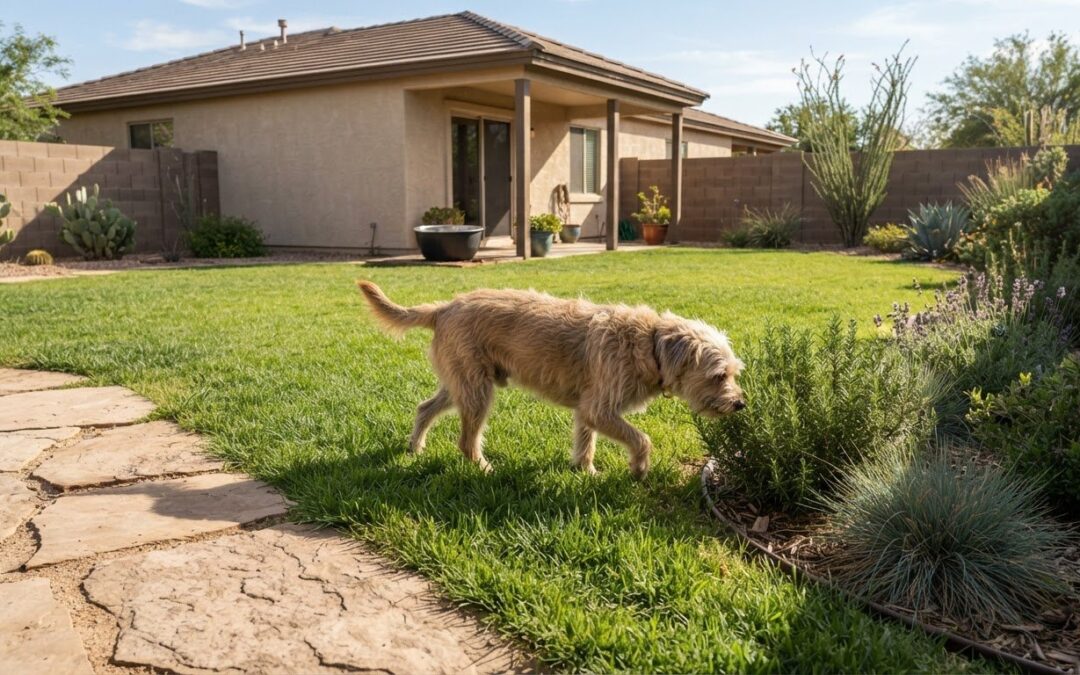
A dog-friendly yard can support a home’s appeal, but its value starts with how well it works for people, too. Thoughtful pet-friendly landscaping ideas can make outdoor space more comfortable and practical, while a home’s value still depends on the property and local market. The goal is a yard that welcomes dogs without sacrificing a polished, cared-for look.
It’s understandable to want a place where your dog can run, explore, and rest without turning the lawn into a muddy obstacle course. Good planning balances everyday needs with durable surfaces, clear paths, and planting suited to how your household uses the yard.
Here, you’ll learn how pet-friendly landscaping can influence a home’s appeal and how to plan useful dog zones, sensory gardens, and comfortable ground cover. You’ll also find practical ways to manage high-traffic areas, so the landscape feels considered for pets and people alike.
Key Takeaways
- A thoughtfully planned dog-friendly yard can support a home’s appeal, but its usefulness and overall upkeep matter alongside pet-focused features.
- Make a water station easier to use and clean with shade, a tip-resistant bowl or small fountain, and a rinseable surface.
- Place dog zones along established routes, and consider a contained digging area 8-12 inches deep with a bathroom spot that drains well and is easy to reach.
- Plan sensory planting away from busy run routes, then choose ground cover to suit the yard’s sun, climate and level of paw traffic.
1. Does a pet-friendly yard add home value?
Pet-friendly landscaping can make a yard more useful and visually cohesive for residents and prospective buyers. Durable paths, defined dog areas, and an orderly water station help pet-friendly features feel integrated rather than improvised. These improvements shape how outdoor space works and looks, but they don’t establish a specific change in home value. For a practical starting point, place a shaded water station where dogs naturally pause, away from busy routes and fragile planting.
Pet landscaping rules vary by city and homeowners association. Before planning features such as fences, drainage changes, or water installations, review local ordinances and HOA governing documents for applicable requirements. Designing within those rules can prevent a useful yard feature from conflicting with property requirements. Documents may also set standards for visible landscape changes, so consider those alongside how your dog uses the space.
For shade and cooling, combine existing tree cover with a pergola or shade sail over a resting area. Place a heavy, tip-resistant bowl or small pet fountain in the shade, then set it on pavers or a small concrete pad with a gentle slope. This rinseable surface makes spills and splashes easier to clean. Keep water near the main play area so your dog doesn’t have to cross hot, exposed paving for a drink.
A splash pad or dog pool can add another water feature. Set it a few inches into the ground for stability, pair it with a level, easy-to-rinse area, and position it so water won’t run into a muddy play zone. For backyard compost, use a covered, secured bin dogs can’t nose open, and keep it separate from the drinking station. These layout choices create distinct places for drinking, cooling, and waste storage while keeping the yard easier to maintain and more orderly.
2. Digging pits and designated dog zones
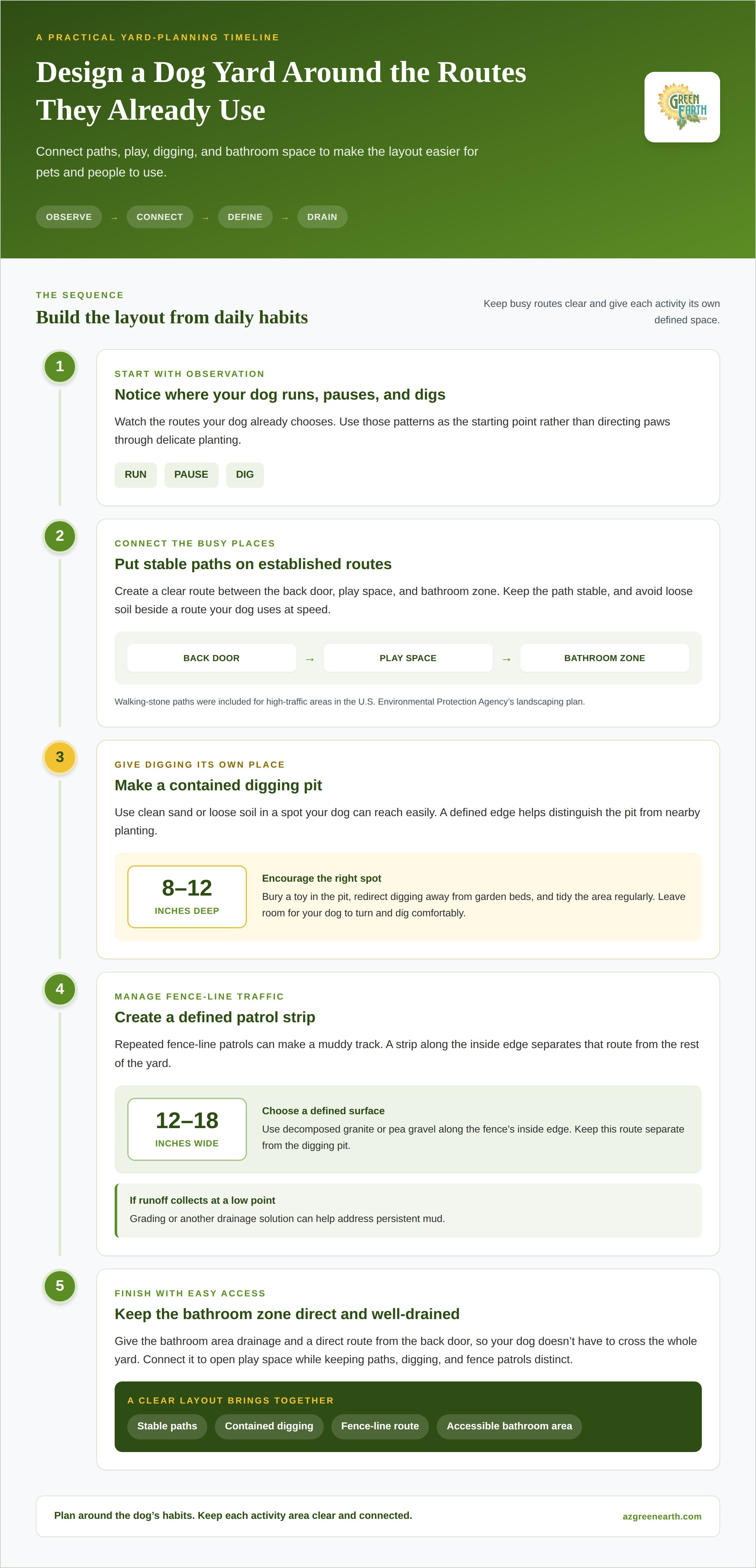
Start by observing where your dog already runs, pauses, and digs. Place paths along those established routes instead of directing paws through delicate planting. The U.S. Environmental Protection Agency’s landscaping plan included walking-stone paths for high-traffic areas. In a backyard, a clear route between the door, play space, and bathroom zone can organize daily use. Keep the path stable, and avoid placing loose soil beside a route your dog uses at speed.
For a dog that digs, create a contained pit with clean sand or loose soil. Make it 8-12 inches deep, and place it where the dog can reach it easily. Encourage use by burying a toy in the pit, then redirecting digging away from garden beds. A defined edge helps mark the area, while regular tidying keeps the pit distinct from nearby planting. Leave enough room around it for a dog to turn and dig comfortably.
Fence lines often become muddy where dogs patrol repeatedly. A 12- to 18-inch strip of decomposed granite or pea gravel along the fence’s inside edge can create a defined route. If runoff collects at a low point, grading or another drainage solution can help address persistent mud. Avoid letting the fence path cut through the digging pit; separate routes make both areas easier to maintain.
Design the yard with a direct path from the back door to a bathroom zone, then connect that route to open play space. Give the bathroom area drainage and easy access, so dogs don’t have to cross the whole yard. A cohesive layout can bring these paths and activity areas together; explore landscape planning options for ideas that suit your yard.
3. Dog-safe plants and sensory gardens
Build a sensory garden around scent, texture, and seasonal color, with plants set beyond active run routes. Place fragrant herbs or ornamental grasses in protected beds, where dogs can investigate without trampling stems. Keep thorny plants away from paths, and avoid delicate flowers where pets regularly brush past. Clear boundaries distinguish planting from play space and make garden upkeep easier.
Which garden plants are non-toxic to dogs and cats? Choose plants identified as non-toxic to both species by their exact botanical names. Common names can refer to different plants, so a familiar label or attractive flower alone doesn’t establish safety for either animal.
In Northern Arizona, choose plants suited to the site’s sun, soil, and water conditions, then assess each species for dog and cat safety. Blackfoot Daisy offers a seasonal example, blooming from March through November, but its flowering period alone doesn’t establish that it’s safe for pets. Keep that distinction clear when planning beds and sensory features.
Before planting, inventory existing greenery using botanical names. Separate plants identified as toxic from areas pets can reach, and remove or relocate them as appropriate. Don’t rely on a plant’s appearance, fragrance, or placement as a safety measure. For new beds, group selected plants together and use low edging to make boundaries visible without disrupting the garden’s overall flow.
Add texture without placing flowers beside a dog’s regular route. Try sturdy, non-thorny foliage in protected beds, and position fragrant plants where pets can approach calmly. Leave open space between plantings for access and maintenance. This measured layout supports exploration while reducing brushing, trampling, and accidental contact with delicate blooms. Match each planting choice to Northern Arizona’s growing conditions and your household pet’s needs.
4. Paw-friendly ground covers and grasses
Choose surfaces based on sunlight, paw traffic, drainage, and the upkeep the yard can support. Compacted decomposed granite, landscaping mulch, and flat pavers with tight joints can create stable paths between active areas. Pavers offer a firm walking surface, while compacted granite creates a defined route. Keep joints tight to reduce gaps where paws could catch.
Are artificial turf, gravel, or natural grass better for pets, and what do they cost? Each has trade-offs: synthetic turf needs good drainage and routine rinsing, gravel can suit a designated bathroom area, and natural grass offers a living surface that may wear under heavy traffic. Costs depend on the material, site preparation, area, and drainage needs. Pricing follows a quote request.
Hardy warm-season grasses are suggested for sunny, high-traffic areas; resilient cool-season blends may suit cooler areas when overseeded and mowed well. Match grass to local growing conditions and the yard’s use. A dog run with repeated traffic may need a firmer path, while less-used areas can retain more lawn. No grass choice eliminates the need for care.
What durable, low-maintenance ground covers are safe for pets? Consider compacted decomposed granite or flat pavers for paths, and a bordered pea-gravel area for bathroom use. Regularly refreshed mulch is another option; heavier mulch resists scattering under paws and needs refreshing as it thins. For a bathroom area, tough turf that can be reseeded offers an alternative. Synthetic turf still needs drainage and rinsing.
Separate path surfaces from planted lawn so wear stays concentrated where paws travel most. For shared properties, request landscape maintenance support to help keep outdoor areas orderly and cared for.
Green Earth, LC
Green Earth, LC helps HOA and commercial property teams maintain outdoor spaces designed for people and pets. Regular landscape maintenance supports tidy paths, cared-for planting, and clearly defined shared areas. For irrigation concerns, drip system repair and controller troubleshooting address watering-system problems that can affect landscape upkeep.
These services are a practical next step when an HOA or commercial property needs ongoing grounds care, or irrigation problems interfere with maintaining the landscape. Green Earth, LC also provides Firewise Defensible Space for properties that need this work. Each service addresses a different part of landscape management, rather than guaranteeing a particular home-value outcome.
Contact Green Earth, LC for help planning and maintaining your property’s landscape.
Shape a yard that works for your household
Turn your priorities into a landscape plan that suits your property, your dog’s habits, and how you want to use the space. Choose features that work together instead of treating paths, planting, and play areas as separate additions. Thoughtful pet-friendly landscaping ideas can make a yard feel purposeful while connecting its design to the rest of your home.
For shared properties, Green Earth, LC offers HOA Landscape Maintenance and Commercial Landscape Maintenance to care for outdoor spaces. Firewise Defensible Space is also available when managing defensible space is part of a property’s landscape needs. The right direction depends on the work required and how the outdoor areas are used.
Give your yard a clear next step, whether that means refining a shared landscape or planning improvements around everyday use. Contact Green Earth, LC about your yard to discuss your landscape needs and move toward an outdoor space your household can enjoy.
Frequently Asked Questions
Does a pet-friendly yard add home value?
A well-maintained, thoughtfully arranged yard may strengthen a home’s appeal, but it doesn’t guarantee a higher sale price. Buyers assess the whole property, including how outdoor features fit its appearance and upkeep. Integrate dog-focused additions with the landscape, and avoid designs that make shared outdoor space difficult to use. A clean, coherent yard can serve household members with or without pets.
What else should I consider when creating a dog-friendly backyard?
Consider how the yard works during everyday routines, not only during play. Keep gates easy to use, store tools and yard supplies out of reach, and leave a clear route between the home and the areas your dog uses. Plan for regular waste pickup and surface upkeep, too. A simple maintenance routine can prevent small messes or worn spots from becoming larger landscaping problems.
What are the best pet-friendly landscaping ideas for dogs and cats?
The best choices give each pet comfortable ways to share the outdoor space. Dogs may benefit from room to move, while cats may prefer a quiet retreat away from active play. Consider separating these areas with planting or a barrier, and keep access to the home straightforward. Choose features suited to your animals’ habits, household routines, and the landscape’s growing conditions.
Which common landscaping plants are toxic to pets?
Plant safety depends on the exact species, so identify garden plants by botanical name instead of relying on common names alone. Review plants already growing near patios, paths, and play areas, then remove or isolate any identified as toxic to your pets. Keep new plant labels or a planting record so you can identify what’s in each bed as the garden changes.
What pet-safe alternatives are there to cocoa mulch and chemical lawn treatments?
For ground cover, consider pavers, compacted decomposed granite, or pea gravel in a defined area. These options avoid relying on cocoa mulch while offering choices for paths or designated zones. To reduce reliance on lawn treatments, use physical upkeep such as hand-pulling weeds and removing debris. Choose materials and maintenance methods based on your pets’ access and the yard’s drainage.
How can I prevent pets from digging, escaping, or damaging garden beds?
Give digging a designated outlet and distinguish protected beds from the dog’s play space. Low edging can mark a boundary, while a secondary interior barrier can protect a garden without enclosing the entire yard. To prevent escapes, close gates securely and address gaps along fence lines. Keep fragile plants away from regular run routes, where repeated brushing and paw traffic can cause damage.
Recent Comments