
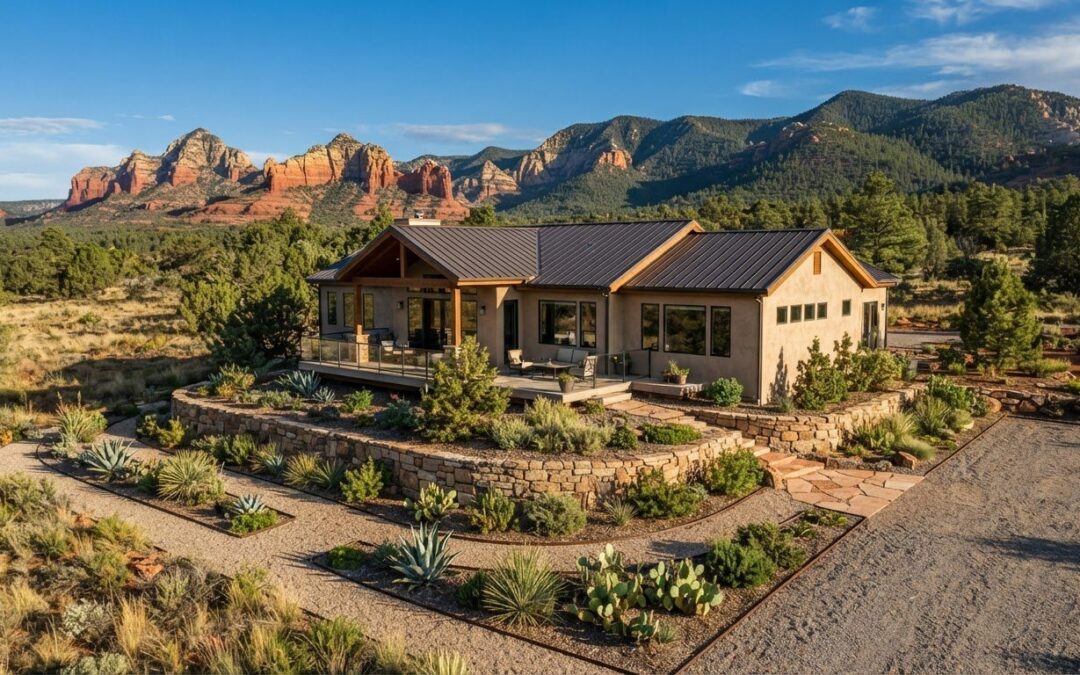
If you’re asking how to protect home from wildfire with landscaping, start by assessing what’s already in your yard. Dead material, unmanaged growth, and the way vegetation connects across a property can all shape the work it needs. In Northern Arizona, a prioritized plan is more useful than a generic list of plants or tasks.
It can be hard to know which plants suit your site, whether mulch is appropriate near the house, or how to reduce fuels without wasting water or losing the look you value. Thoughtful landscaping and regular maintenance can help address those concerns. No landscape can make a home fireproof, but reducing available fuels can help address important risks around the property.
This guide explains how to assess your yard and set practical priorities for vegetation, spacing, hardscape, and upkeep. It also covers how a site-specific Firewise Defensible Space plan can bring those decisions together, with local landscape and irrigation expertise for properties in Sedona, Camp Verde, Cottonwood, Flagstaff, and Prescott.
Key Takeaways
- Learn how to protect home from wildfire with landscaping by reducing fuels and potential pathways toward structures, while recognizing that no landscape can remove all wildfire risk.
- Assess vegetation by its condition, mature size, spacing, and suitability for your property’s growing conditions, rather than relying on a plant label alone.
- Address dead material and unmanaged growth before cosmetic changes, then organize remaining work into manageable tasks.
- Make upkeep routine: inspect the landscape, clear dead material, manage growth, and follow current local fire-authority guidance.
- When slopes, drainage, vegetation, or multiple structures complicate planning, site-specific defensible-space and landscape expertise can help set practical priorities.
How landscaping can reduce wildfire exposure around a Northern Arizona home
Wildfire-conscious landscaping means managing vegetation and other combustible materials around a home so they’re less likely to form continuous fuel or pathways toward structures. It can reduce exposure, but it can’t remove every hazard or make a home fireproof. The goal is to manage the landscape while keeping the property functional and suited to its surroundings.
Embers can travel ahead of a fire and threaten homes without direct flame contact. That makes the yard part of whole-property preparation, alongside maintaining the home and its immediate surroundings. A useful landscape plan considers how vegetation, debris, structures, and terrain relate to one another. Plant selection alone is not a complete solution.
Wildfire-conscious landscaping can reduce available fuels and potential routes toward structures, but it can’t guarantee a home will survive a wildfire.
Start with the home, slope, and surrounding vegetation
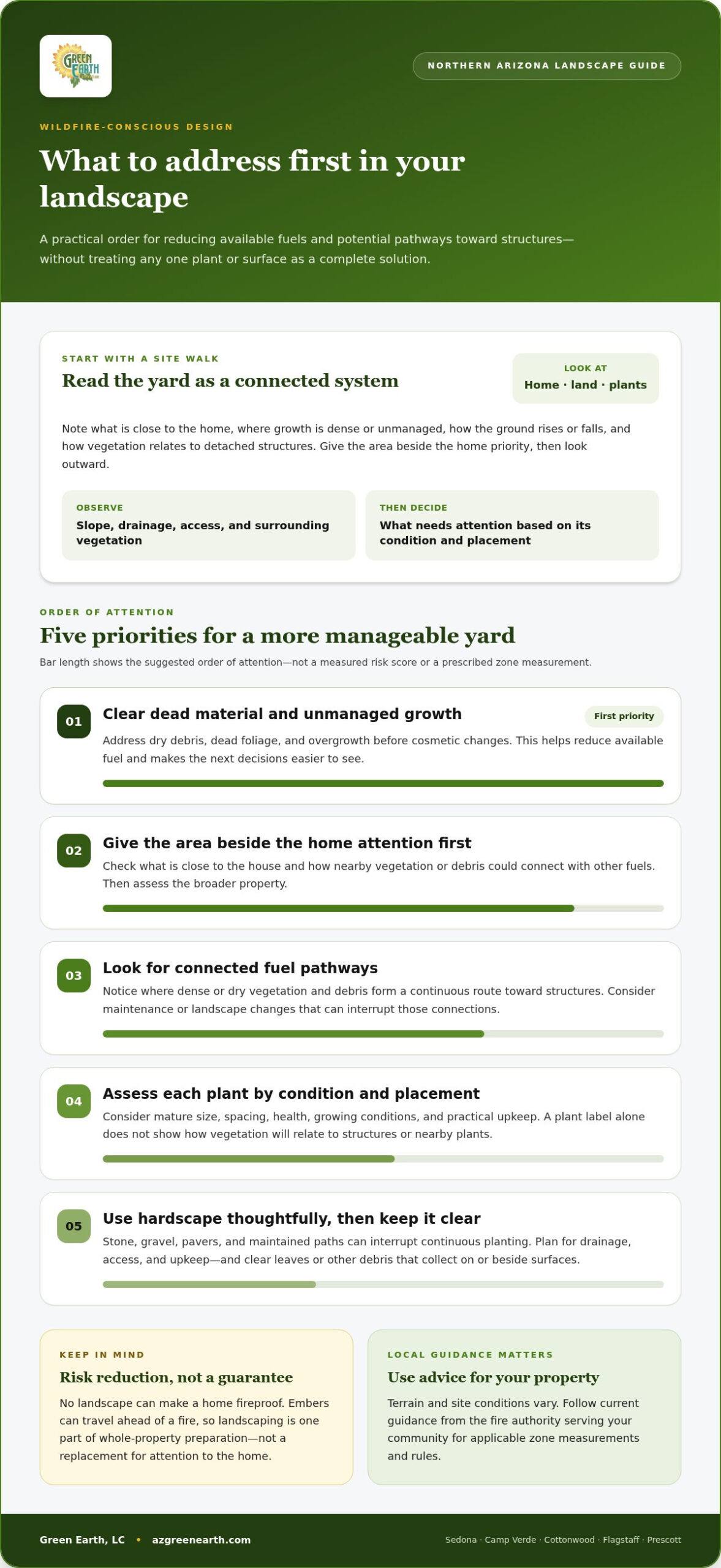
Walk around the property and note what’s close to the home, where vegetation is dense or unmanaged, and how the ground rises or falls. Look at detached structures and other features that affect how vegetation connects across the yard. Give the area beside the home priority, then look outward to understand the broader landscape.
Northern Arizona properties vary widely. A rocky lot, steep slope, or established vegetation can affect how fuels, access, and drainage interact. A solution that suits one yard may not work for another. Start with what’s present, its condition, and its relationship to buildings and the shape of the land instead of relying on a generic plant list or design template.
What defensible space can, and cannot, do
Defensible space is managed surroundings intended to reduce fuel continuity near a home. Look for places where dry or dense vegetation and debris form connected fuel, then consider how maintenance or landscape changes could interrupt those connections. Plant labels don’t tell the whole story: condition, placement, spacing, and ongoing care also affect how vegetation may contribute to fire exposure.
Defensible space in fire control offers an overview of the concept and its landscape role. For applicable zone measurements and rules, follow current guidance from the fire authority serving your community. Recommendations can vary by location and change over time, so don’t assume a measurement in a general article applies to your property.
Defensible space is risk reduction, not a promise, and it doesn’t replace attention to the home itself or current local guidance. If your property has challenging slopes, multiple structures, or vegetation that’s difficult to assess, site-specific planning can help turn general principles into practical priorities. Green Earth’s Firewise Defensible Space work can be coordinated with landscape construction, hardscape, drainage grading, and maintenance to shape improvements around the property.
Which landscape features matter most for wildfire-conscious design?
Wildfire-conscious design depends on several connected choices, not a single “fire-safe” plant or surface. Vegetation management addresses excess or poorly placed growth, hardscape can break up connected planting areas, and regular cleanup prevents dry material from accumulating. Each choice supports the others. A stone path, for example, may interrupt a planted area, but leaves along its edge still need to be cleared.
When considering how to protect home from wildfire with landscaping, don’t focus only on plants labeled fire-resistant. Look at each plant’s mature size, condition, spacing, and growing conditions. Care and placement can matter as much as species.
Plant species matter, but condition and placement help determine whether vegetation connects fuels or fits thoughtfully into the landscape.
Choose and place plants for the site, not a universal safe-plant list
Choose plants suited to the property’s local climate and conditions, and consult Arizona-specific guidance when researching options. No label guarantees low fire risk in every setting. Consider how large a plant may grow, whether its branches or foliage could form dense connections, and how it relates to structures and other vegetation. Allow room for mature growth and practical upkeep.
Check plant health as well. Drought stress, dead foliage, and accumulated thatch can add to maintenance needs. Water requirements matter: a plant’s fire-related qualities don’t automatically make it drought-tolerant, or the reverse. Irrigation adjustments may support plant health, but they don’t replace cleanup and appropriate spacing.
Use hardscape and ground-cover choices thoughtfully
Gravel, stone, pavers, and maintained paths can provide noncombustible surfaces that interrupt continuous vegetation while preserving access and usable outdoor areas. Coordinate their placement with planting beds, drainage, and how people move through the property to keep the landscape functional.
Ground coverings need more consideration than a simple “safe” or “unsafe” label. Organic mulch varies by material and condition, and debris can collect on top of any surface. Consider where a covering will be used, how it will be maintained, and whether a noncombustible surface suits a particular area.
General hardscape and ground-cover guidance is not the same as a building or fire-code requirement. Rules and recommendations depend on location, so use current local fire-authority guidance when planning work near structures. A thoughtful design can balance fuel reduction with water use, drainage, and appearance. Green Earth’s Firewise defensible-space planning can help translate these considerations into property-specific improvements.
How to prioritize landscaping changes without stripping the whole yard
A wildfire-conscious landscape doesn’t require removing every established plant or starting over. First identify the work that addresses current concerns, then plan larger changes around the property’s terrain, access, drainage, and existing landscape. A phased site walk can turn a broad concern about how to protect home from wildfire with landscaping into a practical sequence of tasks.
Build a phased yard action list
Walk the property with a notepad or phone camera. Photograph areas around buildings, planting beds, paths, and slopes. Note dead vegetation, accumulated debris, dense or unmanaged growth, and maintenance challenges. Record structures and hardscape too, so you can see how the layout connects. Use these observations to plan focused improvements, not wholesale vegetation removal.
Sort tasks by timing. Begin with immediate cleanup, such as removing dead material you can safely manage. Next, identify near-home priorities, followed by broader work that may need more planning. Add recurring upkeep so completed work doesn’t become a one-time effort.
- Task: What needs attention, such as clearing dead material or managing dense growth?
- Location: Where is it, and how does it relate to the home, another structure, a slope, or a path?
- Urgency: Is it an immediate cleanup concern, a near-home priority, or planned broader work?
- Recurring need: Will the area need regular debris removal, growth management, or irrigation attention?
This record keeps priorities visible and makes it easier to revisit decisions as the landscape changes. Cottonwood homeowners can find related local context in this Cottonwood Firewise landscaping guide.
Adapt the plan to dry conditions, slopes, and irrigation
Dry conditions can affect plant health and increase the attention needed to manage dead foliage and debris. Exposed slopes may make access, planting, and maintenance more challenging, while drainage patterns affect where water moves across the site. Consider these factors before changing a bed or adding hardscape so the design addresses how the property functions as well as how it looks.
Working irrigation supports landscape care, but watering alone isn’t wildfire protection and doesn’t replace inspection or cleanup. Note where drip lines or controllers may need attention, and match improvements to the plants and site. Northern Arizona desert landscape design guidance can help inform regional choices, but no single planting plan is right for every property.
Before major changes, consider how the work could affect slope stability, access, drainage, existing plants, and maintenance. Follow current local fire-authority recommendations. Breaking the project into phases lets you address urgent conditions while preserving healthy, well-placed landscape features.
How to maintain a wildfire-conscious landscape through the seasons
A landscape plan needs regular care to remain useful. Growth changes, leaves and branches accumulate, and irrigation systems can develop problems. Build maintenance into a repeating cycle: inspect the property, remove dead material, manage growth, and reassess what needs attention. Follow current recommendations from the fire authority serving your community for timing and seasonal tasks.
Protecting a home with landscaping is an ongoing practice, not a one-time cleanup. Keep a simple record of inspections, completed tasks, and issues to revisit. This can help you spot recurring trouble areas and plan work before small maintenance needs become harder to manage.
Inspect vegetation and remove accumulated fuels
During each inspection, look for dead branches, dry leaves, unmanaged growth, and debris near structures or beneath plants. Note where vegetation has become dense or grown close to buildings, then use current local guidance to determine appropriate pruning and clearance. Don’t assume a single measurement applies everywhere.
Tree removal shouldn’t be the default response. Consider a tree’s condition and location, and how it relates to nearby vegetation, before deciding what work is needed. If a tree or overgrowth is difficult to assess, include it in your notes for site-specific review rather than making a major change based on appearance alone.
Keep irrigation and landscape systems working
Check drip lines, sprinklers, and controllers periodically for leaks, blockages, damaged components, or settings that no longer suit the landscape. A faulty line may leave plants without adequate water, while a leak can create drainage or erosion concerns. Addressing irrigation problems supports plant care in Northern Arizona’s dry conditions, but watering doesn’t guarantee protection against ignition or fire spread.
Green Earth provides professional irrigation repair in Flagstaff for landscape systems that need troubleshooting or repair.
Use this repeatable checklist as a starting point, adjusting it to your property and current local guidance:
- Inspect: Walk near structures and through the wider landscape; record changes, problem areas, and new growth.
- Clear: Remove dead branches, dry leaves, and accumulated debris where it can be safely managed.
- Manage: Address overgrowth and pruning needs with attention to plant condition, location, and applicable local recommendations.
- Check systems: Look over irrigation lines and controllers for visible faults, leaks, or areas that aren’t receiving water as intended.
- Reassess: Note completed work and recurring tasks, then update your plan as conditions and vegetation change.
Consistent maintenance helps keep landscape improvements in working order while preserving the character of the yard. Green Earth’s landscaping support includes ongoing landscape maintenance and irrigation services.
When professional defensible-space landscaping can help
Professional planning can help when a property’s conditions make priorities difficult to sort out. Steep or uneven slopes, drainage concerns, dense vegetation, limited access, or several structures may affect how landscape work should be planned. Site-specific planning considers how vegetation, pathways, hardscape, and ongoing care fit together instead of treating each issue separately.
For homeowners researching how to protect home from wildfire with landscaping, professional input can turn broad guidance into a manageable plan for the property. It can help clarify which landscape improvements suit the site and how to approach them in practical stages, but it can’t guarantee a particular outcome or eliminate wildfire risk.
What a site-specific landscape plan can coordinate
Green Earth’s Firewise Defensible Space work can be coordinated with landscape construction, pavers and hardscape, drainage grading, and landscape maintenance. For example, planning can account for how vegetation sits near paths and structures, where hardscape may fit, how grading affects water movement, and what upkeep an area will need.
Each residential property has its own conditions. A useful plan takes those into account while balancing function, appearance, and maintainability. Green Earth brings more than 47 years of landscaping and construction experience to this work, with local knowledge of Northern Arizona properties. The aim is a considered approach, not a promise that landscaping can prevent damage or satisfy every requirement.
Plan your next step with Green Earth
Gather notes or photos of the areas you want assessed, including slopes, drainage trouble spots, vegetation, paths, and nearby structures. This overview can help focus planning on your property’s priorities. Cottonwood homeowners can also explore this guide to Firewise defensible-space landscaping in Cottonwood for related local context.
Green Earth serves Sedona, Camp Verde, Cottonwood, Flagstaff, Prescott, and nearby communities. Because conditions differ across Northern Arizona, a landscape plan should reflect the property rather than assume one approach fits every location. Green Earth’s Firewise Defensible Space service can bring vegetation management, hardscape, drainage, and maintenance considerations into one property-specific plan.
Make your next landscape improvement count
A more wildfire-conscious yard doesn’t have to be a complete redesign. Choose one practical next step, such as documenting an area that needs attention or mapping improvements suited to your property. A considered plan can help you care for the landscape while making decisions that reflect its needs, appearance, and Northern Arizona setting. The goal of learning how to protect home from wildfire with landscaping is to make informed, ongoing choices, not to expect a yard to remove every risk.
Green Earth’s sustainable landscape design was recognized as a statewide runner-up in Green Living Magazine’s Best Sustainable Landscape Designer category. That commitment to thoughtful design can inform landscape planning that respects both the home and its surroundings.
Plan wildfire-conscious landscaping with Green Earth to take a practical next step for your property. Green Earth provides landscape maintenance, Firewise Defensible Space, construction, and irrigation services in Sedona, Camp Verde, Cottonwood, Flagstaff, and Prescott.
Frequently Asked Questions
Can landscaping protect a home from wildfire?
Landscaping can help reduce a home’s exposure to wildfire, but it can’t guarantee the home will avoid damage. Its value lies in deliberate choices about vegetation, debris, and landscape features around buildings. Those choices work best alongside broader home and household preparedness, such as maintaining the property and following local emergency instructions. Treat landscaping as one layer of risk reduction, not a substitute for a complete wildfire plan.
What is the first landscaping step to take before wildfire season?
Start by checking the areas closest to your home for dry leaves, fallen twigs, dead plant material, and items that could catch embers. Check less obvious spots too, such as beneath stairs, around decks, and beside sheds. Make a short list of what you can safely clear and what needs more planning. Follow current guidance from the fire authority serving your community for timing and seasonal tasks.
Are any plants completely fireproof?
No plant is completely fireproof. A plant’s fire behavior can change with its condition, care, and surroundings, so a “fire-resistant” label isn’t a guarantee. Dead foliage or dry material caught within a plant still needs attention, even if the species is considered suitable for landscaping. Check Arizona-specific recommendations for plant selection, then plan ongoing care that fits your property.
Is gravel or mulch better around a home in a wildfire-prone area?
Gravel is noncombustible, while organic mulch can burn, but that doesn’t make one ground covering the right choice everywhere. Consider its location, how debris may collect there, and how easily you can maintain it. Mulch types and conditions vary, so don’t assume all mulch behaves alike. Near structures, follow current local fire-authority guidance and applicable site requirements when choosing or changing ground cover.
How should I landscape a sloped yard to reduce wildfire risk?
Plan for both vegetation and how the slope functions. Look for dense growth, dead material, hard-to-reach areas, and places where runoff may affect paths or planting. Avoid major clearing or grading without considering erosion, drainage, and access. Terrain varies across Sedona, Camp Verde, Cottonwood, Flagstaff, and Prescott, so base decisions on the specific property and current local fire-authority guidance.
Does irrigation make a landscape fire-resistant?
No. Irrigation can support plant health, but it doesn’t make a landscape fire-resistant or guarantee protection from ignition. A working drip system may help deliver water as intended, while leaks, blockages, or controller problems can interfere with care. Check the system periodically, especially if plants show signs of stress or parts of the yard receive uneven water. Pair irrigation care with debris removal and vegetation maintenance.
When should I hire a professional for defensible-space landscaping?
Consider professional planning if slopes, drainage, established vegetation, limited access, or several structures make it difficult to decide what work should come first. Green Earth’s Firewise Defensible Space service can be coordinated with landscape construction, hardscape, drainage grading, and maintenance to suit the property. This can be useful across Northern Arizona, where terrain and growing conditions differ. A landscape plan can guide risk-reduction work, but it can’t guarantee wildfire outcomes.
Recent Comments