
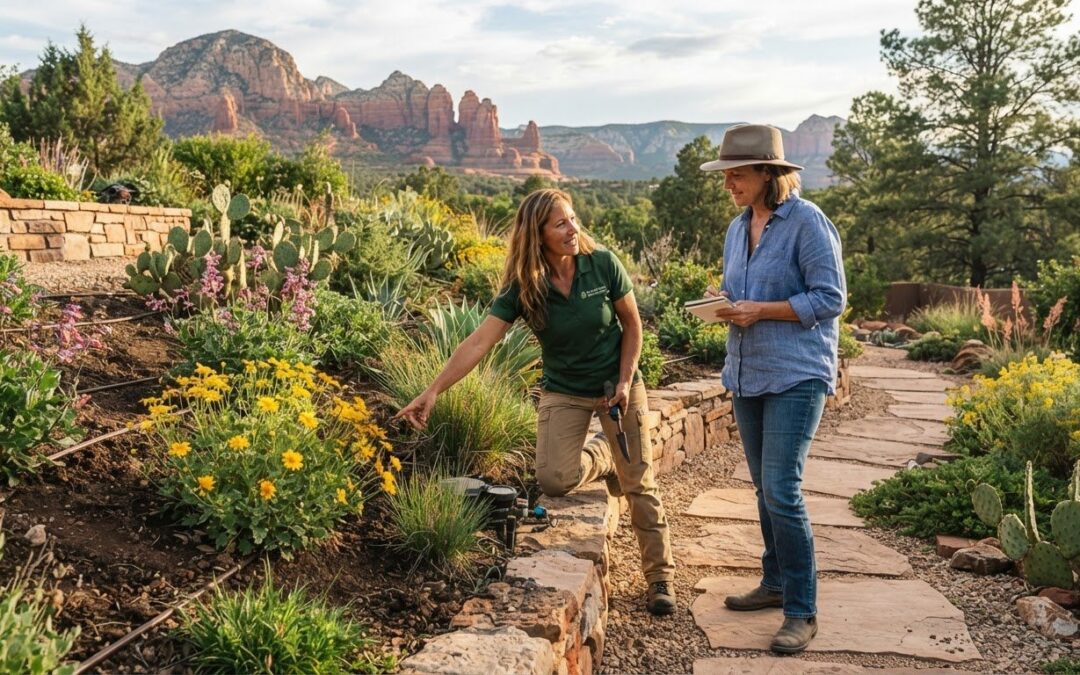
The right native plant for your Arizona landscape isn’t necessarily the one on a generic “drought-tolerant” list. Its fit depends on where it will grow, including the site’s sun exposure, soil, drainage, and water needs. That’s why finding native Arizona plant experts means looking for knowledge that starts with your property, not just a catalog of species.
If you’re unsure which plants will thrive or how to carry sustainable ideas through installation and ongoing care, start by connecting plant choices to the conditions on site and the way you want to use the space. In Northern Arizona, that means considering local differences across the Verde Valley, Sedona, Flagstaff, and nearby communities.
This guide explains what a site-specific native-plant approach involves and how to assess whether a team can connect design, installation, irrigation, and long-term landscape care. Green Earth, LC brings more than 47 years of landscaping and construction experience in Northern Arizona and the Verde Valley, with services spanning design, installation, maintenance, irrigation, and drainage. Use the steps below to shape a practical plan for a residential property, commercial site, or HOA.
Key Takeaways
- Strong native Arizona plant experts look beyond a statewide species list and consider how each part of your property will be used.
- Sun, shade, slope, soil, and drainage can shape planting decisions differently in the Verde Valley, Sedona, and Flagstaff.
- A project-based landscape approach connects site assessment and design with installation and ongoing care.
- Use a practical sequence to turn your landscape goals into a plan for a residential property, commercial site, or HOA.
- Green Earth’s regional experience and landscaping services can connect sustainable goals with irrigation, drainage, and landscape planning.
What Native Arizona Plant Expertise Means for Northern Arizona Landscapes
Native-plant expertise is more than knowing plant names. It means matching regional knowledge to the conditions of a particular property and the way people want to use it. Useful recommendations consider where a plant will grow, how it fits the landscape, and what care the site can support.
A plant’s Arizona roots don’t guarantee it belongs in every Arizona landscape. Local context determines whether it fits the site. A statewide plant list can help identify species and narrow the options, but it can’t show how a plant will perform in a specific yard, courtyard, or shared commercial space. That calls for looking at the planting area itself.
Why Arizona plant knowledge needs a regional lens
Northern Arizona includes varied settings. Sedona, Cottonwood, and Camp Verde are in the Verde Valley region, while Flagstaff and Prescott have their own local conditions. Even within one community, a sunny, exposed slope may present a different challenge from a shaded courtyard or a level area where water drains slowly.
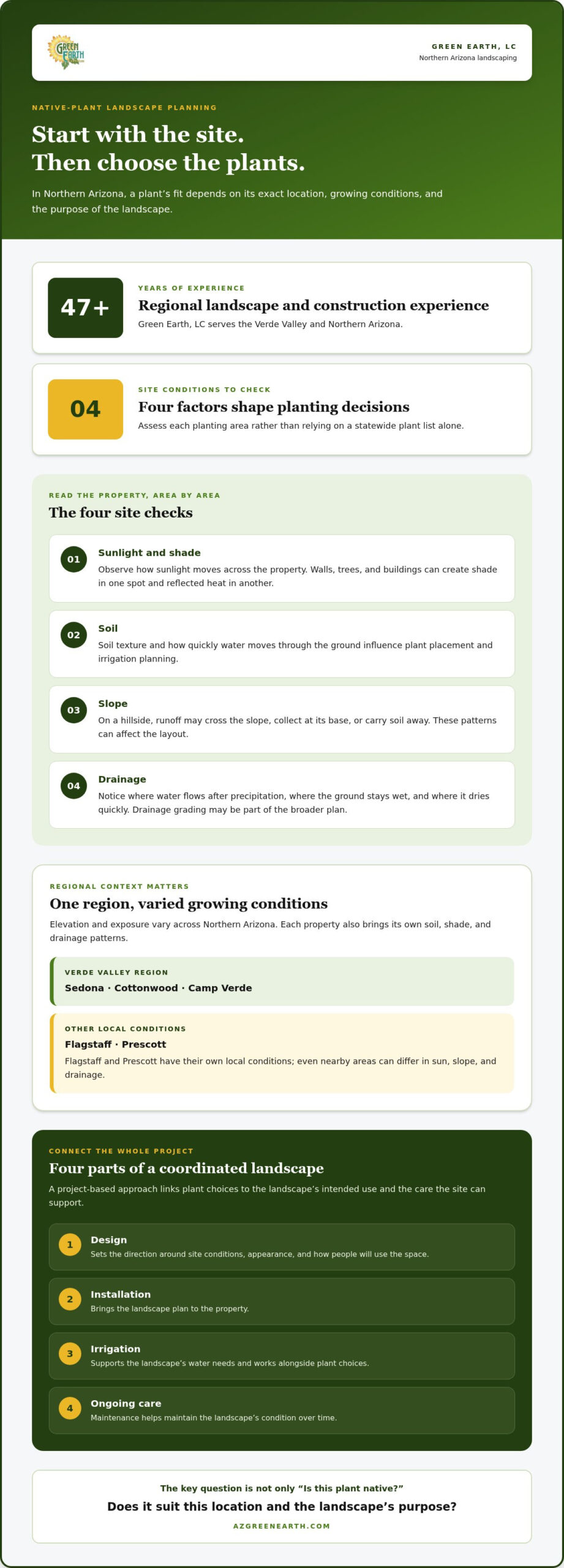
Elevation, sun exposure, soil, and drainage all influence a planting plan. A plant described as native to Arizona isn’t automatically suited to every part of the state or every location on a property. Consider its natural range and growing needs alongside nearby structures, slopes, and how the space will be used. The key question isn’t simply, “Is this plant native?” It’s, “Does this plant suit this location and the landscape’s purpose?”
Plant identification resources can help you learn about a species and its general sunlight or water needs. They serve a different purpose from landscape design and installation, however. A resource won’t assess how plants fit together across your site, coordinate the plan with irrigation or drainage, or carry the design through installation and care.
What a native-plant landscape expert helps you solve
A project-based landscape approach connects plant selection to the full property. It accounts for the appearance you want, the activities the space needs to support, and the care you can plan for over time. That might mean shaping a welcoming entrance, organizing planting areas around a shared outdoor space, or working with the slope and existing drainage on a residential property.
Design, installation, irrigation, and maintenance are connected parts of the result. Design sets the direction; installation brings the plan to the property; irrigation supports the landscape’s water needs; and ongoing care helps maintain its condition. Coordinating these elements makes sustainable goals more practical than choosing plants in isolation.
Green Earth, LC is a locally owned Cornville landscaping and construction company with more than 47 years of experience serving the Verde Valley and Northern Arizona. Its landscape design and installation, irrigation, drainage, and maintenance work brings regional project context to each site. The starting point is the property, its conditions, and the goals it needs to serve.
How Northern Arizona Site Conditions Shape Native Plant Choices
A planting plan takes shape one part of the property at a time. Sun, shade, slope, soil, drainage, seasonal conditions, and intended use all affect which plants are appropriate and where they may fit. Consider these factors together to avoid choosing a plant for one appealing trait while overlooking the conditions it will face on site.
A careful site assessment turns regional plant information into better-informed choices for the exact ground, exposure, and purpose of your landscape. Native Arizona plant experts can add practical value by connecting general plant information with the specific conditions a design must work within.
Assessing sunlight, soil, slope, and drainage
Start by observing how sunlight moves across the property. A wall, tree canopy, or building can create shade in one area and reflected heat in another, so a yard may contain several distinct planting zones. Check soil and drainage early, too. Soil texture and how quickly water moves through an area can influence both plant placement and irrigation planning.
Slopes add another consideration. Runoff may travel across a hillside, collect at its base, or carry soil away. These patterns can shape the layout and point to a need for drainage grading as part of a broader landscape plan. Before settling on plants, note where water flows after precipitation and where the ground stays wet or dries quickly. These observations help match planting decisions to the site instead of relying on labels such as “sun-loving” or “drought-tolerant.”
Matching landscape goals with regional plant information
Northern Arizona conditions vary across the Verde Valley, Sedona, and higher-elevation Flagstaff properties. Elevation and exposure affect the setting, while each site brings its own soil, shade, and drainage patterns. Seasonal conditions matter as well. Consider a plant’s water needs alongside the landscape’s irrigation plan to make choices that work together.
The Arizona Native Plant Society offers a searchable plant list that can serve as a research starting point. Use plant information to explore possibilities, then weigh each option against the actual site and design goals. A pollinator-friendly planting area, a shaded sitting space, and a landscape with year-round visual structure may call for different combinations, even on one property.
For broader context on sustainable landscape planning in the region, explore this Northern Arizona desert landscape design guide. Green Earth, LC’s landscape design, installation, irrigation, and drainage work can bring those site considerations into a practical project plan. If your goals include improving water flow as well as planting, Green Earth’s landscape and drainage experience can help connect those needs.
How to Evaluate Native Arizona Plant Experts Beyond a Plant List
A directory, a nursery resource, and a landscaping team can each help at a different stage. A directory supports research, a nursery resource helps you explore plants, and a project-based landscaping approach connects site decisions with design and implementation. These resources aren’t interchangeable. Choose based on whether you’re identifying plants, exploring options, or planning coordinated landscape work.
Plant familiarity is only one part of evaluating native Arizona plant experts. A landscape project also involves understanding the property’s conditions and intended use, then connecting plant decisions with irrigation, drainage, hardscape, installation, and future maintenance. Define the scope you need before deciding what kind of expertise will be most useful.
What plant lists and resource directories can and cannot tell you
The Arizona Native Plant Society’s searchable plant list is a useful educational resource for discovering native species and exploring their characteristics. Nursery resources can also help you learn about plants and consider options. These tools support informed research, but a plant’s listing or description doesn’t establish that it suits every Northern Arizona property.
A resource page helps answer questions about plants. Landscape planning addresses how choices work together on a real site. That distinction matters when a project includes uneven terrain, water-flow concerns, existing hardscape, or shared outdoor areas. Public education resources can guide discovery; they don’t replace a plan that coordinates design, installation, irrigation, drainage, and care.
Signs of relevant landscaping experience
Relevant experience shows in how a team connects site conditions to project decisions. Look for clear explanations of how design, drainage, irrigation, hardscape, and maintenance relate to your goals. For example, a planting plan on a slope may need to account for runoff, while a commercial entrance or HOA common area may need to suit its users and ongoing care needs.
Green Earth, LC is a locally owned Cornville landscaping and construction company with more than 47 years of experience serving the Verde Valley and Northern Arizona. Its work spans landscape design and installation, maintenance, irrigation, hardscape, and drainage. This regional experience provides a practical foundation for considering how project elements fit together, without assuming every property needs the same plan.
Use this simple comparison to clarify what you need:
- Plant discovery: Use a directory or educational resource to learn about species and their characteristics.
- Plant exploration: Use nursery resources to become familiar with available options and plant categories.
- Project coordination: Consider a landscaping approach when the work needs to connect site conditions, design, installation, irrigation, drainage, or maintenance.
If your landscape goals involve coordinating these elements, explore Green Earth’s landscaping and construction work as a starting point for considering your project needs.
Plan a Native-Plant Landscape Project in the Verde Valley
A clear project sequence turns landscape ideas into decisions that suit the property. Define the outcome you want, assess the site, coordinate the design with supporting systems, then plan for installation and care. This keeps plant research connected to practical needs rather than letting a list of appealing species drive the project.
From landscape goals to a site-aware design
Begin by defining how people will use the space and what you want it to look like. A homeowner may want a welcoming entry and comfortable outdoor areas. A commercial property may prioritize an attractive approach and usable shared spaces, while an HOA may need a plan for common areas and broader landscape goals.
Next, record what’s already on site. Note sunny and shaded areas, slopes, places where water collects or runs off, existing paths and structures, and landscape features worth retaining. These observations give the design team practical information and help identify where planting, grading, irrigation, or hardscape decisions need to work together.
Use plant directories to explore species and learn about their general characteristics, but treat them as a research aid. The plan still needs to account for the actual property, its intended use, and the conditions across different planting areas. This helps make the design cohesive rather than a collection of individually appealing plants.
Coordinate planting, irrigation, and ongoing care
Consider irrigation as part of the planting plan, not an afterthought. The system’s layout and function should support the landscape’s water needs and sustainability goals. If an existing system is involved, note areas that appear poorly watered or where runoff suggests the broader plan may need adjustment. For context on system performance in a higher-elevation setting, see this Flagstaff irrigation repair guide.
Grading and hardscape can also affect planting decisions. A walkway or paver area may shape where planting beds can go, while slope and runoff can influence the site layout. If water movement is a concern, the Arizona drainage grading guide offers related context for planning around runoff and grading needs.
Finally, plan beyond installation. Think about the care the landscape will need as it establishes and changes through the seasons, and consider how irrigation and maintenance fit your long-term goals. Green Earth, LC connects landscape design and installation with irrigation, drainage, and ongoing maintenance for residential, commercial, and HOA properties in the Verde Valley. Plan your Northern Arizona landscape project with Green Earth.
Work with Green Earth on a Sustainable Northern Arizona Landscape
A sustainable landscape takes more than choosing plants with lower water needs. It also needs a thoughtful plan for the property, installation, irrigation, drainage, and ongoing care. Green Earth, LC brings these considerations together through landscaping and construction for residential, commercial, and HOA properties in Northern Arizona and the Verde Valley.
Regional experience and sustainable landscape work
Locally owned and based in Cornville, Green Earth has served the Verde Valley region for over 47 years. That regional experience provides context for planning landscape work across Sedona, Camp Verde, Cottonwood, Flagstaff, and Prescott, where site conditions and project goals differ from property to property. The company emphasizes sustainable practices and connects landscape decisions to the needs of each site.
Green Earth has been recognized as a statewide runner-up in Green Living Magazine’s Best Sustainable Landscape Designer category. Project planning still begins with the property itself: its existing features, intended use, and the work needed to create a cohesive landscape.
When comparing native Arizona plant experts, distinguish plant knowledge from the services that carry a landscape plan through. Green Earth’s work includes landscape design and installation, maintenance, irrigation, and drainage. Hardscape elements can also shape how outdoor areas function and connect with planting zones. Coordinating these elements helps consider the landscape as a whole, rather than as separate decisions made in isolation.
A clear next step for your landscape project
Start by describing what you want the property to do. A homeowner might prioritize a welcoming entry and useful outdoor living space. A commercial client may focus on the appearance and function of a public-facing site, while an HOA may need to plan for shared outdoor areas and community-wide goals. These priorities help frame the work before design and installation details are set.
Gather practical details to guide planning: areas needing attention, existing irrigation or drainage concerns, desired hardscape, and the level of ongoing care that fits your goals. Green Earth connects these needs through design, construction, irrigation, drainage, and maintenance planning. This creates a practical path from the project’s purpose to the work required to shape and care for the landscape.
Whether you’re planning a residential refresh, a commercial property improvement, or a shared HOA landscape, Green Earth welcomes a conversation about your goals and the site. Discuss your Northern Arizona landscape project with Green Earth.
Take the Next Step Toward a Landscape That Fits
Your landscape can grow with your priorities. As you move from ideas to a project, decide what matters most now and what you may want the space to support later. A short brief can help: describe how you want to use the property, the look you’re aiming for, and any practical concerns you already know about. This gives the planning conversation a useful starting point.
Choosing native Arizona plant experts is ultimately about keeping your goals and the property’s realities connected as decisions take shape. You don’t need every detail settled before exploring what’s possible. Clear priorities can help turn an early idea into a thoughtful plan for design, installation, and care.
Start planning your Northern Arizona landscape with Green Earth. With the right foundation, your next project can take shape with purpose, care, and room to thrive.
Frequently Asked Questions
Are all plants native to Arizona suitable for every part of the state?
No. “Native to Arizona” describes a broad geographic range, not a guarantee that a plant suits every site. A species associated with one part of the state may not fit a property elsewhere or a planting area with different exposure and soil. Native Arizona plant experts consider regional context alongside site conditions before recommending where a plant may be appropriate.
Can native plants work in a Northern Arizona HOA landscape?
Yes. Native plants can be part of an HOA landscape when the plan reflects shared goals for appearance, use, and care. An entrance planting may need a consistent look, while a common courtyard may call for comfortable shade and clear paths. Consider how plant placement, irrigation, and maintenance fit the whole property, and align the design with the community’s established landscape preferences.
Are Arizona native plants maintenance-free once established?
No. Establishment is not the end of landscape care. Plants may still need appropriate irrigation adjustments, pruning, weed management, and seasonal observation as the landscape matures. Needs vary by species and site, so care should respond to what’s growing and how the area is functioning. For instance, a plant spreading into a path may need attention even if it’s otherwise thriving.
When is the best time to plant native plants in Northern Arizona?
There isn’t one planting date that suits every Northern Arizona location and species. Timing depends on local elevation, seasonal weather, and the needs of the plants in the plan. Conditions in Flagstaff can differ from those in Cottonwood, Camp Verde, Sedona, or Prescott. Build planting timing into the project schedule with local conditions in mind, and avoid treating guidance for another Arizona region as a universal calendar.
Do native Arizona plants attract pollinators?
Some native plants provide food or habitat that can benefit pollinators, but the value depends on the species and its flowering characteristics. If pollinator support is a goal, consider plants with different bloom periods rather than relying on a single flowering feature. Also account for where the planting will go and how the space is used. A landscape plan can balance ecological priorities with access, appearance, and care.
How can I tell whether a plant is native or simply drought-tolerant?
“Native” describes a plant’s natural geographic origin; “drought-tolerant” describes its ability to manage with limited water. A plant can be drought-tolerant without being native to Arizona. Check a reliable botanical or regional reference for the species’ natural range, then look for information specific to Northern Arizona rather than relying on a general water-use label. This distinction helps keep plant research accurate and relevant to your landscape.
Recent Comments