
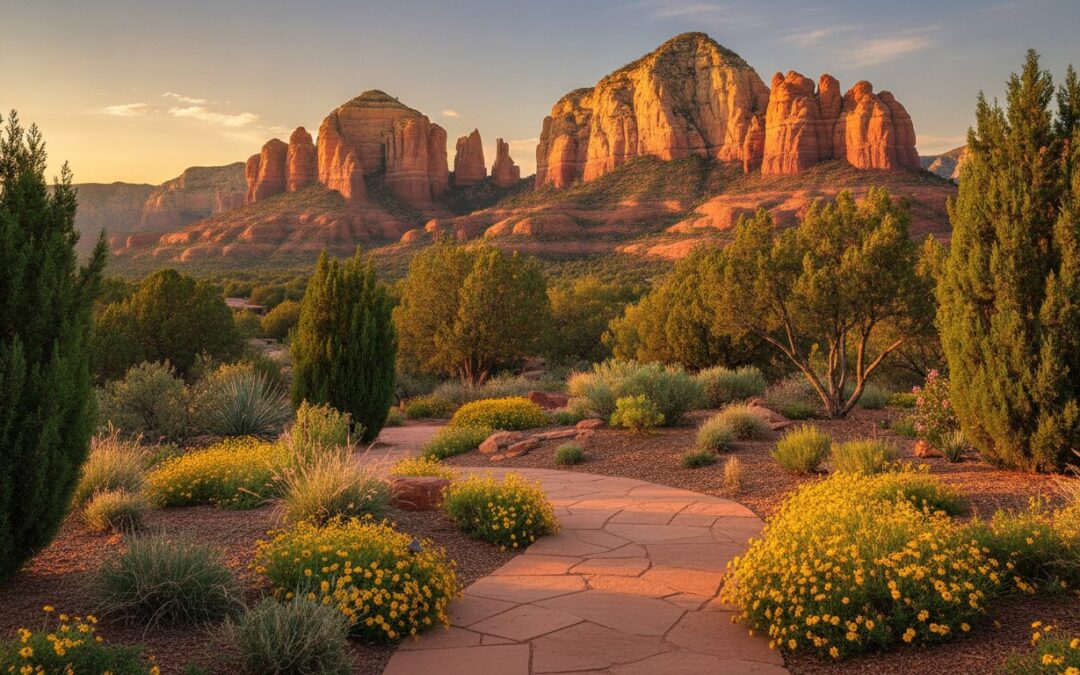
Why does a plant that thrives in a Phoenix backyard often wither and die during a Verde Valley winter? Many homeowners find themselves trapped in a cycle of replacing desert plants that simply aren’t built for our unique transition-zone climate. You’ve likely felt the frustration of watching your water bills climb while your landscape struggles against summer heat and sudden freezes. Mastering native plant landscaping Verde Valley properties requires moving beyond generic Arizona advice and embracing the specific biodiversity of our river valleys and high-desert slopes.
You deserve a lush, vibrant yard that supports local pollinators and stands as a point of pride without demanding constant irrigation maintenance. By aligning your property with the natural rhythms of the region, you can create a sustainable sanctuary that meets updated Firewise standards while significantly reducing your utility costs. This guide provides a professional roadmap for selecting resilient flora, optimizing your irrigation drip systems, and designing a landscape that honors the environmental integrity of our community. We’ll explore the specific species that define our region and the structural elements that ensure long-term resilience.
Key Takeaways
- Understand the unique requirements of the Verde Valley’s transition zone and why plants from lower desert elevations often fail in our climate.
- Identify the best native anchor trees and shrubs that provide structural beauty, privacy, and seasonal color while thriving in local soil pH.
- Learn how native plant landscaping Verde Valley strategies can significantly lower your water consumption and eliminate the need for high-maintenance traditional lawns.
- Discover how to protect your property by integrating Firewise defensible space principles using low-resin, fire-resistant native species.
- Explore the professional design-build process that transforms ecological site assessments into sustainable, high-status outdoor living environments.
What is Native Plant Landscaping in the Verde Valley?
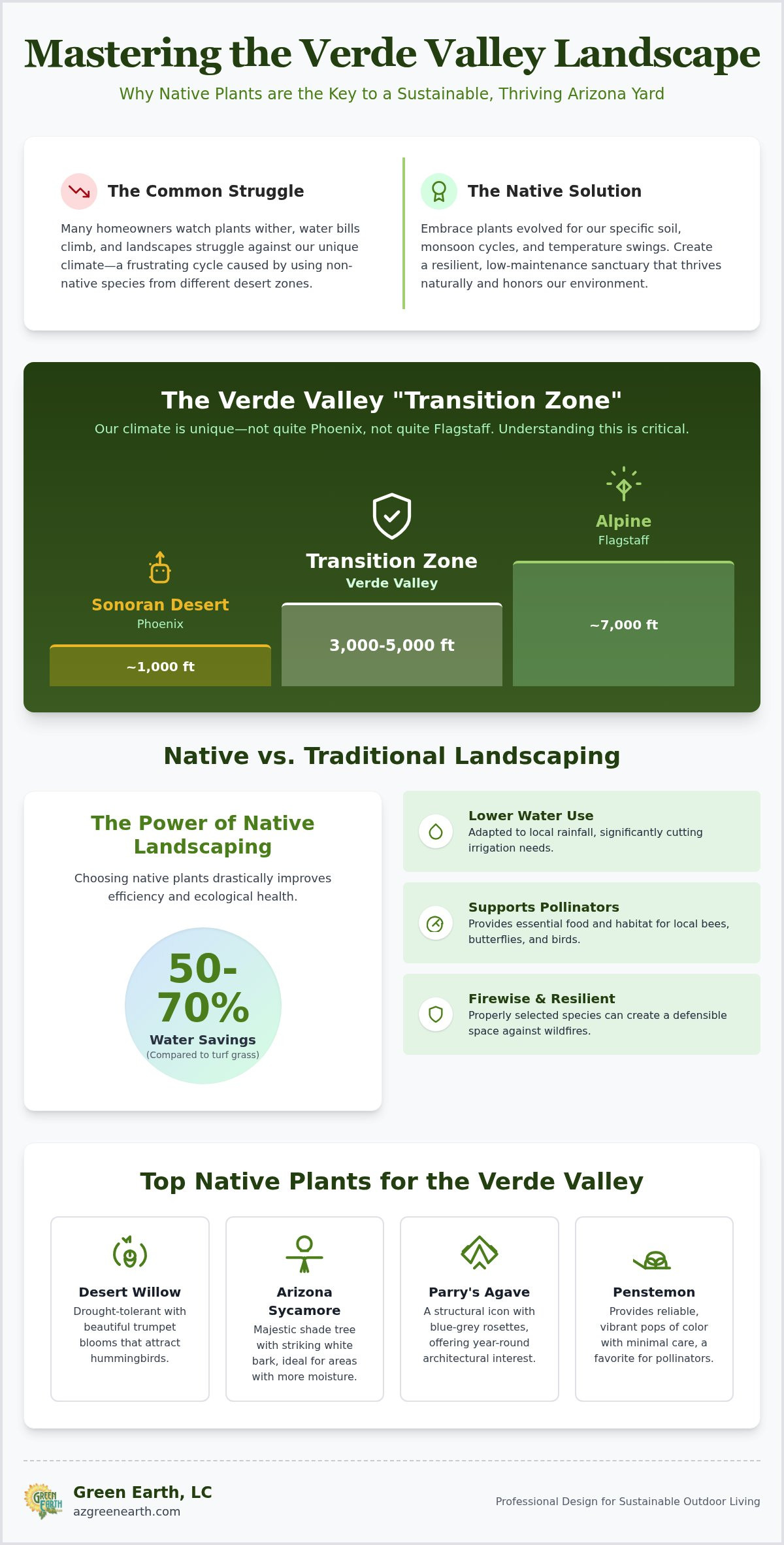
Native plant landscaping in the Verde Valley involves the strategic use of botanical species that evolved naturally within our region’s “Transition Zone.” This zone, defined by elevations between 3,000 and 5,000 feet, represents a unique biological crossroads. These plants aren’t just survivors; they’re specialists. They’ve spent millennia adapting to our specific alkaline soil pH, the violent energy of monsoon cycles, and the sharp temperature swings that define our high-desert climate.
Choosing native flora provides a significant financial advantage for property owners. Traditional turf is often a liability in Arizona, but native landscapes can reduce outdoor water usage by 50-70% compared to non-native grass. This efficiency doesn’t just lower your monthly utility costs; it preserves our precious local water table. From an ecological perspective, your yard becomes a vital link in a larger environmental chain. By consulting resources like the Flora of Arizona, we can select specific species that sustain the Monarch butterfly and native hummingbirds.
The Verde Valley Transition Zone Explained
Our local environment is distinct from both the scorching Sonoran desert in Phoenix and the snowy Alpine peaks of Flagstaff. Sedona and Cottonwood exist in a middle ground where plants must be versatile. The “Red Rock” microclimate and the lush riparian zones along the Verde River create diverse growing conditions. Elevation plays a primary role here; it determines whether a plant will survive a January freeze or thrive during a July heatwave. Mastering native plant landscaping Verde Valley properties requires an intimate knowledge of how these microclimates interact with your specific lot’s topography and drainage patterns.
Sustainable Beauty vs. The ‘Weedy’ Myth
Many homeowners worry that going native means sacrificing a manicured look for something overgrown or “weedy.” This is a myth that professional design easily dispels. By selecting structural native plants with interesting textures and year-round greenery, we create a refined, intentional aesthetic that rivals any traditional garden. We use the natural growth habits of these species to provide privacy and seasonal color without the need for constant, aggressive pruning. Sustainable xeriscaping is a masterful balance of local flora and efficient hardscape that honors the natural landscape while providing a clean, high-status finish.
Top Native Plants for Sedona and the Verde Valley
Selecting the right flora is the most critical step in successful native plant landscaping Verde Valley projects. Unlike the cacti-heavy landscapes of the lower Sonoran desert, our region requires a palette that can handle colder nights and rocky, limestone-rich soils. We look for “anchor” plants that provide the structural foundation of the design, ensuring your yard looks established and intentional throughout the year. These selections are chosen for their ability to thrive in the specific conditions of Cottonwood, Sedona, and Camp Verde.
Signature Trees and Large Shrubs
Trees are the workhorses of a sustainable landscape, providing shade that reduces soil evaporation and cooling the air around your home. The Desert Willow (Chilopsis linearis) is a standout choice, offering trumpet-shaped blooms that attract hummingbirds while maintaining extreme drought tolerance. For properties near the river or those with slightly higher moisture levels, the Arizona Sycamore provides a majestic, white-barked presence. If you want to capture the specific “high chaparral” aesthetic of the Sedona foothills, Manzanita and Scrub Oak are essential. These species offer evergreen foliage and twisted, sculptural branches that define the local skyline. For a comprehensive list of regionally specific species, homeowners can consult the University of Arizona’s guide on Drought Tolerant Native Plants for the Verde Valley.
Perennials and Pollinator Favorites
Filling the mid-level layers of your garden with perennials ensures a constant rotation of color and life. Parry’s Agave serves as a structural icon, its blue-grey rosettes providing sharp architectural interest even in the dead of winter. To add vibrant splashes of color, we often integrate Desert Marigold and various species of Penstemon. These plants provide reliable pops of yellow and purple that thrive with minimal intervention. In the rocky soils common in Cottonwood and Cornville, the Apache Plume is a resilient favorite. Its feathery, pink seed heads create a soft, ethereal texture that contrasts beautifully with the rugged red rocks of the landscape.
Architectural Cacti and Groundcovers
While our region isn’t as cactus-dense as Phoenix, certain succulents are vital for adding low-maintenance visual weight. Groundcovers like Trailing Indigo Bush or various native wildflowers stabilize the soil and prevent erosion on sloped lots. These selections work together to create a cohesive, professional look that requires far less effort than a traditional lawn. If you’re ready to start your project, our team can help you design a custom plant palette that thrives on your specific property.
Native vs. Traditional Landscaping: A Practical Comparison
Choosing between a traditional lawn and a native landscape is often a choice between fighting our environment or working with it. Traditional landscaping typically relies on high-volume spray sprinklers that lose a significant portion of water to evaporation before it even hits the soil. In contrast, native plant landscaping Verde Valley projects utilize precision drip systems that deliver water directly to the root zone. This fundamental shift in infrastructure allows homeowners to maintain a lush, healthy yard while consuming a fraction of the resources required by non-native grass.
The difference in maintenance is just as stark. A traditional lawn demands weekly mowing, edging, and blowing, creating a perpetual cycle of labor and noise. Native gardens require only occasional seasonal pruning to maintain their shape and encourage new growth. Because these plants evolved to survive our “100-year” drought cycles, they possess a deep-rooted resilience that delicate, imported turf simply can’t match. This durability ensures your property remains attractive even during the most intense summer heatwaves, protecting your long-term investment.
For homeowners who need to balance these sustainable goals with the needs of their pets, you can discover Alma Gardening Company and their specialized advice on integrating pet-friendly turf into sustainable residential landscapes.
Cost Analysis Over Five Years
While the initial installation of a native landscape represents a professional investment, the long-term utility savings are undeniable. Over a five-year period, the reduction in water bills and the elimination of expensive chemical fertilizers and pesticides create a clear financial advantage. To naturally support your garden’s vitality, you can discover GrowQanz and their organic microbial technologies that boost soil health and plant growth. Native plants represent the most strategic return on investment for Verde Valley HOAs because they eliminate the recurring costs of weekly mowing and the intensive labor associated with traditional turf management. By choosing plants that belong here, you remove the need for artificial life support systems that drive up property management fees.
Ecosystem Health and Biodiversity
Beyond the financial metrics, native landscapes offer profound environmental benefits. Traditional lawns often contribute to the “heat island” effect, absorbing and radiating heat back toward your home. A well-designed native garden uses natural shade and breathable groundcovers to lower ambient temperatures around your property. This approach transforms your backyard into a functional wildlife corridor, providing essential habitat for local species. For those interested in the specific aesthetics of our region, exploring Desert Landscape Design Northern Arizona can provide deeper insight into how these sustainable choices enhance the authentic beauty of your property.
Designing Your Native Landscape for Firewise Safety
Fire safety is a non-negotiable aspect of native plant landscaping Verde Valley property owners must prioritize. In our region, many neighborhoods sit directly on the wildland-urban interface, where transition-zone brush meets residential development. Designing with fire in mind doesn’t mean stripping your yard of its natural character. Instead, it involves making strategic choices about plant moisture content, fuel arrangement, and structural breaks. By selecting low-resin species and masterfully managing their placement, you create a vital buffer that protects your home while maintaining a vibrant, sustainable appearance.
Integrating hardscape features like pavers and retaining walls serves a dual purpose. While these elements add architectural beauty and value, they also function as effective fire breaks. A stone patio or a wide gravel path can stop a ground fire in its tracks, preventing it from reaching your home’s foundation. This structural approach to native plant landscaping Verde Valley properties ensures that your aesthetic choices also provide a functional layer of security during the dry summer months.
Creating the Three Zones of Defense
Professional Firewise design organizes your property into tiered zones to manage fuel loads effectively. Zone 1 is the most critical area, covering the first 5 feet from your home’s foundation. This perimeter should be entirely non-combustible, utilizing materials like decorative rock or pavers rather than woody mulch. Zone 2 extends from 5 to 30 feet, focusing on a “lean, clean, and green” approach where plants are spaced out to prevent fire from traveling. For residents in Yavapai County, following specific Firewise Landscaping in Cottonwood, AZ guidelines ensures your property meets local safety requirements while remaining ecologically sound.
Native Plants that Support Firewise Goals
Not all native plants carry the same fire risk. Succulents like Parry’s Agave are excellent for Firewise goals because their thick, fleshy leaves store water, making them naturally resistant to ignition. We also focus on the vertical structure of your landscape to eliminate “ladder fuels.” By limbing up trees and ensuring at least 10 feet of clearance between tree crowns, we prevent fire from climbing into the canopy and spreading horizontally. Using inorganic mulches like decomposed granite or river rock instead of cedar bark significantly reduces the chance of ember-driven spot fires near your structure. If you’re concerned about your property’s vulnerability, our team can implement professional Firewise Defensible Space solutions tailored to your specific terrain.
Professional Native Design with Green Earth, LC
Bringing a sustainable vision to life requires more than just a list of plants; it demands a deep understanding of how those species interact with the local environment over time. With over 47 years of regional experience, Green Earth, LC has established itself as a cornerstone of the community. We don’t just install gardens. We craft resilient ecosystems. Our design-build process begins with a comprehensive ecological site assessment, where we evaluate your property’s unique soil composition, solar exposure, and existing drainage patterns. This methodical approach ensures that every element of your native plant landscaping Verde Valley project is positioned for long-term success.
A truly functional outdoor space often requires the seamless integration of living flora and structural hardscape. We specialize in blending native palettes with high-status features like outdoor kitchens and fire features. These elements shouldn’t feel like additions; they should feel like an organic extension of the red rock landscape. By utilizing local materials and expert craftsmanship, we create transition-zone retreats that offer both modern luxury and environmental integrity. Our goal is to provide a visionary partnership that transforms your vague ideas into a functional, beautiful reality.
Why Experience Matters in the Verde Valley
The transition zone is an unforgiving teacher for the inexperienced. Many newcomers make the mistake of improper planting depth or over-watering natives, which can lead to root rot in our clay-heavy soils. Our team’s technical proficiency has earned us recognition as a statewide runner-up for Best Sustainable Landscape Designer, a testament to our commitment to excellence. We understand the mechanics of land management, particularly when it involves complex drainage and grading. Proper grading ensures that monsoon runoff is directed away from your home’s foundation while naturally irrigating your native groves, reducing the need for artificial intervention.
Start Your Sustainable Transformation
The first step toward a more resilient property is scheduling a professional consultation. Whether you’re in Sedona, Cottonwood, or Cornville, we take the time to explain the benefits and value of professional intervention. We can help you navigate the complexities of hardscape construction, ensuring your pavers and retaining walls complement your chosen native plant palette. This holistic approach guarantees that your landscape matures beautifully and maintains its value for decades. Contact Green Earth, LC today to design a landscape that honors the Arizona spirit and protects our shared natural heritage.
Cultivating Your Verde Valley Legacy
Embracing the natural character of our region is the most effective way to ensure your property thrives for decades. We’ve explored how selecting the right transition-zone species reduces water waste and provides a critical defense against wildfire. By moving away from high-maintenance traditional lawns, you invest in a landscape that honors the unique beauty of our red rocks and river valleys. Mastering native plant landscaping Verde Valley properties isn’t just about survival; it’s about creating an “Arizona-authentic” sanctuary that supports local pollinators and enhances your home’s value.
At Green Earth, LC, we bring 47+ years of local experience and award-winning sustainable design to every project. Our Firewise certified strategies ensure your yard is as safe as it is beautiful. Whether you’re planning a complete renovation or a targeted hardscape integration, we’re your visionary partner in land management. Request a Sustainable Landscape Design Consultation from Green Earth, LC today to start your transformation. We look forward to building a resilient, vibrant future for your property together.
Frequently Asked Questions
What are the best native plants for a Sedona landscape?
The best native plants for Sedona include structural species like the Desert Willow and Manzanita, which thrive in rocky, high-elevation soils. Homeowners often choose Parry’s Agave for architectural interest and various Penstemon species for seasonal color. These plants are specifically adapted to the Red Rock microclimate, ensuring they remain vibrant despite the intense solar exposure and sharp temperature swings common in our unique transition zone.
Are native plants really low maintenance?
Native plants are significantly lower maintenance than traditional landscapes once they reach maturity. You can eliminate weekly mowing and heavy fertilization, replacing those chores with light seasonal pruning and occasional irrigation checks. While no landscape is “zero maintenance,” a professional native plant landscaping Verde Valley design focuses on species that thrive with minimal intervention, allowing you to enjoy a beautiful yard without the constant labor required by non-native turf.
Can I have a colorful yard using only native Verde Valley plants?
You can absolutely create a vibrant, colorful yard using only native species. The Verde Valley offers a rich palette, including the deep purples of Rocky Mountain Beardtongue and the bright yellows of Desert Marigold. Flowering shrubs like the Apache Plume provide soft pink textures, while the Desert Willow offers stunning trumpet-shaped blooms throughout the summer. Strategic planning ensures a rotating calendar of color that supports local pollinators year-round.
How do native plants help with Firewise defensible space?
Native plants support Firewise goals when you select low-resin, high-moisture species like agaves and yuccas. These plants are naturally more resistant to ignition compared to oily, non-native evergreens. By managing the spacing between native trees and removing “ladder fuels,” you create a defensible space that slows the spread of wildfire. This approach protects your home while maintaining the environmental integrity and authentic beauty of the Northern Arizona landscape.
Do native plants require a drip irrigation system?
Most native plants benefit from a precision drip irrigation system, especially during their first two years of establishment. While these species are drought-tolerant, supplemental watering during extreme dry spells keeps them healthy and fire-resistant. A well-designed drip system delivers water directly to the root zone, which is far more efficient than traditional sprinklers. This ensures your native plant landscaping Verde Valley investment matures properly while keeping your monthly water bills low.
Will native plants survive the winter freezes in Cottonwood and Camp Verde?
Transition-zone natives are specifically evolved to survive the winter freezes common in Cottonwood and Camp Verde. Unlike Sonoran desert plants from Phoenix, our local flora can withstand temperatures that drop into the teens. Species like Scrub Oak and Arizona Cypress are built for these fluctuations. Choosing plants that belong in our 3,000 to 5,000-foot elevation range is the best way to prevent winter die-off and ensure long-term garden resilience.
How much does it cost to transition to a native plant landscape?
The cost to transition to a native landscape depends on factors like lot size, current turf removal needs, and your choice of structural hardscape. While the initial professional installation is an investment, it typically pays for itself through significantly lower water bills and reduced maintenance costs. Many homeowners find that the long-term savings on utility bills and the increased property value make native design a much more sustainable financial choice than traditional landscaping.
When is the best time of year to plant natives in Northern Arizona?
Late fall and early spring are the ideal times for planting natives in Northern Arizona. Planting in the fall allows the root systems to establish during the cooler, dormant months before the intense summer heat arrives. Early spring is also effective, as it gives plants a chance to settle in before the monsoon season provides natural supplemental moisture. Avoiding the peak summer months ensures your new plants don’t suffer from heat stress during their critical first weeks.
Recent Comments