
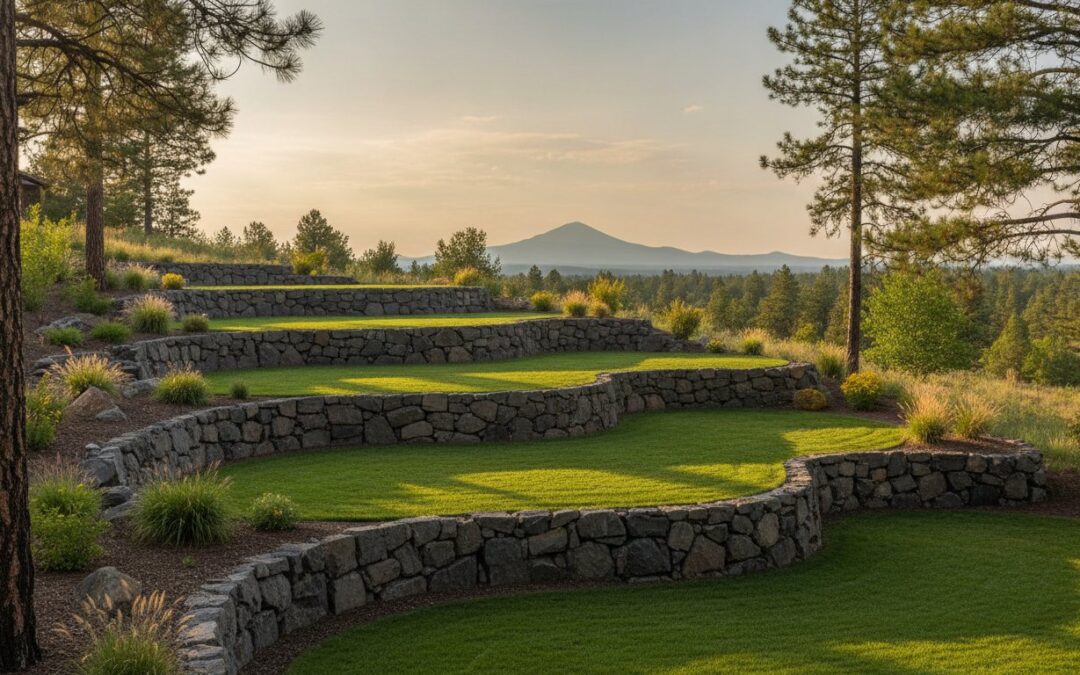
In Northern Arizona, a retaining wall isn’t just a decorative garden border; it’s a structural defense against the relentless force of a 30-inch frost line and seasonal monsoon deluges. You’ve likely seen the results of cutting corners: leaning stones, deep cracks, or soil washing away after a single July storm. It’s frustrating to watch your investment shift and crumble under the pressure of our unique high-altitude environment. By partnering with experienced retaining wall builders Flagstaff homeowners can trust, you can transform a failing slope into a permanent, beautiful asset that actually increases your property value.
With over 47 years of experience in the region, we understand that success depends on looking beneath the surface. We’ll show you how to navigate Coconino County’s specific permit requirements and select sustainable materials that survive the intense freeze-thaw cycle. You’ll discover the engineering techniques required to manage volcanic soil and how to reclaim your yard to create usable flat space that honors the natural integrity of our local landscape. This guide provides the technical knowledge and design inspiration you need to build a landscape that stands the test of time.
Key Takeaways
- Understand why Flagstaff’s 7,000-foot elevation and intense monsoon seasons require specialized structural engineering to prevent soil erosion.
- Learn the critical role of the 30-inch frost line and how proper foundation depth protects your wall from the destructive freeze-thaw cycle.
- Discover how professional retaining wall builders Flagstaff experts implement drainage grading and structural layers to create permanent landscape solutions.
- Navigate the 2026 Coconino County permitting process, including specific height limitations and engineering requirements for walls exceeding 4 feet.
- Explore how local materials like basalt and limestone can be used to build sustainable, high-status structures that harmonize with the natural environment.
The Flagstaff Challenge: Why Standard Retaining Walls Fail in Northern Arizona
Building at 7,000 feet requires more than just stacking stones; it demands a deep understanding of high-altitude physics. In Flagstaff, the environment is constantly working to dismantle man-made structures. While a garden wall in the valley might survive on aesthetics alone, retaining walls in Northern Arizona serve as critical structural defenses. The combination of steep terrain and volatile weather patterns means that standard construction techniques often fall short. Without specialized knowledge, a new project can quickly become a costly liability.
Many homeowners find that their walls begin to lean or buckle after just a few seasons. This isn’t usually a flaw in the stone itself, but rather a failure to account for the immense lateral pressure of the earth. Professional retaining wall builders Flagstaff homeowners trust must design for the long term, ensuring that every layer of the build accounts for soil movement and water weight. Success in this climate isn’t about fighting nature, but about engineering a structure that can live in harmony with it.
Volcanic Soil and Drainage Issues
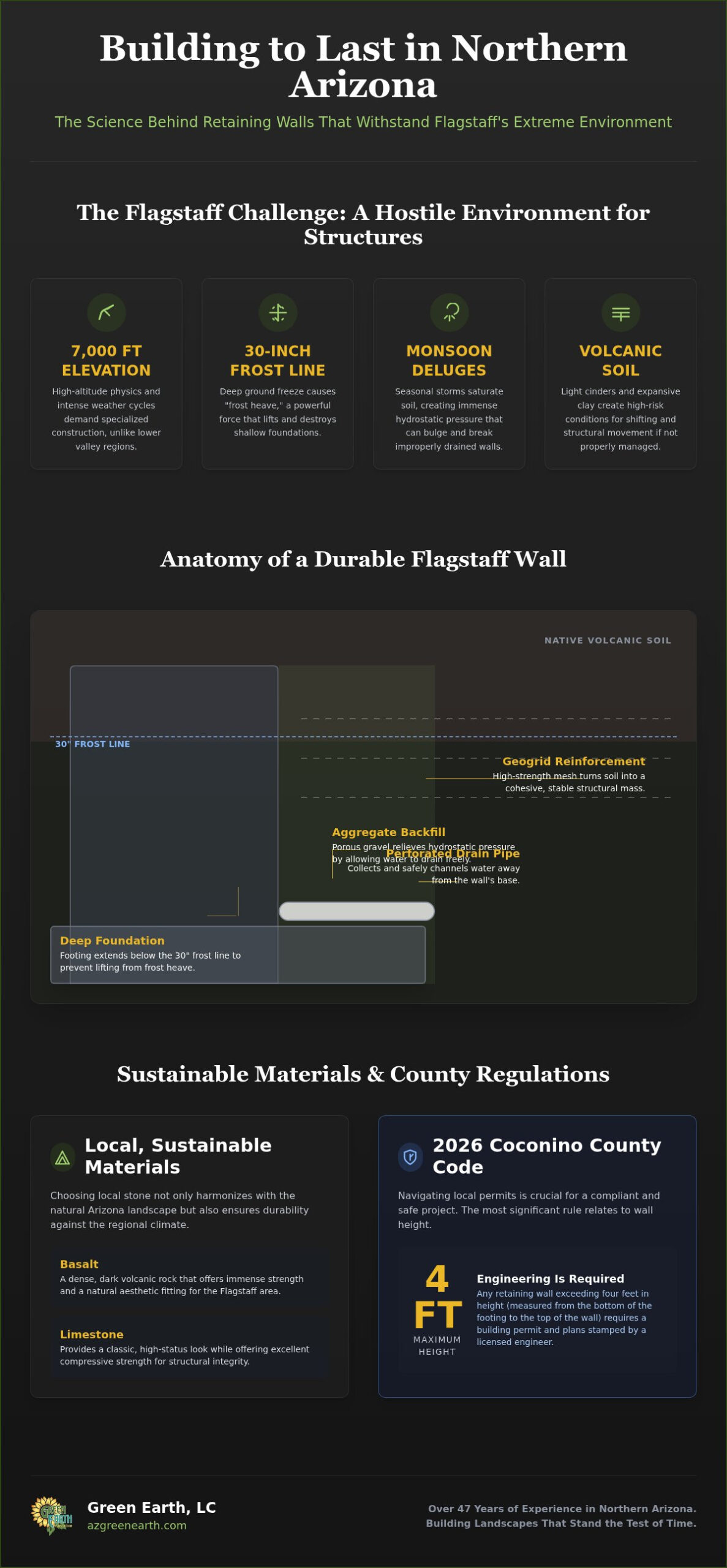
The local geology presents a unique puzzle for any landscape project. Flagstaff sits on a foundation of volcanic cinders and expansive clay, both of which are high-risk soils for structural movement. Volcanic cinders are light and porous, often shifting under the weight of heavy masonry unless they’re stabilized with specific aggregate backfill. Clay, on the other hand, absorbs water and swells, exerting massive force against the back of the wall. When our summer monsoon season arrives, the sheer volume of water can overwhelm basic drainage systems.
This leads to a phenomenon known as hydrostatic pressure. Hydrostatic pressure is the force exerted by stagnant water behind a wall. If a builder doesn’t integrate proper drainage grading and weep holes, this trapped water acts like a slow-motion battering ram. Over time, the weight of the saturated soil becomes too much for the wall to hold, leading to the “bulging” effect often seen in older residential neighborhoods. Effective water management is the first step toward structural longevity.
The Deep Freeze: Frost Heave in Coconino County
Beyond the rain, the freeze-thaw cycle is the most persistent threat to masonry in Coconino County. As temperatures fluctuate, moisture within the soil freezes and expands, physically lifting and shifting the ground. This process, known as frost heave, can easily displace a wall that hasn’t been properly anchored. It’s a relentless cycle that happens dozens of times every winter, slowly weakening the bond between blocks or stones.
Shallow footings are the number one cause of wall failure in the region. If a foundation doesn’t reach the specific Flagstaff frost line depth, it remains vulnerable to the ground’s expansion. Expert retaining wall builders Flagstaff residents hire prioritize deep, reinforced footings to ensure the structure remains stationary while the surrounding earth moves. By building below the frost line, we protect the structural integrity of the wall, ensuring it remains a permanent fixture of your landscape for decades.
Engineering for the Frost Line: The Anatomy of a Durable Flagstaff Wall
A wall is only as strong as its subterranean skeleton. To withstand the lateral pressure of high-altitude terrain, professional retaining wall builders Flagstaff residents rely on must utilize specific gravity principles. In a gravity wall, the “toe” (the front edge of the base) and the “heel” (the back edge) are critical components. The heel uses the weight of the backfill soil to pin the structure down, while the toe provides the leverage necessary to prevent the wall from tipping forward. For taller, reinforced soil slopes, we integrate geogrid. This high-strength polymer mesh stabilizes the earth behind the masonry, essentially turning the soil mass into a cohesive structural unit.
Water management is equally vital to the anatomy of a durable wall. Every structural build requires perforated drainage pipes and weep holes to provide a clear exit path for moisture. Without these features, the wall becomes a dam, trapping water and increasing the risk of failure. By combining these mechanical elements with proper design considerations for cold climates, we create a system that handles the unique stresses of the Colorado Plateau.
The Foundation: Anchoring Below the Frost Line
Durability begins deep underground. Placing blocks or stones directly on native soil is a recipe for disaster in Northern Arizona’s climate. Instead, we excavate to reach the 30-inch frost line and install a thick, compacted gravel base. This layer provides a level, non-shifting platform that allows for minor ground movement without compromising the wall’s face. Proper embedment, which is the portion of the wall buried below the ground surface, is also essential for lateral stability. Green Earth, LC ensures every footing meets or exceeds local building codes, providing the structural anchor necessary for long-term reliability.
Managing Water: The Integrated Drainage System
Water is the primary enemy of masonry. To combat the hydrostatic pressure discussed earlier, we use 57 stone or clean, angular gravel for backfill. This material doesn’t clog and allows water to flow rapidly toward the drainage pipes. To keep the system clear over time, landscape fabric is used to separate the drainage aggregate from the native soil, preventing fine silt from migrating into the gravel gaps. This subterranean work is often paired with professional drainage grading Arizona property owners need to direct surface runoff away from the foundation. If you’re ready to secure your landscape with an engineered solution, consulting with specialists in high-altitude masonry is the first step toward a permanent fix.
Choosing the Right Materials: Stone, Block, and Concrete Options
Selecting materials for a Northern Arizona landscape requires a balance of structural resilience and environmental sensitivity. At 7,000 feet, the intense high-UV exposure can cause some artificial pigments to fade over time, while the relentless freeze-thaw cycles test the internal strength of every unit. Professional retaining wall builders Flagstaff homeowners hire prioritize materials that won’t just look good on day one, but will maintain their integrity for decades. Choosing local basalt or limestone isn’t just an aesthetic decision; it’s an act of environmental stewardship that reduces the carbon footprint of transportation while ensuring the structure blends naturally with the surrounding Ponderosa forest.
While natural stone offers unmatched beauty, engineered concrete masonry units (CMU) provide a different kind of value. These blocks are manufactured for consistency, making them an excellent choice for projects where precision and speed of installation are paramount. We evaluate the cost-to-longevity ratio of every material to ensure your investment stands up to the “Flagstaff Challenge.” Whether you prefer the rugged look of native rock or the clean lines of modern concrete, the goal remains the same: a “forever” structure that enhances your property’s value and usability.
Natural Stone vs. Engineered Blocks
Natural stone remains a top-tier choice for those seeking a timeless, organic character for their landscape. Local basalt, with its deep gray and black tones, provides a rugged durability that is essentially impervious to UV damage. On the other hand, engineered blocks offer built-in drainage features and interlocking systems that provide exceptional stability in shifting soils. Below is a comparison of how these materials perform in our unique climate:
- Natural Stone: High cost due to labor; exceptional durability; local, organic style; minimal maintenance.
- Engineered Block: Moderate cost; high durability; modern, modular style; minimal maintenance.
- Poured Concrete: Moderate-high cost; maximum structural strength; industrial style; moderate maintenance.
Poured Concrete and Veneer Finishes
For projects requiring maximum structural load-bearing capacity, poured concrete is often the necessary choice. It creates a continuous, reinforced mass that can be engineered to hold back significant slopes that modular blocks might not support alone. To avoid a purely industrial look, we often apply a stone veneer finish. This technique provides the sheer strength of a poured wall with the high-desert aesthetic of natural masonry, allowing the structure to feel like a part of the landscape rather than an intrusion.
Sustainability is a core component of our material selection process. We prioritize sourcing from local quarries and look for concrete mixtures that utilize recycled aggregates when possible. This disciplined approach to construction ensures that your project is both structurally sound and ecologically responsible. By partnering with experienced retaining wall builders Flagstaff residents can ensure their material choice reflects the specific demands of their terrain and their commitment to the Northern Arizona environment.
Permitting and Planning: What to Expect from Your Project in 2026
Building a structural wall in Coconino County involves more than just a shovel and stone. It requires a methodical approach to local regulations and site logistics. According to 2026 Coconino County standards, any retaining wall exceeding four feet in height, measured from the bottom of the footing to the top of the wall, requires a building permit. This threshold ensures that taller structures are properly engineered to handle the soil loads and frost pressures unique to our high-altitude environment. Professional retaining wall builders Flagstaff homeowners trust will typically initiate the project with a comprehensive site survey to identify property lines, existing slopes, and drainage patterns before any earth is moved.
The journey from initial design consultation to final inspection typically spans several weeks, depending on the complexity of the engineering and current permit processing times. A professional team manages the documentation, including the submission of stamped engineering plans if your wall supports a surcharge, such as a driveway or a neighboring structure. This disciplined preparation prevents costly corrections during the construction phase and ensures the longevity of your landscape investment.
Navigating Local Building Codes
Flagstaff city codes are particularly strict regarding setbacks and drainage easements. You cannot simply build to the edge of your property without verifying that you aren’t infringing on utility access or disrupting the neighborhood’s natural water flow. Experienced builders handle the permit application process for you, navigating these bureaucratic hurdles to ensure every stone is placed legally. Building without a permit carries significant risks, including steep fines and potential issues when you eventually try to sell your property. In some cases, the city may even require the removal of unpermitted structures that violate safety or zoning codes.
Site Preparation and Utilities
Before any excavation begins, safety and resource protection are the primary concerns. Calling 811 is a mandatory step to locate underground gas, electric, and irrigation repair Flagstaff lines that may be hidden beneath your yard. Managing site access is another critical planning element, especially in established neighborhoods with narrow entries. We take great care to protect existing Ponderosa pines and native vegetation, as heavy machinery can easily compact soil and damage sensitive root systems. If you’re ready to begin the planning phase for your property, contact our design team to schedule a professional site evaluation and ensure your project starts on solid ground.
Sustainable Hardscaping: How Green Earth, LC Redefines Construction
Beyond structural necessity, a well-designed wall serves as a cornerstone for ecological health. At Green Earth, LC, we view our role as more than just retaining wall builders Flagstaff residents hire for basic masonry. We approach every project as a “Visionary Partner,” integrating structural solutions with the surrounding Ponderosa forest. Our 47-year history in Northern Arizona has taught us that a wall is a prerequisite for a thriving landscape, acting as a tool for water conservation and soil preservation. By stabilizing slopes, we prevent the topsoil loss that often follows our intense monsoon seasons, ensuring your property remains a healthy environment for years to come.
In our high-desert climate, every structural element must also serve a protective purpose. We design our retaining walls to integrate with “Firewise” defensible space strategies. Stone and concrete masonry provide non-combustible barriers that can help slow the spread of wildfire near residential structures. This authoritative environmentalist approach ensures that your hardscape isn’t just beautiful, but also a functional component of your home’s safety plan. By choosing materials that naturally resist the elements, we minimize the need for future interventions and reduce the overall environmental footprint of your property.
Integrating Walls with Native Landscaping
A structural wall creates unique opportunities for tiered planters, which are ideal for showcasing drought-tolerant Arizona flora. These terraces allow for “Water Wise” irrigation zones, where moisture is captured and directed specifically to the root systems of native plants. This methodical design prevents water waste and promotes a lush aesthetic without the high maintenance of traditional turf. For detailed advice on selecting species that thrive in these microclimates, explore our desert landscape design Northern Arizona guide. These tiered systems transform unusable slopes into vibrant, living ecosystems that support local pollinators and enhance biodiversity.
The Green Earth Guarantee: Quality That Outlasts the Seasons
Our commitment to excellence is rooted in a passion for the natural world and long-term sustainability. We prioritize low-impact construction techniques and sustainable sourcing, ensuring that our work respects the delicate ecological balance of Coconino County. With 47 years of local experience, we understand the nuances of high-altitude masonry better than anyone in the region. We don’t just build walls; we create “forever” structures that stand as a testament to professional craftsmanship and environmental integrity. If you’re ready to transform your sloped yard into a functional, eco-friendly masterpiece, contact Green Earth, LC for a Retaining Wall Consultation today.
Secure Your High-Altitude Landscape for the Future
Building a permanent structure in Northern Arizona requires a disciplined approach to engineering and environmental stewardship. The key to a “forever” wall lies in anchoring foundations below the 30-inch frost line and utilizing integrated drainage systems to combat hydrostatic pressure. By selecting local materials and adhering to 2026 Coconino County codes, you don’t just solve an erosion problem; you increase your property’s usable space and long-term value. Partnering with the right retaining wall builders Flagstaff homeowners trust ensures your investment survives the harshest winters and most intense monsoon seasons.
Green Earth, LC has been locally owned and operated since 1979, bringing 47+ years of specialized experience to every project. As the statewide runner-up for Best Sustainable Landscape Designer, we take pride in creating structures that harmonize with the natural beauty of the Colorado Plateau. Our team is ready to help you transform your sloped yard into a stable, Firewise, and water-efficient sanctuary. Don’t leave your property’s foundation to chance. Request a Professional Site Assessment from Green Earth, LC and start your journey toward a structurally superior landscape today. We look forward to helping you master the Flagstaff terrain.
Frequently Asked Questions
Do I need a permit for a retaining wall in Flagstaff?
A building permit is required for any retaining wall over 4 feet in height, measured from the bottom of the footing to the top of the wall. This regulation, based on the 2026 Coconino County standards, ensures structural safety against high-altitude soil pressures. If your wall supports a surcharge, such as a driveway or another building, you’ll likely need a stamped engineering design before construction begins. Professional retaining wall builders Flagstaff residents hire typically manage this entire application process.
How much does it cost to build a retaining wall in Northern Arizona?
Total project costs depend on several variables, including material selection, wall height, and site accessibility. Natural stone often requires more labor than modular concrete blocks, while poured concrete may be necessary for extreme structural loads. Additional factors like the complexity of the drainage grading and the need for engineered permits also influence the final investment. We recommend a professional site assessment to determine the specific technical requirements and material volumes needed for your unique terrain.
What is the best material for a retaining wall in a freezing climate?
Local natural stone, such as basalt or limestone, is exceptionally durable in Northern Arizona’s freeze-thaw cycles. These materials are naturally resistant to UV damage and don’t degrade when exposed to the intense high-altitude elements. High-strength engineered concrete blocks are also an excellent choice because they offer consistent structural integrity and built-in drainage features. Both options provide the resilience needed to withstand the lateral pressure of expanding soil during the cold winter months in Coconino County.
How do I stop my existing retaining wall from leaning?
Stopping a leaning wall requires addressing the hydrostatic pressure or foundation failure causing the movement. If the wall wasn’t anchored below the 30-inch frost line, frost heave might be lifting the structure. In many cases, we can stabilize a wall by retrofitting a more efficient drainage system or clearing clogged weep holes to relieve water weight. However, if the structural integrity is compromised, a complete rebuild with proper engineering is often the only permanent solution for safety.
Can a retaining wall help with my backyard drainage issues?
Yes, a retaining wall is one of the most effective tools for managing backyard drainage and soil erosion. By terracing a slope, you can control the speed and direction of monsoon runoff, preventing topsoil from washing away. Integrating professional drainage grading ensures that water is redirected away from your home’s foundation and toward safe exit points. This approach protects your property while creating healthy microclimates for native plants and drought-tolerant Arizona flora to thrive.
How long does a professionally built retaining wall last?
A professionally engineered wall should last for 50 years or more, effectively serving as a “forever” structure on your property. Longevity depends entirely on the quality of the subterranean work, specifically the depth of the footings and the efficiency of the drainage backfill. By building to meet the specific requirements of the Flagstaff climate, we ensure the masonry remains stable through decades of seasonal shifts. High-quality materials like native stone further extend this lifespan by resisting environmental degradation.
Does a retaining wall increase my property value in Flagstaff?
A well-constructed retaining wall significantly boosts property value by transforming unusable sloped terrain into functional flat space. In our mountainous region, usable yard space is a high-status feature that appeals to both residential and commercial buyers. Beyond the aesthetic improvement, a structural wall provides essential protection against erosion and flooding, which are critical considerations for any Northern Arizona real estate investment. It establishes a secure foundation for additional features like outdoor kitchens, fire pits, or native garden beds.
Recent Comments