
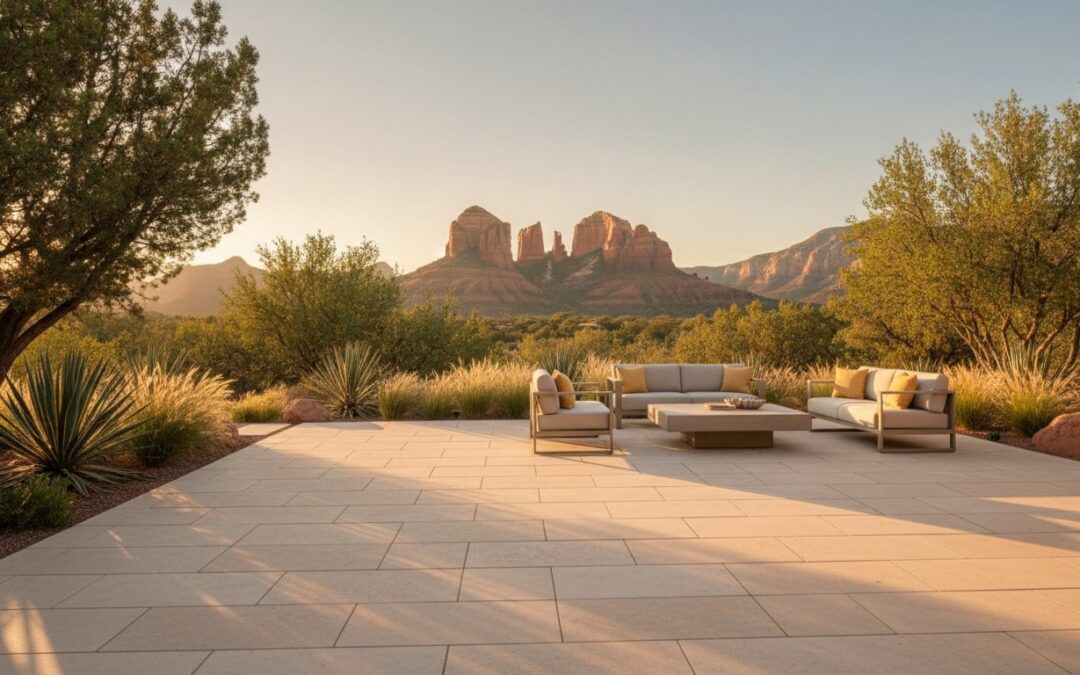
What if your outdoor patio could stay cool to the touch even during a record-breaking July afternoon in Cottonwood? For many residents in Northern Arizona, the dream of installing pavers and hardscape Verde Valley often clashes with the harsh reality of surface heat that burns bare feet and intense monsoon rains that cause expensive stonework to shift. It’s frustrating to invest in your property only to find that common materials don’t hold up against the elements or fail to match the iconic red rock aesthetic of our region.
We believe a successful landscape must be as resilient as it is beautiful. The upcoming 2026 trends are shifting toward ecological harmony, where high-tech materials meet the organic textures of our local terrain. You’ll discover how to blend stunning aesthetics with the rugged climate of the Verde Valley using the latest innovations in hardscape design. We’ll preview the transition toward earthy palettes like warm taupe and sandstone, the rise of permeable systems for superior drainage, and the use of large-format pavers that create a seamless, modern look while increasing your property’s long-term value and environmental health.
Key Takeaways
- Learn why the Solar Reflectance Index (SRI) is the most critical metric for selecting heat-resistant materials that remain comfortable during intense Northern Arizona summers.
- Explore the 2026 shift toward large-format slabs and earthy, natural color palettes that seamlessly integrate your outdoor living space with the surrounding landscape.
- Understand why professional drainage grading is the essential foundation for all pavers and hardscape Verde Valley projects to prevent monsoon-related shifting and erosion.
- Discover how to transform traditional patios into multi-functional “outdoor rooms” that mirror your home’s interior architecture while providing a firewise defensible space.
- Gain professional insights on the durability of porcelain versus traditional concrete to ensure your investment withstands high-UV environments for decades.
The Evolution of Pavers and Hardscape in the Verde Valley for 2026
For nearly five decades, we’ve watched the outdoor aesthetic of Northern Arizona transform from utilitarian gravel beds to sophisticated architectural extensions of the home. In 2026, the standard for pavers and hardscape Verde Valley projects has reached a new peak of intentionality. Homeowners no longer view their backyard as a separate entity. Instead, they see it as a series of “outdoor rooms” that mirror the comfort and design of their interiors. This evolution is driven by a desire for luxury that respects the rugged environment while providing a functional sanctuary.
Safety is a cornerstone of modern design in our region. Creating a Firewise defensible space is no longer an afterthought; it’s a primary requirement. By utilizing non-combustible stone and specialized permeable paving systems, we build a protective barrier that mitigates wildfire risk while managing the intense monsoon runoff common in Cottonwood and Clarkdale. As average temperatures in the Verde Valley continue to climb, our construction methods have adapted. We prioritize high-performance materials that withstand intense UV exposure without cracking or fading, ensuring your investment remains structurally sound and visually striking for decades.
Integrating Sedona Red Rock Aesthetics
Achieving a seamless transition between your living room and the desert requires a deep understanding of local geology. We utilize earth-toned pavers in shades of warm taupe, cream limestone, and soft sandstone to echo the natural cliffs of Sedona. Incorporating local stone accents into custom hardscape features anchors the structure to the earth, making it feel like a natural part of the landscape rather than an addition. These desert-hued pavers are specifically chosen because they reduce visual glare under the high-desert sun, making your patio comfortable for the eyes even during the brightest parts of the day.
The Rise of Multi-Functional Outdoor Living
The 2026 trend focuses on “zoning” the landscape for specific activities, creating a versatile environment for every season. This involves combining durable pavers with outdoor kitchens for summer hosting or integrating seating walls and fire features directly into the paver layout. By using varied textures and large-format slabs, we define distinct areas for dining, lounging, and entertaining without the need for obstructive vertical walls. This open-concept approach maximizes the footprint of your property while maintaining a clean, modern profile that fits the visionary spirit of Northern Arizona living.
High-Performance Materials: Heat, Durability, and Science
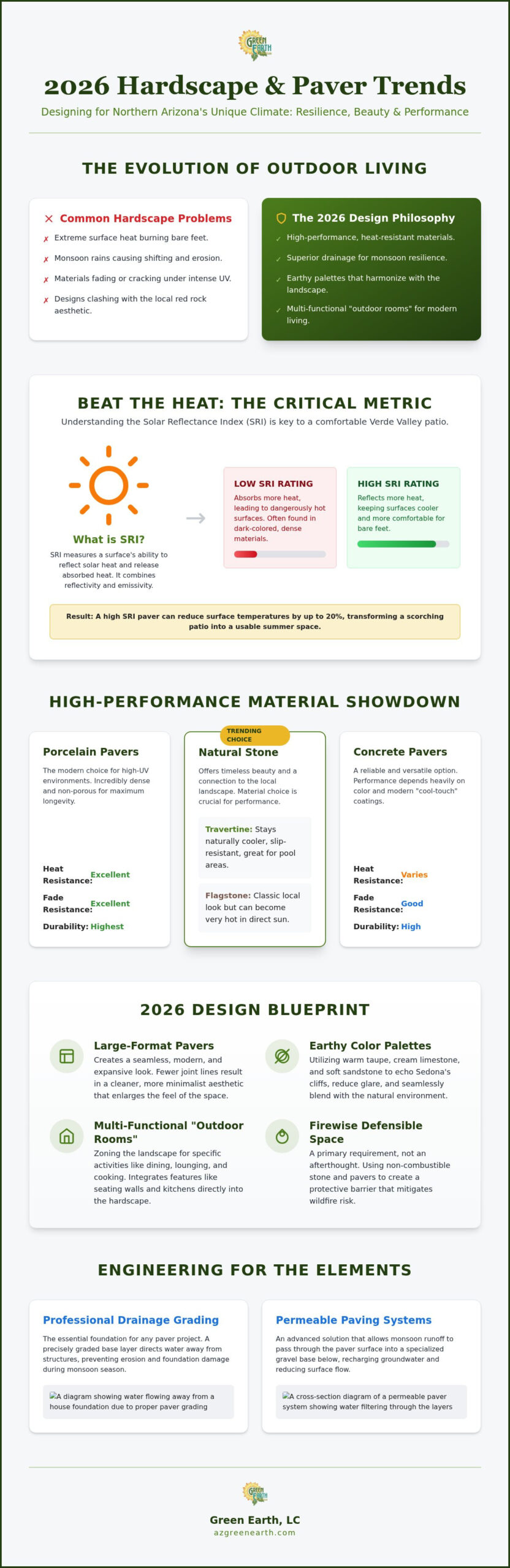
Selecting materials for pavers and hardscape Verde Valley projects requires more than just an eye for color. It is a scientific process. In Northern Arizona, we face intense ultraviolet radiation and extreme thermal expansion that can quickly degrade inferior products. One of the most critical metrics we use is the Solar Reflectance Index (SRI). This value measures a surface’s ability to stay cool in the sun by reflecting solar radiation and emitting thermal radiation. For a patio in Cottonwood or Camp Verde, a high SRI is the difference between a usable outdoor living room and a surface that burns your feet.
While traditional concrete pavers remain a reliable choice, 2026 has seen a surge in porcelain pavers for high-UV environments. Porcelain is incredibly dense and non-porous. It doesn’t fade under the Arizona sun or absorb as much heat as darker concrete. If you prefer natural stone, the choice between Flagstone and Travertine is significant. Flagstone offers that classic, local aesthetic but can become quite hot. Travertine, conversely, stays naturally cooler and provides a slip-resistant surface perfect for pool surrounds. Choosing the right material is the foundation of sustainable landscaping in Arizona, as it reduces the “heat island” effect around your home.
Heat-Reflective Technology for Arizona Summers
Modern manufacturing has introduced advanced paver coatings for 2026 that can reduce surface temperatures by up to 20%. These “cool-touch” technologies are becoming the standard for any barefoot area. To maximize heat mitigation, we recommend light tans, soft grays, and buff tones. These colors have higher reflectivity, ensuring your patio remains comfortable even when the thermometer hits triple digits. If you’re unsure which texture fits your lifestyle, our team can help you evaluate custom material samples during the design phase.
Permeable Pavers and Sustainable Hardscaping
Sustainable water management is no longer optional in our arid climate. We define permeable pavers as a specialized tool for sustainable water management that allows precipitation to bypass the surface and return directly to the local aquifer. By following technical standards like the FHWA guidelines on permeable pavers, we ensure these systems manage heavy monsoon rains effectively. This prevents the dangerous puddling and ice patches often seen during winters in higher elevations like Flagstaff or Prescott. It is a responsible way to build that respects our regional water cycle while providing a durable, high-performance surface.
2026 Style Trends: Patterns and Textures for Northern Arizona
Visual trends for pavers and hardscape Verde Valley projects are shifting toward a concept we call “Modern Desert.” This aesthetic favors simplicity and structural clarity over the busy, interlocking patterns of previous decades. In 2026, we’re seeing a decisive move away from small, multi-colored paving stones in favor of monochromatic, large-scale installations. This transition creates a monolithic appearance that mirrors the vast, sweeping vistas of the Arizona landscape. By reducing visual noise, these designs allow the natural beauty of the surrounding red rocks and high-desert flora to take center stage.
Layout selection is a critical component of this visionary design process. While modular patterns still have their place in rustic settings, linear layouts are dominating modern builds. These clean, straight lines guide the eye toward specific focal points, such as a custom fire feature or a distant mountain view. We often utilize contrasting colors to define these edges and walkways. By using a darker charcoal or a deep terracotta border against a lighter field, we create clear “navigational paths” across the property. This technique defines different activity zones without the need for physical barriers like fences or tall walls, maintaining an open and airy feel.
Large-Format Slabs and Minimalist Lines
The demand for 24×24 and 24×36 pavers has surged as homeowners seek a more expansive, high-end look. These large-format slabs offer a “less is more” approach by significantly reducing the number of grout lines and joints. This isn’t just about aesthetics; fewer joints mean less space for weeds to take root and simpler long-term maintenance. On smaller Cottonwood patios, these oversized pavers actually make the space feel much larger by creating a continuous, unbroken surface that tricks the eye into seeing more square footage than actually exists.
Textured Stone and Natural Rhythms
While minimalist lines are popular, we balance that precision with organic textures to ensure the hardscape doesn’t feel sterile. Incorporating “tumbled” edges on pavers provides a rustic, lived-in feel that harmonizes perfectly with the weathered terrain of Sedona. For a more adventurous, non-linear path, irregular flagstone remains a timeless choice. We often combine these rugged hardscape elements with drought-tolerant plantings, such as agave or desert spoon, to soften the structural lines. This integration creates a rhythmic flow between the built environment and the natural world, reinforcing our role as responsible guardians of the local landscape.
Engineering for the Terrain: Drainage and Structural Integrity
While previous sections focused on the visual allure of 2026 trends, the true longevity of pavers and hardscape Verde Valley projects depends on what lies beneath the surface. We often tell our clients that 90% of a project’s success is determined before the first stone is laid. Engineering for Northern Arizona’s specific terrain requires a deep understanding of local soil mechanics, especially when dealing with the expansive clay or rocky caliche common in Cottonwood and Sedona. Without a properly engineered sub-base and meticulous drainage grading, even the most expensive materials will eventually shift, crack, or wash away during our intense seasonal changes.
The sub-base is the hidden engine of your hardscape. We excavate to specific depths based on the expected load and soil type, then build back up with layers of compacted crushed stone and bedding sand. We frequently utilize geotextile fabrics to separate the native soil from our aggregate. This prevents the “sinking” effect that occurs when fine soil particles migrate into the stone base during saturation. This disciplined approach to craftsmanship ensures that your patio remains level and stable for decades, regardless of the environmental pressure.
Monsoon-Ready Hardscaping and Grading
The primary threat to structural integrity in our region is the annual monsoon season. These high-intensity rain events produce significant runoff that can quickly undermine a paver system if the water has nowhere to go. We approach every project with a “water-first” mindset, ensuring that every square inch of the hardscape is designed to shed moisture efficiently and protect your home’s foundation. Our process follows three essential steps:
- Step 1: Conducting a topographical survey to identify natural water flow paths and potential pooling areas.
- Step 2: Installing hidden French drains or catch basins beneath paver surfaces to manage excess water volume.
- Step 3: Ensuring a minimum 2% slope away from home foundations to prevent moisture from compromising the structure.
Retaining Walls: Marrying Strength with Style
Managing sloped properties in Sedona and Prescott often requires the strategic use of retaining walls. We evaluate each site to determine if a gravity wall or a reinforced wall is necessary. Gravity walls rely on their own weight to resist the pressure of the soil behind them, making them ideal for shorter, decorative slopes. For steeper hillsides, we utilize reinforced walls that incorporate geogrid soil reinforcement to create a massive, stable block of earth. Retaining walls serve as a vital structural defense, preventing soil erosion and catastrophic slope failure during the heavy downpours of the summer monsoon season. Whether you choose engineered blocks for a modern look or natural boulder walls for an organic feel, the engineering must be flawless. For properties on challenging red rock terrain, our guide to retaining wall construction in Sedona covers the structural and drainage requirements in greater detail.
A beautiful patio is only as good as the engineering that supports it. If you’re planning a project on a challenging hillside or a low-lying lot, contact our design-build team to ensure your outdoor living space is built to last for generations.
Designing Your Custom Verde Valley Hardscape with Green Earth, LC
Transforming a vague concept into a functional masterpiece requires a partner who understands both the art of design and the science of the Arizona desert. At Green Earth, LC, we’ve spent over 47 years refining our approach to pavers and hardscape Verde Valley. As a dedicated design-build firm, we provide a single point of accountability from the first sketch to the final stone. This differs significantly from suppliers who simply refer clients to a network of outside contractors. Our clients benefit from a cohesive vision where the designer and the builder are one and the same, ensuring that the high-performance materials and complex engineering discussed in previous sections are executed with precision.
Our role as a “Visionary Partner” means we take the time to understand your lifestyle and property goals. Whether you’re a homeowner looking to expand your living space or a commercial property manager seeking to increase curb appeal, we approach every project with disciplined craftsmanship. Large-scale HOA and commercial properties trust us because of our established history in Northern Arizona. They know that our work isn’t just about immediate aesthetics, it’s about long-term reliability and environmental health. We prioritize sustainability in our material sourcing and construction methods, acting as responsible guardians of the local landscape.
From Concept to Construction: Our Process
The journey begins with an initial consultation where we assess your property’s unique environmental challenges. We don’t just look at the soil; we study the sun’s path, wind patterns, and the natural slope of the land. This site-specific data informs our custom design process, where we integrate 2026 trends like large-format slabs and heat-reflective technology to create a timeless space. Our professional execution is handled by local crews who understand Verde Valley soil better than anyone else. They know how to navigate the complexities of caliche and clay, ensuring the structural integrity of your installation is never compromised.
A Legacy of Excellence in Northern Arizona
Our commitment to quality has earned us recognition as the statewide runner-up for Best Sustainable Landscape Designer. This accolade reflects our passion for creating beautiful spaces that respect the natural world. We believe in local accountability, which is why we offer long-term maintenance support to ensure your hardscape remains as stunning as the day it was installed. We don’t just build patios; we build enduring relationships with our community through excellence and integrity. If you’re ready to elevate your outdoor living experience, it’s time to partner with a team that has the experience to bring your vision to life.
Start your custom hardscape project with Green Earth today and discover the difference that nearly five decades of local expertise can make for your property.
Transforming Your Vision into a Lasting Reality
Designing a modern landscape requires a delicate balance between visionary aesthetics and the uncompromising demands of the Northern Arizona climate. We’ve explored how 2026 trends prioritize heat-reflective materials and large-format slabs that harmonize with our local red rock terrain. However, the true value of your investment lies in professional engineering. Ensuring your pavers and hardscape Verde Valley project includes monsoon-ready drainage and a stable sub-base is essential for long-term durability and structural integrity.
With over 47 years of local experience, Green Earth, LC understands the specific geological challenges of our region. As a statewide runner-up for Best Sustainable Landscape Designer, we’re committed to creating outdoor spaces that are as ecologically responsible as they are beautiful. We take pride in our role as a visionary partner, guiding you from the initial concept to a flawless professional execution that respects the natural world.
Ready to elevate your property with a design that stands the test of time? Request a Professional Hardscape Design Consultation today. Your dream outdoor living space is within reach, and we’re here to ensure it’s built with the excellence and reliability your home deserves.
Frequently Asked Questions
What are the best pavers for the hot Arizona sun?
Porcelain and light-colored travertine are the superior choices for the intense Arizona sun. These materials have a high Solar Reflectance Index (SRI), which means they reflect more heat than they absorb. This keeps the surface comfortable for bare feet even in triple-digit weather. We often recommend light tans and buff tones to maximize this cooling effect.
Do I need a permit for hardscaping in the Verde Valley?
Ground-level paver patios typically don’t require a building permit in most Verde Valley jurisdictions. However, you will need a permit for structural elements like retaining walls over 3 feet tall or attached patio covers. Always check with the City of Cottonwood or your local planning department to ensure compliance with the 2024 International Building Code standards.
How do I prevent my pavers from sinking during monsoon season?
Proper sub-base compaction and professional drainage grading are the only ways to prevent sinking. We use layers of crushed stone and geotextile fabrics to create a stable foundation that doesn’t wash away. This engineering is crucial for successful installations of pavers and hardscape Verde Valley during our heavy summer monsoons.
What is the difference between pavers and flagstone for a patio?
Pavers are engineered for uniform thickness and interlocking strength, while flagstone is a natural, irregular stone that offers a more organic look. Pavers generally stay cooler and are easier to maintain over time. Flagstone provides a timeless Sedona aesthetic but requires more skilled labor to install evenly and can absorb more heat.
Can hardscaping help with wildfire protection in Sedona?
Yes, hardscaping is a fundamental part of creating a Firewise Defensible Space around your home. By replacing flammable vegetation with non-combustible stone or concrete, you create a vital fuel break. This strategic use of pavers and hardscape Verde Valley can significantly reduce the risk of fire damage during the dry season.
How much maintenance do pavers require in a desert environment?
Pavers are remarkably low-maintenance in a desert environment compared to wood or composite decking. You’ll simply need to sweep away debris and occasionally top off the polymeric joint sand to prevent weed growth. They don’t require the regular staining or sealing that other materials need to survive high UV exposure.
What are permeable pavers and are they worth it in Northern Arizona?
Permeable pavers are designed with wider joints that allow rainwater to filter directly into the ground rather than running off. They’re highly worth the investment in Northern Arizona because they prevent soil erosion and help recharge our local aquifers. These systems are an excellent choice for managing heavy monsoon runoff without creating large puddles or ice patches.
How long does a typical hardscape installation take in Cottonwood?
A typical hardscape installation in Cottonwood takes between one and three weeks from start to finish. The exact timeline depends on the project’s complexity, the amount of excavation required, and the total square footage. We provide a detailed schedule during the visionary design phase so you know exactly what to expect before construction begins.
Recent Comments