
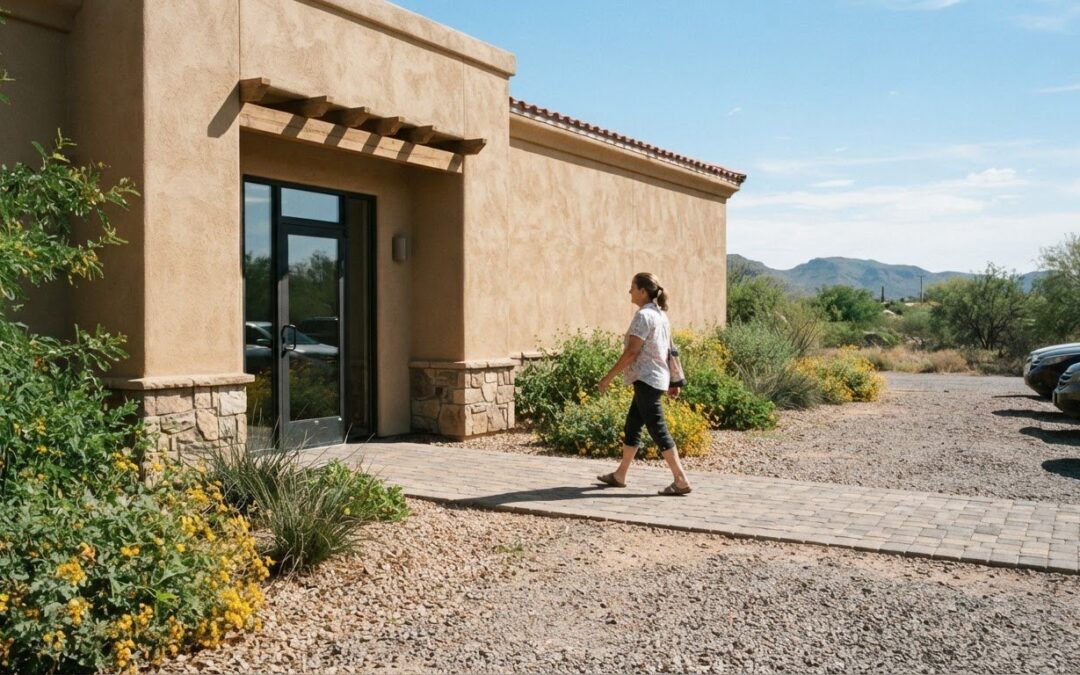
A business entrance can welcome visitors and guide them safely at the same time. Thoughtful landscaping for a business entrance combines clear walkways, well-placed planting, and visible routes between parking areas and the front door. The result can make arrival feel more inviting while helping pedestrians and drivers move through the property with fewer visual obstacles.
Curb appeal matters, but an entrance also needs to work for the people using it. Native plants suited to local conditions, paver or stone walkways, and purposeful upgrades can create a welcoming experience and support clear traffic flow. Planting layout, sightlines, maintenance needs, and business priorities all shape a practical design.
Key Takeaways
- Use clear, maintained paths to guide visitors from parking areas to the entrance, while keeping signs and important sightlines visible.
- Choose native plants to suit the entrance’s sunlight, wind exposure, soil, and water availability for a landscape that can need less care.
- Consider pavers, stonework, or crisp edging to define the route and give the entrance a distinctive finish.
- Prioritize upgrades around visitor experience, maintenance needs, business identity, and budget, then plan improvements in practical phases.
1. How Can Landscaping Make Your Business Entrance More Welcoming?
A welcoming entrance pairs a clear route with visible signage and planting suited to its setting. Symmetrical beds can draw attention to the doorway, while varied plant heights and textures soften a building’s hard lines. Groundcover or stone landscaping can reduce the need for mowing on slopes. For water-conscious design, choose plants suited to the water available and avoid beds that require frequent replacement.
Lighting helps visitors see walkways, stairs, and entry points after dark. Landscape lighting along these routes can improve visibility and help reduce trip risks. Position trees and shrubs to preserve views between drivers, pedestrians, signs, and the entrance. Planters, low walls, or garden beds can separate walking paths from parking areas without blocking traffic sightlines.
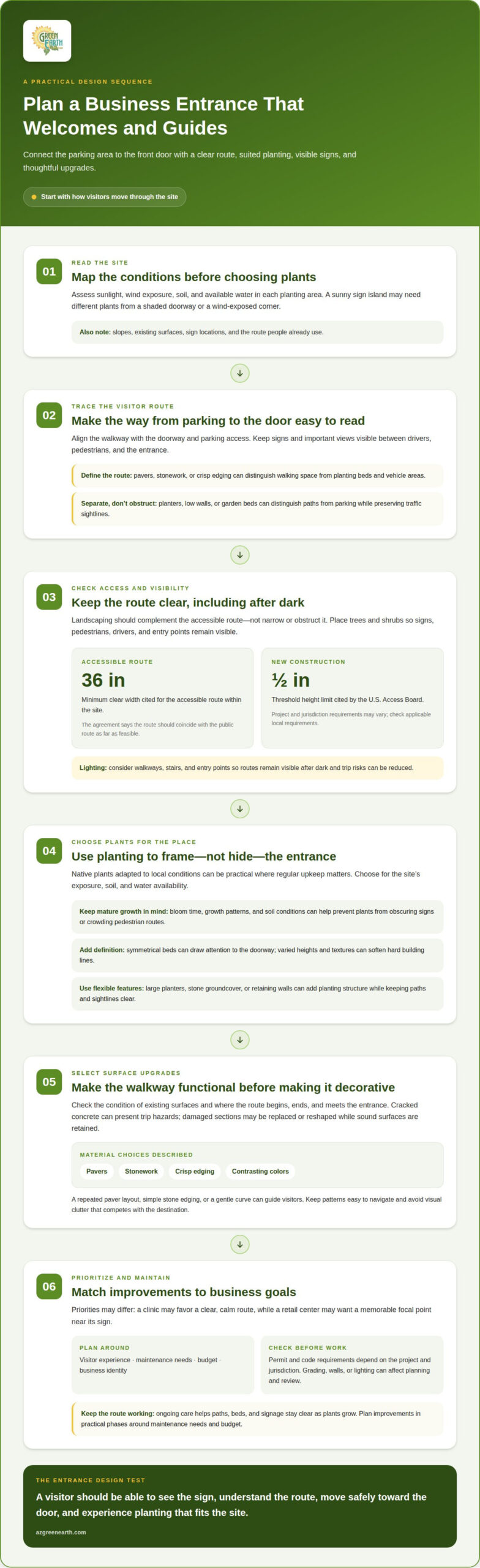
For accessibility, according to the U.S. Department of Justice, the agreement requires an accessible route within the site to coincide with the public route as far as feasible and have a minimum clear width of 36 inches. For new construction, the U.S. Access Board limits threshold height to 1/2”. Landscaping should complement the route, not narrow or obstruct it.
Permit and code requirements depend on the project and its jurisdiction. Local planning and building authorities set applicable requirements, so account for them before work begins. Changes involving grading, walls, or lighting can affect how a commercial landscaping project is planned and reviewed.
For curb appeal, consider large planters beside the entrance, maintained planting around signs, or seasonal color as a focal point. A permanent sign can guide the surrounding landscape design, but plants should never block its message or lighting. On slopes, retaining walls can create tiered planting areas and help control erosion. A professional can help prioritize improvements and phase the work around maintenance needs and the business’s budget. Ongoing commercial landscaping and HOA grounds maintenance keep paths, beds, and signage clear as plants grow.
2. Selecting native plants suited to local conditions
Plant selection starts with the conditions at the entrance, not a generic regional palette. For landscaping for business entrance projects, assess sunlight, wind exposure, soil, and available water in each planting area. A sunny sign island may need different plants from a shaded doorway or wind-exposed corner. Native plants adapted to local conditions can be a practical choice where regular upkeep matters.
Flower beds can add color and draw attention to a business name or doorway. Grouped blooms can echo brand colors while keeping plants low near signs and driveways. Bloom time, growth patterns, and soil conditions also guide plant selection. This helps prevent mature plants from obscuring signage or crowding pedestrian routes.
Conditions vary across Sedona, Camp Verde, Cottonwood, Flagstaff, and Prescott. Consider local climate alongside the entrance’s exposure and soil, rather than assuming one plant palette suits every location. Landscaping for business entrance areas should also account for available water, which affects plant choices and ongoing care.
Where a site slopes or needs screening, a retaining wall can create planting space and help control erosion. A raised bed can soften views of a parking lot while keeping plants organized. Pavers can define the wall’s edge or connect the planting area to the walkway, with the layout preserving a clear passage.
Containers offer a flexible option near doors or signs. Large planters can hold selected plants or small trees, adding color without changing an entire bed. Place them so they preserve access and sightlines. A custom landscape plan can bring native plants, containers, and retaining walls together in a design suited to the site.
3. Walkways with pavers, stonework, and personalized designs
A defined walkway gives visitors a clear route from parking areas to a business entrance. On a commercial property, pavers, stonework, or crisp edging can distinguish the route from planting beds and vehicle areas. Cracked concrete can present trip hazards, so a landscape design may replace or reshape damaged sections while retaining sound surfaces. Align the path with the doorway, parking access, and surrounding site features.
Material and pattern can make a walkway feel specific to the business. A custom design might use pavers in a repeated layout, pair stonework with simple edging, or create a curved approach that complements the building. Contrasting colors can define the route without adding signs or visual clutter. The goal is an attractive entrance that remains easy to navigate, not a decorative pattern that competes with the destination.
Design and installation start with the route people already use and the condition of existing surfaces. Consider where the path begins and ends, how it meets the entrance, and how planting beds or walls affect its edges. Pavers can replace sections of concrete, while a stone border can distinguish the walking area from adjacent landscaping. Coordinating materials with nearby features helps the new work feel integrated.
Lighting can be considered alongside the walkway layout so entry points and changes in direction remain visible after dark. A custom design might pair a straight paver path with a stone accent near the doorway, or use a gentle curve to lead visitors past a planted area. For businesses planning a hardscape improvement, professional pavers and hardscape installation can bring the route, materials, and surrounding landscape together. Careful construction makes the walkway a functional part of the entrance, not an isolated surface upgrade.
4. Choosing upgrades to match business goals
A landscape plan starts with the experience the business wants visitors to have. A clinic may prioritize a clear, calm route, while a retail center may want a memorable focal point near its sign. The property’s purpose, customer experience, maintenance needs, budget, and branding all shape the design. These priorities help separate essential improvements from decorative additions that do not support the entrance’s function.
Next, assess how people arrive and move across the site. A parking lot garden can soften a broad concrete expanse, while a buffer beside a driveway can define pedestrian space. If visibility is the priority, keep planting low around signs and sightlines. If the goal is a stronger first impression, a distinctive planter or seasonal display can create a focal point without changing the whole property.
Maintenance belongs in the decision from the start. A business with limited grounds upkeep may favor durable hardscape and planting suited to local conditions over beds that need frequent replacement. A property with regular commercial landscape maintenance may choose more seasonal color. Consider how plant growth will affect signs, routes, and views over time so the improvements remain useful as plants mature.
Budget planning can shape the order of work. A professional may first address a damaged path or unclear pedestrian route, then schedule planting beds or decorative details as later phases. This keeps the project aligned with spending priorities while preserving a coordinated design. For example, consistent materials and colors can connect a new walkway with future entrance beds. To plan commercial landscape improvements around your property’s goals, discuss your entrance landscaping project.
Green Earth, LC
Green Earth, LC helps commercial properties create welcoming entrances and maintain the surrounding landscape. Turn to the team for an entrance refresh, ongoing grounds care, or irrigation issues that need attention as part of landscape upkeep. Commercial Landscape Maintenance and HOA Landscape Maintenance support consistent care, while Irrigation Drip System Repair and Irrigation Controller Troubleshooting address specific irrigation needs. Firewise Defensible Space can also complement broader landscape planning where defensible space is a priority.
Share your entrance priorities, such as clearer visitor routes, refreshed planting, or a coordinated maintenance plan. Contact Green Earth, LC to discuss your business landscape.
Set a Clear Direction for Your Entrance
A successful landscape plan should suit the way your property operates, not just its appearance on opening day. Before planning the next phase, identify the main priority: a clearer arrival experience, a more distinctive identity, or grounds that are easier to maintain. That gives the design team a practical starting point and helps keep future improvements coherent.
Treat landscaping for a business entrance as an ongoing investment in how people experience the property. Plant growth, changing site needs, and routine upkeep can all affect how the landscape performs over time. A plan that accounts for these changes can help keep the entrance welcoming and functional as the business evolves.
Green Earth, LC can help turn your priorities into a landscape plan shaped around your commercial property. Contact Green Earth, LC to discuss the next step for your entrance. With a clear goal and thoughtful planning, you can create an approach that serves your visitors and your business with confidence.
Frequently Asked Questions
How Can Landscaping Improve Safety and Traffic Flow Around Your Entrance?
Landscaping can support safer traffic flow by making pedestrian routes clear while preserving drivers’ views. At a property with a busy drop-off lane, for example, keep planting low near crossings and place taller shrubs away from turning sightlines. Path lighting can clarify transitions after dark. Position fixtures to illuminate walking surfaces without shining directly into approaching drivers’ eyes.
How Can Landscaping Make Your Business Entrance More Welcoming?
A welcoming entrance helps visitors know where to go and feel comfortable approaching the building. A seating area can serve people waiting for appointments, while a distinctive planter can mark the main door without crowding it. Consider how the entrance looks from both the parking area and the exit route. Consistent upkeep helps the experience feel intentional throughout a visitor’s trip.
How Can a Landscaping Professional Choose Upgrades That Match Your Business Goals?
Start by observing how visitors, staff, and service vehicles use the entrance. This can reveal whether the priority is easier wayfinding, a more polished arrival, or simpler ongoing care. Rank improvements by how well they address those priorities. For example, a confusing route may need clearer path definition before decorative features are added.
Why Is Entrance Landscaping the Most Important First Impression?
Visitors often form their first impression of a business from its entrance. A clear approach, legible sign, and well-maintained surroundings can make arrival feel organized before anyone steps inside. The same area shapes the final view as visitors leave, so a coherent design supports a consistent experience from arrival to departure.
How much does commercial entrance landscaping cost?
Commercial entrance landscaping costs depend on project scope and site conditions. A refresh using existing beds differs from work involving new pavers, retaining walls, grading, or irrigation repairs. Plant choices, materials, and phased construction also affect the work. Green Earth, LC provides project pricing upon request, based on the specific improvements and site conditions.
Which low-maintenance plants are best for commercial landscaping?
The best options are native plants suited to the entrance’s sunlight, wind exposure, soil, and water availability. Those conditions can differ across Sedona, Camp Verde, Cottonwood, Flagstaff, and Prescott, so a plant that thrives in one setting may not suit another. A professional can assess the site and select plants whose growth habits fit the beds and surrounding use.
Recent Comments