
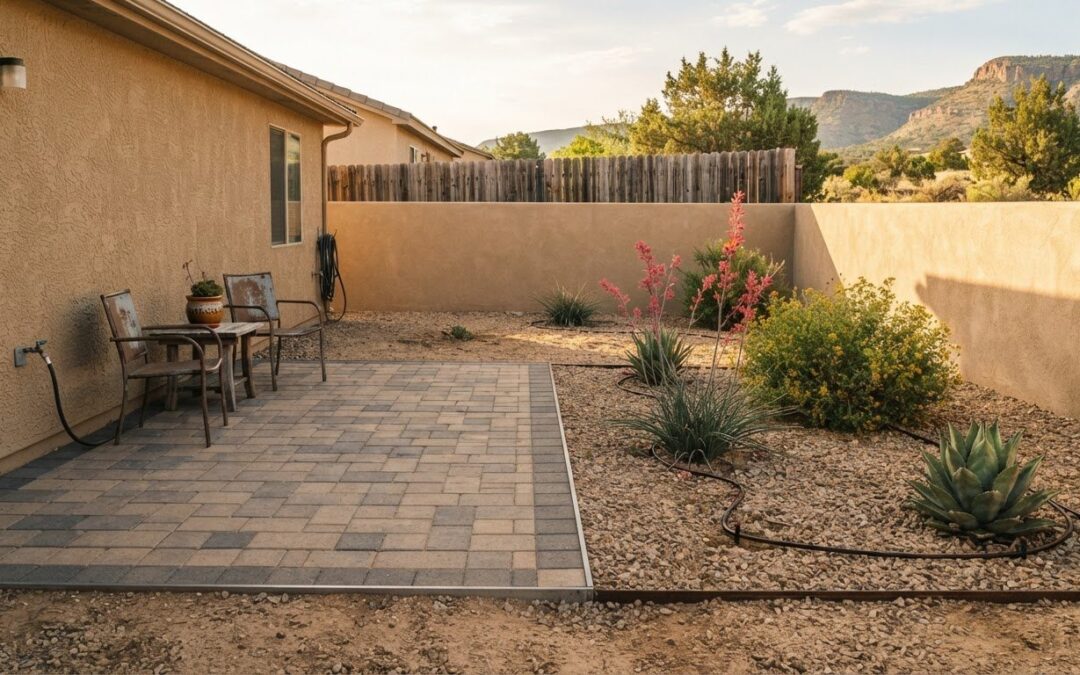
A small yard isn’t automatically a small landscaping project. For landscaping on a budget in Arizona, the overall cost depends on the scope, materials, site conditions, and the features you choose, with pavers adding their own design and installation considerations.
It makes sense to want a clear estimate before committing to changes. Across Arizona communities, a compact space can still need careful planning for sun exposure, drainage, plant selection, and ongoing maintenance, so the lowest upfront option may not be the best fit for the yard over time.
This guide from Green Earth, LC explains what shapes small-yard landscaping costs in the region and how different materials and project choices affect a budget. You’ll also see what to consider when planning a paver patio or pathway, choosing desert-friendly planting, and balancing initial work with future care.
Key Takeaways
- Set your project priorities first so you can focus spending on the changes that will make the biggest difference in a small yard.
- Compare desert-friendly materials by their appearance, upkeep needs, and fit with the yard’s conditions.
- Plan plant choices around sun exposure, soil, irrigation, mature size, and the care you want to provide over time.
- Understand how patio and pathway design, base preparation, and drainage influence a paver project’s scope and durability.
1. Average Phoenix landscaping costs
A small-yard budget in Sedona, Camp Verde, Cottonwood, Flagstaff, or Prescott starts with a defined scope. A 200-square-foot planting area differs from a complete backyard redesign. List the intended work, such as planting, irrigation changes, surface preparation, or grading. Each task affects labor, materials, equipment access, and coordination. Comparing proposals is more useful when they describe the same work and finished result.
For a useful estimate, describe both the area and the result you want. Replacing a bare section with drought-adapted plants is different from adding a paved sitting area. Existing irrigation, uneven ground, restricted access, and unwanted materials to remove also affect the work. A clear written scope identifies these tasks so you can see how the design and site conditions shape the project.
Arizona rebates for turf removal or water-efficient landscaping depend on the local water provider or municipality. Eligibility may depend on the area being converted and the replacement landscape, so include an incentive in your budget only if the project meets the program’s criteria.
Separate essential work from optional upgrades before comparing plans. Start with functional needs, such as drainage problems or irrigation that cannot support new planting. Then prioritize visible improvements, such as a focal bed or seating area. This keeps the initial scope focused and leaves room for later additions. In Flagstaff, for example, the existing grade matters when planning new surfaces.
Ask for an estimate organized by task rather than yard size alone. A project may involve site preparation, plant selection, irrigation adjustments, grading, and installation. That range is a planning consideration, not a statement that every yard needs a permit. A clear scope helps show which choices drive the work and where a simpler design could reduce complexity.
2. Desert-friendly landscaping materials
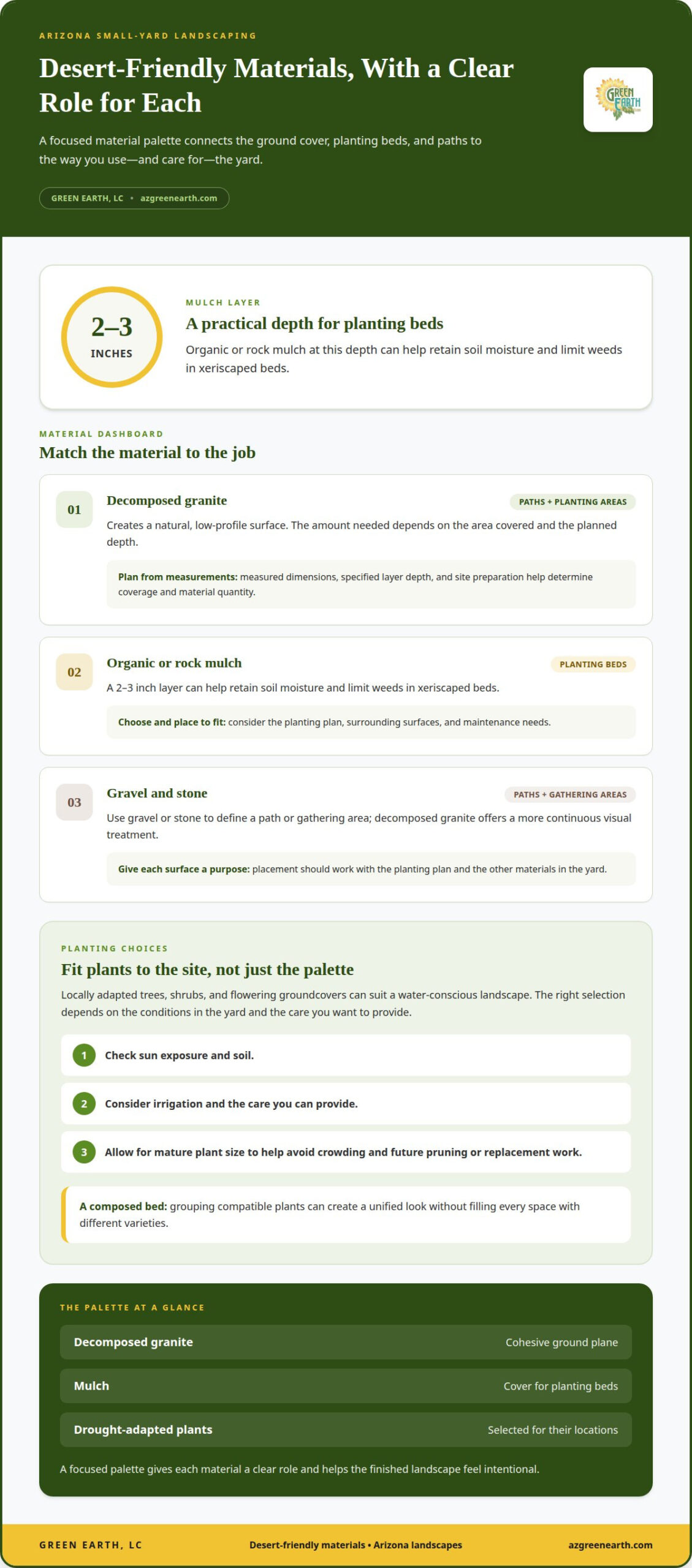
Material selection shapes both the look and upkeep of an Arizona yard. Decomposed granite creates a natural, low-profile surface for paths and planting areas. The amount depends on the area to be covered and the planned depth. A professional can estimate coverage from measured dimensions and account for the specified layer and site preparation, aligning the material order with the design rather than a rough guess.
Mulch offers another practical choice around plants. A 2-3 inch layer of organic or rock mulch can help retain soil moisture and limit weeds in xeriscaped beds. Professionals select the type and placement to complement the planting plan, surrounding surfaces, and maintenance needs. Gravel and stone can also define paths or gathering areas, while decomposed granite keeps the visual treatment more continuous.
For affordable, drought-tolerant native planting, consider locally adapted trees, shrubs, and flowering groundcovers. The right choices depend on sun exposure, soil, irrigation, and the care you can provide. Grouping compatible plants in a bed creates a composed look without filling every space with different varieties. Mature size matters, too: plants suited to the available area can reduce future pruning and replacement work.
Professionals help source plants and landscape materials by matching quantities, sizes, and material types to the design. They can plan where mulch, gravel, and plants belong, then coordinate the installation sequence to avoid unnecessary handling or waste. For example, decomposed granite intended for a pathway needs a different placement plan from mulch around a planting bed. A coordinated landscape material plan connects those choices with the finished yard.
Keep the material palette focused. Use decomposed granite for a cohesive ground plane, mulch to cover planting beds, and drought-adapted plants suited to their locations. Giving each material a clear role helps the finished landscape feel intentional.
3. Planning for maintenance and local conditions
A planting plan should suit the yard’s sun exposure, soil, irrigation, wildlife conditions, and available care. Before selecting plants, consider their mature width and height, then place them where they can grow without crowding paths or structures. A sun-exposed bed in Cottonwood, for example, calls for different choices than a shaded area beside a home. Matching plants to the site can also make ongoing care more manageable.
Native plants can support water-conscious landscapes in Sedona, Camp Verde, Cottonwood, Flagstaff, and Prescott. Xeriscaping uses plants and design suited to local conditions, but choices still depend on soil, irrigation coverage, exposure, and maintenance preferences. Plants suited to their site are less likely to need replacement or corrective work. Account for mature size as well as appearance.
Permit requirements for tree removal, drainage changes, and irrigation work depend on the municipality and project scope. That figure is a planning consideration, not a guarantee that a particular project needs a permit. The proposed work and local requirements determine whether permitting applies.
The scope of a drip irrigation installation depends on the area served, existing lines, water access, and planting-bed layout. A professional also considers emitter placement, controller compatibility, and whether existing components need repair. A compact bed connected to a usable system involves different work from a yard needing new lines across several planting zones.
Plan for both plant growth and how the irrigation system delivers water. A professional can assess whether existing drip irrigation supports the selected plants and identify blocked emitters, leaks, or uneven coverage. Green Earth, LC provides Irrigation Drip System Repair to address system problems without treating every project as a full installation. Connecting plant needs, site conditions, and future care helps create a landscape suited to the property.
4. Budget paver patios and pathways
A paver project’s footprint is one of its most important budget decisions. A compact patio or direct pathway uses less surface area than a broad, winding layout. Professionals can shape the design around a clear purpose, such as connecting a back door to a seating area. A defined route reduces unnecessary paving while keeping the yard functional.
Ground preparation matters as much as the visible pavers. A patio should have a base of 4-6 inches of compacted gravel. That foundation supports the finished surface and helps limit shifting. The required preparation depends on the site, including existing soil, slope, and drainage. A professional evaluates these conditions before setting the project scope.
Drainage needs deliberate attention. A paver patio should have a slope of at least 1% to direct rainwater away from a home’s foundation. The design should consider where runoff will travel, nearby planting beds, and the existing grade. For example, a patio beside the house needs a layout that moves water away rather than toward the structure.
Material selection affects the finished appearance and installation plan. Paver shape, color, pattern, edge details, and transitions to nearby gravel or planting beds all matter. A simple pattern can create a cohesive surface without unnecessary design complexity. A narrow pathway can use a restrained layout, while a patio may need more room for furniture and movement.
To keep the scope focused, decide how the space will function before finalizing its size and layout. Then have the installation plan account for the base, grade, drainage, and paver pattern together. Cutting corners on preparation can undermine the finished surface, so a lower-cost design should simplify the footprint, not skip essential groundwork. Plan a paver patio or pathway around the space you want to use.
Green Earth, LC
Green Earth, LC provides custom landscape design and installation suited to local conditions. When irrigation problems complicate plant care, Irrigation Drip System Repair and Irrigation Controller Troubleshooting can address issues affecting system operation. For ongoing property needs, the company also provides HOA Landscape Maintenance, Commercial Landscape Maintenance, and Firewise Defensible Space.
Bring your priorities together, whether you’re improving irrigation, planning regular landscape care, or addressing defensible space. Green Earth, LC can help you plan the work around those needs. Contact the team to discuss your landscaping project.
Give your yard a clear next step
Choose the change that would make your yard more useful day to day, then define what success looks like. For landscaping on a budget in Arizona, a focused project plan keeps decisions aligned with your priorities instead of adding features without a clear purpose. Consider how you want to use the space, how much ongoing care suits your routine, and which improvements can wait for a later phase.
That direction gives a professional a practical starting point for planning work around your property. Green Earth, LC can help you discuss priorities and plan a suitable approach for your landscape, whether you’re improving a small outdoor area or addressing broader property needs.
Ready to take the next step? Contact Green Earth, LC today to start a conversation about your landscape. A thoughtful plan can turn your ideas into a welcoming outdoor space, one considered decision at a time.
Frequently Asked Questions
How much does it cost to landscape a small backyard in Arizona?
There isn’t one dependable price for every small Arizona backyard; the estimate depends on the project scope. Updating planting beds differs from changing irrigation, grading, or hardscape. Site conditions and material choices also affect the work involved. For a useful estimate, define the result you want and the project area, then assess the preparation and installation the property needs.
What can I use instead of a lawn in Arizona?
Instead of a conventional lawn, consider drought-adapted planting, decomposed granite, gravel, or a paved gathering area. A compact seating space beside planted beds, for example, leaves less room for a water-intensive surface. The right combination depends on how you use the yard, its sun and soil conditions, and your preferred level of ongoing care.
What is the cheapest ground cover for an Arizona backyard?
There isn’t one cheapest ground cover for every yard. Decomposed granite, gravel, and mulch suit different areas, while coverage, preparation, and finish shape the project scope. For example, mulch can define planting beds, while gravel or granite can cover open paths. Choose materials for each area’s function and maintenance needs to avoid replacing an unsuitable surface later.
What is xeriscaping and why is it good for an Arizona budget?
Xeriscaping is landscape design that organizes plants and materials around efficient water use. It can suit Arizona yards by favoring plants adapted to local conditions and grouping them according to their needs. For example, a planting bed can bring compatible species together rather than mixing plants with different watering requirements. This approach can support lower water use and manageable upkeep.
What are the cheapest landscaping ideas for Arizona yards?
Cost-conscious ideas include refreshing one defined area, choosing a restrained material palette, and keeping paths direct rather than elaborate. A compact seating area beside a simple planting bed, for instance, creates a useful destination without redesigning the whole yard. Phasing improvements lets homeowners prioritize function first and add features later, keeping each project aligned with the property’s conditions.
How much can xeriscaping save on Arizona water bills?
Water-bill savings depend on existing water use, local rates, and how much irrigated area changes. Xeriscaping with native plants can reduce outdoor water consumption by 50% or more in Prescott and Prescott Valley, but that doesn’t guarantee the same percentage reduction in a household bill. In Sedona, Camp Verde, Cottonwood, Flagstaff, and Prescott, actual savings depend on individual usage and billing structure.
Recent Comments