
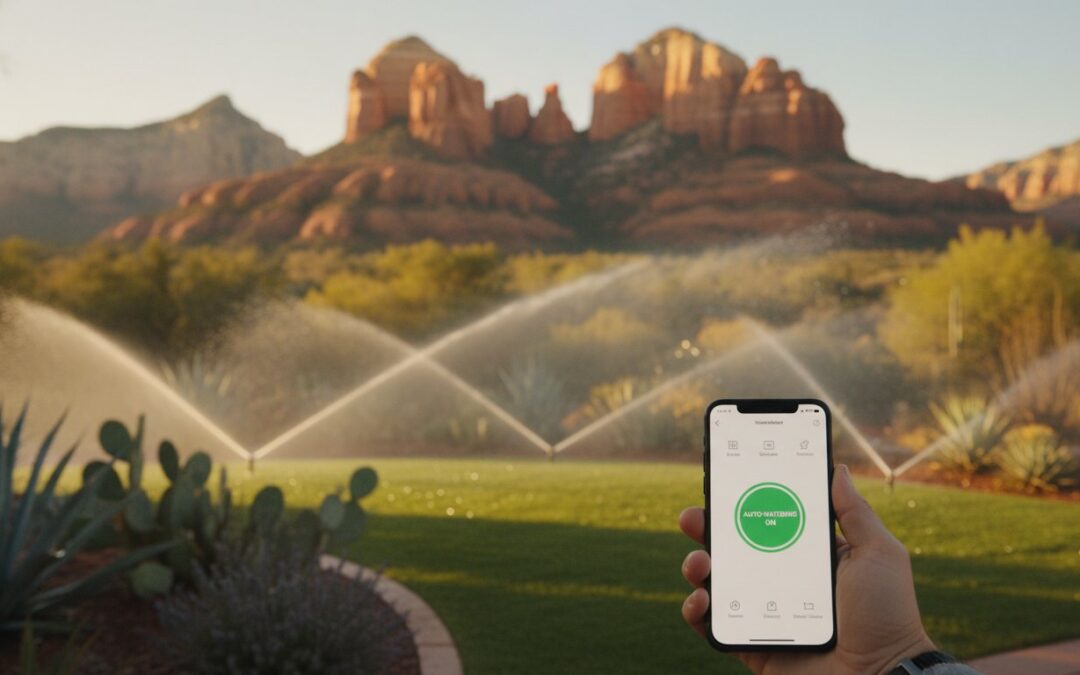
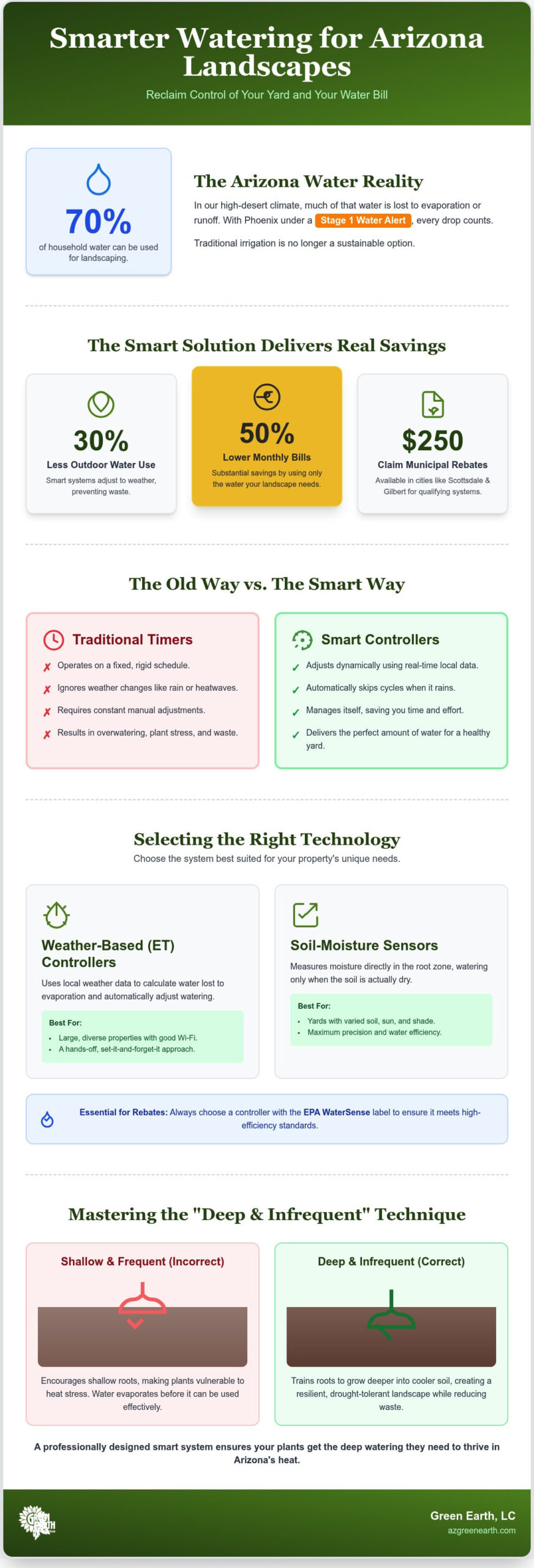
Did you know that up to 70% of your household water use likely goes straight into your yard? In our high-desert climate, a significant portion of that water often evaporates or runs off before it ever reaches a root. Investing in smart irrigation controllers Arizona homeowners can trust isn’t just a tech upgrade; it’s a necessary defense against rising municipal rates and the relentless sun. With Phoenix currently under a Stage 1 Water Alert, managing every drop has become a civic responsibility as much as a financial one.
We understand the frustration of watching your water bill climb while your favorite plants struggle. Programming a traditional timer often feels like a guessing game that leads to soggy soil or brittle leaves. This guide helps you reclaim control over your landscape. You’ll discover how weather-responsive technology can slash your outdoor water use by as much as 30% and lower your monthly bills by up to 50%. We will explore the top 2026 models, explain how to claim rebates of up to $250 in cities like Scottsdale or Gilbert, and show you how professional troubleshooting ensures your desert garden thrives even when you’re away from home.
Key Takeaways
- Identify whether weather-based ET controllers or soil-moisture sensors are better suited for your property’s specific microclimate and soil conditions.
- Master the “deep and infrequent” watering technique to protect your plants from the desert heat while significantly reducing water waste.
- Check your existing hardware’s compatibility with the top smart irrigation controllers Arizona offers to ensure a seamless and reliable technical upgrade.
- Learn why professional troubleshooting and expert system design are essential for integrating smart technology into a truly sustainable Northern Arizona landscape.
What are Smart Irrigation Controllers and Why Does Arizona Need Them?
In Northern Arizona, where outdoor watering can account for up to 70% of total household water use, the “set it and forget it” approach to irrigation is no longer sustainable. Traditional controllers operate on a fixed schedule, delivering the same amount of water regardless of whether it rained an hour ago or if a record breaking heatwave is hitting the Verde Valley. This lack of flexibility leads to significant waste and plant stress. By contrast, smart irrigation controllers Arizona residents install today act as an intelligent brain for their landscape, using real-time environmental data to make precise adjustments. These systems don’t just follow a clock; they respond to the actual needs of your soil and plants.
Beyond the obvious ecological benefits, there is a strong economic case for upgrading. A smart system can reduce landscape water use by as much as 30%, which translates to substantial savings on monthly municipal bills. Additionally, modern units often include flow monitoring. This feature detects leaks early, preventing the kind of structural property damage and soil erosion that often goes unnoticed until it becomes an expensive repair. With 47 years of experience in the region, Green Earth, LC has seen how these technical upgrades transform a struggling yard into a resilient desert sanctuary.
The Difference Between a Timer and a Smart Controller
Traditional irrigation clocks are static. They run on a rigid timeline that requires manual intervention every time the season changes or a storm rolls through. Smart controllers are dynamic. They utilize local weather data and specialized algorithms to determine what smart irrigation controllers do best: delivering water only when necessary. If high winds are forecasted or if a monsoon downpour provides natural hydration, the system automatically skips the scheduled cycle. Most of these units are managed via intuitive smartphone apps, giving you the ability to monitor your yard from anywhere in the world.
Why Northern Arizona’s Climate Demands Smart Tech
The transition from the high altitude of Flagstaff to the red rocks of Sedona creates diverse microclimates that a standard timer simply cannot handle. In these regions, the combination of intense high altitude sun and extremely low humidity creates high evapotranspiration (ET) rates. Evapotranspiration is the combined process of water evaporating from the soil and transpiring from plant leaves; in Sedona, this rate dictates exactly how much supplemental water a native juniper or agave needs to survive the summer. A fixed timer might overwater during the humid monsoon season, leading to root rot, or underwater during a dry June. Smart technology bridges this gap by automatically adjusting for these shifts, ensuring your landscape remains healthy while respecting our precious local water resources.
Weather-Based vs. Soil-Moisture Sensors: Selecting the Right Tech
Selecting the ideal hardware for a Northern Arizona landscape requires a move away from generic “smart” labels toward specialized performance. The two primary technologies available are weather-based (ET) controllers and soil-moisture sensors. Both aim to eliminate the waste associated with fixed timers, but they function in fundamentally different ways. According to the Arizona Department of Water Resources, these high-efficiency systems can reduce outdoor water use by 20% to 40%, provided they carry the EPA WaterSense label. This certification is a non-negotiable requirement for homeowners looking to qualify for local municipal rebates in cities like Sedona or Prescott.
For many property owners, the decision rests on the specific layout of their yard and their personal maintenance preferences. While one system relies on atmospheric data, the other focuses on what is happening beneath the surface. When you invest in smart irrigation controllers Arizona residents often find that the “best” choice is the one that accounts for the specific microclimate of their neighborhood.
Weather-Based (ET) Controllers: The Hands-Off Choice
ET controllers function by pulling real-time data from local weather stations, such as those at the Prescott airport or regional meteorological hubs. They calculate the specific amount of water lost to the atmosphere and adjust the schedule accordingly. For large residential lots in Sedona, these units are often the preferred hands-off choice. They don’t require burying sensitive hardware in the ground, which simplifies the initial setup and prevents damage from digging. The primary maintenance requirement is a robust Wi-Fi signal; if the connection drops, the system may revert to a less efficient backup schedule. This makes them highly reliable for those who travel frequently and need a system that manages itself based on regional climate shifts.
Soil-Moisture Sensors in Arizona Clay and Caliche
Soil-moisture sensors offer a more direct approach by measuring the actual water content at the root zone. While these provide incredible precision, Northern Arizona’s rocky soil, often thick with clay and caliche, presents a significant installation hurdle. It’s difficult to get a sensor properly seated in a bed of limestone or compacted earth without professional help. Despite this, sensors are often superior for deep-root drip systems because they ignore the surface heat and focus only on the moisture available to the plant. These sensors prevent root rot in desert-adapted plants by halting irrigation cycles when the soil remains saturated from a previous monsoon event. If your current system is underperforming or you’re struggling with complex settings, professional irrigation controller troubleshooting can help determine which technology aligns with your specific soil profile and plant palette.
For the ultimate in precision, hybrid systems combine both ET data and soil sensors to cover every variable. This ensures your yard remains resilient against the desert heat while preventing a single drop of waste. When you choose smart irrigation controllers Arizona landscapes thrive because the technology respects the unique environmental constraints of the Verde Valley and the high desert.
Solving the Arizona ‘Watering Frequency’ Dilemma
The most common error Northern Arizona homeowners make is adjusting the run-time minutes on their irrigation clock while leaving the watering frequency the same. This approach often results in moisture that never penetrates the deeper soil layers or, conversely, keeps the surface perpetually damp. To achieve a healthy, resilient landscape, you must master solving the watering frequency dilemma by prioritizing deep, infrequent applications. This method encourages roots to reach deeper into the cooler earth, providing a natural buffer against the scorching desert heat. Modern smart irrigation controllers Arizona residents use are specifically designed to automate this complex logic, shifting the schedule based on the actual needs of the plant rather than a static calendar.
Efficiency also depends on the intelligent management of “Hydrozones.” This practice involves grouping plants with similar hydration needs on the same irrigation valve. Cacti and agaves shouldn’t share a line with thirsty citrus trees or lush flowering shrubs. By isolating these zones, your smart controller can deliver precise volumes to each group, ensuring no plant is over-saturated or neglected. This level of precision is exactly what distinguishes a professional landscape management plan from a basic DIY setup.
For those living in Flagstaff, the challenge is even more specific due to a shorter growing season and the threat of early freezing winters. A smart system helps by automatically tapering off watering as temperatures drop in the fall. Properly managing this transition is vital to prevent cracked pipes and frost damage, tasks made significantly easier when your controller anticipates the seasonal shift for you. Green Earth, LC has spent 47 years helping neighbors navigate these high-altitude transitions with sustainable, tech-forward solutions.
Deep Watering vs. Surface Sprinkling
In the Verde Valley, shallow sprinkling is a recipe for disaster. Frequent, light watering leads to salt buildup in the upper soil, which eventually chokes and kills sensitive desert-adapted species. High-quality smart controllers solve this through “soak-and-cycle” features. This technology breaks a long watering cycle into several shorter bursts, allowing the water to penetrate heavy clay without creating wasteful runoff. Managing this runoff is a critical component of drainage grading Arizona property owners must consider to protect their home’s foundation and prevent soil erosion during intense storms.
Adjusting for the Arizona Monsoon Season
July and August bring the unpredictable intensity of the monsoon season. While traditional timers will dutifully water your yard during a downpour, smart irrigation controllers Arizona landscapes rely on use rain sensors and predictive weather data to skip cycles when nature provides the moisture. This is especially useful in Sedona’s unique micro-climates, where one neighborhood might receive a deluge while another remains dry. By customizing your controller settings to your specific zip code, you prevent water waste and ensure your landscape utilizes every drop of natural rainfall efficiently.
Selecting and Installing Your Smart Controller in Northern Arizona
Transitioning from a traditional timer to one of the smart irrigation controllers Arizona homeowners now prefer requires more than just swapping a box on the wall. First, you must verify that your existing solenoid valves and wiring are compatible with modern low-voltage digital signals. Most systems installed in the last twenty years will work, but older setups may require updates to the wiring or the valves themselves. During the initial software setup, precision is your best friend. You will need to input specific data points for every zone, including soil texture, plant species, and the degree of slope. In Northern Arizona, neglecting to account for the slope can lead to water pooling at the bottom of a hill while the top remains parched.
Location is the second major factor. While many controllers are designed for outdoor mounting, they must be housed in a weather-resistant, lockable cabinet to survive our intense summer heat and winter freezes. More importantly, these units rely on a consistent Wi-Fi signal to pull weather data. If your irrigation box is located on the far side of a stucco or brick home, you may need a Wi-Fi extender to ensure the controller does not lose its “smart” capabilities and revert to a basic timer.
Professional Installation vs. DIY
Retrofitting modern technology into older irrigation repair Flagstaff systems can be surprisingly complex. While a DIY enthusiast might manage a simple four-zone swap, larger properties and HOAs should always opt for professional installation. Expert setup ensures that every zone is correctly mapped and that the master valve, which prevents system-wide leaks, is properly integrated. In the rural Verde Valley, professional installers can also troubleshoot signal interference and ensure your system remains connected through seasonal storms.
A Buyer’s Checklist for 2026
As you shop for a desert-ready controller, look beyond the slick smartphone interface. Verify if your local municipality offers rebate programs that can offset the purchase price. To maximize your investment, prioritize these five essential features:
- EPA WaterSense Certification: This is often a non-negotiable requirement for municipal rebates.
- Master Valve Support: This feature provides an extra layer of protection by shutting off the main water supply when the system is not in use.
- Flow Monitoring and Leak Detection: Essential for identifying underground breaks before they cause property damage.
- Hyperlocal Weather Station Integration: Ensures your system reacts to the rain in your neighborhood, not just the regional airport.
- Multi-Zone Scalability: Allows for future landscape additions or the creation of new hydrozones.
Investing in professional expertise during the installation phase pays for itself by preventing plant loss and ensuring your system operates at peak efficiency from day one. If you are ready to modernize your yard, our team can provide expert irrigation controller troubleshooting and installation to protect your landscape investment.
Sustainable Landscape Management with Green Earth, LC
Green Earth, LC has spent more than 47 years serving as a responsible guardian of the Northern Arizona landscape. Our commitment to environmental stewardship is built into every project we undertake, from intimate residential gardens to sprawling commercial sites. We believe that true sustainability requires a marriage of natural beauty and technical precision. This is why professional desert landscape design Northern Arizona projects must include smart irrigation as a foundational element. By integrating advanced technology into the initial design phase, we ensure that your outdoor space remains vibrant and healthy without placing an undue burden on our region’s limited water resources.
Our team brings a level of local expertise that only decades of Verde Valley experience can provide. We understand the nuances of our native soil and the specific hydration requirements of high-desert flora. While many providers offer generic solutions, we specialize in the custom calibration of smart irrigation controllers Arizona properties require to survive our unique climate. This local knowledge is especially vital for HOAs and commercial property managers who oversee large-scale systems. We provide the centralized management and technical oversight necessary to maintain uniform beauty across hundreds of acres while keeping operational costs and water waste at a minimum.
Expert Irrigation Troubleshooting and Repair
A smart controller is only as effective as the infrastructure it manages. Our technicians excel at identifying and fixing hidden leaks that can silently drain your bank account and damage your property’s foundation. We focus on optimizing drip systems to deliver water directly to the root zones of native Arizona flora, minimizing evaporation and weed growth. For clients looking to combine efficiency with structural elegance, we often integrate these systems with local stone and masonry. You can learn more about these cohesive outdoor spaces in our guide to hardscape construction Cottonwood AZ, which explores how to balance functional irrigation with beautiful, low-maintenance design.
Protecting Your Investment and the Environment
Upgrading to smart irrigation is a strategic investment in your property’s long-term value. A healthy, well-managed landscape enhances curb appeal and resilience, providing a significant return on investment through lower utility bills and reduced plant replacement costs. Beyond the financial gains, there is the pride that comes from being an active participant in local conservation efforts. As stewards of the Sedona and Verde Valley landscapes, we take our role seriously. We don’t just install hardware; we build sustainable ecosystems that will thrive for generations to come. If you’re ready to modernize your system and protect your piece of the desert, Schedule your irrigation audit with Green Earth, LC today. Let us help you transform your landscape into a model of water efficiency and natural beauty.
Securing the Future of Your Northern Arizona Landscape
Transitioning to modern irrigation technology is a vital step toward protecting both the natural beauty and the financial value of your property. By moving away from rigid, outdated timers and embracing the data-driven precision of smart irrigation controllers Arizona landscapes require, you ensure every drop of water serves a specific purpose. We’ve explored how selecting the right sensors and mastering deep-watering techniques can transform your yard into a resilient desert sanctuary that thrives through every season.
Green Earth, LC brings over 47 years of Northern Arizona expertise to every project. As a statewide runner-up for Best Sustainable Landscape Designer, we take pride in our role as specialized partners for residential homeowners, commercial properties, and HOAs. We understand the unique demands of our local soil and microclimates; we provide the professional troubleshooting and design needed to achieve lasting excellence. It’s time to stop the guesswork and start investing in a smarter, more sustainable future for your outdoor space.
Optimize Your Arizona Landscape: Contact Green Earth, LC for a Smart Irrigation Consultation
Frequently Asked Questions
How much water can a smart irrigation controller really save in Arizona?
A smart irrigation controller can reduce landscape water use by as much as 30% in our arid climate. For many homeowners, this translates to a 30% to 50% reduction in monthly water bills. These savings are achieved by eliminating the “set it and forget it” mentality and allowing the system to adjust for actual weather patterns rather than a static timer.
Do smart controllers work with drip irrigation systems?
Yes, smart controllers are exceptionally effective when paired with drip irrigation systems. They allow for the “deep and infrequent” watering that native desert plants require to build strong, resilient root systems. By managing specialized soak-and-cycle features, these controllers ensure water reaches the deep root zone without causing surface runoff or excessive evaporation.
Will a smart controller work if my Wi-Fi goes down?
Most smart controllers continue to operate using a stored backup schedule if your Wi-Fi connection is interrupted. While the unit won’t be able to pull real-time weather updates until the connection is restored, it won’t leave your plants without water. Once the signal returns, the device automatically syncs with local weather stations and resumes its intelligent adjustments.
Are there rebates available for smart controllers in Sedona or Flagstaff?
Many municipalities across the state offer significant rebates to encourage water conservation. While specific amounts vary by year, cities like Scottsdale and Gilbert currently provide up to $250 for WaterSense-labeled controllers. Residents in Sedona and Flagstaff should check with their local water utilities, as 2026 programs frequently offer incentives to offset the initial purchase and installation costs.
Can I install a smart irrigation controller myself?
While a basic four-zone replacement might be a manageable DIY project, professional installation is highly recommended for larger properties or complex systems. Expert setup ensures your smart irrigation controllers Arizona investment is correctly calibrated for specific soil types, slopes, and plant species. Professionals also handle the nuances of wiring and Wi-Fi signal strength that often frustrate homeowners.
What happens to my smart controller during an Arizona monsoon?
During the monsoon season, your smart controller uses predictive weather data or an integrated rain sensor to automatically skip scheduled cycles. This prevents the wasteful practice of watering your yard during or immediately after a heavy downpour. By leveraging local weather station data, the system ensures your landscape utilizes natural rainfall before resuming supplemental irrigation.
Is a soil moisture sensor better than a weather-based controller for desert soil?
Both technologies offer high efficiency, but the choice depends on your specific soil profile. Soil moisture sensors provide direct data on root zone hydration but can be difficult to install in the rocky, caliche-heavy earth typical of Northern Arizona. Weather-based (ET) controllers are often the preferred “hands-off” choice for large residential lots because they don’t require buried hardware.
How often should I check my smart irrigation system for leaks?
You should perform a visual inspection of your system at least once a month, even if your controller features automatic leak detection. While smart irrigation controllers Arizona residents use can identify major breaks through flow monitoring, small cracks or clogged emitters can still occur. Regular troubleshooting helps identify these minor issues before they impact the health of your plants or your water bill.
Recent Comments