
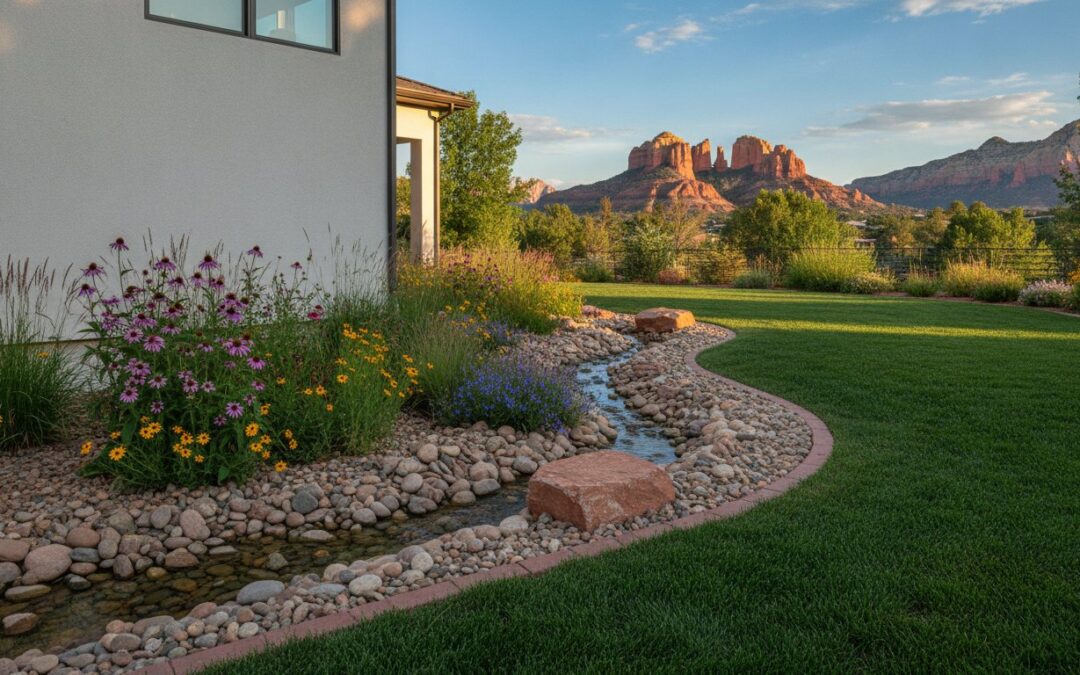
Your backyard’s greatest threat isn’t the summer heat, but the thousands of gallons of water that can drop in a single afternoon during a Northern Arizona monsoon. If you’ve watched standing water turn your lawn into a pest-ridden marsh or seen soil erosion strip away your landscape, you’re not alone. Many homeowners in Flagstaff and the Verde Valley struggle with these issues, especially when the region’s notorious caliche soil makes DIY digging nearly impossible. It’s frustrating to feel like your property is at the mercy of the next storm.
The good news is that effective backyard drainage solutions can transform your outdoor space from a flood risk into a functional asset. We’ll show you how to master the art of managing intense rainfall through professional grading and sustainable design that protects your foundation. This 2026 guide covers everything from managing Coconino County’s current permit timelines to implementing aesthetic features that blend with our desert environment. You’ll learn how to secure your home’s long-term value while creating a dry, beautiful landscape that works with nature instead of fighting it.
Key Takeaways
- Apply the 5% rule of professional grading to ensure water flows at least ten feet away from your home’s foundation.
- Select the most effective backyard drainage solutions by comparing the subsurface protection of French drains with the high-volume runoff management of dry creek beds.
- Integrate sustainable features like rain gardens and permeable pavers to transform excess storm water into a self-watering landscape asset.
- Utilize advanced laser-leveling and site analysis to achieve precise results in the challenging, flat terrain of the Verde Valley.
- Protect your property’s long-term value by implementing drainage strategies that align with local HOA regulations and current county standards.
Understanding Backyard Drainage Challenges in Northern Arizona
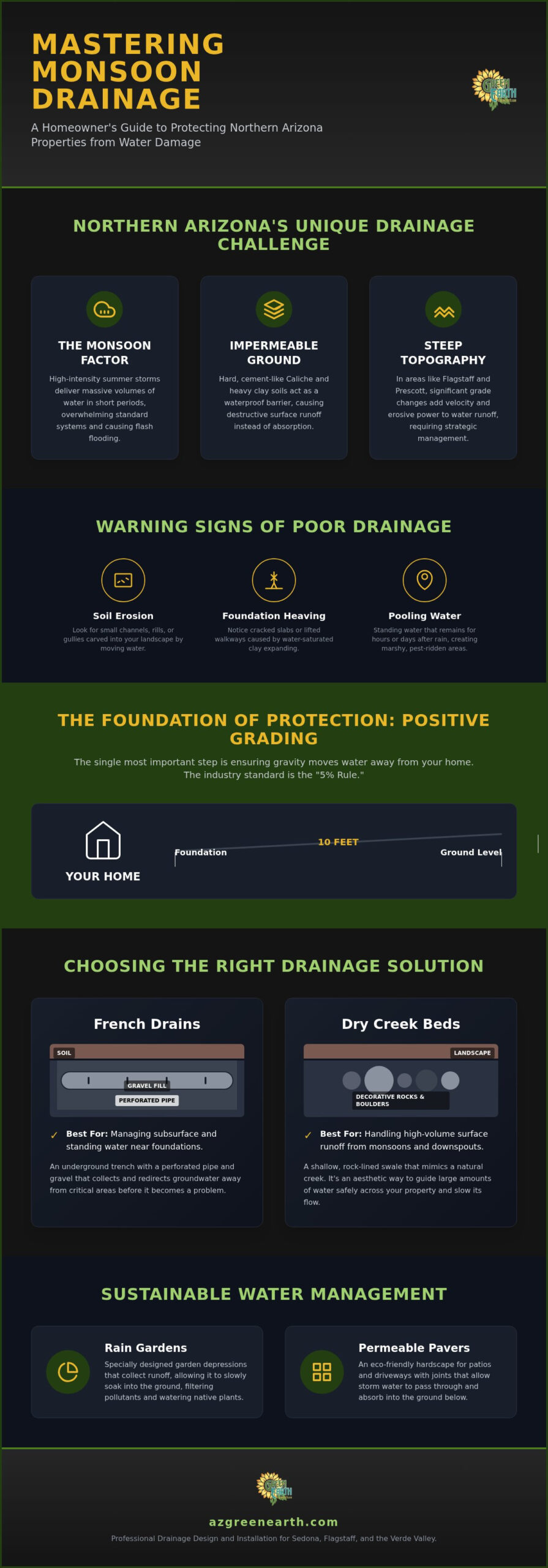
Northern Arizona presents a unique set of environmental challenges that render generic backyard drainage solutions ineffective. In areas like Sedona and Cottonwood, the “Monsoon Factor” dominates the landscape. These high-intensity summer storms deliver massive volumes of water in very short windows. Standard systems designed for steady, light rain often overflow, leading to flash flooding on residential lots. Without professional intervention, this water moves with enough energy to strip away topsoil and compromise structural integrity.
The soil composition complicates matters further. Much of the region sits atop caliche, a naturally occurring cement-like layer of calcium carbonate. When you combine this with heavy clay, the ground acts as a waterproof barrier rather than a sponge. Instead of soaking in, water travels across the surface with destructive force. In higher elevations like Flagstaff and Prescott, steep topography adds velocity to this runoff. Managing a significant grade change across a backyard requires more than just a pipe; it requires strategic energy dissipation to prevent downstream damage.
We also deal with a dual-threat seasonal cycle. Winter brings heavy snowpack that melts slowly, saturating the ground and putting constant pressure on foundations for weeks at a time. Summer brings violent downpours that scour the land in minutes. Effective backyard drainage solutions must be engineered to handle both the slow, persistent soak of snowmelt and the sudden, violent surge of a July storm. Relying on 47 years of local experience, we’ve seen that one-size-fits-all approaches simply don’t hold up against these regional extremes.
Why ‘Standard’ Solutions Don’t Always Work in the Verde Valley
Many homeowners attempt to install shallow systems using thin-walled PVC pipes. In the Verde Valley, the intense summer heat can make lower-grade plastics brittle over time, leading to underground collapses that are difficult to diagnose. Digging shallow trenches in rocky soil often results in “perched” water tables where the drain sits above the caliche layer, failing to capture subsurface moisture. Understanding How French drains work is essential; they require specific depth and aggregate to function properly in our terrain. Additionally, Arizona follows the “Common Enemy” doctrine regarding surface water. This legal principle means you can protect your property from runoff, but you can’t negligently divert that water in a way that damages your neighbor’s land.
Identifying Drainage Warning Signs Before the Monsoon Hits
Early detection saves thousands in repair costs. Look for “rills” and “gullies,” which are small, jagged channels carved into your soil by moving water. These are clear indicators of active erosion that will only worsen. You should also inspect your home’s exterior for “heaving.” This occurs when water-saturated clay expands, physically lifting walkways or cracking foundation slabs. Hydrostatic pressure is the force exerted by standing or flowing water against a structure, and in Northern Arizona, it’s the primary cause of retaining wall failure and basement seepage.
Essential Drainage Grading and Foundation Protection
Drainage grading is the foundational step in any effective landscape plan. It involves the intentional reshaping of your property’s surface to ensure gravity works for you, not against you. In the context of drainage grading Arizona homes require specialized attention because our high-intensity monsoons can quickly overwhelm flat or poorly sloped yards. By creating a clear path for water to exit the property, we prevent moisture from ever reaching your structural footings, effectively stopping problems before they begin.
Industry standards for backyard drainage solutions dictate the “5% Rule.” This means the ground should drop at least six inches within the first ten feet away from your foundation. This initial slope is critical. Without it, water pools against the concrete, eventually finding its way into crawlspaces or causing the slab to heave. We often use a combination of swales and berms to manage high-volume runoff. A swale is a shallow, vegetated channel that guides water safely through the yard, while a berm is a raised mound that acts as a barrier. These features can even be designed as sustainable rain gardens, capturing moisture for local plants while keeping your home dry.
The Science of Positive Grading
Positive grading is the primary defense for any Northern Arizona home. You can measure this yourself using a simple string line and a line level. Stretch the string from the foundation to a point ten feet away, ensuring it stays perfectly level. If the distance from the string to the ground doesn’t increase by at least six inches at that ten-foot mark, you have “negative grading” that puts your crawlspace at risk. In cities like Prescott and Flagstaff, professional grading plans are often required for new construction to ensure that one property’s runoff doesn’t negatively impact neighbors or public infrastructure.
Protecting Your Home’s Foundation
Grading works best when paired with other structural protections. We often integrate extended downspouts into the plan to ensure roof runoff is deposited far beyond the foundation’s “splash zone.” For properties with persistent water issues, combining these methods with French drains provides a multi-layered defense. Maintaining the 2026 safety standard of having at least six inches of clearance between the soil and your siding is essential to prevent moisture wicking and pest intrusion. If you’ve noticed water pooling near your walls, a professional grading assessment can identify risks before the next storm cycle. This proactive approach preserves your home’s structural integrity and ensures your outdoor space remains usable year-round.
French Drains vs. Dry Creek Beds: Which is Right for You?
Selecting the right backyard drainage solutions for your property depends on whether you are managing hidden groundwater or visible monsoon surges. While both systems move water, they serve different masters. French drains are the quiet workhorses of the landscape. They excel at capturing subsurface moisture and lowering a rising water table before it can press against your foundation. In contrast, dry creek beds are designed for high-velocity surface runoff. They provide a designated path for the flash floods that characterize our summer season, turning a potential disaster into a scenic landscape feature.
Strategic collection points, known as catch basins, often act as the “on-ramps” for these systems. By placing basins in low spots or directly beneath downspouts, we can trap debris and silt before they enter your pipes. This is a critical distinction in Arizona. Our environment is heavy with fine dust and organic matter that can quickly clog a poorly designed drain. Maintenance requirements vary significantly between the two. A dry creek bed is easily cleared of surface debris with a leaf blower, while a French drain requires a clean-out port and professional flushing to maintain its efficiency over decades of service.
The Functional Beauty of Dry Creek Beds
Dry creek beds offer a unique opportunity to mimic the natural washes found throughout the Verde Valley. By using varying sizes of local river rock and weathered boulders, we create a feature that looks like it has always been there. These aren’t just for show. A properly engineered creek bed is sized to handle a “100-year storm” event, ensuring that even the most extreme downpour stays within its banks. Integrating these features into your hardscape construction Cottonwood AZ project ensures that your patios and walkways remain dry and stable during the rainy season. It’s a balance of form and function that respects the local desert aesthetic.
When to Choose a French Drain
French drains are the superior choice for managing “weeping” slopes or the persistent snowmelt common in Flagstaff. If your yard stays spongy for days after a storm, you likely have a subsurface water issue. We utilize non-woven geotextile fabric to wrap our drain systems, which acts as a filter to prevent fine silt from choking the pipe. This technical detail is often overlooked by DIYers but is essential for long-term performance in our soil. We frequently pair these systems with retaining wall construction Sedona projects to relieve hydrostatic pressure. Without a French drain behind the wall, the weight of water-logged soil can cause even the sturdiest stone structure to lean or fail over time.
Sustainable Water Management: Rain Gardens and Eco-Friendly Hardscapes
Traditional backyard drainage solutions often focus solely on moving water off-site as quickly as possible. In the arid climate of Northern Arizona, we view this as a missed opportunity for environmental stewardship. Water is our most precious resource. By shifting our perspective from disposal to management, we can utilize monsoon runoff to support local ecosystems. Our “Visionary Partner” approach integrates functional engineering with desert landscape design Northern Arizona homeowners appreciate for its long-term sustainability and aesthetic appeal.
Infiltration trenches and rain gardens represent the forefront of this eco-friendly shift. An infiltration trench is a deep, rock-filled excavation designed to bypass caliche layers and recharge the local groundwater directly. This keeps your yard dry while replenishing the aquifers we all rely on. When these systems are designed correctly, they transform a potential flood hazard into a self-sustaining landscape feature. This methodical approach ensures that your property remains functional without wasting the natural hydration provided by our seasonal storms.
Building a Desert-Friendly Rain Garden
A rain garden is a shallow depression designed to capture and soak up runoff from roofs or driveways. The key to success in Sedona or Cottonwood is selecting native, drought-tolerant plants that can also handle “wet feet” for up to 24 hours. Species like Arizona Rosewood or certain native sedges thrive in these conditions. We recommend using organic mulch in the basin to improve water absorption and soil health, while using rock mulch on the perimeter for stability. These gardens do more than just look beautiful; they act as natural filters, removing pollutants from the water before it can reach the Verde River watershed.
Permeable Hardscaping Solutions
Traditional concrete driveways and patios are “impervious,” meaning they force 100% of rainfall to run off into your yard, often causing the very flooding issues you’re trying to solve. Permeable pavers offer a superior alternative. These systems utilize specialized layers of open-graded aggregate that allow water to pass through the joints and soak into the ground. In Sedona, where red rock dust is prevalent, maintaining these systems is straightforward. A simple annual vacuuming or sweeping of the joints keeps the infiltration paths clear of debris. This ensures your patio remains a dry, usable space even after a heavy downpour. If you’re ready to upgrade your property with these innovative systems, you can schedule a professional site analysis to determine the best sustainable path forward for your landscape.
Professional Drainage Design and Installation in Sedona
Professional site analysis is the bedrock of every successful project we undertake. While online forums often suggest that you can simply dig a hole and fill it with gravel, this approach ignores the long-term engineering requirements and liability issues associated with water diversion. In Northern Arizona, effective backyard drainage solutions require a higher level of technical precision. We utilize advanced laser-leveling technology to ensure that even the flattest yards in the Verde Valley maintain a consistent, reliable flow. This accuracy prevents the minor grading errors that lead to major foundation issues over time.
We leverage our 47 years of regional experience to navigate the complexities of local soil and climate. This deep history allows us to solve drainage issues that many others might find impossible. Safety is always a holistic goal for us. That’s why we often integrate water management with the firewise landscaping Cottonwood AZ homeowners use to maintain defensible space. By strategically managing both moisture and vegetation, we create a property that’s protected from summer monsoons and seasonal fire risks alike.
The Green Earth Consultation Process
Our process begins with a comprehensive evaluation of your entire property, including existing irrigation systems. Often, leaking or outdated drip lines contribute to soil saturation, making drainage problems appear worse than they are. We provide customized 2D or 3D drainage plans that are essential for gaining HOA board approvals in neighborhoods with strict aesthetic guidelines. These plans don’t just show where the water goes; they demonstrate how the solution will enhance the beauty of your land. We also offer long-term maintenance plans for both commercial and residential systems to ensure they remain clear of desert silt and debris year after year.
Get Started on Your Drainage Project
Preparing for the upcoming monsoon season is a matter of timing. Spring is the optimal window for grading and hardscape work because it allows the soil to settle before the heavy July downpours arrive. Don’t wait until you see water pooling against your foundation to take action. A professionally engineered system provides the peace of mind that your home’s value is protected regardless of the weather. If you’re ready to transform your yard into a dry, usable, and sustainable space, it’s time to take the first step. Contact Green Earth, LC for a Professional Drainage Evaluation and let us put our decades of expertise to work for your home.
Protect Your Property Before the Next Monsoon
Managing Northern Arizona’s intense weather cycles requires a proactive strategy that respects the local terrain. From implementing the 5% grading rule to choosing between French drains and dry creek beds, the right backyard drainage solutions do more than just divert water. They preserve your home’s structural integrity while enhancing the natural beauty of your landscape. By integrating sustainable features like rain gardens and permeable pavers, you can turn seasonal runoff into a resource for your garden.
As a statewide award-winning sustainable designer with over 47 years serving Northern Arizona, Green Earth, LC understands the unique challenges of our rocky soil and flash-flood patterns. We are specialists in creating monsoon-ready landscapes that stand the test of time. Don’t wait for a foundation failure to address pooling water or soil erosion. Taking action today ensures your outdoor space remains dry, usable, and beautiful for years to come. Your home is your largest investment, and proper water management is the best way to safeguard its value.
Secure Your Foundation with Expert Drainage Grading from Green Earth, LC
Frequently Asked Questions
What is the best backyard drainage solution for Arizona’s caliche soil?
Surface-level grading and dry creek beds are often the most effective backyard drainage solutions for properties with caliche soil because they manage water where it naturally flows. Caliche acts like concrete, preventing water from soaking in. Instead of fighting this layer with shallow trenches, we focus on directing surface runoff to designated infiltration areas or sustainable rain gardens that can handle high-volume surges.
How much does professional yard drainage grading cost in Sedona?
The cost of professional drainage grading in Sedona depends on the size of your lot, the severity of the slope, and the presence of rocky terrain or caliche. Every project requires a unique site analysis to determine the volume of earth that needs moving. While basic drain components have national averages, custom grading in Northern Arizona requires specialized heavy machinery and local expertise to navigate our specific soil conditions.
Can I install a French drain myself in Northern Arizona?
While a DIY installation is possible for simple projects, Northern Arizona’s rocky soil and caliche layers usually require professional-grade trenching equipment. Hand-digging in this region is notoriously difficult and often results in shallow drains that fail during a heavy monsoon. A professional installation ensures the correct depth, slope, and filtration fabric are used to prevent the system from clogging with fine desert silt.
Do I need a permit for drainage grading in Flagstaff or Prescott?
Yes, most drainage grading projects in Flagstaff or Prescott require permits and engineering reports from the city or county. In Coconino County, residential grading inspections typically incur a fee of $360.00, while drainage reports can range from $722.50 to $1,789.00 depending on the complexity of the site. As of 2026, you should plan for a 6 to 8-week permit review timeline before starting any major earth-moving work.
What is a dry creek bed and how does it help with drainage?
A dry creek bed is a landscape feature lined with river rock and boulders that mimics a natural Arizona wash. It helps with drainage by providing a designated, high-capacity path for surface runoff during intense monsoon storms. Unlike underground pipes that can eventually clog with debris, a creek bed manages large volumes of water while adding aesthetic value to your desert landscape.
How do I stop water from pooling against my home’s foundation?
To stop water from pooling against your foundation, you must establish “positive grading” by ensuring the ground slopes away from your home at a 5% grade. This means the soil should drop at least six inches within the first ten feet from your exterior walls. Pairing this grading with downspout extensions ensures that both roof runoff and surface water are moved safely away from your crawlspace or slab.
Is it legal to drain my backyard water onto my neighbor’s property?
Arizona follows the “Common Enemy” doctrine, which generally allows you to protect your property from surface water, but you cannot negligently divert water in a way that causes damage to your neighbor’s land. It’s illegal to create a new drainage point that discharges directly onto an adjacent property. Professional drainage designs ensure your system manages water within legal boundaries and complies with local HOA regulations.
How often should I clean my backyard drainage basins and pipes?
You should inspect and clean your drainage basins, grates, and pipes at least twice a year to ensure they remain functional. The best times are in the spring before the monsoon season starts and in the late autumn after the summer storms have passed. Regular maintenance prevents the buildup of desert dust, pine needles, and sediment that can lead to system failure during a major storm event.
Recent Comments