
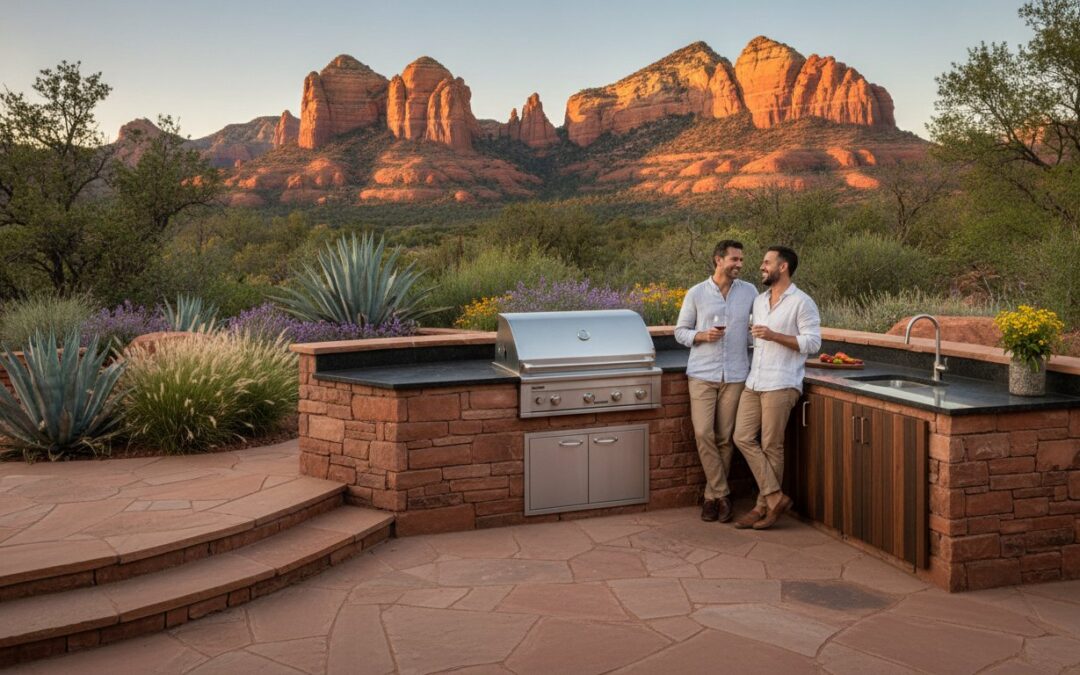
In the high desert of Sedona, a luxury outdoor kitchen is far more than a place to grill; it is a structural commitment to a landscape that demands both aesthetic grace and rugged resilience. Building in this environment requires a delicate balance between high-end entertainment and the harsh reality of 110-degree summers, intense UV rays, and strict Firewise safety regulations. When you partner with the right outdoor kitchen builders Sedona offers, you can solve these challenges while ensuring your space mirrors the majesty of the red rocks. You likely envision a sanctuary for hosting guests, yet you’re probably concerned about material fading or the complexities of local HOA and drainage requirements.
We understand that your property is a legacy that deserves protection as much as it deserves beauty. This guide will show you how to design a fire-safe, climate-resilient kitchen that adheres to the 2024 International Building Code standards transitioning in 2026. You’ll discover the best materials for UV resistance, learn about Dark Sky lighting compliance, and see how professional grading can manage monsoon runoff. We will walk through everything you need to create a durable, high-value extension of your home that feels like a natural part of the Arizona terrain.
Key Takeaways
- Understand how climate-engineered materials protect your investment from Sedona’s intense UV rays and extreme summer heat.
- Navigate complex HOA regulations and the 2024 International Building Code updates to ensure your kitchen is both compliant and fire-safe.
- Learn to use structural retaining walls and indigenous stone to create a seamless transition between your cooking area and Sedona’s iconic red rock views.
- Discover why leading outdoor kitchen builders Sedona residents rely on prioritize Firewise defensible space as a core component of luxury design.
- Gain insights into sustainable hardscaping techniques that preserve the natural beauty and long-term property value of your desert home.
Why Sedona’s Climate Demands Specialized Outdoor Kitchen Builders
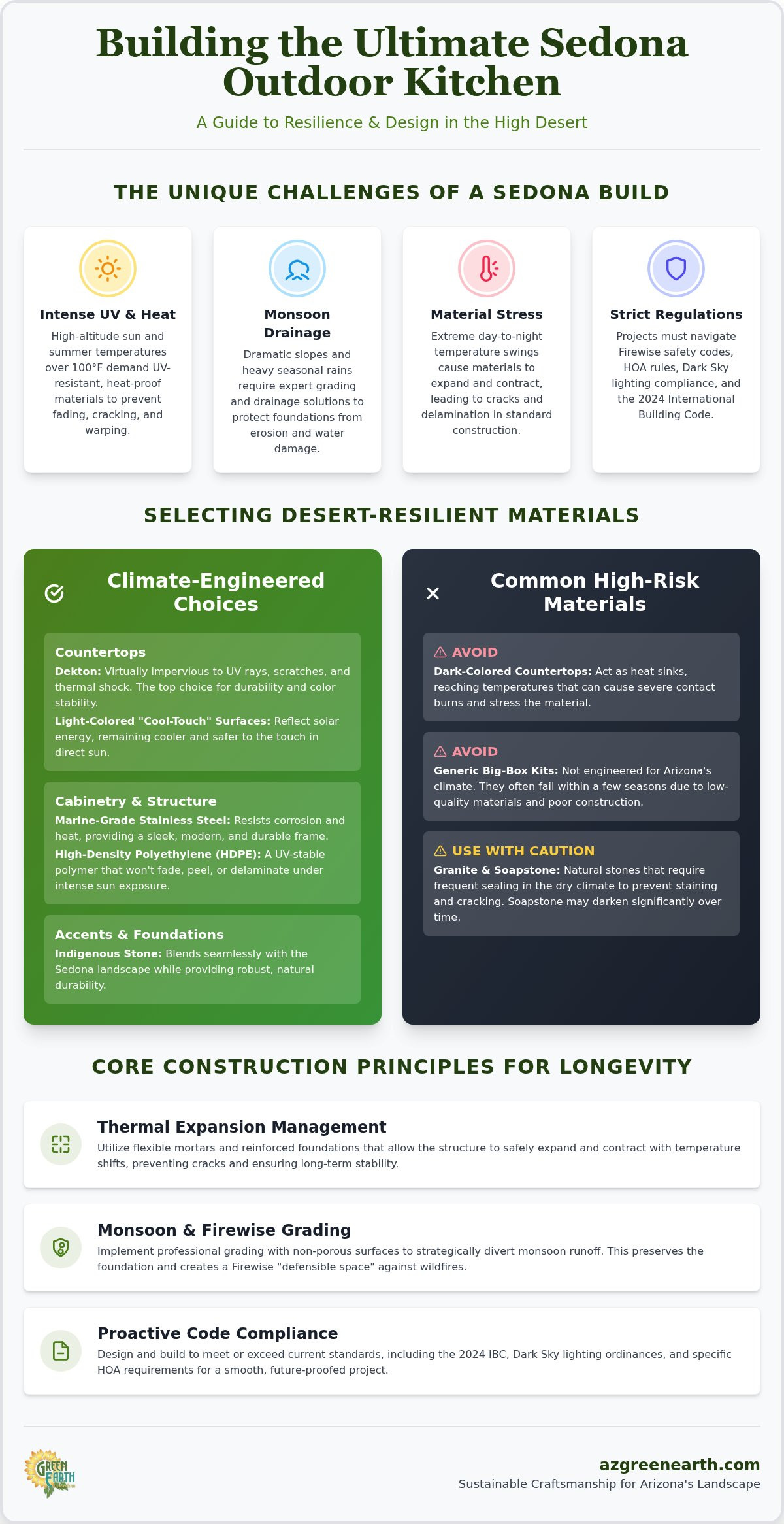
In Sedona, an outdoor kitchen isn’t just a collection of appliances; it’s a climate-engineered living space designed to survive one of the most punishing environments in the Southwest. Many homeowners overlook the fact that our high-altitude desert creates a unique set of physical stressors. With summer temperatures frequently exceeding 100 degrees and UV radiation levels significantly higher than at sea level, standard construction methods simply don’t hold up. Choosing experienced outdoor kitchen builders Sedona trusts ensures that your investment is protected from the inevitable “thermal expansion” that occurs when masonry and countertops are exposed to extreme diurnal temperature swings.
Generic kits from big-box retailers often fail within a few seasons because they aren’t built for Northern Arizona. These pre-fabricated units rarely account for the structural integrity required when integrating with the natural hardscape of a sloped, rocky lot. Without specialized engineering, the joints in masonry can crack and stone veneers may delaminate as the materials expand and contract under the relentless sun. A professional build accounts for these shifts, using flexible mortars and reinforced foundations that move with the earth rather than fighting against it.
The Role of UV Resistance in Material Selection
Standard cabinetry and finishes that work in milder climates quickly fade, peel, or crack under the intense Arizona sun. We prioritize materials like high-density polyethylene (HDPE) and marine-grade stainless steel because they’re built to withstand both heat and radiation without losing their structural properties. In high-altitude environments, we define UV-stable finishes as coatings specifically formulated with chemical stabilizers that prevent the breakdown of polymers and pigments when exposed to direct sunlight. This ensures your cabinetry remains as vibrant as the day it was installed, even after years of exposure.
Managing Monsoon Drainage and Topography
Sedona’s dramatic topography often means building on significant slopes, which can compromise foundation stability if not handled correctly. Proper drainage grading Arizona homeowners need is essential to prevent water from pooling around the kitchen’s base during heavy monsoon rains. We utilize non-porous surfaces and strategic grading to ensure that torrential downpours are diverted away from the structure. By managing the flow of water across the site, we preserve the integrity of the soil and the kitchen’s masonry, preventing the erosion that often plagues DIY or amateur installations.
Selecting Desert-Resilient Materials for Your Sedona Kitchen
Choosing materials for a high-desert kitchen is a decision that impacts both the longevity of your investment and your daily comfort. Professional outdoor kitchen builders Sedona residents rely on prioritize materials that harmonize with the local geology while resisting the extreme thermal stress of the Verde Valley. Integrating indigenous red rock accents into your cabinetry or backsplash provides a seamless aesthetic connection to the surrounding mesas. However, these natural elements must be balanced with engineered surfaces in high-heat cooking zones to prevent structural failure over time.
Countertops That Beat the Heat
Selecting the right countertop surface is critical for usability in 100-degree weather. While granite is a classic choice, it requires frequent sealing in our dry climate to prevent staining and cracking. Soapstone offers excellent heat resistance but can darken significantly over time. Many modern designs now favor Dekton, an ultra-compact surface that is virtually impervious to UV rays and thermal shock. This material doesn’t fade or degrade, making it an ideal candidate for the harsh Arizona sun.
We strongly advise against dark-colored countertops. Deep browns and blacks act as heat sinks, reaching temperatures that can cause contact burns in minutes. Instead, opt for “cool-touch” lighter tones that reflect solar energy. When planning your layout, ensure your material choices align with Sedona building codes regarding non-combustible surfaces near grills and pizza ovens. Proper planning ensures your prep area remains functional even during the peak of July.
Hardscape Foundations and Flooring
The foundation of your kitchen must be as stable as the red rocks themselves. Utilizing professional hardscape construction Cottonwood AZ techniques ensures your flooring won’t shift or crack during the seasonal transition from dry heat to monsoon rains. While poured concrete is a common option, it often develops unsightly fissures in the desert’s expansive soils. Pavers are generally superior for Sedona kitchens for several reasons:
- Thermal Regulation: Lighter-colored pavers stay significantly cooler underfoot than dark, broom-finished concrete.
- Durability: Individual units can expand and contract independently, preventing the large-scale cracking seen in monolithic slabs.
- Sustainability: Permeable pavers allow monsoon runoff to filter back into the aquifer, supporting local environmental health.
Choosing slip-resistant textures is equally important, especially near prep areas where spills are common. If you aren’t sure which stone best suits your specific lot, our team can help you evaluate the best material options for your landscape to ensure a durable and beautiful result.
Integrating Your Kitchen with Sedona’s Natural Hardscape
Sedona’s dramatic red rock formations aren’t just a scenic backdrop; they are a structural reality that dictates how we approach every build. Unlike builders who might suggest a one-size-fits-all slab, specialized outdoor kitchen builders Sedona professionals understand that the landscape often requires creative vertical solutions. Anchoring heavy masonry or high-end appliances into the region’s caliche or rocky substrate requires precision engineering. Following Sedona’s Land Development Code ensures that these structural additions respect the natural contours of the earth while meeting rigorous safety standards for land disturbance and aesthetic preservation.
The “Red Rock Rustic” aesthetic is more than a design trend; it’s a way to honor the local environment. By using indigenous stone veneers and earthy color palettes, your kitchen becomes a natural extension of the mesa. This visual harmony is essential for maintaining property value and complying with local design guidelines that prioritize the preservation of Sedona’s unique visual character. A well-integrated kitchen should look like it was carved from the landscape rather than simply placed upon it.
Retaining Walls and Terraced Living
Many prime Sedona lots feature significant elevation changes that make a standard patio impossible. Professional retaining wall construction Sedona allows us to carve out level tiers for distinct cooking, dining, and lounging zones. These walls do more than just hold back soil; they serve as the essential structural foundations for heavy equipment like built-in grills or wood-fired pizza ovens. We often design these walls with dual purposes, creating built-in bench seating that maximizes the functional footprint of your space without obstructing the view.
Fire Feature and Kitchen Synergy
A truly cohesive outdoor space links the culinary zone with the social warmth of a fire feature. We recommend maintaining a minimum safety distance of 10 feet between open-flame fire pits and cooking appliances to ensure proper airflow and guest safety. Using a consistent material palette across your kitchen island and fire feature creates a unified architectural statement that feels intentional and disciplined. Integrating custom fire features effectively extends your kitchen’s usability into the crisp Sedona winters, providing a warm gathering point once the sun dips below the canyon walls.
Navigating Sedona Building Codes and HOA Requirements
Sedona’s regulatory environment is among the most rigorous in Arizona, designed to protect the very natural beauty that draws homeowners here. Professional outdoor kitchen builders Sedona trusts must navigate a complex web of “Dark Sky” ordinances and Firewise safety standards. For instance, all outdoor lighting must be fully compliant by January 1, 2028. This means your kitchen’s task lighting must use shielded fixtures that point downward, with bulbs limited to a color temperature of 3000K or lower. Uplighting is strictly prohibited to preserve our famous starlit nights.
Winning HOA approval requires a disciplined approach to material and color selection. Most associations in the Verde Valley require building colors to have specific Light Reflective Values (LRV) that blend with the red rock landscape. We recommend preparing a comprehensive “Aesthetic Impact” package for your board, showcasing how your kitchen’s stone and finishes mimic the surrounding terrain. This proactive step often smooths the path for approval by demonstrating your commitment to community standards.
Firewise Defensible Space Integration
Safety is paramount in our fire-prone environment. We design every kitchen as a critical component of your property’s safety strategy. This involves creating a five-foot non-combustible zone immediately around the structure using pavers or gravel. By referencing established firewise landscaping Cottonwood AZ principles, we ensure that your plant selection near the kitchen consists of high-moisture, low-resin species. Using ignition-resistant materials like stone and steel instead of wood framing is no longer just a luxury; it’s a necessity for modern high-desert builds.
Sedona Permit and Approval Roadmap
The permitting process can take 12 to 20 weeks, making early planning essential. We manage this timeline through the city’s “Citizen Access” digital portal. Our team handles the technical documentation required for each phase:
- Step 1: Site Plan and Utility Survey: We identify existing gas and plumbing lines to ensure your kitchen’s footprint doesn’t interfere with native plant salvage requirements.
- Step 2: HOA Submission: We provide detailed renderings that prove your design meets local height and color restrictions.
- Step 3: Final Safety Inspections: City officials must verify that gas line extensions and electrical circuits meet the 2024 International Building Code standards transitioning in 2026.
Navigating these hurdles requires a partner who understands local nuances. If you’re ready to begin your project, schedule a consultation with our Sedona design team to review your site’s specific requirements.
The Green Earth Advantage: Sustainable Craftsmanship
Choosing the right outdoor kitchen builders Sedona offers means looking beyond the grill and the countertops to find a partner who understands the soul of the high desert. With a legacy spanning over 47 years in Northern Arizona, we act as a visionary partner for homeowners who refuse to compromise on luxury or environmental integrity. Our “Authoritative Environmentalist” approach ensures that every project we undertake is a responsible addition to the local ecosystem. By prioritizing sustainability, we don’t just build a kitchen; we protect your long-term property value through resilient engineering and eco-friendly practices.
Sustainable craftsmanship is the thread that connects high-end aesthetics with functional longevity. Integrating desert landscape design Northern Arizona principles into your build allows the kitchen to function as a water-wise utility. We focus on minimizing the environmental footprint of each project by utilizing locally sourced materials and energy-efficient appliances. This commitment to the land ensures that your outdoor living space remains a sanctuary that honors the natural beauty of the Verde Valley for decades to come.
Award-Winning Sustainable Design
Our dedication to the environment has earned us recognition as a statewide runner-up for Best Sustainable Landscape Designer. This accolade means your project is handled by experts who understand how to balance luxury needs with ecological health. We reduce the carbon footprint of your build by selecting stone from local quarries and implementing smart irrigation systems for any peripheral plantings. These systems use advanced weather-tracking technology to provide precise moisture levels, ensuring that your kitchen’s surrounding greenery thrives without wasting a drop of our precious desert water.
Comprehensive Project Management
A successful build requires a disciplined, end-to-end strategy that eliminates the stress of coordinating multiple contractors. Our team manages every technical detail, from the initial drainage grading that protects your foundation to the final calibration of your high-end appliances. We maintain a neighborly, professional communication style throughout the process, keeping you informed at every milestone. This methodical rhythm ensures that the transition from a rocky slope to a functional masterpiece is seamless and predictable. If you’re ready to elevate your home with a resilient, luxury entertainment space, start your sustainable outdoor transformation today with a team that truly knows the Sedona landscape.
Transform Your Sedona Backyard into a Resilient Sanctuary
Building a luxury outdoor space in the Verde Valley requires more than just high-end appliances; it demands a deep understanding of thermal expansion, Firewise safety, and local ordinances. By selecting desert-resilient materials and integrating your kitchen with the natural red rock topography, you create an entertainment hub that stands the test of time. As leading outdoor kitchen builders Sedona homeowners have trusted for over 47 years, Green Earth, LC specializes in combining aesthetic beauty with technical excellence in drainage and structural hardscape.
We invite you to request a custom outdoor kitchen consultation with Green Earth, LC to discuss your specific vision. Our award-winning team, recognized as a Best Sustainable Landscape Designer runner-up, provides full-service design and construction tailored to Sedona’s unique environmental challenges. Whether you’re navigating strict HOA requirements or planning a complex hillside build, we have the regional expertise to bring your project to life. Let’s work together to build a durable, eco-friendly space where you can enjoy the majesty of the Arizona landscape for years to come.
Frequently Asked Questions
Do I need a permit for an outdoor kitchen in Sedona?
Yes, you need a permit for any outdoor kitchen project involving structural work, gas lines, or electrical wiring. The City of Sedona requires digital submission through the Citizen Access portal. In 2026, all designs must comply with the 2024 International Building Code standards. Planning ahead is vital because the review process typically takes between 12 and 20 weeks. Professional outdoor kitchen builders Sedona residents hire will usually manage this technical documentation to ensure full compliance.
What are the best heat-resistant countertops for Arizona’s sun?
Dekton and light-colored granite are the top choices for Arizona’s intense sun. Dekton is an ultra-compact surface that resists UV degradation and thermal shock better than almost any other material. We recommend avoiding dark colors like black or deep brown; these act as heat sinks and can reach temperatures that cause contact burns. Lighter tones reflect solar energy and keep your prep areas functional even during the peak of July.
How much does a custom outdoor kitchen cost in Sedona?
The cost of a custom project depends on site topography, utility requirements, and material choices. Factors such as trenching for gas lines, building structural retaining walls, and selecting UV-resistant appliances all influence the total investment. In the Arizona market, a professionally designed outdoor living space can increase a home’s resale value by 10% to 15%. We focus on using high-quality materials that ensure your kitchen remains a durable asset for decades.
Can I build an outdoor kitchen if I live in a Firewise community?
You can build in a Firewise community by using ignition-resistant materials and creating a defensible space. This involves establishing a five-foot non-combustible zone around the kitchen using stone, gravel, or pavers. We prioritize steel framing and stone veneers over wood to ensure the structure doesn’t become a fuel source. Integrating these safety measures protects your home while allowing you to enjoy luxury outdoor living in fire-prone areas.
How do Sedona’s Dark Sky laws affect my outdoor kitchen lighting?
Sedona’s Dark Sky ordinances require all outdoor lighting to be fully shielded and directed downward. By the January 1, 2028 deadline, all fixtures must use bulbs with a color temperature of 3000K or lower to reduce light pollution. Uplighting is strictly prohibited within city limits. We design kitchen lighting that provides safety for the chef while preserving the integrity of our famous starlit nights and local nocturnal ecosystems.
How long does it take to build an outdoor kitchen in the Verde Valley?
A typical project timeline in the Verde Valley spans several months, largely due to the rigorous local permitting process. The most experienced outdoor kitchen builders Sedona has to offer suggest allowing 12 to 20 weeks for the city’s review phase alone. Actual construction timing varies based on masonry complexity and site grading requirements. Starting your design in the late fall ensures your new entertainment space is fully operational before the peak spring season begins.
Which materials are best for preventing monsoon damage to my kitchen?
Preventing monsoon damage requires a combination of non-porous surfaces and expert drainage grading. We use permeable pavers that allow heavy rain to filter into the ground rather than pooling around the kitchen’s foundation. High-density polyethylene (HDPE) cabinetry and marine-grade stainless steel are also essential because they won’t warp or rust when exposed to moisture. These choices ensure your kitchen remains structurally sound during Sedona’s intense seasonal storms.
Is it better to use propane or natural gas for a Sedona outdoor kitchen?
Natural gas is generally preferred for its convenience and lower operating costs, though it requires professional trenching and plumbing permits. If your property doesn’t have an existing gas line, propane is a reliable alternative that offers the same instant shut-off safety required during fire restrictions. Both options are permitted year-round in Sedona; unlike charcoal or wood-burning appliances, which are often prohibited during Stage I and Stage II fire restrictions.
Recent Comments