
Could your dream of a crackling backyard fire actually be a legal liability or a safety hazard in the high-desert winds of Northern Arizona? Many homeowners in the Verde Valley and Flagstaff envision cool evenings spent around a flickering flame, yet the reality of strict seasonal fire bans and monsoon-driven erosion often makes the planning phase feel overwhelming. You’ve likely felt the frustration of choosing between a traditional wood-burning ring and a gas-powered feature while wondering how much the necessary site preparation will truly add to your bottom line. Understanding the fire pit installation cost Arizona residents should expect in 2026 requires looking beyond just the price of stone; it demands a focus on engineering and environmental stewardship.
We agree that your outdoor living space should be a sanctuary that respects the local landscape while providing a reliable gathering point for your family. This guide provides a clear framework for budgeting a custom, durable fire feature that stands up to the elements. You’ll discover the real-world factors that influence your investment, from gas line integration to masonry quality. We’ll also preview how professional design increases your home value and ensures your project meets the specific safety ordinances of our unique regional terrain, allowing you to build with confidence and ecological responsibility.
Key Takeaways
- Learn how material selection and fuel sources like gas or wood significantly influence the fire pit installation cost Arizona residents encounter when planning custom projects.
- Understand the critical importance of Firewise Defensible Space and local ordinances in Sedona and Flagstaff to ensure your fire feature is both beautiful and legal.
- Discover why custom-built masonry offers superior longevity compared to big-box store kits, especially when facing Northern Arizona’s intense sun and monsoon seasons.
- Identify how professional site leveling and drainage grading prevent structural failure and protect your landscape investment for decades to come.
- Explore the benefits of partnering with a local expert who understands the specific engineering required for high-altitude winds and sustainable outdoor design.
Understanding Fire Pit Installation Costs in Arizona (2026)
While some national websites suggest a fire pit costs under $1,000, the reality for a professionally engineered feature in Northern Arizona is quite different. In 2026, the fire pit installation cost Arizona homeowners encounter typically ranges from $2,500 to over $10,000. This variance depends on whether you want a simple stone ring or a fully integrated gas feature. For a foundational understanding of different types and safety, this Fire pit overview provides helpful context. In regions like Sedona and Flagstaff, the baseline is shaped by the logistical challenges of transporting heavy masonry materials and the specialized labor required to build on sloped or rocky terrain. We see a growing trend in 2026 toward sustainable design, where homeowners prioritize local stone and low-emission fuel sources to protect our natural environment.
The Baseline: What Are You Paying For?
Professional installation isn’t just about stacking stones. It’s a precise balance of design fees, high-quality materials, and skilled labor. A significant portion of your investment goes into site preparation. We often emphasize the role of drainage grading Arizona property owners need to consider before construction begins. Without proper grading, monsoon runoff can undermine the structure. Choosing “cheap” installations often results in foundation cracking within the first year as our desert soil expands and contracts. Investing in proper engineering prevents these structural failures and ensures your feature remains a permanent fixture of your landscape.
Project Tiers: From Simple to Sublime
Project costs generally fall into three distinct categories based on complexity and material choice. Understanding these tiers helps you align your vision with a realistic budget for our regional market.
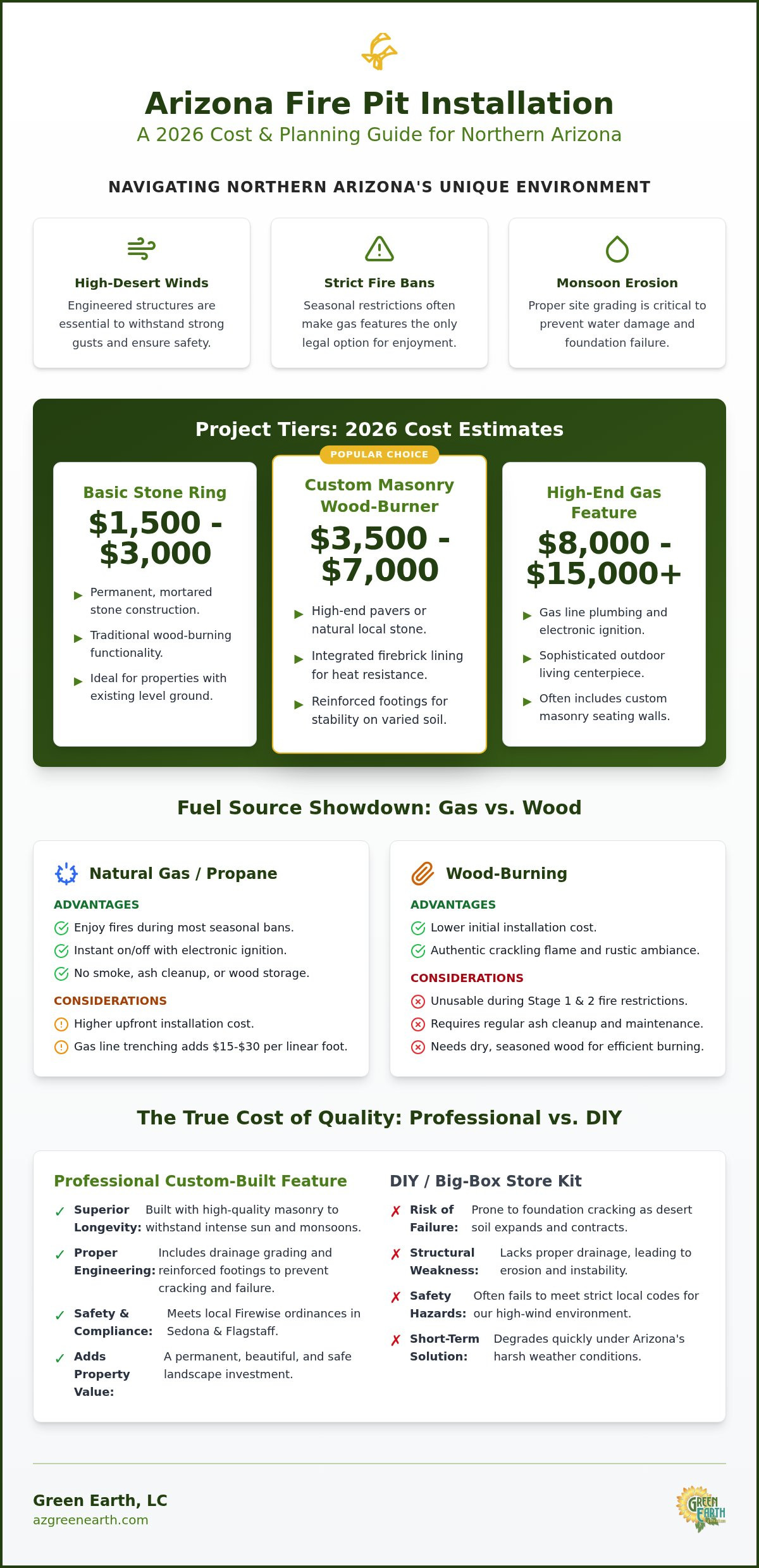
- Basic Stone Ring ($1,500 – $3,000): These permanent, mortared stone features are ideal for level ground and traditional wood-burning. They offer a rustic look that complements the natural beauty of the Verde Valley.
- Custom Masonry Wood-Burner ($3,500 – $7,000): These features utilize high-end pavers or natural stone and include integrated firebrick linings to withstand intense heat. They often feature reinforced footings for extra stability in varied soil types.
- High-End Gas Feature with Seating ($8,000 – $15,000+): These are sophisticated outdoor centerpieces. They include gas line plumbing, electronic ignitions, and custom masonry seating walls that, when paired with high-quality outdoor furniture from Zing Patio, transform a backyard into a year-round living space.
If you are planning a more extensive backyard renovation beyond a single fire feature, you can explore Project-based Landscaping and Outdoor Construction Fees to see how professional firms structure their pricing for complex masonry and site preparation.
By choosing a custom build over a portable unit, you’re investing in a structure designed to withstand high-altitude winds and the intense Arizona sun. This professional approach ensures your fire feature adds genuine value to your property while maintaining strict compliance with local safety codes.
Primary Factors That Drive Fire Pit Pricing
The total investment for a backyard fire feature is determined by more than just the diameter of the pit. In our region, the fire pit installation cost Arizona homeowners plan for is heavily influenced by the infrastructure required to support the feature and the quality of the materials used. While a basic metal bowl might seem like a budget-friendly shortcut, it often fails to meet the safety standards required for our high-wind environments and lacks the thermal mass of professional masonry. True value is found in selecting components that balance aesthetic beauty with long-term ecological responsibility.
Wood-Burning vs. Gas: Financial and Regulatory Trade-offs
Choosing your fuel source is a decision that impacts both your initial budget and your year-round enjoyment. Running a dedicated gas line typically costs between $15 and $30 per linear foot, depending on the complexity of the trenching through our rocky Northern Arizona soil. While this adds to the upfront bill, gas burners offer significant advantages during the dry summer months. Many local jurisdictions enforce strict rules during peak fire season. By consulting Arizona’s official fire restrictions, you can see why gas features are often the only legal way to enjoy an outdoor flame during Stage 1 or Stage 2 restrictions. Maintenance also differs; wood features require frequent ash removal and soot cleaning, while gas systems require occasional burner inspections to ensure the ports remain clear of debris.
Material Costs: Aesthetics vs. Durability
The exterior finish of your fire pit serves as both a structural shell and a visual focal point. Local Arizona fieldstone offers a timeless look that blends seamlessly with the red rocks of Sedona, though it requires more labor-intensive shaping by a master mason. Alternatively, high-quality manufactured products provide a clean, modern aesthetic and consistent installation times. When designing your space, integrating the pit with existing pavers and hardscape ensures a cohesive look that increases property value. You should also consider the “media” inside the pit; while basic lava rock is cost-effective, designer fire glass or ceramic logs can increase the price point while offering a more refined glow. Regardless of the exterior, we always recommend using professional-grade refractory bricks to line the interior, as these heat-resistant materials prevent the outer stone from cracking under extreme temperature fluctuations. For a feature that truly complements your home’s unique footprint, you can consult with a visionary partner to explore sustainable material options that honor the local landscape.
Size and scale also play a role in the final tally. A standard 36-inch pit is sufficient for small groups, but larger linear features or pits with integrated seating walls require significantly more masonry hours and structural reinforcement. Every additional foot of height or width increases the volume of stone and mortar required, which is why precise professional design is essential to keep your project within a defined budget.
Northern Arizona Specifics: Altitude, Wind, and Firewise Codes
Building a fire feature in Northern Arizona requires a deeper understanding of environmental physics than a standard suburban project. The high altitude and unique topography of the Verde Valley and the Mogollon Rim create specific engineering challenges. When calculating the fire pit installation cost Arizona homeowners must consider, it’s vital to account for climate engineering that protects the structure from high-altitude winds and the intense thermal expansion caused by Sedona’s sun. A fire pit that isn’t designed for these specific regional stressors will likely suffer from stone spalling or mortar failure within just a few seasons. We focus on creating features that aren’t just beautiful, but are also resilient enough to withstand the rapid temperature swings common in our high-desert environment.
Drainage is another critical factor often overlooked in budget estimates. During the monsoon season, a fire pit can quickly become a collection point for runoff if it lacks a properly engineered sub-base. We utilize a multi-layered aggregate foundation to ensure water moves away from the masonry, preventing the ground-shifting that leads to structural cracks. Additionally, permitting requirements in Yavapai and Coconino counties vary. While the permit fees themselves are generally manageable, the cost of meeting specific safety setbacks and fuel-line standards is a necessary part of a professional installation budget.
Designing for the Verde Valley Climate
The intense UV exposure in our region can bake standard masonry products until they become brittle. We prioritize sustainable material selections that harmonize with desert landscape design Northern Arizona residents value for its longevity. Wind-shielding is also a primary design consideration. In wind-prone areas like Flagstaff, a sunken pit design offers natural protection for the flame. Conversely, in the Verde Valley, we often build raised masonry walls that serve a dual purpose: providing comfortable seating and acting as a windbreak to ensure a steady, safe burn.
Firewise Compliance and Safety Costs
Living in a high-fire-risk zone means safety isn’t an option; it’s a responsibility. Integrating firewise landscaping Sedona principles into your project ensures your fire pit doesn’t compromise your home’s defensible space. This involves maintaining a 10-foot radius of non-combustible materials like decorative rock or pavers around the pit. For wood-burning features, we include heavy-duty spark arrestors and specialized mesh screens to contain embers. These professional-grade safety features ensure your project passes HOA inspections and, more importantly, protects the surrounding natural landscape we all cherish.
Professional Installation vs. DIY: The True Cost of Quality
Many homeowners are tempted by the “weekend warrior” approach when they see pre-fabricated kits at big-box retailers. While these kits appear budget-friendly, they rarely account for the long-term fire pit installation cost Arizona residents face when temporary units fail after just two seasons. These mass-produced products are often constructed from thin-gauge steel or porous, non-reinforced concrete that quickly degrades under our intense UV exposure and rapid temperature swings. A custom-built masonry feature, however, is designed as a permanent architectural addition that enhances your property’s value and aesthetic character for decades.
The DIY Reality Check
The true cost of a DIY project extends far beyond the initial receipt for materials. Homeowners often underestimate the expense of specialized tool rentals, such as plate compactors for soil stabilization or wet-cutting masonry saws. Common amateur mistakes, including improper site leveling and the omission of thermal expansion joints, frequently lead to structural heaving. When a fire pit begins to lean or crack due to the expansive nature of our local soils, the eventual “call-back” to a professional contractor often costs more than the original installation would have. To better understand the engineering required to prevent such issues, learn more about Bayside Pavers and their guide on why hardscape structures develop cracks. We believe in doing the job right the first time to ensure your outdoor sanctuary remains safe and stable.
Choosing a professional installation gives you access to commercial-grade components that aren’t available to the general public. We utilize high-capacity brass burners and stainless steel pans that resist corrosion and provide a superior flame pattern. Our approach treats the fire feature as part of a larger “Hardscape Ecosystem,” where seating walls, lighting, and pavers work in harmony. This holistic design ensures that your new feature doesn’t interfere with existing irrigation repair Flagstaff systems, preventing water damage to your masonry and ensuring your landscape’s health remains a priority. We coordinate every technical detail, from gas line pressure testing to drainage management, so you don’t have to.
Safety remains the most compelling reason to partner with a licensed expert. Amateur gas line installation poses significant risks, including underground leaks that can go undetected until they become a hazard. By working with an established local leader, you gain the peace of mind that comes with comprehensive warranties and liability coverage. If you are ready to transform your vague backyard idea into a functional, beautiful reality, we invite you to request a custom fire feature consultation with our design team today. Investing in professional craftsmanship ensures your fire pit is a source of joy rather than a recurring maintenance burden.
Designing Your Custom Fire Feature with Green Earth, LC
For over 47 years, Green Earth, LC has served as a cornerstone of the Verde Valley community, transforming outdoor spaces into sustainable sanctuaries. We understand that a fire feature is more than a luxury; it’s a gathering point that must harmonize with the delicate ecology of Northern Arizona. Our approach to managing the fire pit installation cost Arizona homeowners invest is rooted in a design-build process that prioritizes longevity and environmental stewardship. By utilizing local materials and advanced engineering, we create custom hardscapes that reflect the natural beauty of our region while standing firm against its unique environmental stressors. We don’t just build pits; we craft enduring landmarks for your home.
Our collaborative process moves from your initial vision to a functional reality through disciplined craftsmanship. We act as your visionary partner, taking vague ideas and refining them into professional designs that consider wind patterns, soil composition, and existing vegetation. This thorough approach ensures that your investment provides a significant return in both property value and lifestyle quality. In Northern Arizona, where outdoor living is a year-round pursuit, a custom-built masonry feature serves as the heart of the backyard ecosystem.
The Green Earth Design Philosophy
We believe that safety and beauty are not mutually exclusive. A primary focus of our work is balancing Firewise Defensible Space requirements with high-end aesthetic design. For example, in a recent Sedona project, we integrated a custom fire pit into a red rock outcropping by using native stone and a non-combustible paver radius. This design not only looked like a natural extension of the landscape but also met strict local safety codes. We frequently incorporate native, drought-tolerant plants around our hardscape features to soften the transition between built structures and the wild desert. This commitment to sustainable beauty has earned us recognition as a statewide runner-up for Best Sustainable Landscape Designer.
Next Steps for Your Arizona Backyard
Ready to begin your project? Preparing for your first consultation is a straightforward process that helps us provide a more accurate, site-specific estimate. We recommend identifying your primary goals, such as whether you prefer the ritual of a wood-burning fire or the convenience of a gas system. It’s also helpful to have a basic idea of your desired seating capacity and how the feature will connect to your existing patio or walkways. Our team will handle the technical complexities, from assessing your property’s drainage to ensuring your fire pit installation cost Arizona budget aligns with your long-term goals.
Your outdoor transformation starts with a conversation about quality and craftsmanship. We invite you to schedule your custom fire feature consultation with Green Earth, LC today. Let us help you build a safe, beautiful, and sustainable centerpiece that your family will enjoy for generations.
Transform Your Backyard into a Sustainable Sanctuary
Investing in a custom fire feature is an investment in your home’s long-term value and your family’s quality of life. As we have explored, the true fire pit installation cost Arizona homeowners should expect is shaped by more than just materials. It includes professional site engineering to handle Northern Arizona’s high-altitude winds and the integration of Firewise Defensible Space standards to protect our local landscapes. Choosing custom masonry over temporary kits ensures your feature withstands the sun and monsoons for decades without structural failure.
Green Earth, LC brings 47+ years of local Arizona expertise to every project. We are a sustainable landscape design award winner and remain fully licensed, bonded, and insured for both commercial and residential projects. We’re ready to take your vision and turn it into a durable reality that respects our unique natural environment. Your dream outdoor living space is within reach, and we’re here to guide you through every technical detail. Get Your Custom Fire Pit Quote from Green Earth, LC and start building a centerpiece that will glow for years to come.
Frequently Asked Questions
Do I need a permit for a fire pit in Sedona or Flagstaff?
Yes, most municipalities in Northern Arizona require a permit for permanent outdoor fireplaces or fire pits. Permit fees generally range from $20 to $500 depending on the complexity of the project and local city ordinances. These regulations ensure that your feature meets specific safety setbacks and fuel line standards. Professional installers typically manage this submission process to ensure your project complies with all building codes and Firewise safety requirements.
Is a gas or wood-burning fire pit better for Northern Arizona?
Gas fire pits are often the superior choice for Northern Arizona because they remain legal during many Stage 1 and Stage 2 fire restrictions. While wood pits offer a traditional aroma, they are frequently banned during the dry summer months. Choosing gas provides a spark-free flame that you can enjoy year-round. This decision is a primary factor in the total fire pit installation cost Arizona homeowners encounter during the planning phase.
How much does it cost to run a gas line to an outdoor fire pit?
Running a gas line typically costs between $14 and $50 per linear foot in our region. This price variance depends on the distance from your main gas meter and the difficulty of trenching through rocky soil or existing hardscapes. A full gas fire pit installation, including the line, labor, and materials, generally falls between $3,500 and $8,000. Only licensed professionals should perform this work to ensure safety and pressure-test compliance.
Will a fire pit increase my Arizona home value?
Yes, a professionally installed fire feature increases your home’s market appeal by extending your usable living space. In the 2026 real estate market, outdoor amenities are a high-priority for buyers seeking the desert lifestyle. Custom masonry and integrated seating walls create a permanent architectural asset that offers a strong return on investment. Unlike temporary portable units, these engineered structures are viewed as valuable property improvements that enhance the overall landscape design.
How far should a fire pit be from my house for Firewise compliance?
General Arizona regulations require permanent fire pits to be at least 25 feet away from any structure or combustible material. To maintain a defensible space, we also recommend a 10-foot radius of non-combustible surfaces like gravel or stone pavers around the feature. These setbacks protect your home from heat transfer and stray embers. Following these guidelines is essential for passing HOA inspections and ensuring the long-term safety of your property.
Can I install a fire pit on top of my existing paver patio?
You can install a fire pit on a paver patio, but it requires a structural assessment of the existing sub-base. Custom masonry is heavy and may cause standard pavers to sink or shift without a reinforced concrete footing. Additionally, the pit must include a heat-resistant firebrick lining to prevent the underlying pavers from cracking due to thermal expansion. We evaluate your current hardscape to determine the safest method for integration.
What is the best material for a fire pit in the desert climate?
Natural stone and reinforced masonry are the best materials for the intense Arizona climate. These materials possess the thermal mass required to withstand extreme temperature swings and are immune to the UV degradation that destroys metal or plastic units. For the interior, high-quality refractory bricks are necessary to protect the outer shell from high heat. Using local fieldstone ensures the feature blends with the natural environment while providing decades of durability.
How long does a professional fire pit installation take?
A professional installation typically takes between three to five days of active labor from start to finish. This timeline includes site preparation, drainage grading, and the precision masonry work required for a custom build. If your design includes a gas line, we also account for the time needed for trenching and municipal inspections. We prioritize a methodical pace to allow for proper mortar curing, ensuring the structure remains stable for years to come.
Recent Comments