
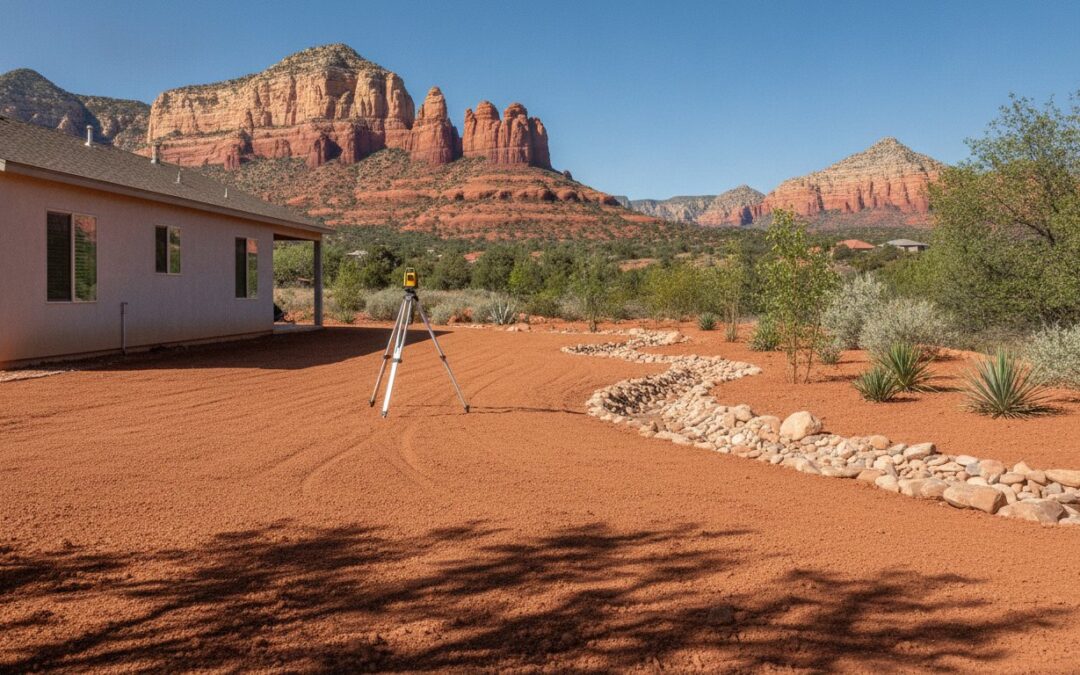
A single Arizona monsoon can move more soil in an hour than a decade of wind, leaving your home’s foundation vulnerable to erosion and structural damage. While many homeowners view leveling a lot as a cosmetic upgrade, professional drainage management is actually a structural insurance policy for your property. Understanding the backyard grading cost Arizona homeowners face in 2026 is the first step toward securing your landscape against the unpredictable desert climate.
It’s frustrating to watch your topsoil wash away or see water pooling dangerously close to your stem wall after a heavy storm. Water always finds a way. We know that fluctuating contractor quotes often make it difficult to plan these essential improvements with confidence. This guide provides a clear breakdown of the factors influencing grading expenses in Northern Arizona, from the rocky terrain of Sedona to the high-altitude challenges of Flagstaff. You’ll learn how precision slope adjustments and sustainable drainage solutions create a level base for your pavers while protecting your investment. We will explore regional pricing variables, permit requirements for 2026, and the technical details that ensure your yard remains dry and functional.
Key Takeaways
- Professional grading acts as a structural insurance policy by redirecting monsoon runoff away from your foundation to prevent long-term erosion.
- We break down the primary factors influencing backyard grading cost Arizona homeowners can expect in 2026, including cubic yardage and specialized equipment requirements.
- Learn how Northern Arizona’s unique terrain, from Sedona’s red rock slopes to Flagstaff’s snowmelt patterns, dictates specific drainage strategies.
- Discover why professional precision using laser levels and transit technology offers a higher return on investment than high-risk DIY attempts.
- Explore sustainable grading plans that incorporate passive water harvesting to nourish your desert landscape while maintaining a dry foundation.
Understanding Backyard Grading Costs in Arizona
At its core, Grading in civil engineering involves adjusting the slope and elevation of a landscape to ensure stability and proper water management. In the Arizona desert, this process is far more than a cosmetic choice; it’s a structural necessity. While a yard might look level to the naked eye, professional grading creates subtle, intentional paths for water to follow. This is especially vital during the summer monsoon season, when intense rainfall can dump inches of water in minutes. Without a precise plan, that water will inevitably find the path of least resistance, which often leads directly toward your home’s foundation or under your expensive new paver patio.
Arizona’s soil often becomes hydrophobic during long dry spells, meaning it repels water rather than absorbing it. When the storms finally arrive, the runoff moves with surprising speed and force. Properly assessing the backyard grading cost Arizona residents face means looking beyond simple dirt moving. It requires a strategy that accounts for soil composition, existing vegetation, and the specific way water interacts with your property’s unique topography.
The Critical Role of Drainage Grading
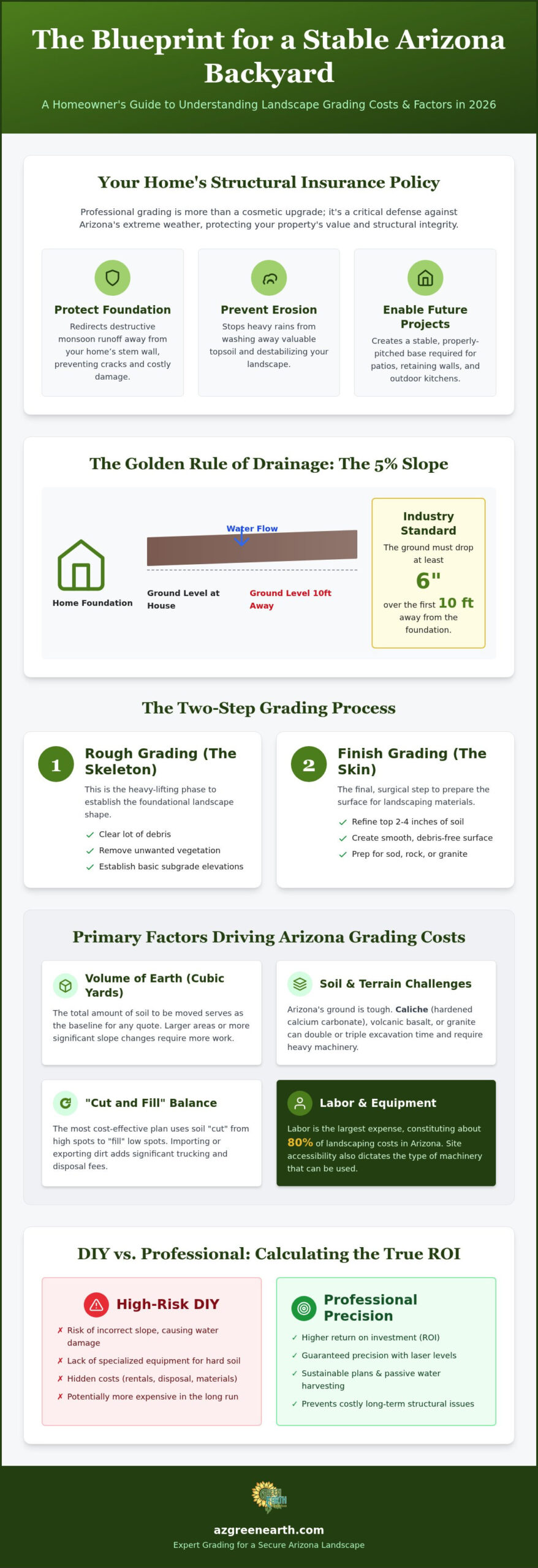
Improperly sloped yards are the leading cause of foundation cracks and localized flooding in Arizona. We follow the industry standard “5% Slope Rule,” which dictates that the ground should drop at least six inches within the first ten feet away from the home. This ensures that gravity does the work of protecting your stem wall. Proper grading also serves as the essential first step before installing high-end features like outdoor kitchens or retaining walls. If the base isn’t structurally sound and perfectly pitched, these investments will eventually shift or crack under the pressure of shifting soil or trapped moisture.
Rough vs. Finish Grading: What Do You Need?
Homeowners often confuse rough grading with finish grading. Rough grading is the heavy lifting phase where we clear the lot, remove debris, and establish the basic subgrade elevations. It’s the skeletal structure of your landscape. Finish grading is the surgical final step. This involves refining the top two to four inches of soil to create a smooth, debris-free surface. It’s the preparation required for sod, decorative rock, or decomposed granite. When calculating the backyard grading cost Arizona projects require, remember that labor constitutes about 80% of total landscaping costs in the state. This is due to the physical intensity of working with sun-baked, rocky earth and the precision required for sustainable drainage. Choosing a comprehensive package that includes both phases is usually more cost-effective than hiring separate contractors for each stage.
Primary Factors Driving Arizona Landscape Grading Prices
Estimating a grading project involves more than just measuring the square footage of your yard. The total volume of earth to be moved, measured in cubic yardage, serves as the baseline for any professional quote. However, the technical complexity of the job often stems from the unseen obstacles beneath the desert floor. Understanding these variables helps demystify the backyard grading cost Arizona homeowners encounter when requesting estimates for their property.
Soil and Terrain Challenges
Arizona soil is notorious for its density and resistance. Caliche is a hardened, cement-like layer of calcium carbonate common in desert soils that often requires heavy machinery or specialized pneumatic breakers to penetrate. When this layer is present, excavation time can double or triple, as standard grading blades cannot easily slice through the mineral deposits. In Northern Arizona, we also contend with volcanic basalt and granite outcroppings that demand similar mechanical force and precision.
Another significant cost driver is the balance of “cut and fill.” If your property requires a Sustainable Grading Plan, we must determine if the dirt removed from high points can be repurposed to fill low spots. Importing clean fill dirt or exporting excess debris involves trucking fees and disposal costs that are frequently overlooked in initial DIY estimates. Achieving a perfect balance on-site is the most ecologically responsible and cost-effective approach, but it requires advanced topographical calculations.
Labor and Equipment Logistics
Site accessibility dictates the type of machinery we can bring to your backyard. A standard skid steer requires at least a five-foot opening; if your side gate is narrower, we must utilize smaller, less efficient mini-excavators or even manual labor. Hand-grading is meticulous and physically demanding, significantly increasing the total man-hours required to achieve a precise slope. In tight-access residential lots, these logistical constraints can become a major factor in the final project price.
For 2026, labor remains the primary expense in the industry, often accounting for nearly 80% of the total project investment. Skilled operators in Arizona command competitive rates because of the high stakes involved in drainage work. Additionally, remote locations in the Verde Valley or high-country areas may incur fuel surcharges and equipment transport fees. If you are planning a complex landscape transformation, reaching out for a professional drainage grading assessment can help clarify these logistical variables before you break ground.
Regional Challenges: Grading in Northern Arizona’s Unique Terrain
Northern Arizona presents a topographical puzzle that Phoenix-based contractors often underestimate. From the iron-rich red rocks of Sedona to the volcanic peaks of Flagstaff, the terrain demands more than a one-size-fits-all approach. Green Earth, LC brings over 47 years of regional experience to these challenges, ensuring that your property is both beautiful and structurally sound. For deeper technical insights, our guide on drainage grading Arizona projects offers a look at foundation protection in these specific environments. We understand how the local geology influences every bucket of dirt moved.
Monsoon Management in the Verde Valley
In Cottonwood and Sedona, managing runoff means preparing for 100-year storm events. These aren’t just theoretical possibilities. They are high-intensity bursts that can overwhelm standard city drainage systems and cause sudden, localized flooding. We utilize a strategic combination of swales and berms to capture and direct water safely toward the street or designated drainage basins. This isn’t just about water management; it’s about property safety and long-term environmental stewardship. Integrating these features with firewise landscaping Cottonwood AZ strategies ensures your defensible space remains clear and functional during the dry season. The backyard grading cost Arizona homeowners pay in these areas often reflects the technical precision needed to navigate these steep, iron-rich slopes.
Elevation and Slope Stabilization
High-altitude regions like Flagstaff introduce the added complexity of snowmelt. Unlike rain, snowmelt is a slow, steady release of moisture that can saturate soil over several weeks. This saturation can cause slow-moving erosion or basement seepage if the grade isn’t perfect. On hillside properties in Prescott or Sedona, stabilization is paramount to prevent the landscape from shifting. In many cases, effective grading requires a retaining wall construction Sedona specialist to create tiered levels. These walls act as structural anchors, preventing soil creep and protecting your home from the natural movement of the terrain. When calculating the backyard grading cost Arizona properties require, we factor in these essential structural elements to ensure long-term stability and environmental health. We take pride in transforming challenging slopes into functional, tiered outdoor living spaces.
DIY vs. Professional Grading: Calculating the Long-Term ROI
Attempting to manage the backyard grading cost Arizona homeowners face by performing the work themselves often leads to unforeseen financial burdens. While renting a skid steer for a weekend might seem like a cost-saving measure, the hidden expenses of equipment transport, fuel surcharges, and potential damage to underground utility lines add up quickly. Professional grading is not just about moving dirt; it’s a high-stakes engineering task. We utilize advanced laser levels and transit technology to ensure every inch of your property adheres to a precise drainage plan. Eyeballing a slope is a recipe for disaster in the desert, where a minor miscalculation can lead to water pooling against your foundation or, worse, flooding a neighbor’s property. The latter can result in significant legal liabilities and insurance claims that far outweigh any initial savings from a DIY approach.
The Complexity of Arizona Permits
Navigating the regulatory landscape in Yavapai or Coconino County requires local expertise. Many homeowners don’t realize that altering the natural flow of water often triggers the need for a grading permit. While specific thresholds vary by municipality, moving more than 50 cubic yards of material or disturbing a significant area of land typically requires formal documentation and inspections. In 2026, permit fees and the potential requirement for engineered drainage plans add another layer of complexity to the project. Major alterations might even require an engineering stamp to certify that the work won’t negatively impact the local watershed. We handle these logistical hurdles as part of our comprehensive service, ensuring your project remains compliant with all local environmental regulations.
Long-Term Savings and Property Protection
The true return on investment for professional grading is found in the costs you never have to pay. Foundation repairs in Arizona can easily exceed $20,000, a figure that dwarfs the backyard grading cost Arizona residents invest upfront. Beyond structural protection, proper elevation is the essential foundation for any successful hardscape construction Cottonwood AZ project. Without a stable, well-drained base, expensive pavers and retaining walls will eventually shift, crack, or sink as the soil beneath them becomes saturated. Professional intervention also allows for the integration of sustainable desert landscape design Northern Arizona, where grading is used to naturally harvest rainwater for native plants. If you’re ready to secure your property’s future with a precision-engineered landscape, you can request a professional grading consultation to get started on the right path.
Implementing a Sustainable Grading Plan with Green Earth, LC
We approach every landscape as a delicate ecosystem rather than just a construction site. Our identity as the “Authoritative Environmentalist” means we prioritize the health of your soil and the surrounding watershed in every design. With over 47 years of experience in Northern Arizona, we understand that land management is a foundational element of long-term property stewardship. We don’t just push dirt around; we create functional contours that respect the natural flow of the desert. Our team acts as a visionary partner, taking your initial concepts and grounding them in technical excellence. This expertise ensures that the backyard grading cost Arizona residents pay results in a landscape that remains resilient for decades.
Passive water harvesting is one of our most effective tools for sustainable design in the Verde Valley. Instead of directing every drop of monsoon rain into the street, we use precision grading to create micro-basins and bioswales. These features capture runoff and allow it to percolate into the root zones of your native plants. This approach helps offset the backyard grading cost Arizona homeowners invest by significantly reducing future water bills and promoting a lush, self-sustaining landscape. It’s a method that turns a potential drainage problem into a biological asset, nourishing the local environment while protecting your home.
The Green Earth, LC Design-Build Process
Our journey begins with a detailed topographic assessment of your property. We use advanced technology to map your lot’s unique elevations and identify potential drainage hazards that might be invisible to the naked eye. This data allows us to build a custom grading plan that balances your aesthetic vision with technical necessity. We believe in complete transparency throughout this process. Our team provides clear, comprehensive quotes that account for all equipment and labor, ensuring there aren’t any nasty budget surprises once the project is underway. We value the trust you place in our decades of local service and maintain high standards of craftsmanship from the first cut to the final compaction.
Effective land management reduces erosion and protects the integrity of your property against the extreme cycles of the Arizona climate. We integrate grading with other essential systems, such as the irrigation repair Flagstaff residents need for high-altitude success. By ensuring your land is sloped correctly and your water systems are optimized, we create a landscape that thrives despite heat and drought. We use native materials to ensure the final result looks as though it has always been part of the local terrain. If you’re ready to protect your home and enhance your outdoor living space, you can request a professional quote for your Northern Arizona project to see the Green Earth, LC difference firsthand.
Securing Your Property’s Future with Professional Drainage
Investing in your land’s structural integrity is a decision that pays dividends for decades. We have explored how precise slope management protects foundations from devastating monsoon runoff and provides a stable, long-lasting base for luxury hardscapes. While the backyard grading cost Arizona homeowners plan for in 2026 depends on variables like soil density and site accessibility, the long-term value of professional precision is clear. Since 1979, our team has served as a trusted partner across the Verde Valley, Sedona, and Flagstaff, combining technical excellence with a deep commitment to environmental stewardship.
As award-winning sustainable landscape designers, we’re ready to transform your drainage challenges into a beautiful and functional reality. You can Get a Professional Grading Quote from Green Earth, LC to start your property transformation today. Our local experts understand the unique geology of Northern Arizona and will ensure your landscape remains a resilient, well-drained sanctuary for years to come. Don’t leave your home’s foundation to chance when professional protection is just a consultation away.
Frequently Asked Questions
How much does it cost to level a backyard in Arizona?
The total investment for your project depends on the volume of soil moved and the presence of subsurface obstacles like caliche. Labor remains the most significant component of your project budget, typically accounting for nearly 80% of the total expense. While simple surface leveling for a small lot is more accessible, complex topographical adjustments for drainage require specialized equipment and skilled operators. We focus on providing comprehensive assessments that account for long-term stability and environmental health.
Do I need a permit for backyard grading in Sedona or Flagstaff?
You generally need a permit if your project involves moving more than 50 cubic yards of material or significantly altering existing drainage patterns. Requirements vary between Yavapai and Coconino counties, especially for hillside properties where erosion risk is high. We handle the technical documentation and permitting process for our clients. This ensures your project complies with 2026 local regulations and protects you from potential legal issues or fines during construction.
How long does a typical backyard grading project take?
Most residential grading projects are completed within one to three business days, though larger estates may require up to a week. The timeline depends heavily on site accessibility and soil density. If we encounter heavy caliche or volcanic rock, excavation takes longer. We prioritize a methodical pace to ensure the subgrade is perfectly compacted and sloped. This precision prevents future settling and ensures your landscape remains structurally sound for decades.
Can improper grading affect my home insurance coverage in Arizona?
Improper grading that leads to water damage is often viewed as a maintenance issue rather than an accident by insurance carriers. If a claim arises from foundation seepage or flooding caused by poor drainage, your policy might not cover the repairs. Investing in professional grading serves as a form of structural insurance. It demonstrates proactive property management and mitigates the risk of catastrophic water intrusion during the intense Arizona monsoon season.
What is the best time of year to grade my yard in Arizona?
Late spring and early fall are the ideal windows for grading projects in Northern Arizona. Completing the work before the summer monsoons arrive ensures your foundation is protected against heavy runoff. In high-altitude areas like Flagstaff, we also aim to finish before the ground freezes in winter. This timing allows for proper soil compaction and the installation of stabilizing vegetation or hardscapes before extreme weather events test the new drainage system.
How do I know if my backyard needs grading?
Look for standing water near your foundation after a storm or visible erosion channels in your topsoil. If your patio pavers are shifting or you notice damp spots in your basement or crawlspace, your grade is likely failing. A professional assessment can determine if the soil has settled over time. We use precision tools to identify low spots that aren’t visible to the naked eye, ensuring water moves away from your home.
Will grading my yard fix my monsoon drainage problems?
Grading is the primary defense against monsoon damage because it utilizes gravity to direct high-velocity runoff safely away from your home. By creating strategic swales and basins, we manage the backyard grading cost Arizona homeowners invest by preventing expensive flood damage. While some properties also require French drains or catch basins, a correctly sloped yard is the most sustainable and effective way to handle intense desert rainfall events.
How much does it cost to haul away excess dirt in Arizona?
Hauling expenses are determined by the number of truckloads and the distance to a certified disposal site. Trucking fees and dump charges are separate from the actual excavation labor. We strive to balance the “cut and fill” on your property whenever possible to minimize these costs. Repurposing clean soil for berms or landscape features is an ecologically responsible choice that reduces the environmental impact and the overall backyard grading cost Arizona residents encounter.
Recent Comments