
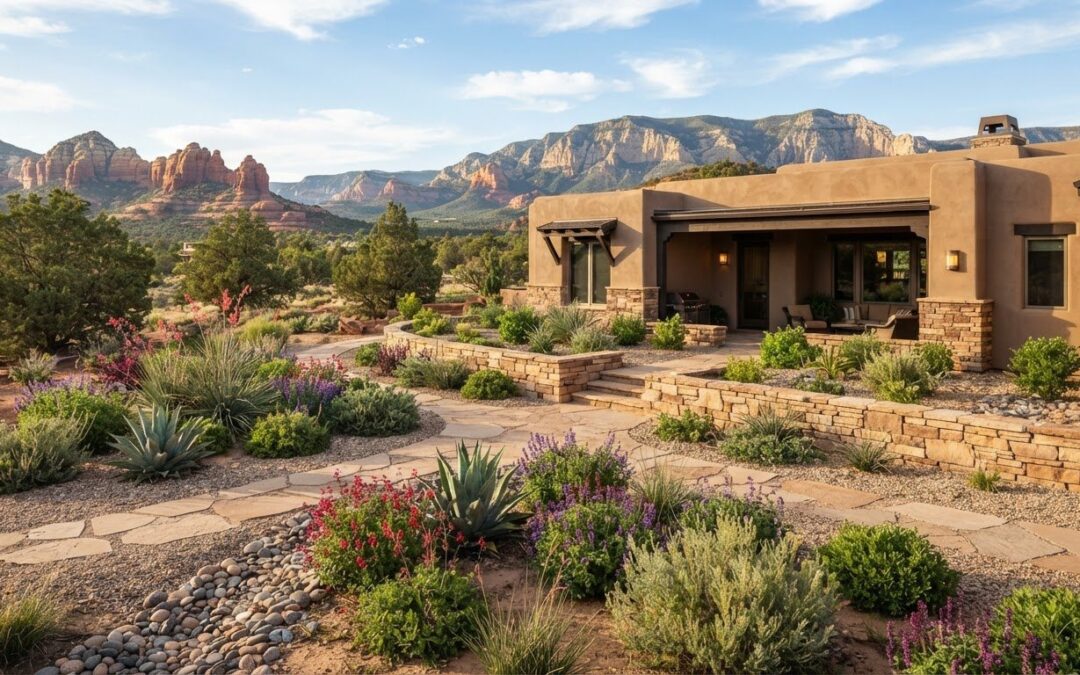
No plant is fireproof, so choosing fire resistant plants for Zone 8 is about reducing fuel, not eliminating wildfire risk. Colorado State University Extension describes defensible-space Zone 1 as 0 to 5 feet from a home and Zone 2 as 5 to 30 feet; its guidance recommends keeping plant material at least 5 feet from the home. Plants with moist, supple leaves, little dead wood, and low oil or resin content tend to be less flammable.
It’s understandable to want a landscape that feels both beautiful and safer around your home. This guide explains the traits that influence plant flammability, then looks at ground covers, drought-tolerant plants, and shrubs that may suit Zone 8 landscapes. You’ll also see why placement, spacing, and ongoing care matter alongside plant choice, so you can make informed decisions for the areas near your home and other structures.
Key Takeaways
- Choose plants for their leaf moisture, low resin or oil content, and tendency to hold little dead material, not just their hardiness zone.
- Use low-growing ground covers near structures, and plan their placement to avoid creating continuous paths of fuel.
- Balance drought tolerance with ongoing care: water plants as needed and clear away dry leaves, stems, and other debris.
- Use shrubs thoughtfully as part of a varied landscape, with spacing and mature size in mind rather than relying on them alone as fire breaks.
- Keep the landscape safer over time by combining suitable plant choices with defensible-space planning and regular maintenance.
1. What are fire-resistant plants?
No plant is truly fireproof. Colorado State University Extension says lower-flammability plants generally have moist, supple leaves, little dead wood, and less oil or resin. They also tend not to trap dry material within their branches. These traits help explain why plants with similar appearances can behave differently around fire. “Fire resistant” describes relative flammability, not immunity.
Fire resistance also shifts with local conditions. In humid Zone 8 areas, leaves may retain moisture longer, while extended dry spells can dry plants and fallen debris. In drier Zone 8 landscapes, irrigation, exposure, soil, and seasonal maintenance weigh heavily on plant condition. A deciduous plant may drop leaves in autumn, so clear that litter rather than letting it collect beside a structure. Check mature size, too: a plant that outgrows its space can crowd other vegetation and complicate upkeep.
Defensible space is the managed area around a home that reduces nearby fuels and helps limit exposure to flames and heat. According to Colorado State University Extension, Zone 1 extends from 0 to 5 feet from a home, Zone 2 from 5 to 30 feet, and Zone 3 from 30 to 100 feet. The Colorado State Forest Service’s 2021 Home Ignition Zone guide describes structural ignitability and defensible space; its Home Ignition Zone extends 100 feet, or 200 feet on steeper slopes. Distance guidance may differ by state, so local community rules matter.
For Zone 8 communities, firewise landscaping means placing plants carefully, limiting connected fuel, and maintaining the space. The Colorado State Forest Service guidance recommends keeping plant material at least 5 feet from a home and leaving 10 feet or more between group plantings in the intermediate zone. It also recommends at least 15 feet between tree branches and a home. These are guidance points, not a substitute for local requirements.
Near homes, avoid bark mulch or chips because they can ignite easily, especially when dry. The guidance advises against bark mulch within 5 feet of a home and recommends removing conifer needles from the first two Home Ignition Zone areas. Keep plants watered as needed, prune dead growth, and clear debris in spring and throughout the growing season. Avoid placing conifers next to a home; dry needles and resin-rich material can add fuel.
Garden centers and nurseries that serve Zone 8 offer plants suited to local growing conditions. Plant prices depend on species, container size, and maturity, so costs vary rather than following one standard price. Near fire-prone homes, avoid dry, resinous plants and dense plantings that collect dead material; prioritize spacing and regular cleanup.
2. Ground covers and low-growing plants near structures
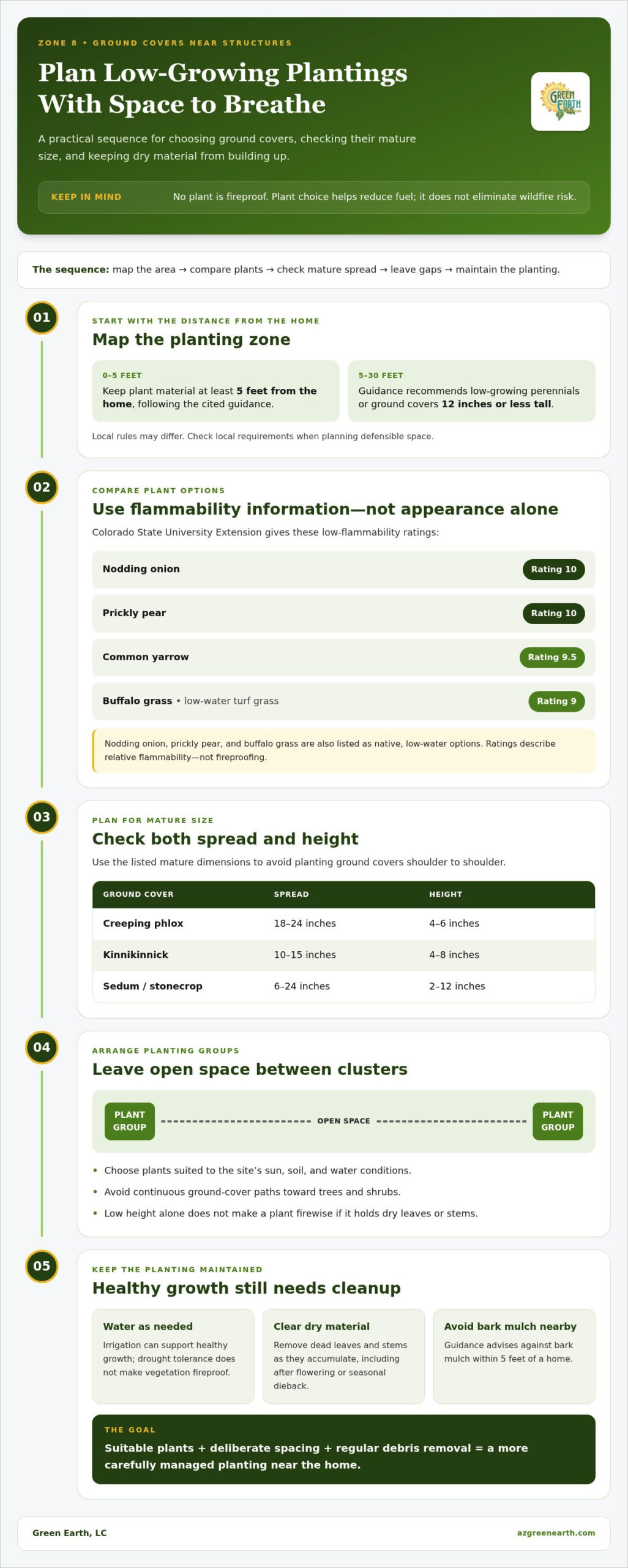
Ground covers can soften bare soil and add color without creating tall planting near a home. In the 5- to 30-foot zone, guidance recommends low-growing perennials or ground covers 12 inches or less tall. Choose plants for the site’s sun, soil, and water conditions, then leave open space between groups. A low-growing plant can still hold dry leaves and stems, so height alone doesn’t make it a suitable firewise choice.
For native, low-water options, consider nodding onion, prickly pear, and buffalo grass. Colorado State University Extension gives nodding onion and prickly pear low-flammability ratings of 10, and rates buffalo grass, a low-water turf grass, at 9. Common yarrow receives a rating of 9.5. These examples offer useful starting points when comparing fire resistant plants for Zone 8. Match each species to the site and remove dry material as it accumulates.
Ground-cover dimensions can help guide spacing. Creeping phlox spreads 18-24 inches and grows 4-6 inches tall, while kinnikinnick spreads 10-15 inches and grows 4-8 inches tall. Sedum, also called stonecrop, ranges from 6-24 inches wide and 2-12 inches tall. Account for mature spread instead of planting these forms shoulder to shoulder. Keep ground covers clear of structures and avoid creating a continuous bridge toward trees and shrubs.
Several non-native ornamental options also suit Zone 8 by hardiness range. Pink Chablis® dead nettle is listed for zones 4-8, Kaleidoscope™ ‘Dancing Embers’ ice plant for zones 5-10, and Rock ‘N Grow® ‘Back in Black’ stonecrop for zones 3-9. Hardiness indicates winter survival range, not fire performance. Colorado State University Extension rates hardy yellow ice plant, Delosperma nubigenum, at 10 for low flammability. That rating doesn’t remove the need to clear dead material.
Plan the planting pattern as carefully as the plant list. Choose ground covers suited to the soil moisture, and leave open space between clusters, especially near taller trees and shrubs. Irrigation can support healthy growth. After flowering or seasonal dieback, inspect plants and remove dead material. Avoid bark mulch near structures, and keep fallen leaves from collecting beneath ground covers.
Build a shortlist of fire resistant plants for Zone 8 by comparing mature height, spread, water needs, and fire-performance information. Nodding onion, prickly pear, and buffalo grass are examples of low-water choices with favorable ratings. Ground covers can contribute to a well-planned landscape, but spacing and ongoing upkeep remain essential near homes.
3. Drought-tolerant plants for fire-prone landscapes
Drought tolerance can reduce irrigation needs, but it does not make vegetation fireproof. Dry leaves, stems, and accumulated debris can still add fuel during wildfires. In dry periods, check for dead growth and provide the moisture plants need to stay healthy.
Colorado State University Extension lists several plants with favorable low-flammability ratings. Nodding onion and prickly pear each receive a rating of 10. Common yarrow receives 9.5, smooth aster receives 8, and buffalo grass receives 9 as a low-water turf grass. These ratings help compare plant choices, but they don’t replace sensible placement or routine care. Match each plant to the site’s sun, soil, and water conditions.
For ornamental variety, Zone 8 options include ‘Denim ’n Lace’ Russian sage, listed for hardiness zones 4-9, and Summersong™ Firefinch™ coneflower, listed for zones 4-8. Pyromania® ‘Orange Blaze’ red hot poker suits zones 5-9, while Graceful Grasses® Toffee Twist sedge suits zones 7-10. Hardiness describes climate suitability, not fire behavior. Pair these plants with fire-performance information and space plantings to avoid dense, connected vegetation.
Landscape maintenance makes a practical difference. Remove dead stems and dry plant debris, and water plants regularly as conditions require. Keep turf grass at 3-4 inches, and maintain native grasses at 6 inches or less. Avoid recycled rubber mulch because it is highly flammable. Check plants after seasonal dieback, flowering, or prolonged dry weather, when dead material may be easier to spot.
Pruning can reduce ladder fuels when done carefully. Guidance recommends pruning lower branches of conifers and ornamental grasses 6 to 10 feet from the ground to limit ladder fuels. When pruning branches, remove no more than 30% of a tree’s original canopy. Prune conifers in early to midwinter to avoid attracting insect pests, and avoid planting them next to a home.
For wildfire guidance in Sedona, Camp Verde, Cottonwood, Flagstaff, Prescott, and nearby Northern Arizona communities, consult local fire authorities. Requirements can vary by state and community. Colorado State University Extension’s low-flammability ratings offer a comparison tool, while local guidance can help you apply defensible-space practices. Review the landscape regularly, remove dry vegetation, and adjust irrigation and pruning as plants mature. Ongoing care helps prevent drought-tolerant plantings from becoming unmanaged fuel.
4. Fire-resistant shrubs as potential fire breaks
Shrubs can add structure, flowers, and seasonal color to Zone 8 landscapes. They should not be treated as guaranteed fire breaks. Dense, continuous vegetation can carry flames, especially when branches, dry leaves, or dead stems collect. Instead, place shrubs in separated groups and keep them maintained. Select by mature size, moisture needs, and growth habit, not hardiness alone.
For a Zone 8 shortlist, Sweet Romance® lavender is listed for hardiness zones 5-9, Scentara Pura® lilac for zones 2-8, and ‘Denim ’n Lace’ Russian sage for zones 4-9. Other listed choices include Golden Spirit smoke tree, zones 4-8; Marina strawberry tree, zones 7-9; and Little Joker® ninebark, zones 4-8. Hardiness ranges show climate suitability, not how a plant performs in a fire.
Mature dimensions can guide safer spacing. Golden Spirit smoke tree grows up to 8 feet tall and 6 feet wide. Marina strawberry tree can reach 20 feet tall and 30 feet wide. Lilacs grow 5-15 feet tall and spread 6-12 feet. Allow room for mature growth, and avoid crowding shrubs against homes, fences, or one another. Crowded plants are harder to inspect and maintain.
Native choices should be matched to the local site, rather than selected by label alone. Colorado State University Extension lists prickly pear (Opuntia spp.) with a low-flammability rating of 10. It also lists nodding onion at 10, a useful flowering perennial to consider alongside shrubs. A cactus or native plant still needs suitable placement and care; remove dead material, and consider its water needs and mature form.
Ground covers can complement shrub groups without forming a dense wall. Creeping phlox grows 4-6 inches tall and spreads 18-24 inches; kinnikinnick grows 4-8 inches tall and spreads 10-15 inches. Leave open ground between plant groupings, and keep dry leaves and stems cleared. This breaks up continuous vegetation while retaining low-growing color beneath taller plantings.
Non-native shrubs can also suit Zone 8. Summerlasting™ Coconut crape myrtle may be considered where its mature size and growing conditions suit the site. Golf Ball pittosporum suits zones 8-11, while Apex™ Blue meadow sage suits zones 4-9. Assess moisture, mature spread, and seasonal debris before planting. Regular pruning and cleanup help prevent shrubs from accumulating dry fuel.
Use shrubs as part of a maintained, well-spaced landscape, not as a substitute for defensible-space planning. Separate plantings, remove dead growth, and consider how mature branches relate to nearby structures and trees. These steps let shrubs add beauty without relying on them as a dependable wildfire barrier.
5. Characteristics of fire-resistant plants
Plant flammability depends on more than a species name or garden label. Colorado State University Extension’s rating method runs from 0, the most flammable score, to 10, the least flammable score. The score offers a comparison, not a promise that a plant won’t burn. Site conditions and maintenance also affect the amount of available fuel.
Start by examining foliage. Plants with moist, supple leaves tend to be less flammable than plants with dry, brittle foliage. Colorado State University Extension identifies low oil or resin content as another characteristic linked to lower flammability. These traits provide useful selection criteria when comparing shrubs, perennials, and ground covers for Zone 8.
Check for dead material, too. Fire-resistant plants tend not to hold large amounts of dry leaves, twigs, or stems within their growth. Inspect the center of each plant and the ground beneath it, and remove dead growth before it builds up. This applies to evergreen plants that retain foliage year-round as well as deciduous plants that shed leaves seasonally.
Plant moisture changes with weather and care. Supple leaves during a cool, wet period can dry out in summer heat or prolonged drought. Check foliage and soil regularly, then water according to the plant’s needs. Irrigation supports healthy growth, but it does not replace removing dead material or spacing plants appropriately.
Use ratings alongside visible characteristics. Colorado State University Extension rates hardy yellow ice plant at 10, nodding onion at 10, and common yarrow at 9.5. Buffalo grass receives a rating of 9 as a low-water turf grass. These examples help compare options, but a high score doesn’t eliminate the need for upkeep. Check each plant’s condition and remove dry or damaged growth.
To compare candidate plants, consider their foliage, oil or resin content, tendency to hold dead material, and care requirements. Then assess how each plant will fit its location at maturity. Avoid dense, connected growth near structures, and keep access clear for inspection and maintenance. This is more useful than relying on labels such as “fire-safe” without considering the plant’s actual traits.
Fire-resistant planting is an ongoing practice, not a one-time choice. Inspect the landscape through spring and summer, after flowering, and whenever plants show dieback. Remove dry leaves and stems, check that irrigation reaches the intended plants, and prune dead growth. To put these characteristics into a practical landscape plan, get help planning your firewise landscape.
Green Earth, LC: HOA Landscape Maintenance
Green Earth, LC helps communities maintain landscapes and plan Firewise Defensible Space around homes and shared structures. For HOA properties, ongoing maintenance can keep plantings orderly, remove accumulated dry material, and preserve access for regular inspections. Thoughtful irrigation supports plant health in dry conditions, and Irrigation Drip System Repair can address problems affecting drip systems.
This support can be useful when shared areas need consistent upkeep, or when plant placement, dry debris, and irrigation need attention as part of a firewise landscape. Green Earth, LC’s maintenance and defensible-space services complement thoughtful plant selection and ongoing care.
Contact Green Earth, LC or visit azgreenearth.com to discuss your landscape needs.
Make your landscape plan work over time
Choosing fire resistant plants for Zone 8 is a starting point; the lasting value comes from adapting your landscape as plants grow and conditions change. Take a fresh look at the spaces around your home or shared property, noting where plantings need more room, where upkeep is difficult, and where dry material tends to collect. A practical maintenance plan can help keep those priorities visible through changing seasons.
For communities and commercial properties, Green Earth, LC offers HOA Landscape Maintenance, Commercial Landscape Maintenance, and Firewise Defensible Space services. These services support ongoing landscape care and defensible-space planning as part of a broader property plan. Start by identifying the areas that need attention and the maintenance support that fits your property.
Contact Green Earth, LC to discuss your landscape needs. Thoughtful planning can help you create a well-cared-for outdoor space that reflects both your design goals and your firewise priorities.
Frequently Asked Questions
What are fire-resistant plants?
Fire-resistant plants are species that tend to ignite less readily or burn less intensely than highly flammable plants. Colorado State University Extension notes that no plant is fireproof. For a practical garden check, look inside mature plants for trapped leaves, dead stems, or dry twigs. A plant’s condition matters as much as its species: unmanaged growth can accumulate fuel even when the plant has favorable characteristics.
What makes a plant firewise?
A firewise plant suits its location and can be maintained without creating dense, connected fuel. Colorado State University Extension’s flammability scale runs from 0, the most flammable score, to 10, the least flammable score. Use a rating as one selection factor, then consider mature size, water needs, and seasonal debris. A “native” or “evergreen” label alone doesn’t establish how a plant will perform in fire.
Which plants are considered fire-resistant for USDA Zone 8?
Look for plants that suit Zone 8 and have favorable fire-performance information, rather than relying on hardiness alone. Examples with Zone 8-compatible ranges include beardtongue ‘Midnight Masquerade’ (zones 3-8), ‘Serendipity’ ornamental onion (zones 4-8), and Designer Threads™ ‘Golden Needles’ threadleaf coreopsis (zones 5-9). Colorado State University Extension rates smooth aster at 8. For Sedona, Camp Verde, Cottonwood, Flagstaff, and Prescott, also match plants to site conditions.
What fire-resistant trees grow well in Zone 8?
Zone 8-compatible tree choices in the article include Crimson Queen Japanese maple, listed for zones 5-8, and Forest Pansy redbud, listed for zones 5-9. Timeless Beauty® desert willow is listed for zones 7-9. These hardiness ranges indicate climate suitability, not a fire-resistance rating. Consider each tree’s mature size and placement, and avoid treating any tree as a protective barrier between a home and wildfire.
How should fire-resistant plants be spaced and arranged around a Zone 8 home?
Arrange plants in separate groups rather than a continuous, dense band, and leave room for mature growth. Colorado State Forest Service guidance recommends at least 5 feet between plant material and a home, and 10 feet or more between group plantings in the intermediate zone. Slope and local guidance can affect defensible-space planning. In a narrow side yard, prioritize open access and avoid connecting shrubs, ground covers, and tree branches.
How should Zone 8 fire-resistant plants be watered, pruned, and maintained?
Water plants to maintain healthy growth, then remove dead leaves and stems that can dry into fuel. Inspect drip irrigation for leaks or blocked emitters so water reaches the intended planting areas. Colorado State Forest Service guidance recommends pruning conifers in early to midwinter, and removing no more than 30% of a tree’s original canopy when pruning branches. Recheck plants after seasonal dieback and clear debris beneath them.
Recent Comments