
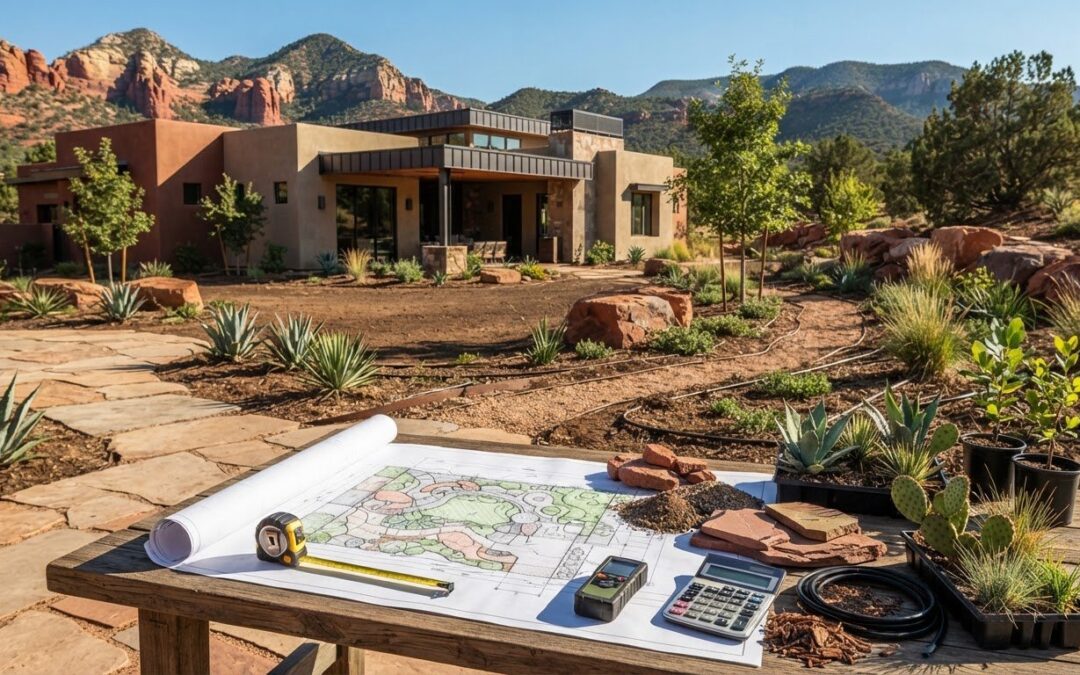
Estimating landscaping costs for new construction starts with a project budget, then breaks that budget into measurable areas and specific features. A professional landscaping budget is commonly set at 2% to 5% of the home’s total cost. The final estimate should also account for labor, mobilization, contingency, overhead, and profit.
A common estimating mistake is to price visible materials while overlooking the work and site conditions behind them. Plants, lawn, and patios are easy to see, but an accurate estimate also accounts for site preparation, installation, drainage, and the equipment needed to complete the work.
This guide explains how to measure landscape areas, estimate hardscape separately, and build a realistic budget from the scope up. You’ll also learn how to account for labor and business costs, avoid common estimating errors, and plan for the practical details that help a new landscape perform well over time.
Key Takeaways
- Match each landscape item to the right pricing method: area, length, quantity, or crew time.
- Evaluate grading, drainage, access, and soil conditions before pricing hardscape or planting work.
- Use 2% to 5% of a new home’s cost as a starting point for the landscaping budget, then refine it around the planned scope.
- Build a complete bid by accounting for labor burden, mobilization, contingency, overhead, and profit, not just materials and installation.
- Plan irrigation with water efficiency in mind: the U.S. Environmental Protection Agency says inefficient irrigation can lose as much as 50% of outdoor water to wind, evaporation, and runoff.
What Are the Most Common Estimating Mistakes on Landscape Packages?
Build the estimate around the full scope, not just visible plants and paving. Check design, installation, water needs, and approvals to identify costs that might otherwise be missed.
-
List Design, Material, Labor, and Maintenance Costs
Break the estimate into design, materials, installation labor, and ongoing maintenance. List plants, soil preparation, irrigation components, and hardscape materials separately from the labor required to install them. This makes omissions easier to catch and shows which choices have the greatest effect on the total.
Include the work that supports long-term performance, not only the initial installation. The U.S. Environmental Protection Agency’s WaterSense program states that as much as 50% of outdoor water use is lost to wind, evaporation, and runoff from inefficient irrigation. Account for irrigation planning and maintenance needs when deciding what belongs in the package.
Include mobilization and material handling in the job breakdown. A hardscape project may require moving pavers or stone from the delivery point to the installation area. Narrow gates, long carrying distances, and limited equipment access can add labor even when the patio dimensions stay the same.
-
Identify Cost Drivers and Material Markups
Record when the work can take place, which materials are needed, and how much labor each task requires. Planting schedules can affect material sourcing and crew sequencing, while site access can affect delivery and installation time. Treat timing as a planning factor instead of assuming materials and labor will be ready at the same time.
Apply material markups consistently instead of using one percentage for every category. Common estimating ranges are 25% to 50% for plants and trees, 15% to 30% for bulk mulch, soil, and rock, and 20% to 35% for hardscape accessories. Keep each category visible so the estimate reflects its actual purchasing and handling demands.
Separate deck work from landscape quantities when the plan includes a deck. Its materials and design choices have their own scope, so don’t bury them in a planting or paving allowance.
-
Check Permits, HOA Rules, and Local Requirements
Review local requirements and HOA documents before finalizing the scope. Ask the relevant planning or building department which proposed work requires review, and check HOA rules for restrictions on plants, visible structures, irrigation, or drainage changes. Requirements vary by location and project, so record applicable approvals and fees rather than assuming they won’t apply.
Compare requirements with the site plan before ordering materials. A retaining wall, drainage change, or outdoor structure may affect the work sequence and the documents needed for review. If approval changes the design, update quantities, labor, and timing together, not just the materials line.
Keep approval-related costs and schedule effects visible in the estimate. For example, list permit fees separately from design revisions and additional site visits. This makes the estimate easier to update if local review or HOA feedback changes the approved layout.
How Much Does Landscaping Cost Per Square Foot?
Choose a pricing unit that matches the work, then measure each part separately. Landscape costs vary with scope, materials, site preparation, and installation demands.
- Use square-foot pricing for work spread across a defined area when estimating landscaping costs for new construction.
Measure the landscaped area, not the entire parcel. Separate lawn, planting beds, paths, and patios because each requires different materials and work.
- Base commercial square-foot pricing on the defined landscape area. Identify whether the scope includes planting, irrigation, grading, or other site work before applying a rate. Don’t count buildings, parking areas, or unused grounds as landscaped square footage.
Compare projects with similar scopes, not just headline rates. An open lawn with shade trees differs from a plaza with stone paving and specimen trees. Differences in scope and materials explain why per-square-foot pricing varies.
- Use linear-foot pricing for features measured by length, such as edging or a boundary treatment. Measure each section and note turns, grade changes, and transitions, since they affect installation work. Square feet suit broad surfaces; linear feet suit narrow features. Keeping those quantities separate prevents a long border from disappearing into an area-based allowance.
Use per-item pricing when the work depends on the number of items rather than the area covered. Count plants or fixtures separately when their size, spacing, or installation requirements differ.
- Use hourly pricing for tasks whose duration depends on site conditions. It can suit troubleshooting, adjustments, or work where access and complexity affect productivity. Record the task, labor time, and equipment separately, then compare the total with area-based work. This keeps labor visible instead of hiding it in a broad square-foot figure.
Review quantities by season and sequence before finalizing the estimate. Confirm which areas need grading, soil preparation, sod, or irrigation, then price each unit consistently. A measured plan with separate square-foot, linear-foot, per-item, and hourly lines makes the estimate easier to update when the design changes.
How Do You Price Hardscape in a Landscape Bid?
Estimate hardscape from measured quantities, site conditions, and specified materials. Walkway and outdoor-lighting costs depend on materials, layout, access, and installation requirements.
-
Evaluate the Site and Plan the Project
Walk the site and record installation conditions before building the estimate. Measure proposed patio and walkway areas, retaining-wall lengths, slopes, drainage paths, and access routes. A site evaluation can reveal soil, drainage, and access considerations that affect landscape costs.
Use a scaled plan as a reference, then compare it with conditions on the ground. Note where machinery can enter and where crews must carry materials by hand. Access distance and grade can change handling time even when hardscape dimensions remain the same.
-
Define Scope and Priorities
List each feature, its purpose, and its quantity before assigning costs. For example, separate a front-entry walkway from a patio intended for seating. Itemize paving material, edging, base preparation, drainage, and lighting. This breakdown helps prevent a broad hardscape allowance from obscuring work that has been left out.
Decide which elements are essential and which can be phased in later. A new homeowner might prioritize a safe entrance and drainage improvements before adding decorative lighting. Record the material and finish for each feature, since stone, concrete, and pavers require different quantities and installation details.
-
Set Project Phases and Allowances
Organize design and construction work into clear phases: site evaluation, design, material selection, preparation, installation, and final review. Tie each allowance to a defined feature, such as a specified patio area or wall length. Avoid one general allowance for all hardscape, since changing one material can otherwise affect the entire estimate.
Keep design decisions and installation quantities aligned. If a homeowner changes a walkway’s route, update its length, excavation, and material quantities together. A 15% markup is within the recommended 15% to 20% markup range for residential landscaping jobs, but it doesn’t replace the need to measure and price each scope item.
-
Compare Project Examples and Hardscape Costs
Use comparable residential projects to set priorities, not as a substitute for measuring quantities.
Price patios and retaining walls by their specified area or length, and itemize walkways and outdoor lighting separately. Scope depends on dimensions, selected materials, site access, and the preparation required.
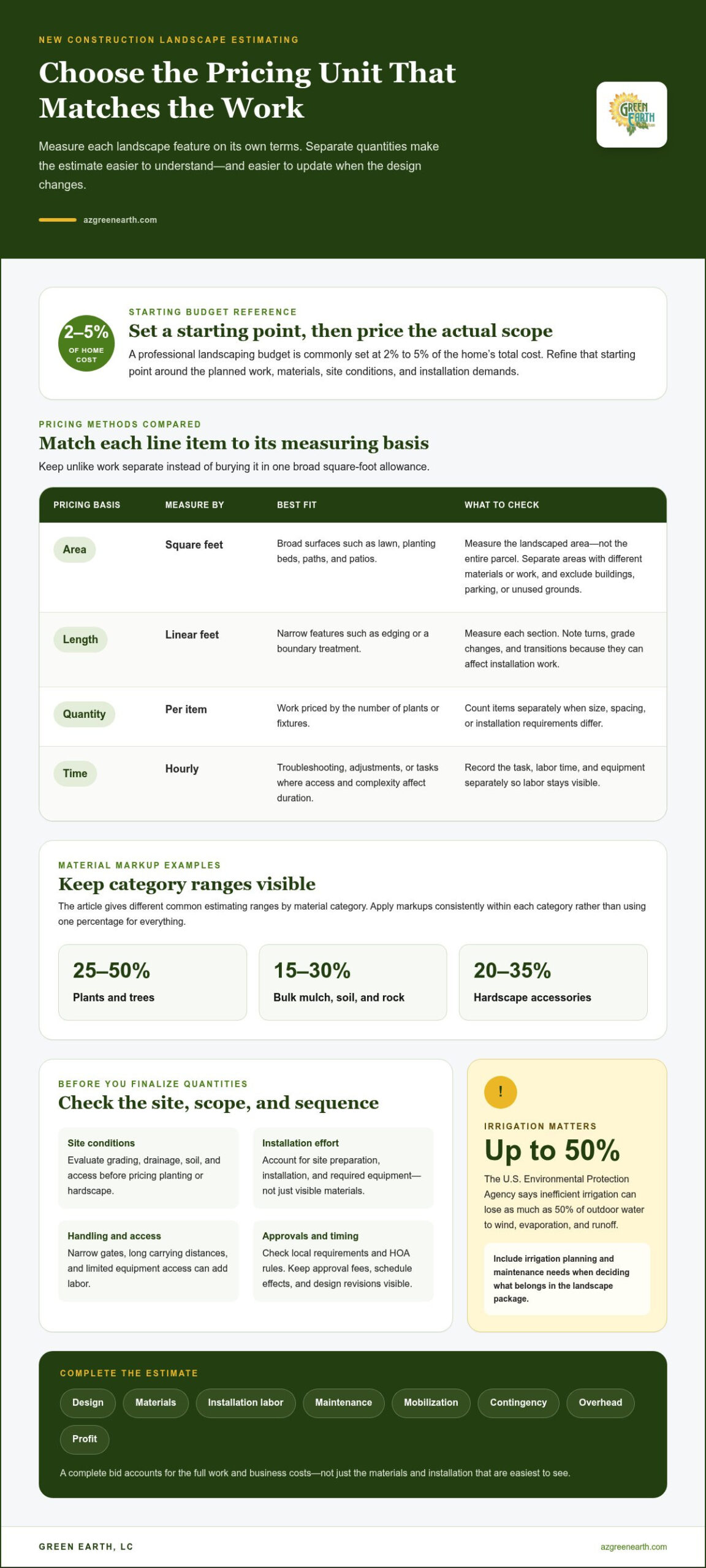
Recommended landscaping budget as a percentage of home cost
A common starting point is 2% to 5% of the home’s total cost.
-
Set a Budget as a Share of Home Cost
Multiply the home’s price by 2% and 5% to establish a planning range. Treat the percentage as a starting framework, then allocate funds according to actual site quantities and desired features.
Use the lower end for a simpler scope and the higher end when the plan includes more design detail, hardscape, or irrigation. Don’t assume a builder’s allowance covers the finished landscape: some new homes include an allowance around $800, which may cover only a skim coat of loam, hydroseed, and four small plants.
-
Apply Unit-Cost Benchmarks
Price softscape by measured area or item count.
Choose the right unit for each scope item. Measure hardscape surfaces in square feet and walls in linear feet, then list materials and quantities separately. A clear proposal distinguishes these measures instead of blending them into one landscape-area rate.
-
Estimate Costs for a Quarter-Acre Yard
Treat this as a reference point, not a complete estimate for a new home. The final scope depends on how much land becomes lawn, planting beds, paths, or other features.
Convert the plan into quantities before adjusting the budget. Measure sod separately from planting beds, then calculate soil and establishment needs for each area. A quarter-acre property does not mean every square foot gets the same treatment, so price only the areas included in the landscape plan.
-
Compare New-Home Costs and Low-Maintenance Choices
For a new construction home in the United States, use 2% to 5% of the home’s cost as a practical budget range.
To plan for future upkeep, simplify the layout and group plants with similar water needs. Reduce lawn where it has no clear purpose, and choose durable surfaces for frequently used paths. These choices can reduce routine tasks while keeping the outdoor space functional. Compare proposals by quantities, included work, and establishment needs.
Labor burden, mobilization, contingency, overhead, and profit
For a simple planting bed, doing the work yourself may cost less if you have the tools and time. A professional may be a better fit when the scope involves irrigation, grading, or coordinated installation, where labor planning and execution shape the estimate.
-
Estimate Labor Hours and Loaded Rates
Break the landscape plan into tasks, then estimate labor hours for each. Include preparation, installation, cleanup, and equipment handling, not just the visible work.
Use a loaded rate that reflects more than base wages. Landscape labor burden is typically 25% to 40% on top of base wages and equipment when estimating from material and crew-hour costs. Record the rate and hours separately, so a change in plant quantities or irrigation scope doesn’t hide its labor effect.
-
Account for Labor Time and Payroll Taxes
Build payroll costs into labor instead of treating wages as the full expense. One estimating recommendation adds about 18% to labor costs for payroll taxes, including FICA. Apply that addition to the wage portion of the estimate, then keep equipment, materials, and crew hours visible as separate lines.
Treat this as a market reference, not a substitute for calculating actual labor time. Moving materials across a site or adjusting irrigation can change the hours required, so estimate each activity rather than applying one hourly rate to the whole project.
-
Add Project and Business Cost Factors
Include mobilization for bringing the crew, tools, and materials to the site and preparing for work. Distance, access, delivery coordination, and the number of separate visits affect this allowance. Keep it distinct from installation labor, especially when grading, planting, and irrigation require separate visits.
Include contingency for site conditions that could change the work. Estimating contingency is typically 3% to 8% of direct cost; commercial landscape budgets may include 10% to 20% for unexpected issues. Higher-risk jobs may carry 5% to 15%. Choose the allowance based on project risk, not as an unexplained addition.
Then account for overhead and profit. General overhead is typically 6% to 12% of direct cost plus contingency, while contractors typically allocate at least 20% of total sales to overhead. Recommended markup is 15% to 20% for residential landscaping and 10% to 15% for commercial work. Keep each component clear so the final bid shows how charges build.
Green Earth, LC: HOA Landscape Maintenance
Green Earth, LC provides HOA Landscape Maintenance and Commercial Landscape Maintenance for communities and commercial properties. For established landscapes that need recurring care, these services help keep outdoor spaces maintained. If irrigation performance is a concern, Irrigation Drip System Repair addresses drip-system issues. Firewise Defensible Space supports landscape planning around fire-conscious priorities.
Use the estimate to identify ongoing needs after installation, such as routine care or irrigation repairs. Separating these from construction work clarifies maintenance planning and the property’s next steps.
Contact Green Earth, LC to discuss landscape maintenance or irrigation needs, or visit azgreenearth.com.
Plan for a Landscape That Grows With Your Home
Move-in day is only the beginning of how you’ll use your outdoor space. A thoughtful approach to estimating landscaping costs for new construction can align the initial design with how you want the property to function over time. Consider which areas need ongoing attention, where water management matters, and how the landscape should support daily life. Those priorities can guide decisions beyond installation.
For ongoing property care, Green Earth, LC provides HOA Landscape Maintenance and Commercial Landscape Maintenance. Firewise Defensible Space can address landscape needs around fire-conscious priorities. Match the next step to the property’s needs to keep planning connected to its long-term use.
When you’re ready to discuss care for a community or commercial landscape, contact Green Earth, LC. A considered plan can help your new home’s outdoor spaces mature into a useful, welcoming part of everyday life.
Frequently Asked Questions
How Do You Do a Landscape Takeoff Step by Step?
Start with the site plan and turn every landscape feature into a measured quantity. For estimating landscaping costs for new construction, separate lawn, planting beds, paved surfaces, walls, and irrigation zones. Measure areas in square feet, linear features in feet, and individual plants by count. Then list materials and labor for each item and compare the quantities with the plan to catch gaps, overlaps, or unmeasured areas before pricing.
How Do You Set Markup, Contingency, and Allowances?
Set each amount against a clearly defined cost base. A common estimating contingency is 3% to 8% of direct cost, while recommended markup ranges are 15% to 20% for residential landscaping and 10% to 15% for commercial work. Keep allowances tied to specific undecided items, such as a material selection. Track contingency separately from markup so the estimate distinguishes risk coverage from business margin.
What Is Actually Included in Landscaping and Irrigation Costs on a Construction Project?
A complete project scope can include design, site preparation, materials, installation labor, irrigation components, and establishment care. List each separately, then identify what the construction plan assigns to the landscape package. For irrigation, specify the zones, controls, piping, and connection work included. Clarify whether grading, drainage, soil amendment, cleanup, or follow-up maintenance is in scope, so responsibilities and quantities are clear before work begins.
How much does new-construction landscaping cost per square foot?
There is no single square-foot rate for every new home; the mix of features drives the estimate. Calculate the landscaped area, then separate lawn, beds, paving, walls, and irrigation instead of applying one rate to the entire lot. A basic planted area and a design with extensive hardscape require different materials and labor. Site access, grading, plant selections, and irrigation coverage also affect the total.
What are typical costs for grading, topsoil, and soil preparation?
Grading and soil preparation depend on the volume of material moved, existing slope, drainage needs, and equipment access. Separate finish grading from imported soil and soil amendment in the estimate. For a site around Sedona or Prescott, document the actual terrain and quantities rather than assuming the whole yard needs the same preparation.
How much do sod, seed, and artificial turf cost to install?
For any lawn option, measure the area to be covered and account for the site preparation required. Compare sod, seed, and artificial turf by material, preparation, installation labor, and future care needs. Costs depend on the selected product and work involved, so keep each option on its own estimate line.
What do trees, shrubs, flower beds, and mulch cost for a new yard?
Estimate planting work by listing each tree, shrub, and perennial with its size and quantity, then measure flower beds by area. Mulch quantities depend on bed area and application depth; one cubic yard covers roughly 108 square feet at a three-inch depth. Plant selection, spacing, soil preparation, delivery, and installation affect the estimate. Grouping plants by bed helps match quantities to the design and reduces ordering errors.
How much do irrigation systems and drainage work cost to install?
Irrigation and drainage costs depend on the layout, site conditions, materials, and labor. For irrigation, map the zones and note the areas each serves, along with the controller and delivery components. For drainage, record where water collects and the route it must follow away from the problem area. In Cottonwood, Camp Verde, and Flagstaff, base the scope on the property’s actual slope and plan rather than assuming a standard layout.
Recent Comments