
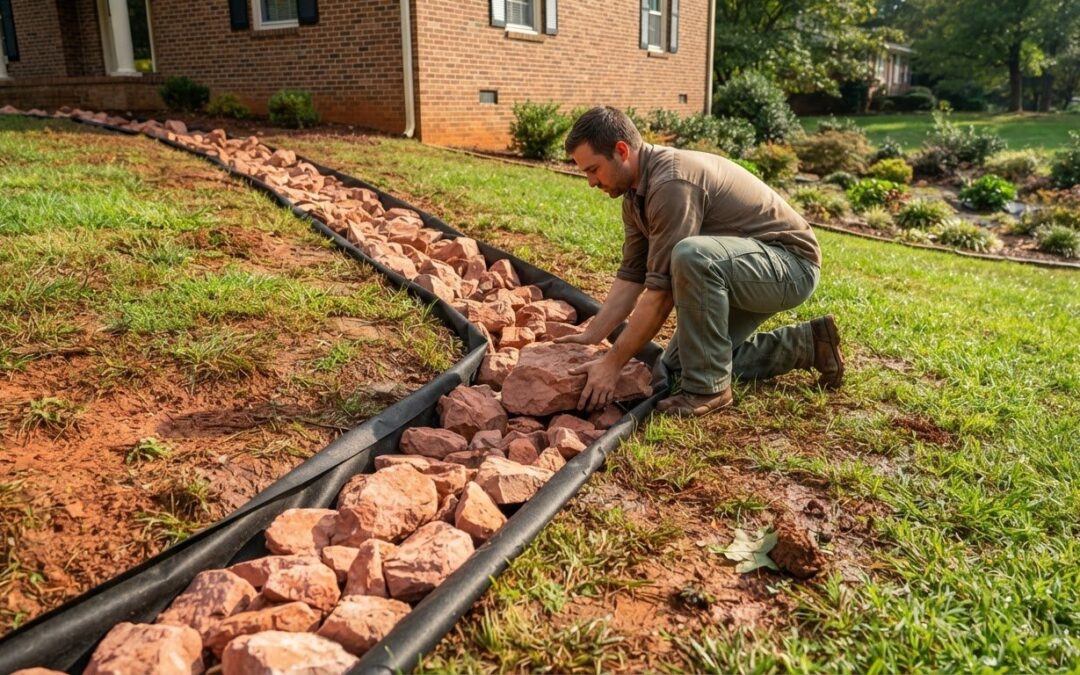
Finding landscape drainage contractors near me in Sedona, Cottonwood, or Camp Verde starts with confirming that the service covers your property. Then review examples of relevant drainage work and describe where water collects and how it moves across the landscape. Clear site details help focus the conversation on the problem and possible next steps.
For residents in Flagstaff or Prescott, the same approach applies: match the service area, read reviews for project details, and watch for recurring pooling, erosion, or moisture concerns. When comparing landscape drainage contractors near me, consider how clearly each explains the proposed drainage approach and maintenance needs. This guide covers review details, signs that deserve attention, and practical ways to care for drainage systems. Use those points to assess landscape drainage contractors near me and decide what your property needs next.
Key Takeaways
- Identify whether a contractor serves your community around Winston-Salem and can address the drainage conditions affecting your property.
- Use review details about communication, project work, and follow-through to assess a contractor’s service, not just the overall rating.
- Recognize signs of worsening drainage, such as persistent pooling, erosion, or moisture affecting buildings and plants.
- Learn how routine attention to drainage paths and system components can help maintain reliable water flow over time.
Service area around Winston-Salem, North Carolina
While some homeowners look for landscape drainage contractors near me in other regions, Green Earth, LC focuses its operations exclusively in Northern Arizona. Service-area fit starts with the site address. Green Earth, LC serves Sedona, Cottonwood, Camp Verde, Clarkdale, Village of Oak Creek, Rimrock, Prescott and Prescott Valley, and Flagstaff. If you are searching for landscape drainage contractors near me, check that your location falls within this service area before comparing project details. Heavy rain and clay-heavy soil can contribute to standing water, erosion, and plant stress when water is not managed.
Residential and commercial drainage needs can differ. Runoff may cross a home garden, while a commercial landscape may collect water across a shared outdoor area. In either case, drainage grading can redirect surface flow by adjusting the land’s contours. Consider landscape drainage contractors near me based on your property’s location and the specific work involved. Emergency tree services are separate from drainage grading: a fallen tree blocking a drain is not the same problem as runoff crossing a site.
Compare estimates by reviewing the proposed work, drainage route, materials, excavation, and restoration. Licensing, insurance, and warranty terms depend on the work and applicable local requirements; read the written scope and terms carefully. Permit needs for residential drainage projects also depend on location and project scope, including whether grading changes alter water flow.
The average cost to install a French drain or yard drainage system depends on site conditions, excavation, drainage length, materials, and restoration. Price depends on the case and is provided after a quote request. Installation time likewise depends on access, soil, design, and excavation involved. A defined route may require less work than extensive grading and restoration.
Green Earth, LC serves the named Northern Arizona communities. Share your property location, where water pools, and whether runoff moves toward a structure or planting area. These details help establish whether the concern involves surface grading and clarify the work under consideration.
Contractor ratings and customer reviews
Treat an online rating as a starting point, not a complete record of drainage work. Read reviews for details about the property, water issue, proposed fix, and result. A comment describing runoff beside a driveway gives more context than “great job.” Look for examples involving grading, surface flow, or drain installation, since those details are relevant to the work you need.
Compare review platforms for consistent themes rather than relying on one unusually positive or negative comment. Note whether customers mention clear explanations, changes to the work plan, site cleanup, and follow-up. Repeated comments about water still pooling after rain, for example, deserve attention. A professional, clear response to criticism can also show how concerns are addressed.
Before hiring, ask how the contractor will identify the source of runoff and explain the proposed drainage route. Ask what the estimate includes, how site conditions could affect the work, and what written terms apply to the completed project.
- Check whether the reviewer describes a drainage problem similar to yours, such as pooling near a walkway.
- Look for specifics about grading, drain placement, landscape restoration, and communication during the work.
- Read negative reviews for recurring issues, not just a single disagreement without project details.
- Notice whether a response addresses the customer’s concern directly and explains a practical next step.
- Compare review details with the estimate’s scope, materials, water route, and cleanup plan.
Reviews can help you ask better questions, but they don’t replace a clear project discussion. Ask where collected water will travel and how the proposed grading supports that route. A useful explanation connects the site conditions to the planned work, rather than relying on a general promise that the yard will drain better.
Use the estimate and review history together. If reviews describe tidy restoration but the written scope omits disturbed lawn areas, ask for the scope to clarify restoration before accepting the proposal. Clear expectations make it easier to compare the completed work with the plan.
Drain problems and repair urgency
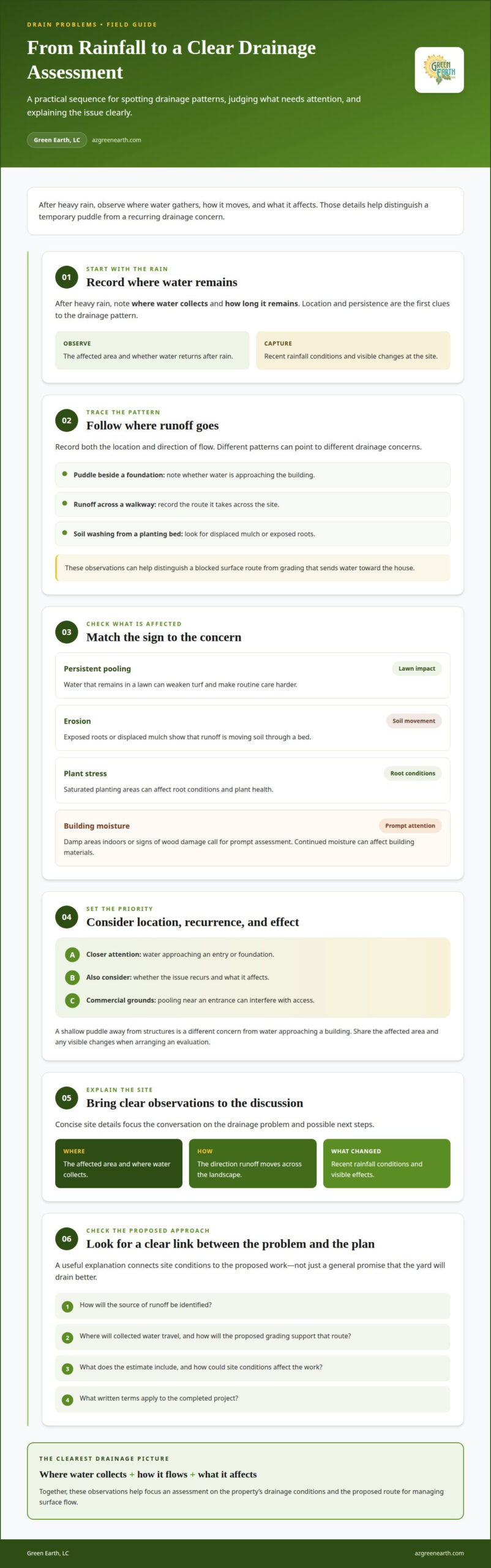
After heavy rain, note where water collects and how long it remains. A puddle beside a foundation, runoff crossing a walkway, or soil washing from a planting bed points to different drainage patterns. Record the location and direction of flow. These observations can help distinguish a blocked surface route from grading that sends water toward the house.
Water intrusion deserves prompt attention because continued moisture can affect building materials. Heavy rainfall combined with poor drainage can contribute to mold growth, wood rot, and structural integrity issues in homes or businesses. Recurring dampness at an exterior wall, for example, suggests more than a temporary lawn puddle. Note whether water appears after rain, near a downspout, or along a low foundation edge.
- Persistent pooling: Water that remains in a lawn can weaken turf and make routine care harder.
- Erosion: Exposed roots or displaced mulch show that runoff is moving soil through a bed.
- Plant stress: Saturated planting areas can affect root conditions and plant health.
- Building moisture: Damp areas indoors or signs of wood damage call for prompt assessment.
Prioritize the issue by location, recurrence, and effect. Water approaching an entry or foundation needs closer attention than a shallow puddle away from structures. On commercial grounds, pooling near an entrance can also interfere with access. When arranging an evaluation, share the affected area, recent rainfall conditions, and any visible changes.
Not every wet patch comes from rainwater. A damaged irrigation drip line may keep one planting area wet during dry weather. Compare the wet spot with the irrigation route and note whether it appears during or after watering. Irrigation drip system repair addresses the irrigation source; drainage evaluation addresses how water moves across the site. Distinguishing these causes helps direct the work toward the actual problem.
Observe the area after the next rainfall or irrigation cycle. Note whether pooling spreads, soil continues to erode, or moisture appears near a structure. These specific changes help clarify urgency and guide an assessment, while distinguishing a localized irrigation leak from a broader yard drainage issue.
Drainage system maintenance
A drainage system needs attention after storms and landscape changes. Leaves can cover a surface-drain inlet, while moved soil or mulch can redirect runoff. Walk the drainage route after rainfall and note where water enters, travels, and exits. If water bypasses an inlet or collects in a new low spot, the system may need clearing or adjustment.
Keep visible inlets and channels free of leaves, sediment, and yard debris. Clear material from the surface without pushing it deeper into a drain. Check that outlet areas remain open and flowing water doesn’t wash soil into nearby beds. For a French drain, look for changes at its visible outlet, such as reduced flow or sediment buildup. Buried sections can’t be assessed by appearance alone.
- Remove leaves and loose debris from visible drain openings.
- Watch the outlet during rainfall for steady flow or signs of blockage.
- Look for erosion, exposed roots, or new pooling along the drainage route.
- Keep mulch and soil from covering inlets or changing the intended grade.
- Record recurring trouble spots to show how conditions change after rain.
Planting, lawn work, and hardscape changes can affect water movement. A new bed, for example, may redirect runoff toward a walkway, while compacted soil can slow absorption. After landscape work, observe the route again during rainfall. If the surrounding surface has changed, grading adjustments may be needed to help water follow its intended route.
Maintenance also means distinguishing a clogged path from a design issue. If clearing a visible inlet doesn’t resolve pooling, or water repeatedly escapes its route, grading or another concealed condition may be involved. Avoid digging blindly near buried lines. A professional assessment can trace the flow and determine whether drainage grading needs attention.
For help addressing drainage changes and maintaining dependable site flow, discuss your drainage grading needs. Timely observation, clear inlets, and attention to altered landscapes help protect drainage function while preserving healthy, attractive outdoor spaces.
Green Earth, LC: Drainage Grading
Green Earth, LC offers drainage grading to help manage how water moves across a landscape. It can be relevant when runoff follows an unwanted route or low areas collect water. Grading adjusts the land’s contours to direct water along a planned path while supporting the surrounding landscape.
Green Earth, LC is based in Cornville, Northern Arizona, and serves the Verde Valley. Its stated service area is not Winston-Salem, so it isn’t a local option for properties in North Carolina. For property managers in its service region, drainage grading can complement HOA or commercial landscape maintenance when site runoff affects maintained grounds.
If your property is in the Verde Valley and needs drainage grading, contact Green Earth, LC to discuss the site and its drainage concerns.
Choose the Next Step That Fits Your Property
Before moving forward, define the outcome you need: guide runoff away from a structure, protect planting areas, or improve water movement across a managed site. This gives the drainage discussion a clear purpose. When evaluating landscape drainage contractors near me, make sure the service area includes your property and the work fits its needs.
Green Earth, LC serves Northern Arizona communities including Sedona, Cottonwood, Camp Verde, Flagstaff, and Prescott. Its drainage grading can help address unwanted runoff across a landscape. HOA and commercial landscape maintenance, along with Firewise Defensible Space, serve different property needs, so choose the service that matches your goals.
If your property is in Green Earth, LC’s service area and you’d like to discuss drainage grading, contact Green Earth, LC. A thoughtful next step can help you shape a landscape that works well with its surroundings.
Frequently Asked Questions
How should I assess drainage contractor reviews and ratings?
Look for reviews describing a project similar in scope to yours, then consider the details behind the rating. A review about correcting runoff across a sloped yard may be more relevant than one about routine lawn care. Note when reviews were posted and whether customers describe clear explanations of the completed work. Ratings offer context, but they can’t show how a contractor would address your site.
Do drainage contractors install French drains, grading, and downspout drainage?
Services vary: grading reshapes land to guide surface water, while French drains and downspout drainage address water through different routes. Ask what the proposed work includes and where collected water will flow. Green Earth, LC offers drainage grading, which can help direct water across a property. Don’t assume every contractor offers every drainage method; confirm the work scope in the written proposal.
What are the risks of poor yard drainage, and what signs call for a contractor?
Poor drainage can leave turf weak, encourage plant disease, and make regular lawn care harder. Persistent wet ground, repeated erosion, or water entering a building are signs to take seriously. Note whether the affected area grows after rainfall or stays wet during dry weather. That distinction can help identify whether runoff, irrigation, or another source may be involved.
How do I find the best local landscape drainage contractor?
Start with service-area fit: Green Earth, LC serves Northern Arizona, including Sedona, Camp Verde, Cottonwood, Flagstaff, and Prescott, not Winston-Salem. For work in its region, Green Earth offers drainage grading alongside landscape maintenance for HOA and commercial properties. The right choice depends on location and project scope, so match the contractor’s stated coverage and work to your property’s needs.
how long does professional yard drainage installation take
Installation time depends on site access, soil, design, and excavation. A defined route may require less work than extensive grading and restoration.
Recent Comments