
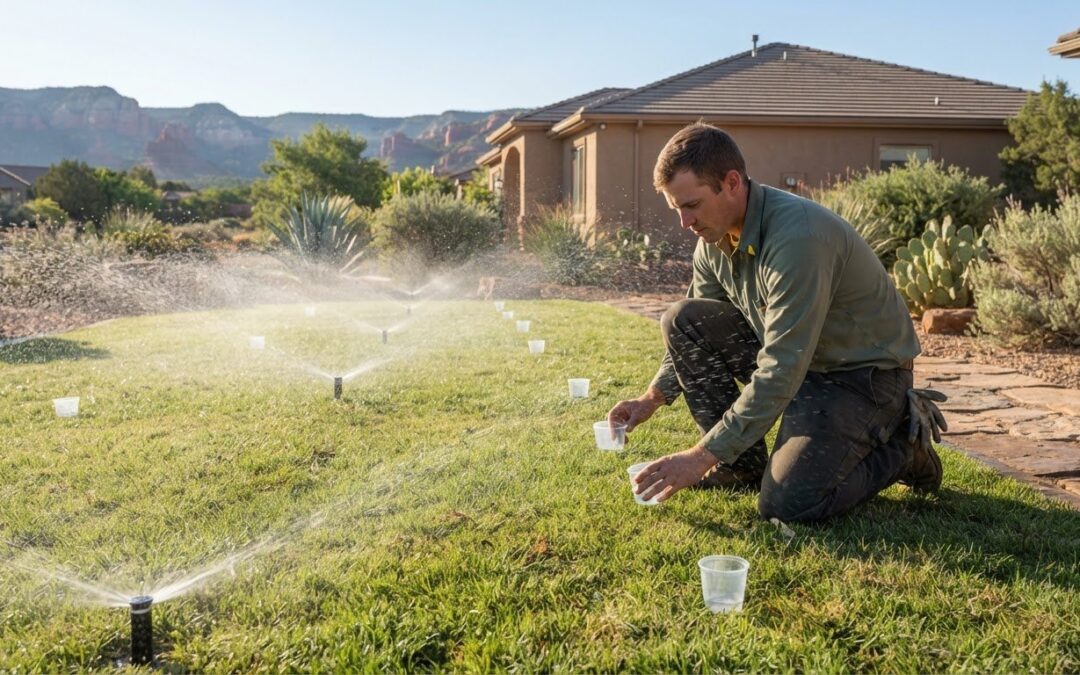
Yes, irrigation repairs can help reduce water waste by correcting leaks, misdirected spray, and watering schedules that no longer fit the landscape. An irrigation system tune-up service can identify these problems and restore more even, efficient coverage. For comparison, switching from a 1990s timer-based system to smart irrigation typically reduces outdoor water use by 20-30% in the first full season, though that figure applies to the system upgrade, not every tune-up.
It makes sense to inspect your irrigation system when water runs onto pavement, parts of the landscape stay dry, or watering continues after the weather changes. Seasonal start-up and routine inspections can uncover issues before they waste water or stress plants. This article explains what repairs can address, what an irrigation system tune-up service involves, how seasonal maintenance supports residential and commercial landscapes, and when professional troubleshooting can help keep your system working as intended.
Key Takeaways
- Learn how controller settings and smart upgrades can better match watering to landscape needs.
- Understand how an irrigation assessment helps determine whether targeted repairs or broader replacement make sense.
- See what seasonal start-ups and tune-ups can address before watering demands change.
- Explore routine maintenance approaches for commercial landscapes and when drip system repair can help.
Can irrigation system repair help reduce water waste?
Yes. Correcting leaks, overspray, or inaccurate schedules can direct water where plants need it. Replacing a 1990s timer-based system with smart irrigation typically reduces outdoor water use by 20-30% in the first full season. That figure applies to a system upgrade, not every repair or tune-up. A controller adjustment may be enough when the equipment works but watering times no longer suit the landscape.
Reviewing the controller is a practical first step. A technician can check each zone’s run time, start time, and watering days, then adjust the settings to suit the landscape. Separate zones matter: turf, shrubs, and drip-irrigated beds may need different schedules. Running every zone for the same duration can overwater some areas and leave others dry. Seasonal adjustments help schedules reflect changing weather and plant growth.
Malfunctions can make a schedule unreliable. A sprinkler zone that won’t start may point to a controller setting, wiring issue, or valve problem. A zone that keeps running past its scheduled cycle needs troubleshooting, not a longer or shorter program. Controller troubleshooting can reveal whether the fault affects one zone or the whole system, helping target the repair instead of changing settings blindly.
Upgrades should address the cause of uneven watering. A Wi-Fi-controlled controller can make schedule changes easier to manage, while compatible weather-based features can adjust watering in response to conditions. Replacing a malfunctioning controller may restore dependable zone control. Replacing a damaged or poorly aimed sprinkler head can also improve coverage and prevent water from spraying onto pavement. A tune-up should account for both controller settings and spray patterns.
Rebates and water-saving incentives vary by location and program. For homeowners in Sedona, Camp Verde, Cottonwood, Flagstaff, or Prescott, eligibility depends on the local program and the specific controller or upgrade. Review the program’s requirements before purchasing to understand whether the equipment qualifies.
Do you offer seasonal sprinkler maintenance and repairs?
Seasonal irrigation care can include diagnosing faults, repairing damaged components, and troubleshooting the controller. The right repair depends on the inspection findings: uneven coverage, a leaking pipe, and a valve that fails to open can have different causes. Assessing the system first helps locate the fault and determine whether to repair one part or replace a larger section.
During an inspection, each sprinkler zone can be activated and observed. This makes it easier to spot a clogged nozzle, a head spraying pavement, or a zone that stays dry. Valves, visible pipe connections, and sprinkler heads also need attention, since damage to one component can affect coverage elsewhere. A technician can diagnose the problem and recommend targeted repairs instead of replacing working equipment without cause.
- Sprinkler heads and nozzles: Repair or replace damaged, blocked, or poorly aimed parts to restore the intended spray pattern.
- Pipes and connections: Address leaks that reduce pressure or leave soggy patches near the break.
- Valves: Troubleshoot a zone that won’t turn on, shut off, or respond as expected.
When an irrigation system is aging, weigh the pattern of failures, the condition of connected components, and whether repairs can restore dependable operation. One worn valve or broken head may need only a focused repair. Repeated problems across several zones may indicate broader wear, making a larger replacement more practical. Recommendations should relate to observed performance and coverage.
Targeted sprinkler repair can preserve sound parts while resolving specific trouble spots. Drip lines that leak or fail to deliver water need a different repair approach from a malfunctioning controller. For persistent zone or programming problems, irrigation controller troubleshooting can help identify the source and guide the next repair decision.
Seasonal sprinkler tune-ups and spring start-ups
A seasonal start-up checks whether the sprinkler system is ready to water the landscape. An irrigation system tune-up service can also identify adjustments needed before regular watering resumes.
Tune-Up Scope and Service Comparisons
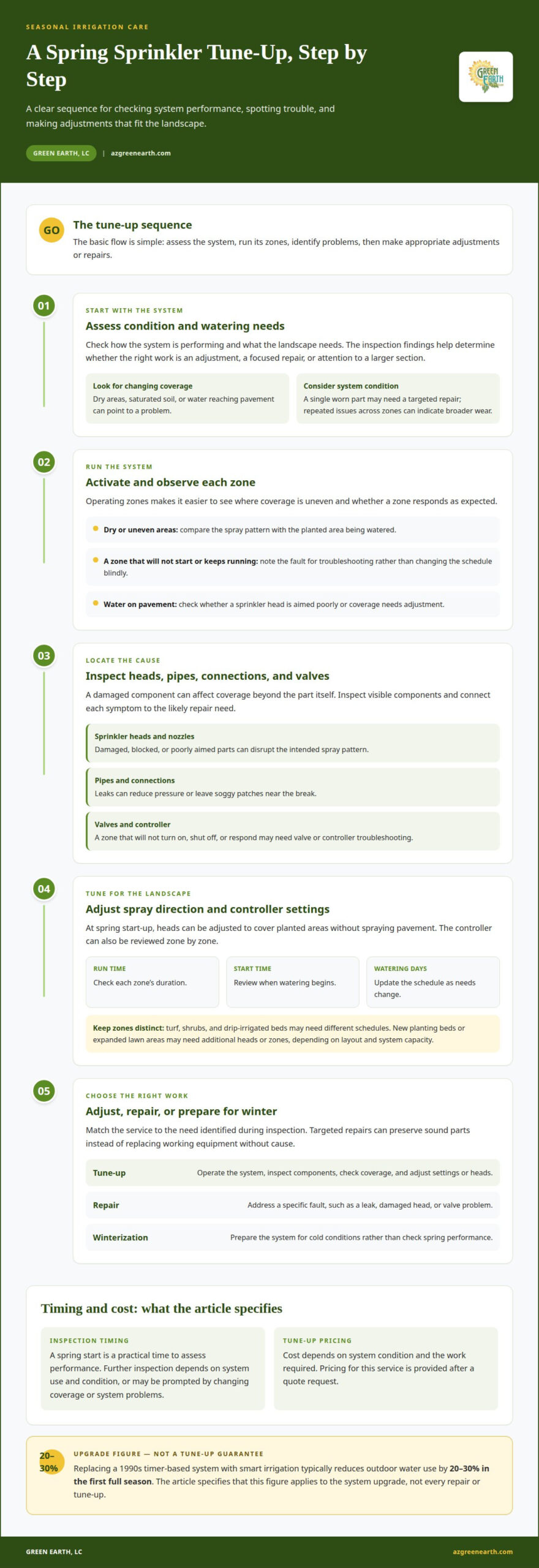
A tune-up typically involves operating the system, inspecting components, checking coverage, and adjusting controller settings or sprinkler heads. The sequence is straightforward: assess the system, run its zones, identify problems, and make appropriate adjustments. A repair addresses a specific fault, such as a leak. Winterization prepares the system for cold conditions, rather than checking spring performance.
Choose the work that fits the need: inspection and adjustment, a targeted repair, or seasonal shutdown preparation.
Tune-Up Cost and Inspection Frequency
The cost of a sprinkler system tune-up in the United States depends on system condition and the work required. For this service, pricing depends on the individual case and is provided after a quote request. Inspection frequency also depends on use and condition. A spring start is a practical time to assess performance, with another inspection prompted by changing coverage or system problems.
Scheduling an irrigation system tune-up service around seasonal transitions keeps inspection timing connected to the landscape’s needs.
Head Adjustment, Coverage, and Added Zones
At spring start-up, a technician can observe each sprinkler head and adjust its direction to cover planted areas without spraying pavement. Dry patches beside saturated soil may indicate uneven coverage. New planting beds or expanded lawn areas may need additional heads or zones, depending on the layout and system capacity.
For installation or replacement, design zones around the landscape’s distinct watering needs.
Signs of Sprinkler System Problems
Pooling water, persistent dry spots, overspray onto walkways, or a zone that fails to run can signal a problem. A head that sputters or sprays unevenly may also need attention. At spring start-up, these signs help focus the inspection on the affected area instead of treating every zone alike.
Repeated faults or uneven coverage after adjustments can indicate a broader system issue and help guide the next repair decision.
Commercial landscape irrigation maintenance
Commercial properties need routine irrigation checks to keep landscaped areas consistently watered. A technician can run each zone, inspect heads and valves, and look for leaks or overspray near walkways. Regular checks can also uncover a broken component before it affects nearby turf, planting beds, or shared spaces.
A maintenance visit should relate irrigation performance to the landscape’s current needs. A shaded bed and an exposed lawn, for example, may need different watering schedules. The technician can review controller settings, observe spray patterns, and record issues by zone. Noting the controller make, such as Hunter or Rain Bird, can also keep service records clear for future maintenance.
- Check each zone: Run the system and note weak flow, pooling, or dry areas.
- Inspect visible components: Look for leaking connections, damaged heads, and valves that don’t operate correctly.
- Review schedules: Adjust run times and watering days to suit the maintained landscape.
- Track system condition: Record repairs and recurring concerns for the next service visit.
Commercial irrigation maintenance may also include annual irrigation system backflow testing. Routine inspections should distinguish a localized fault from a problem affecting several zones. A single broken head may need a focused repair, while recurring leaks or uneven coverage may call for a broader assessment. Clear records help property managers track what was inspected, what was repaired, and which issues need follow-up.
For HOA properties and business landscapes, consistent maintenance supports both plant health and site presentation. A planned inspection can account for changes to planting beds, foot traffic, or surrounding hardscape that affect spray coverage. Plan routine landscape irrigation maintenance to address system concerns as part of ongoing property care.
Green Earth, LC: Irrigation Drip System Repair
Green Earth, LC provides irrigation drip system repair for landscapes with damaged lines or uneven water delivery. A targeted repair can address a drip-system problem without replacing the entire irrigation system. If a controller or zone isn’t operating properly, irrigation controller troubleshooting can help identify the source.
When irrigation is part of broader landscape care, HOA and commercial landscape maintenance can support ongoing attention to the grounds. Choose the next step based on the issue: drip repair for a drip-system problem, or controller troubleshooting when settings or operation are at fault. These services help property owners and managers address irrigation concerns in the context of the surrounding landscape.
For irrigation concerns at home or on a managed property, contact Green Earth, LC.
Set Your Landscape Up for the Season Ahead
As planting beds mature or property use changes, irrigation needs can shift. Plan the next irrigation system tune-up service around the current layout, problem areas, and seasonal care priorities. This gives maintenance a clear purpose: keeping water delivery aligned with the property instead of relying on settings that no longer fit.
Green Earth, LC provides HOA Landscape Maintenance and Commercial Landscape Maintenance, as well as Firewise Defensible Space for properties that need defensible-space care. The right service depends on the landscape work you’re planning and the irrigation concerns you want addressed. Share your priorities with Green Earth, LC to discuss practical next steps.
Contact Green Earth, LC to discuss care for your landscape. A thoughtful plan can help keep your outdoor spaces healthy and well maintained through the seasons.
Frequently Asked Questions
How do I know if I need sprinkler system repair?
Consider a repair when irrigation performance changes despite an active schedule. A controller may show a zone running while that area receives little water, or water use may rise without a change in landscape needs. These clues can point to a component fault, programming issue, or leak. A system assessment can locate the cause and help determine the right repair.
What types of sprinkler problems can be repaired?
Repairs can address damaged drip tubing, leaking connections, faulty valves, malfunctioning controllers, and sprinkler heads that no longer distribute water properly. The right fix depends on how the problem affects the system. A drip line leaking in one planting bed differs from a controller fault affecting several zones. Identifying the affected component helps keep the repair focused.
Why should I hire a professional sprinkler repair company near me?
A professional can assess how the controller, valves, heads, and drip components work together, then diagnose the source of a system problem. Green Earth, LC offers irrigation drip system repair and irrigation controller troubleshooting in Northern Arizona, including Sedona, Camp Verde, Cottonwood, Flagstaff, and Prescott. An on-site assessment can connect irrigation concerns to the property’s landscape needs.
What are signs that a sprinkler system needs a tune-up?
A tune-up may help when watering schedules no longer suit the landscape, especially after planting beds change or outdoor work alters the layout. Repeated manual adjustments to maintain consistent operation are another clue. A professional inspection can assess whether settings, components, or both need attention, then align the recommended work with the property’s current irrigation needs.
How do irrigation professionals check for leaks, clogged heads, and uneven coverage?
Professionals operate the system and observe each zone, noting visible leaks, weak spray, or heads that distribute water unevenly. Comparing the affected area with nearby zones can help narrow down where flow changes. For drip irrigation, an inspection can focus on tubing and connections serving the problem area, distinguishing a localized leak from a broader issue.
Can a tune-up reduce water use and lower utility bills?
A tune-up can reduce unnecessary water delivery by correcting problems that send water beyond planted areas or keep irrigation running when it isn’t needed. Avoiding unnecessary watering may also reduce utility bills when irrigation contributes to excess consumption. The practical benefit depends on the system’s condition and schedule, so an assessment can identify which adjustments or repairs may improve water efficiency.
Recent Comments