
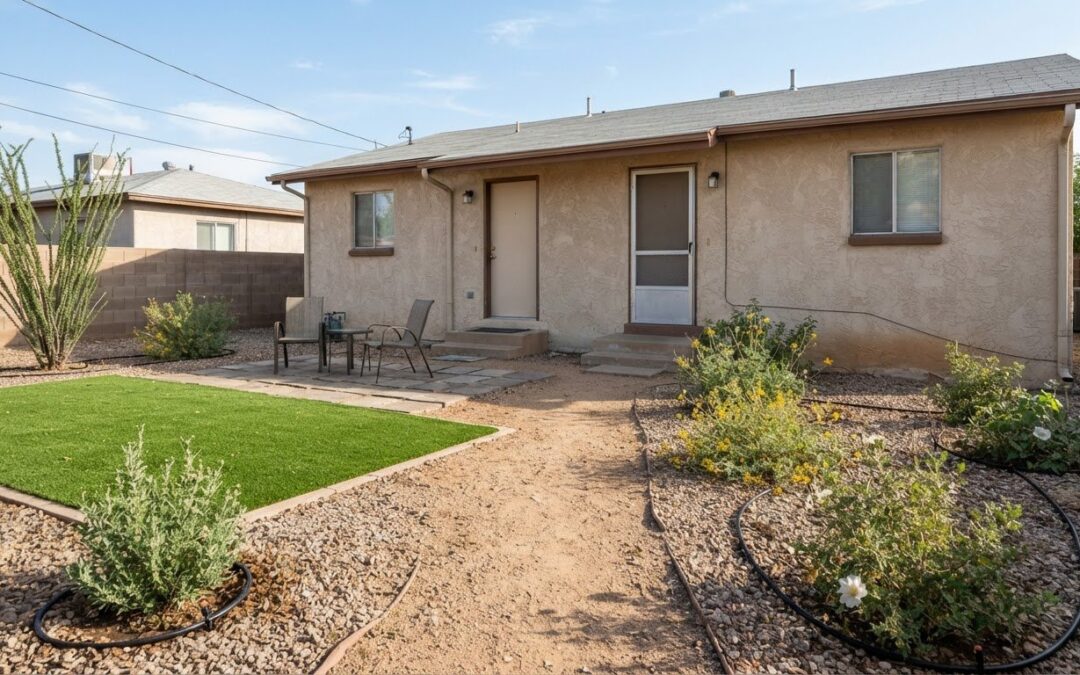
A rental yard doesn’t need to be elaborate to feel cared for. Effective landscape maintenance for rental properties starts with clear lease expectations and a plan suited to the site, local climate, and how tenants use the space. Low-maintenance plants and ground covers can reduce recurring care, while hardscape can mean less planted area to maintain.
It’s understandable to want an attractive outdoor space without a long list of tenant chores or an ongoing maintenance burden. This guide explains how to set practical care expectations, compare hardscape and softscape by installation and upkeep needs, and choose ground covers suited to the property. You’ll also find ways to keep rental landscaping functional, water-conscious, and easier to manage over time.
Key Takeaways
- Set clear, tenant-friendly yard-care expectations and match them to the property’s layout and how residents use the space.
- Compare planted areas with patios, paths, and other hardscape by considering both installation needs and ongoing upkeep.
- Explore ground covers that can reduce mowing and watering, while accounting for foot traffic, pets, and local conditions.
- Choose climate-suited plants and practical irrigation to create an attractive landscape that’s easier to maintain over time.
1. Designing landscaping for tenants who may not maintain it
Rental-property landscaping may include mowing, watering, weed removal, leaf collection, and keeping outdoor areas tidy. Depending on the agreement, care can also include minor garden upkeep, aerating, dethatching, and fertilizing. A clear scope helps tenants understand what they handle and what remains part of professional maintenance.
Put yard-care responsibilities in the lease, then walk the property with the tenant at move-in. Identify planted beds, irrigation controls, lawn areas, and any pet-use zones. Routine tenant duties may include mowing, watering, pulling weeds, and collecting leaves. A simple written care guide can explain how to water established plants and how to report visible irrigation problems. Tenants should report irrigation malfunctions within 48 hours of discovery.
A maintenance contract should name the included tasks, service frequency, seasonal work, and how irrigation issues are handled. Common scope items include lawn mowing, weed control, leaf cleanup, shrub and garden-bed care, and irrigation-system servicing. The agreement should also distinguish routine upkeep from substantial exterior repairs, such as work on retaining walls. This clarity helps prevent confusion when a tenant reports damage or a service visit is due.
There’s no single mowing schedule for every rental yard. Some lawns may need mowing every five days, depending on growth. Trees and shrubs need care based on their condition, type, and seasonal growth; irrigation needs attention when performance changes or a malfunction appears. A written maintenance calendar sets expectations without assigning the same schedule to every property.
To limit damage and recurring work, choose plants suited to the local climate and group them by watering needs. Mulch helps retain soil moisture and control weeds, while hardscape can reduce planted areas. In pet-friendly yards, a designated pea-gravel area can help limit urine damage to grass. Pair these choices with a move-in walk-through and clear tenant guidance for an attractive, manageable outdoor space.
2. Hardscape and softscape maintenance costs
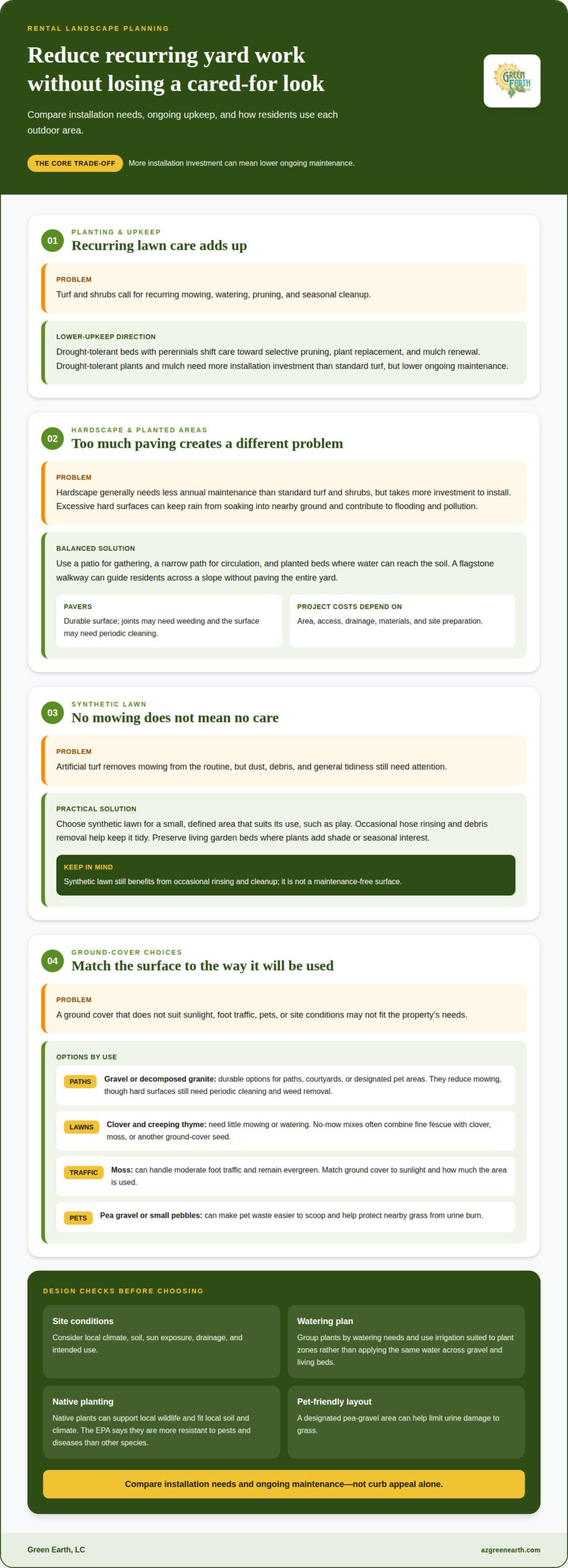
Hardscape and softscape create different cost patterns for rental-property owners. Turf and shrubs require recurring mowing, watering, pruning, and seasonal cleanup. Drought-tolerant beds with perennials shift the work toward selective pruning, plant replacement, and mulch renewal. Compare installation needs with ongoing maintenance and property-management workload, not curb appeal alone.
Patios, paths, and decorative rock beds reduce planted areas while providing useful outdoor space. A flagstone walkway, for example, can guide residents across a slope without paving the entire yard. Pavers create durable surfaces, though joints may need weeding and the surface may need periodic cleaning. Synthetic lawn avoids mowing but still benefits from occasional rinsing and debris removal.
Landlords can compare synthetic lawn and hardscape with drought-tolerant planting. Full hardscape generally needs less annual maintenance than standard turf and shrubs, but takes more investment to install. Drought-tolerant plants and mulch also need more installation investment than standard turf, while ongoing maintenance needs are lower. Project costs depend on the area, access, drainage, materials, and site preparation.
Limit paving where possible. Excessive hard surfaces can prevent rain from soaking into nearby ground and contribute to flooding and pollution. A balanced design might include a patio for gathering, a narrow path for circulation, and planted beds where water can reach the soil. This mix can preserve curb appeal while reducing mowing around high-traffic areas. Perennials add seasonal color, while drainage, shade, and tenant use help determine how much hardscape makes sense.
3. Artificial turf and low-maintenance ground covers
Artificial turf removes mowing from a rental yard’s routine, but it still needs occasional care. Spraying it with a hose can clear dust and debris and keep the exterior looking tidy. Consider how tenants use each area before choosing synthetic turf: a small, defined lawn may suit play, while a path or seating area may work better with another surface. The property owner can preserve living garden beds where plants add shade or seasonal interest.
Gravel and decomposed granite make durable ground covers for paths, courtyards, or designated pet areas. In Northern Arizona, choose materials and installation suited to the site’s soil, drainage, and intended use. Pea gravel or small pebbles can make pet waste easier to scoop and help protect nearby grass from urine burn. These materials reduce mowing, though hard surfaces still need periodic cleaning and weed removal.
Ground cover offers another alternative to a traditional lawn. Clover and creeping thyme need little mowing or watering, while no-mow mixes often combine fine fescue with clover, moss, or another ground-cover seed. Match the choice to sunlight and foot traffic: moss can handle moderate foot traffic and remain evergreen, while some plants need more light. Ground cover can replace grass without additional watering or mowing.
Native plants can support birds, butterflies, and other local wildlife while fitting local soil and climate. According to the U.S. Environmental Protection Agency, native plants are more resistant to pests and diseases than other species. For a balanced rental landscape, combine native planting with gravel paths, then group plants by watering needs. An irrigation system should suit those plant zones, rather than applying the same water across gravel and living beds. These choices can attract tenants who value a cared-for, practical outdoor space, while keeping the groundcover plan suited to the property’s conditions.
4. Simple, low-maintenance rental landscaping
Start with the site’s climate, soil, sun exposure, and drainage. A plant that thrives in one neighborhood may struggle elsewhere, even within the same state. The U.S. Environmental Protection Agency notes that local conditions affect which species can grow without supplemental water and fertilizer. Matching plants to the environment can reduce replacement work and keep the outdoor space appealing between tenancies.
Choose hardy, climate-suited plants and group them by watering needs. According to the U.S. Environmental Protection Agency, native plants are more resistant to pests and diseases than other species. A bed of native perennials can return each year, while dwarf shrubs need little to no pruning. Leave room for mature growth near paths, windows, and building walls to prevent crowded access and repeated trimming.
Mulch planted beds to retain moisture, control weeds, and limit erosion. It can also reduce fertilizer and water use around plants. Pair mulch with drip irrigation, which directs water to plant roots and can reduce loss through evaporation or runoff. A simple layout might use drip lines for grouped shrubs, mulched perennial beds, and a clear route to outdoor seating.
Neglected landscaping can create hazards, including overgrown branches near walkways, hidden path edges, or standing water after irrigation problems. These conditions can increase the risk of trips, property damage, or blocked access. Regular inspections and prompt attention to visible hazards help keep the exterior safer and easier to maintain.
A responsible plan balances tenant appeal with practical upkeep, rather than filling every corner with plants. Keep sightlines clear, select species suited to local moisture conditions, and use durable surfaces where residents walk often. Plan a lower-maintenance rental landscape around the property’s climate and use.
Green Earth, LC
Green Earth, LC helps property owners plan and maintain attractive, practical outdoor spaces. For rental communities and commercial sites in Sedona, Camp Verde, Cottonwood, Flagstaff, and Prescott, landscape maintenance can keep shared grounds orderly and suited to their setting. When an irrigation issue disrupts plant care, Green Earth, LC also provides irrigation drip system repair.
Consider professional support when tenant responsibilities are difficult to manage, outdoor areas need consistent care, or irrigation problems put plants at risk. For properties with wildfire-related landscape concerns, Green Earth, LC provides Firewise Defensible Space. The right approach depends on the property’s layout, plantings, water needs, and how residents use the grounds.
Contact Green Earth, LC to discuss your rental property’s landscaping needs.
Make your rental landscape work for the long term
A rental landscape can do more than frame a home. It can support everyday use, convey that a property is cared for, and suit the local environment without making upkeep unnecessarily complicated. Treat the landscape plan as part of long-term property management: align maintenance expectations with how residents use the space, then revisit the plan when plant health, water performance, or tenant needs change.
A steady approach keeps landscape maintenance for rental properties connected to the property’s condition, rather than relying on short-term fixes. It also helps owners decide where professional care can make a difference. Green Earth, LC works with property owners on landscape needs for residential communities and commercial properties, including defensible-space concerns in Sedona, Camp Verde, Cottonwood, Flagstaff, and Prescott.
Contact Green Earth, LC to discuss a landscape approach suited to your rental property. A well-considered plan can help make the outdoor space welcoming and easier to manage over time.
Frequently Asked Questions
Who is responsible for lawn care and landscaping: landlord or tenant?
The lease should spell out which party handles each task. It can assign routine work, such as removing leaves or tending a small garden, to tenants while reserving irrigation repairs and substantial exterior work for the owner. For example, the lease can distinguish keeping a patio clear from repairing a malfunctioning drip line. Clear boundaries help residents know whom to notify when an issue arises.
What do U.S. landlord-tenant laws say about rental property landscaping responsibilities?
Landscaping responsibilities depend on the lease and applicable local requirements. There’s no nationwide rule assigning landscaping to one party in every rental agreement. Owners should account for local ordinances and homeowners’ association requirements when planning work, and describe tenant duties clearly in the lease. For an HOA property, explain how community landscaping rules relate to the tenant’s assigned routine care.
How much does rental property lawn and landscape maintenance cost per month?
Monthly maintenance costs depend on the property’s size, plant selection, irrigation needs, and scope of recurring work. A broad turf lawn requires different care from a landscape with drought-tolerant beds, gravel paths, or pavers. The service schedule and seasonal tasks also affect the total. Define the areas and work included first, then assess the recurring plan for that property.
What low-maintenance landscaping is best for rental properties?
The best option suits the property’s climate, sunlight, drainage, and tenant use. A shaded area with moderate foot traffic may suit moss, while a sunny route may work better as a gravel path. Native plants can support local wildlife, and drip irrigation can direct water to planted beds. A thoughtful design makes landscape maintenance for rental properties more manageable without applying one treatment everywhere.
How do landscaping responsibilities and costs vary by state or city?
Local climate, water needs, ordinances, and HOA requirements can all shape the landscape plan and its care. A rental property in a dry area may benefit from drought-tolerant planting, while local rules may limit paving. Tenant duties still need clear lease language. Align the landscape scope with local conditions, community requirements, and the work residents are expected to handle.
Recent Comments