
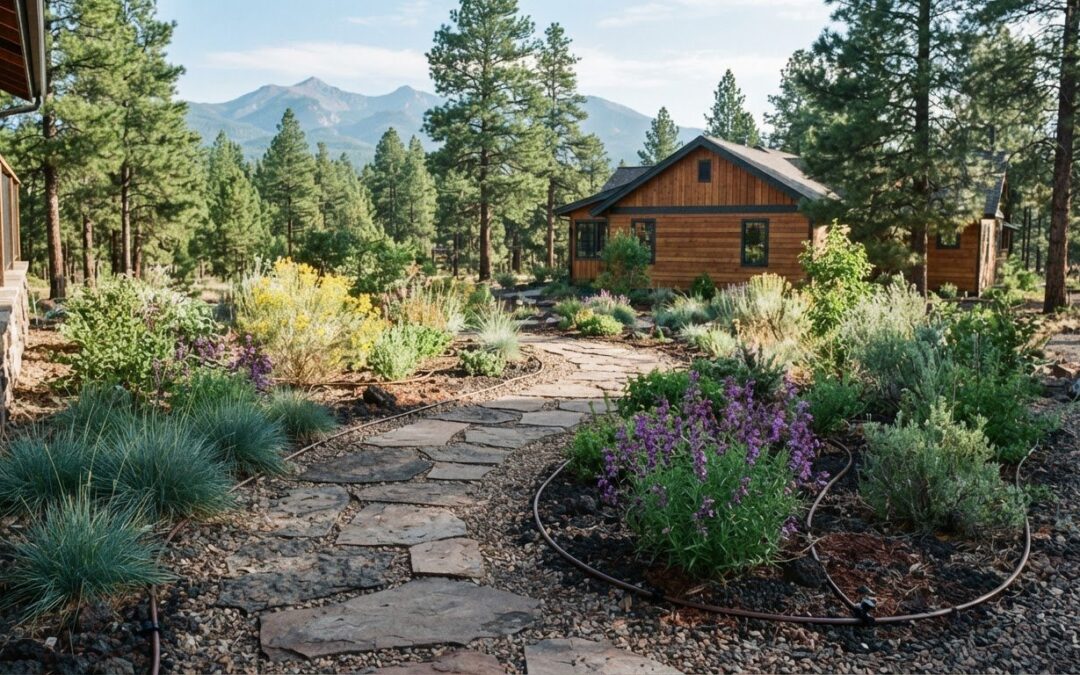
Landscape design services in Flagstaff should do more than shape an attractive yard: they should plan for water-conscious planting, practical irrigation, and ongoing care. Under Flagstaff’s Low Water Landscape Program, spray irrigation isn’t allowed; any installed irrigation must be drip irrigation. Compare how a design addresses water use as well as appearance.
It’s understandable to want a beautiful, manageable landscape that doesn’t waste water. The right professional connects the design to the site’s terrain, planting needs, irrigation approach, and maintenance requirements, so those decisions work together from the start.
This guide explains what landscape design, irrigation, sustainable landscaping, and maintenance services can include, and what to consider when choosing a Flagstaff landscape professional. You’ll also learn how lawn-conversion program requirements may shape a project and how to identify a practical next step for your property.
Key Takeaways
- Compare landscape plans by how well they coordinate planting, irrigation, hardscape, drainage, and ongoing upkeep.
- For patios, driveways, and retaining walls, consider how each element fits the site’s layout and supports practical movement through the space.
- Before converting a lawn, account for the program’s initial inspection; large sites may submit up to three staged rebates, according to the City of Flagstaff.
- Match the service scope to your property’s needs, from drip-system repair to residential or commercial landscape maintenance.
Irrigation design and maintenance
Start by mapping planting areas, slopes, paved surfaces, and outdoor living spaces. Flagstaff’s Low Water Landscape Program does not allow spray irrigation; any installed irrigation must be drip irrigation. That makes water delivery an early design decision, not a finishing detail. A plan should show where each line runs and how planting zones receive water.
Drip irrigation delivers water through tubing and emitters near plants. In a mixed landscape, separate zones can serve different planting beds instead of treating every area alike. For example, a shrub bed and a row of new plants may need different schedules. Clear zone labels also make later controller adjustments and repairs easier.
Maintenance starts with a systematic inspection. Check the controller schedule, then look along each line for leaks, disconnected fittings, or emitters that aren’t delivering water. A dry plant beside a damp one may indicate a localized issue; stress throughout a bed may call for a schedule or zone review. After repairs, run the system and observe each area.
Plan outdoor lighting alongside irrigation routes. A path light beside a planting bed, for example, needs a location that won’t conflict with tubing or routine access. Coordinating these elements on one layout helps preserve practical repair access while supporting the intended nighttime use of a patio or walkway.
Adjust irrigation seasonally according to observed site conditions and plant needs, not just a fixed schedule. Review the controller after planting changes, repairs, or shifts in how outdoor spaces are used. A useful maintenance record notes the affected zone, the issue found, and the adjustment made. This history helps diagnose recurring problems and keep irrigation aligned with the landscape.
Choosing Landscape Architects & Designers in Flagstaff, AZ
Compare hardscape, planting, and circulation as parts of one coordinated design. The right scope for landscape design services in Flagstaff depends on how the property will be used.
Retaining walls can address grade changes while defining planting beds or outdoor living areas. Patios create space for seating and dining; walkways connect those areas to entrances and driveways. A useful design shows how people move between these features and how each meets the surrounding ground.
For example, a patio beside a home may need a clear route to the driveway, while a wall can separate a sloped bed from a sitting area. Do landscape projects require permits or HOA approval? Requirements depend on project scope, property location, and HOA rules. Patio, driveway, and retaining-wall plans should account for applicable city review and community design requirements.
Consultations and Design Estimates
Free consultations and design estimates aren’t universal; the process varies by provider and project. A useful estimate describes the planned work, such as patio dimensions, paving materials, wall construction, and site preparation. It should distinguish design decisions from construction details, so the scope is clear before work begins.
For patio design, consider intended use, access from the home, and how seating relates to walkways. A dining patio, for instance, needs a practical connection to the kitchen, while a quiet sitting area may prioritize garden views. Clear priorities make design conversations more productive.
Design Providers and Service Areas
Landscape architects, landscape designers, and landscape construction companies may all provide design, though their work can differ. Some focus on plans; others coordinate design with hardscape construction, including pavers and retaining walls. Which Flagstaff companies offer landscape design, and where do they work? Green Earth, LC serves Flagstaff as well as Sedona, Camp Verde, Cottonwood, and Prescott.
Review the proposed scope for features that matter to your site, from driveway access to patio placement. For a project centered on pavers and retaining walls, compare how the design connects those elements with circulation and outdoor use.
Water-conscious and sustainable landscaping
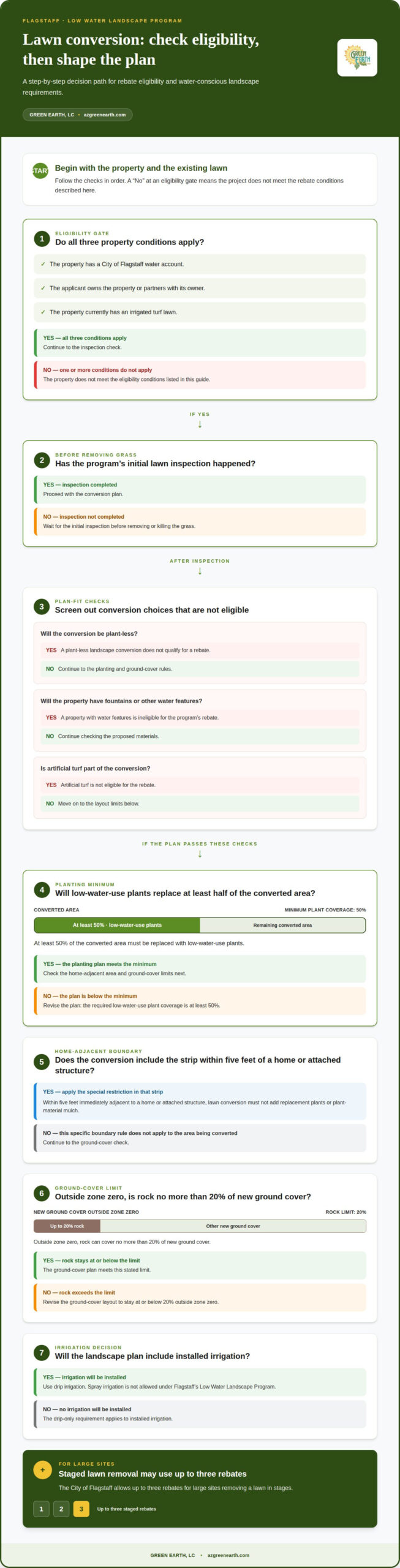
A conversion plan should account for plant coverage, ground cover, and existing site features before work begins. For large sites removing a lawn in stages, the City of Flagstaff allows up to three rebates.
Eligibility depends on the property and its current landscape. Applicants must have a City of Flagstaff water account, own the property or partner with its owner, and currently maintain an irrigated turf lawn. Homeowners must wait for the program’s initial lawn inspection before removing or killing the grass. A plant-less landscape conversion doesn’t qualify for a rebate.
Plan planting areas around the program’s coverage rules. At least 50% of the converted area must be replaced with low-water-use plants. Within five feet immediately adjacent to a home or attached structure, lawn conversion must not add replacement plants or plant-material mulch. Outside zone zero, rock can cover no more than 20% of new ground cover. These limits shape both planting beds and the spaces between them.
Native and other low-water-use plants can form the living structure of a water-conscious yard. Group plants with similar needs in the same beds, then coordinate their placement with paths and open areas. Custom water features may be design focal points, but a property with fountains or other water features is ineligible for the program’s rebate. Artificial turf also isn’t eligible. Consider these choices before planning around rebate eligibility.
Landscape design and maintenance services in Flagstaff
A landscape plan should explain how design choices will be maintained after installation. In Flagstaff, consider planting, hardscape, irrigation, and upkeep as connected parts of the property. For example, a paved gathering area needs clear access, while nearby planting beds need a defined maintenance approach. A coordinated scope shows what the finished space requires over time.
Plan maintenance around the features actually on site. A property with planted beds, walkways, and a drip system needs different care than one centered on open lawn. Ask the design team to identify how crews will access each area, where debris may collect, and which elements need routine observation. A walkway bordered by shrubs, for instance, should remain clear without damaging the plants.
For shared properties, the plan should support consistent care across common areas. HOA Landscape Maintenance can address shared planting beds, entrances, and walkways as parts of one property. Commercial Landscape Maintenance can organize care around public-facing grounds and access routes. In either setting, a clear scope aligns the intended appearance with the work needed to maintain it.
Use a simple handoff from design into ongoing care:
- Record plant-bed and hardscape locations on the site plan.
- Identify irrigation zones and controller locations.
- Note access routes for maintenance crews.
- Document changes after repairs or landscape updates.
These details help connect future service visits with the original layout. If a planting bed changes, the irrigation plan and care instructions may need updating too. A maintenance record can note the affected area and work completed, giving the next crew a practical reference instead of relying on memory.
For a property that needs a more organized upkeep plan, explore landscape maintenance options suited to its shared areas and site features.
Green Earth, LC
Green Earth, LC helps connect landscape priorities with practical care for residential and commercial properties. Turn to the team when a shared property needs consistent upkeep, a drip system needs repair, or a site needs attention to defensible space. HOA Landscape Maintenance and Commercial Landscape Maintenance support ongoing care, while Irrigation Drip System Repair and Firewise Defensible Space address specific property needs.
For a landscape plan, consider which elements will need continued attention after installation. Matching maintenance needs with the property’s use can help preserve its function and appearance over time. Green Earth, LC offers services for these practical next steps, rather than every type of landscape project.
Contact Green Earth, LC to discuss your property’s landscape needs.
Shape a Landscape That Works for the Long Term
Choosing landscape design services in Flagstaff is an opportunity to shape how your property works over time, not just how it looks on completion day. Define the outdoor spaces you want to use, the care you can sustain, and the priorities that matter to residents, visitors, or tenants. Those choices give a landscape professional a useful foundation for planning around the site’s needs. Bring them to your next project conversation.
Green Earth, LC supports properties through HOA Landscape Maintenance, Commercial Landscape Maintenance, and Firewise Defensible Space. These services help property owners and managers address ongoing grounds care and defensible-space needs as priorities evolve. Discuss how the property is used and which work matters most to plan a practical next step.
Contact Green Earth, LC to talk about your property’s landscape needs. A thoughtful plan can help you move toward an outdoor space that serves its purpose and feels considered.
Frequently Asked Questions
What landscape design services are available in Flagstaff, Arizona?
Flagstaff projects can include landscape design and installation, hardscape, retaining walls, drainage grading, irrigation, and ongoing maintenance. Green Earth, LC offers landscape construction for residential and commercial properties, along with HOA and commercial maintenance, irrigation services, and Firewise Defensible Space. A homeowner planning a patio and a property manager overseeing shared grounds need different scopes, so start by defining how the space will be used.
What drought-tolerant and native plants work best in Flagstaff’s high-desert climate?
Choose native and low-water-use plants suited to the site’s sun exposure, soil, elevation, and available growing space. Group plants with similar water needs, and consider mature size before placing them beside paths or foundations. For example, a sunny, exposed bed and a shaded entryway may call for different plants. A locally informed plan matches species to each microclimate rather than relying on one universal plant list.
What are Flagstaff’s water-wise landscaping rules, rebates, or conservation requirements?
It requires at least 50% of the converted area to become low-water-use plants, and the initial lawn inspection must happen before grass removal. The City of Flagstaff allows large sites to submit up to three rebates for staged lawn removal. Installed irrigation must be drip, not spray.
How do Flagstaff landscape designers compare on reviews, portfolios, and specialties?
Compare portfolios by project type and setting, such as residential patios, shared community grounds, or commercial sites. Look for examples showing how planting, hardscape, and circulation work together, not just finished close-ups. Read reviews for recurring comments about communication, project coordination, or maintenance. Then compare those patterns with your priorities, since a designer focused on hardscape may approach a planting-centered project differently.
What should I expect during the landscape design process, from consultation to installation?
Green Earth, LC describes its process as six steps: Tell Us Your Ideas, Consultation & Site Visit, Design and Planning, Execution & Construction, Regular Communication, and Completion and Follow-up. The sequence takes a project from initial goals through planning and construction. Be ready to explain how you use the space, which features matter most, and what practical concerns the design should address.
What questions should I ask before hiring a Flagstaff landscape designer?
Clarify what the proposed scope includes, how design connects to installation, and how the plan addresses irrigation and future maintenance. Ask how patios, walls, planting, and drainage will be coordinated if they’re part of the same project. For an HOA or commercial property, discuss access and shared-use priorities. These questions help determine whether the proposed approach fits the site and its day-to-day needs.
Recent Comments