
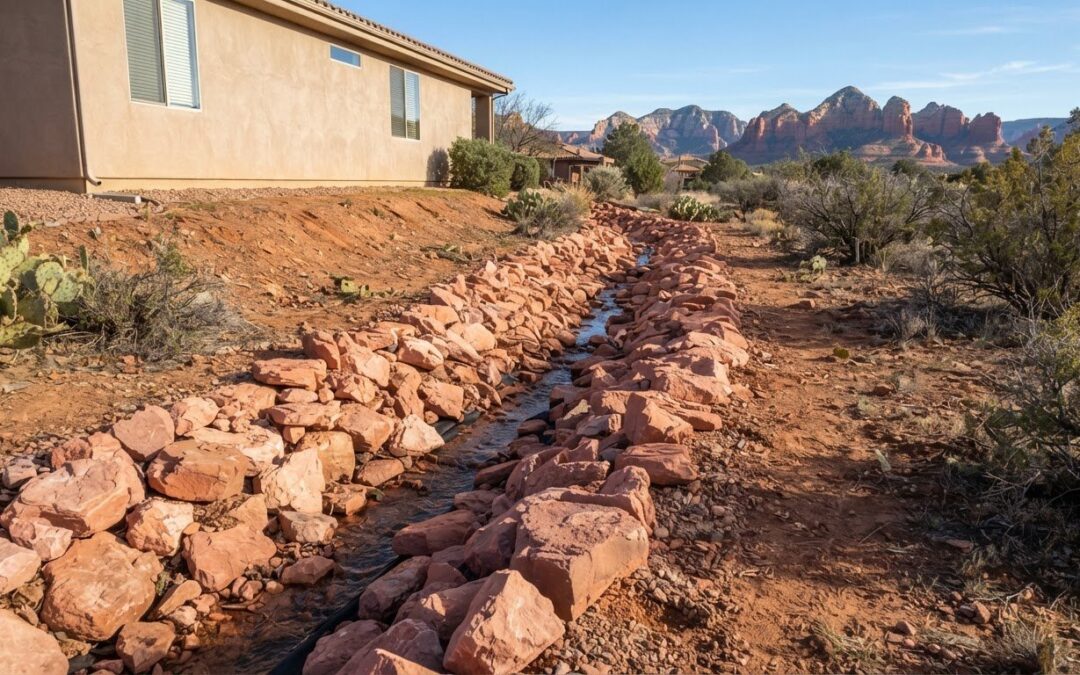
A drainage problem doesn’t always call for more soil. Sometimes the better solution is to move water through a drainage pipe. Landscape grading for proper drainage reshapes the ground to guide runoff away from structures, while piped drainage carries excess water below the surface. The right approach depends on where water collects and how it needs to flow.
It’s reasonable to want a clear cost before planning the work. Pricing depends on the project and is available upon request. The area involved, soil conditions, slope, access, and whether piped drainage is needed all affect the scope.
This guide explains how to spot recurring drainage problems, what affects grading costs, and how to maintain soil clearance near your home. It also compares surface grading with piped drainage, including when each may make sense. You’ll learn why pooling that remains after about 24 hours can signal a grading issue, and how well-planned drainage can protect usable outdoor spaces while supporting a healthier landscape.
Key Takeaways
- Notice where water pools and how long it remains; recurring standing water can point to a grading issue.
- Professional regrading should guide runoff away from the home while preserving visible foundation clearance.
- Project cost depends on the site, soil, slope, access, and whether the design also needs piped drainage.
- Compare surface grading with piped drainage based on how water moves across and through your property.
How do I know if my property has a drainage problem?
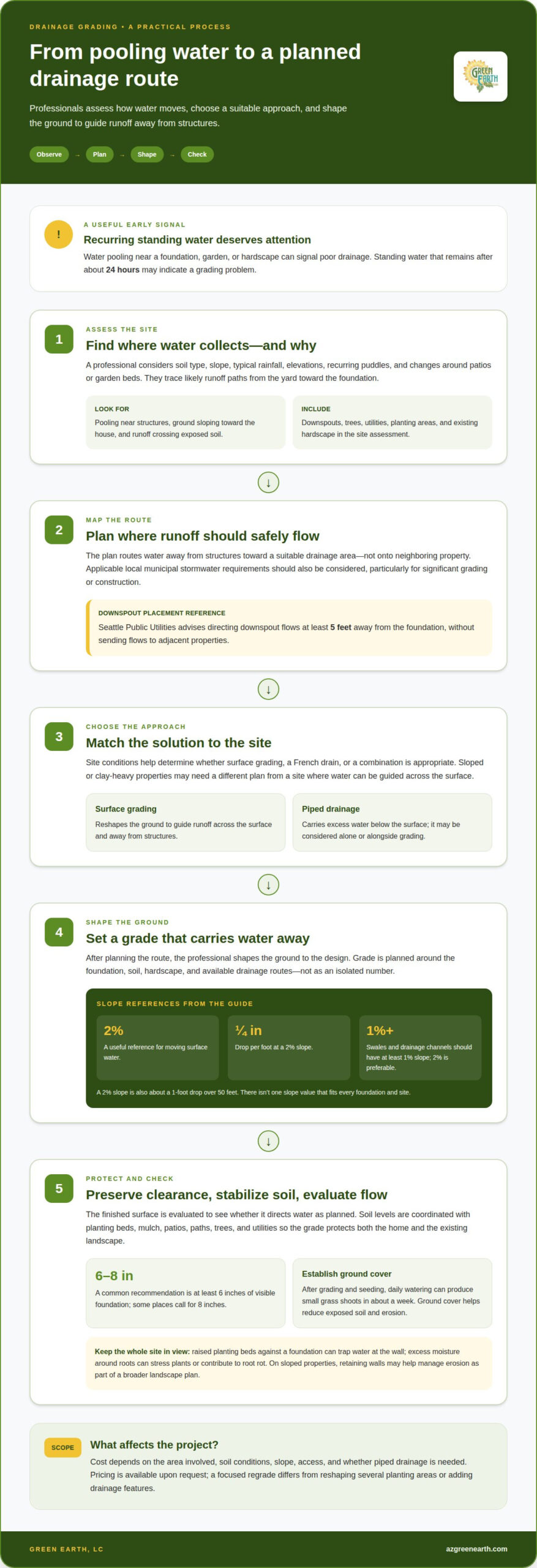
Water pooling near a foundation, garden, or hardscape can signal poor drainage. Standing water that remains after about 24 hours may indicate a grading problem.
Local municipal stormwater requirements can apply to residential projects, particularly those involving significant grading or construction. Drainage plans should account for applicable local requirements.
Assessing Yard Slope Toward the House
A professional identifies ground that slopes toward the house by assessing elevations and tracing likely runoff paths from the yard to the foundation. This matters because water flowing toward a structure can contribute to water damage, while fast runoff across exposed soil can cause erosion.
They also consider recurring puddles and changes around patios or garden beds. Downspout placement is part of the assessment: Seattle Public Utilities advises directing downspout flows at least 5 feet away from your foundation, without sending flows to adjacent properties.
Understanding Slope and Elevation Change
Percentage slope describes the elevation change over a horizontal distance. It helps professionals plan how the surface should carry water away from a foundation. A 2% slope equals a 1/4-inch drop per foot, or about 1 foot over 50 feet.
There isn’t one slope value that fits every foundation and site. A 2% grade is a useful reference for moving surface water, while swales and drainage channels should have at least a 1% slope, with 2% preferable. Soil, hardscape, and available drainage routes affect the planned grade.
How Professionals Grade a Yard Step by Step
Professionals assess soil type, slope, and typical rainfall, then identify where runoff collects and where it can safely flow. They plan a route away from structures toward a suitable drainage area, rather than directing water onto neighboring property.
On sloped or clay-heavy properties, site conditions help determine whether surface grading, a French drain, or a combination is appropriate. The professional then shapes the ground to the plan and evaluates how the finished surface directs water. This approach addresses recurring pooling without treating every yard alike.
Maintaining Proper Soil Clearance Between the Home and Graded Yard
During grading, professionals adjust soil levels while protecting the foundation and existing landscape. They consider drainage, planting, trees, utilities, and hardscape together so the finished grade suits the property.
Establishing and Caring for Freshly Graded Soil
Soil clearance is the visible foundation space left above the finished ground. A common recommendation is to leave at least 6 inches of foundation visible, while some places call for 8 inches.
Professionals plan the final soil height before adding material, accounting for mulch and planting beds so they don’t cover the foundation. They also coordinate the grade with nearby patios, paths, and garden edges. After grading and seeding, daily watering can produce small grass shoots in about a week. Establishing ground cover helps reduce exposed soil and erosion.
Accounting for Site and Soil Conditions
Site planning considers elevations, soil conditions, and landscape features before the final grade is shaped. These factors affect how water moves and whether it collects near the house or planting areas.
For example, professionals account for clay-heavy soil, established trees, and hardscape placement during grading. A raised planting bed against a foundation can trap water at the wall, while excess moisture around roots can stress plants or contribute to root rot. The design needs to suit both the soil and the outdoor features already in place.
Professional Runoff and Erosion Control
Runoff and erosion control means shaping and stabilizing soil so water follows a planned route without washing away topsoil. It helps protect the foundation, utilities, trees, and landscaping during grading.
Professionals plan around existing structures and utility locations, preserve foundation clearance, and shape the ground to guide runoff away from the home. They also consider how water will flow around trees and planted areas. On sloped properties, retaining walls can help manage erosion as part of a broader landscape plan. Each feature must work with the finished grade so water doesn’t collect in a new low spot.
How much does landscape grading cost?
Pricing depends on the site and is available upon request. Professionals assess the area, soil, slope, access, and drainage work needed. A focused regrade differs from reshaping several planting areas or adding drainage features. Planning landscape grading for proper drainage starts with defining the affected areas and how water needs to move through them.
Professionals use earthmoving and leveling equipment to shape the surface, adding soil where the planned contours require it. Seed or other planting materials can cover exposed ground, while erosion-control materials may help where runoff could carry soil away. Equipment and materials depend on site access, existing landscape features, and the project design.
Grade influences runoff and moisture in lawns and planting areas. A 2% grade is a reference for moving water across these surfaces. Professionals consider how the slope connects with patios, garden beds, and existing drainage paths, rather than pricing a grade in isolation. The scope of landscape grading for proper drainage therefore reflects both the work area and its relationship to the rest of the yard.
Planting beds need particular attention because excess moisture around roots can stress plants or contribute to root rot. A professional plan considers how water flows around plants and structures, and whether swales or other drainage solutions suit the site. This planning can help limit waterlogging and erosion while keeping the outdoor layout attractive.
Project scope also reflects the work needed to protect existing plants and stabilize soil. Professionals assess whether reshaping the ground will address the drainage concern or whether another drainage feature is appropriate. The amount of soil to move, site access, the number of affected areas, and the finish around existing features all shape the work. A clear scope explains how each part supports drainage and planting health.
Grading compared with piped drainage
Grading changes the ground’s surface so runoff follows a planned route. Piped drainage collects or carries excess water below ground. These approaches solve different drainage problems, and some properties benefit from combining them rather than relying on either alone.
Surface grading suits sites where water can safely flow across the yard toward an appropriate dispersal area. A swale, for example, creates a shallow channel that guides runoff while remaining part of the landscape. This can address pooling caused by the yard’s contours, but the route must not direct water toward a home or neighboring property.
Piped drainage may be worth considering when water needs to move below the surface or runoff concentrates in a specific area. Perforated pipe can carry excess water away, and a French drain can redirect water within the landscape. Soil type, slope, and typical rainfall affect which drainage solution suits the site.
Consider the pattern, not just the puddle. If runoff crosses a broad area, reshaping the ground may restore a clear surface route. If water collects in a low area or needs an underground path, a pipe-based system may be more suitable. Persistent basement moisture or erosion on a slope can signal that surface grading alone may not solve the drainage problem.
Steep ground adds another design consideration. A slope steeper than the 3:1 rule of thumb may need a retaining wall, rip-rap, or geotextile to help stabilize soil. Retaining walls can also support a planned change in elevation, while grading directs runoff around the resulting landscape features. The practical takeaway: match the method to where water travels and where it can safely go. Discuss drainage grading options for your property.
Green Earth, LC: Drainage Grading
Green Earth, LC provides drainage grading for properties where runoff, pooling, or erosion needs a planned solution. Consider this service when water repeatedly collects near a structure, crosses planting areas, or moves down a slope in a way that affects the yard.
The grading plan considers the property’s contours and existing outdoor features, then shapes the ground to direct runoff along a more suitable path. For broader property care, HOA Landscape Maintenance and Commercial Landscape Maintenance support managed properties, while Firewise Defensible Space addresses landscape needs related to defensible space.
Share where water collects, when the problem appears, and which parts of the property are affected. These details help define the drainage concern and the work the landscape may need. Contact Green Earth, LC to discuss drainage grading for your property.
Plan a landscape that works with water
Use the planning conversation to connect water management with how you want to use the property. A well-considered landscape grading plan for proper drainage should fit around the outdoor features you value, the planting areas you want to preserve, and the way people move through the space. This broader view makes drainage part of the landscape design, rather than an isolated fix.
Before moving ahead, consider which areas are priorities and how the finished yard should look and function. Clear priorities help shape a plan that balances practical water movement with the character of your outdoor space. Green Earth, LC can discuss drainage grading in relation to your goals and the site’s existing landscape.
Contact Green Earth, LC to talk through the next step. Thoughtful planning can help you move toward a landscape that feels both functional and welcoming.
Frequently Asked Questions
Why would you need to grade your yard?
Yard grading helps guide runoff when existing ground levels cause water to collect or flow through the wrong areas. For example, water that repeatedly gathers beside a walkway can make it difficult to use and may contribute to nearby soil loss. Regrading can reshape the surface to create a clearer drainage path while preserving space for planting, patios, and other outdoor uses.
Can I direct water onto my neighbor’s property?
Don’t plan a drainage route that sends runoff onto adjacent property. The receiving area matters just as much as moving water away from a structure. Seattle Public Utilities advises directing downspout flows at least 5 feet away from your foundation, without sending flows to adjacent properties. A grading plan should consider where water will travel after it leaves your yard.
Should I regrade my yard myself or hire a professional?
For a project that changes drainage near the home, across a slope, or around existing landscape features, have a professional assess the grading plan. A small surface adjustment differs from reshaping a yard’s drainage route. Professional planning can account for soil conditions, planting areas, hardscape, and where runoff should go, helping avoid a correction that shifts water toward another part of the property.
How do I know if my home has negative grading?
Negative grading means the ground slopes toward the home instead of directing runoff away. After rain, look for water moving toward the foundation or collecting beside it rather than continuing across the yard. Standing water that remains after about 24 hours may indicate a grading problem. Check whether the pattern recurs in the same location, especially near a downspout or paved area.
How much should a yard slope away from the house?
A 2% slope is a useful reference for moving surface water: it equals a 1/4-inch drop per foot, or about 1 foot over 50 feet. The appropriate grade depends on the area and site conditions, so this figure isn’t a universal prescription for every foundation. Patios and other hardscape may use different slope requirements than lawn or planting areas.
How can a professional determine whether there is enough space to regrade my lawn?
A professional assesses ground elevations between the home and the intended drainage area, then considers the distance available to create a workable transition. Patios, paths, trees, planting beds, and other fixed features can limit where soil levels change. The assessment also considers where runoff can safely flow, so the design fits the property rather than simply raising or lowering one section.
Recent Comments