
A multi-year agreement can provide continuity without locking an HOA into an unclear scope: a 2-to-3-year term with an annual escalation cap of 3% to 5% is one contract structure. For HOA landscape maintenance in Prescott, AZ, the term works best when the written scope and service schedule account for the community’s mountain setting and seasonal upkeep needs.
It’s reasonable to want predictable grounds care and clear expectations from season to season. Prescott sits at roughly 5,400 feet, and maintenance can be scheduled weekly, monthly, or seasonally, depending on the property’s needs. A contract should spell out which areas are maintained, what tasks are included, how often they’re scheduled, and how changes are handled.
This guide explains how to weigh a multi-year term against a shorter arrangement, define a practical scope and schedule, and plan for irrigation, plant care, and other upkeep across a Prescott mountain community. You’ll also learn what makes a maintenance plan easier to manage over time, so the HOA can set clear expectations while supporting attractive, resilient grounds.
Key Takeaways
- Choose a contract length that balances continuity with room to adjust as community priorities change.
- Build Prescott’s elevation, terrain, and water needs into the upkeep plan so maintenance supports resilient grounds.
- Define service areas, task responsibilities, and how changes are documented to reduce ambiguity during the contract.
- Use the written schedule to coordinate routine care with irrigation needs and other seasonal landscape priorities.
Weekly, monthly, or seasonal maintenance plans
Prescott communities can schedule maintenance weekly, monthly, or seasonally. The right cadence depends on plant needs, irrigation performance, and how residents use shared areas.
Seasonal Cleanup Planning
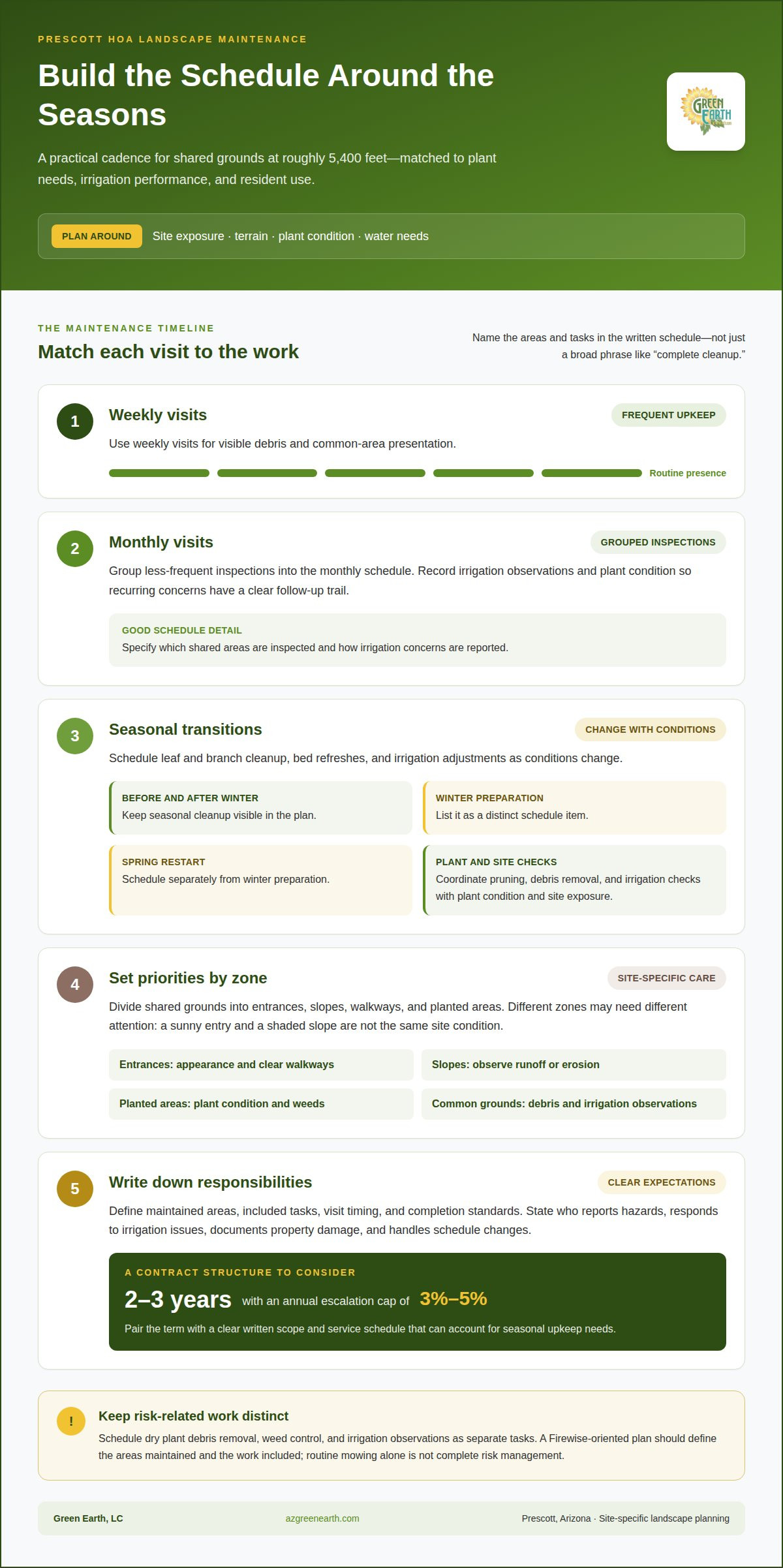
A seasonal cleanup plan should define recurring visits and transition tasks. Weekly visits can address visible debris and common-area presentation; monthly visits can group less frequent inspections. Seasonal work can cover leaf and branch cleanup, bed refreshes, and irrigation adjustments as conditions change. Name the areas and tasks in the schedule rather than relying on a broad phrase like “complete cleanup.”
High-Elevation Seasonal Needs
Prescott sits at roughly 5,400 feet, so Northern Arizona plans must account for seasonal change. List winter preparation and spring restart as distinct schedule items. The landscape manager can coordinate pruning, debris removal, and irrigation checks with plant condition and site exposure. Commercial entries may need clear walkways and consistent appearance. Less-used beds can receive seasonal attention.
Water-wise landscaping in Arizona can specify drought-tolerant plants and efficient irrigation systems. Choose native plants suited to each site’s sunlight, soil, and exposure; one planting choice won’t fit every Prescott property.
Put responsibilities in writing: identify who reports hazards, responds to irrigation issues, and documents property damage. The agreement should specify applicable licensing and insurance documentation and which party maintains coverage. Terms should match the work and the site.
Prescott HOA landscapes can face drought stress, fire exposure, and weed growth. Schedule dry plant debris removal, weed control, and irrigation observations as distinct tasks. A Firewise-oriented plan should define the areas maintained and the work included, rather than treating routine mowing as complete risk management. Seasonal cleanup before and after winter keeps these priorities visible.
Before adding retaining walls, changing drainage, or working near protected trees, confirm whether the project may require permits in Prescott, Arizona, or unincorporated Yavapai County. Include these checks in seasonal planning so site work does not disrupt routine visits, and clarify who will coordinate any required approvals.
Houzz lists 81 landscape contractor professionals serving Prescott, Arizona. Houzz reports 64,483 local projects by landscape contractors in Prescott, Arizona. These figures can help frame contractor research, but the plan should still define the property’s specific tasks, timing, and responsibility for follow-up.
Prescott mountain-community landscape maintenance
Prescott’s mountain setting calls for plans shaped around site exposure, terrain, and plant needs. At roughly 5,400 feet, local communities benefit from coordinating grounds care with irrigation performance and seasonal conditions.
Mountain-Community Maintenance Plans
A useful plan divides shared grounds into practical zones: entrances, slopes, walkways, and planted areas. Set different priorities for each zone, since a sunny entry and shaded slope may need different attention. Include irrigation observations, plant condition, weed control, and debris removal in the landscape services schedule. In a hillside community, note areas where runoff or erosion should be observed after watering or storms.
Prescott’s climate also shapes how managers plan for plants and water. Drought-tolerant planting and efficient irrigation systems can support Southwest landscapes, while the site’s soil, sun, and slope help guide plant placement. The maintenance plan should identify areas needing routine observation and explain how irrigation concerns are recorded. This gives the HOA a clear basis for tracking recurring issues.
Contractor Selection Criteria
Choose a landscape maintenance company whose written plan addresses the community’s actual layout, not just a generic visit frequency. Review whether the scope identifies common areas, irrigation responsibilities, seasonal tasks, and a process for reporting concerns. Ask for a sample service schedule and a clear description of how completed work is documented. These details help managers compare proposals for scope and consistency.
For an HOA, selecting a company also means clarifying who communicates with managers and how schedule changes are handled. Confirm that licensing and insurance documentation aligns with the work and agreement. A clear point of contact helps route reports about damaged plants, leaks, or missed areas without confusing routine care with additional work.
Water Restrictions and Irrigation Rules
Water restrictions and irrigation rules can depend on the HOA’s water provider and applicable local requirements. The maintenance agreement should align irrigation schedules with those rules and identify who manages controller settings, observes system performance, and reports leaks.
For common areas, define watering zones and responsibilities in writing. Drip-system observations and controller troubleshooting can help managers identify issues for timely follow-up. A site-specific plan can bring these landscape priorities together; explore community landscape planning as a next step.
Written maintenance scope and service schedules
A written scope turns broad expectations into trackable tasks. It should identify maintained areas, included services, visit timing, and completion standards. For example, “maintain entrance beds” is less precise than listing bed care, debris removal, and irrigation observations. Clear language helps managers distinguish routine work from additional requests.
For an Arizona HOA, distinguish homeowner responsibilities from common-area work in the community’s governing documents and maintenance agreement. The documents should identify who maintains each area, such as association-owned entry landscaping versus a homeowner’s private patio. This division gives residents and managers a shared reference when service questions arise.
Build the scope around actual site features. A map or area list can identify entrances, sidewalks, planted beds, slopes, and outdoor gathering spaces. Then connect each area to specific tasks and standards:
- State where litter and landscape debris removal applies.
- Describe how maintained beds and plantings should be kept.
- Identify which irrigation observations belong in routine visits.
- Note how drainage concerns are documented and reported.
- Separate scheduled maintenance from requested extra work.
A service schedule should show each task, location, and planned timing. For example, distinguish recurring grounds visits from seasonal cleanup and irrigation system observations. Name the reporting path for missed tasks or emerging issues, too. This record helps managers track work across separate common areas.
Use measurable descriptions instead of subjective phrases. “Keep paths clear of landscape debris” gives crews and managers a visible standard; “keep the property attractive” does not define completion. Include how schedule changes are recorded, who approves added work, and how updates reach homeowners. If services include drainage grading or other outdoor improvements, identify them separately from routine maintenance. A clear scope helps the HOA track what the agreement covers and distinguish ongoing care from a project.
Prescott AZ HOA landscaping services and maintenance plans
A maintenance plan should connect recurring care with the community’s longer-term landscape priorities. In Prescott, match each contract term to the work required, the site’s changing needs, and the HOA’s approval process.
A 2 to 3 year term can support continuity across recurring landscape services. For a multi-year agreement, an annual escalation cap of 3% to 5% can make adjustments more predictable. The contract should state how the cap applies, when changes take effect, and how either party documents approved adjustments. Clear renewal and review dates also give managers time to assess performance before the agreement continues.
- Group recurring visits and seasonal tasks into a defined service calendar.
- Separate routine maintenance from repairs and improvement projects.
- Set a review point for service quality and changing site priorities.
- Describe how approved schedule or scope changes are recorded.
Planning should also account for the landscape’s long-term condition. Drought-tolerant plants and efficient irrigation systems can support Southwest landscapes, but plant health and system performance still need attention. The agreement can distinguish routine observation from corrective work. This helps the association understand which tasks belong in regular service and which require separate approval.
Use the contract review to connect maintenance with community priorities. For example, an HOA might adjust planned work after recurring irrigation concerns or changes in shared-area use. Managers can document the issue, identify the affected area, and decide whether it belongs in routine service or a separate project. This creates a practical record for future planning.
For a community ready to establish or refine its plan, discuss landscape maintenance planning around its grounds, schedule, and contract priorities.
Green Earth, LC
Green Earth, LC helps HOA managers turn landscape priorities into a clear maintenance plan for shared grounds. Its HOA and commercial landscape maintenance services support recurring care, while Firewise Defensible Space and irrigation drip system repair address specific community needs. These services can form part of a broader plan that identifies routine work, seasonal priorities, and irrigation concerns without conflating maintenance with separate repairs.
Consider this next step when your association is setting a contract term, refining its written scope, or organizing upkeep across common areas. A well-defined plan gives managers and landscape professionals a practical basis for coordinating work and maintaining the property’s outdoor spaces.
Contact Green Earth, LC to discuss your HOA’s landscape maintenance needs.
Set a clear direction for your community’s grounds
Turn maintenance priorities into a plan the association can manage over time. Before the next contract review, identify which shared spaces need consistent attention, where irrigation concerns affect plant health, and what the board wants documented. These priorities give managers a useful starting point for shaping HOA landscape maintenance in Prescott, AZ around the property rather than a generic service schedule.
Green Earth, LC provides HOA Landscape Maintenance and Commercial Landscape Maintenance, along with Firewise Defensible Space. These services support communities seeking regular grounds care while addressing specific landscape priorities through a coordinated plan.
Bring the association’s site priorities and contract goals into the next planning conversation. A clear starting point can help connect everyday care with the long-term character of the community. Discuss your community’s landscape plan with Green Earth, LC and take the next step toward well-managed shared grounds.
Frequently Asked Questions
How long should an HOA landscape contract run?
A 2-to-3-year term can provide continuity, with an annual escalation cap of 3% to 5% for multi-year agreements. The right duration depends on how clearly the scope fits the property and how the HOA handles renewals and changes. For example, a board can set a review date before renewal to assess completed work, recurring issues, and whether the scheduled services still match community needs.
What Does Property Landscaping Include?
Property landscaping can include routine grounds care, pruning, seasonal maintenance, and irrigation-related observations. For an HOA, the agreement should specify which shared spaces receive each task, such as entry beds, walkways, or planted areas around community facilities. It should also separate recurring care from repairs or improvement projects. This helps residents understand what the maintenance schedule covers and how separate work is handled.
Recent Comments