
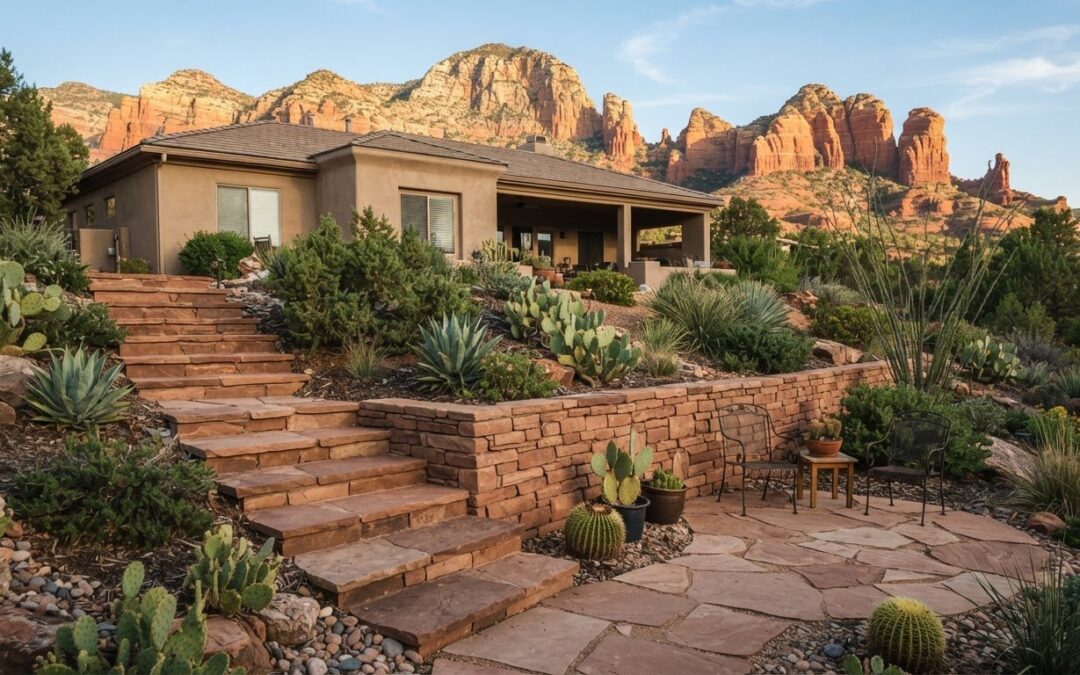
A well-designed Sedona landscape needs to work with the ground as well as complement the home. Local landscapers in Sedona can bring together residential design, tree care, stone patios, retaining walls and drainage features to create outdoor spaces that are both attractive and functional.
When planning a yard in Sedona, it helps to look beyond planting: hardscape and water flow shape how the space feels and functions. This guide explains what local landscaping services may include, what to consider for a residential project, and how design, materials, and site conditions affect the result.
From patios and retaining walls to drainage grading, each part of a project contributes to the finished landscape. The sections ahead explain these services and options for properties in Sedona, Camp Verde, Cottonwood, Flagstaff, Prescott, and nearby communities, helping you identify a practical next step.
Key Takeaways
- Consider how your property’s location, layout, and condition shape the landscaping services and maintenance plan it needs.
- Understand how Sedona’s dry climate, strong sunlight, and seasonal changes can affect tree and plant care.
- Plan residential design around how you want to use the space, then coordinate planting, irrigation, and hardscape elements.
- Explore how patios, retaining walls, and drainage grading can bring lasting function and structure to an outdoor space.
Landscaping services in Sedona, Village of Oak Creek, and the Verde Valley
In Sedona, Village of Oak Creek, and the Verde Valley, local landscapers in Sedona can handle projects ranging from scheduled maintenance to patios, walls, and drainage grading. The right service depends on the property’s layout, condition, and intended use.
Service Areas
Landscaping providers serve Sedona neighborhoods and nearby communities, including Village of Oak Creek. ZIP codes 86336, 86339, and 86340 mark areas covered by Sedona landscaping directories. Coverage matters when planning recurring visits, irrigation work, or construction that needs coordinated site access.
Directory figures indicate 103 landscape contractors serve the West Sedona area, with 64,483 contractor projects reported there and an average homeowner rating of 4.4. These figures describe a broad local market, not a guarantee of fit. Focus on whether a provider’s services match your property’s needs.
Landscaping and Hardscaping
Landscape services can include maintenance, irrigation, and hardscape construction. Examples include paver patios, retaining walls, drainage grading, and outdoor kitchens or fire features. Planning these elements together helps paths, planting areas, and water flow work as part of one design.
Irrigation work and landscape lighting can also be coordinated with how you use the space. Ask for a project scope that spells out each component, such as patio construction and grading. A clear scope aligns the design, materials, and work with your priorities.
Estimates and Service Features
An estimate should describe the planned work, materials, and site features involved. Property size, layout, and condition affect maintenance schedules; some Sedona homeowners use weekly or biweekly visits. Irrigation needs also vary, so identify whether the project includes system checks, repairs, or controller troubleshooting.
What landscaping services do Sedona companies offer? Services can include maintenance, planting, irrigation, pavers, walls, and drainage grading, with the exact scope shaped by the property. Do Sedona landscaping projects require city or county permits? A blanket yes-or-no answer would be misleading: permit needs depend on the work and the property’s jurisdiction.
Tree planting, trimming, pruning, and removal
Sedona’s dry climate, intense sunlight, and seasonal changes can affect tree health and landscape appearance. A professional assessment considers each tree’s condition, location, and relationship to nearby structures. Planting plans also benefit from considering mature size and the available space, especially beside paths, patios, or construction areas. This tailored approach helps trees fit the property rather than compete with its other uses.
Native and drought-tolerant plants can be considered as part of a Southwest landscape. Their suitability depends on site conditions, including sun exposure, soil, and irrigation. A sunny bed beside a home may need a different plan from a shaded area near a wall. A landscape professional can match plant choices to the space and how you intend to use it.
Pruning, fertilization, and seasonal adjustments can all be part of plant care. The appropriate work depends on the plants and their condition, not one schedule for every property. Pruning may address branches that interfere with access or surrounding features, while fertilization and seasonal care can fit into a broader maintenance plan. An assessment helps identify suitable steps.
Tree removal is a separate decision from routine trimming or pruning. An assessment considers the tree’s condition, its position near buildings or landscape features, and how removal may affect the site. The work may also need coordination with planting, irrigation, or nearby construction. Discussing the full scope helps clarify whether the goal is to preserve a tree, manage its growth, or change the landscape arrangement. The tree’s overall condition and setting matter as much as its highest branches.
Residential landscape design and installation
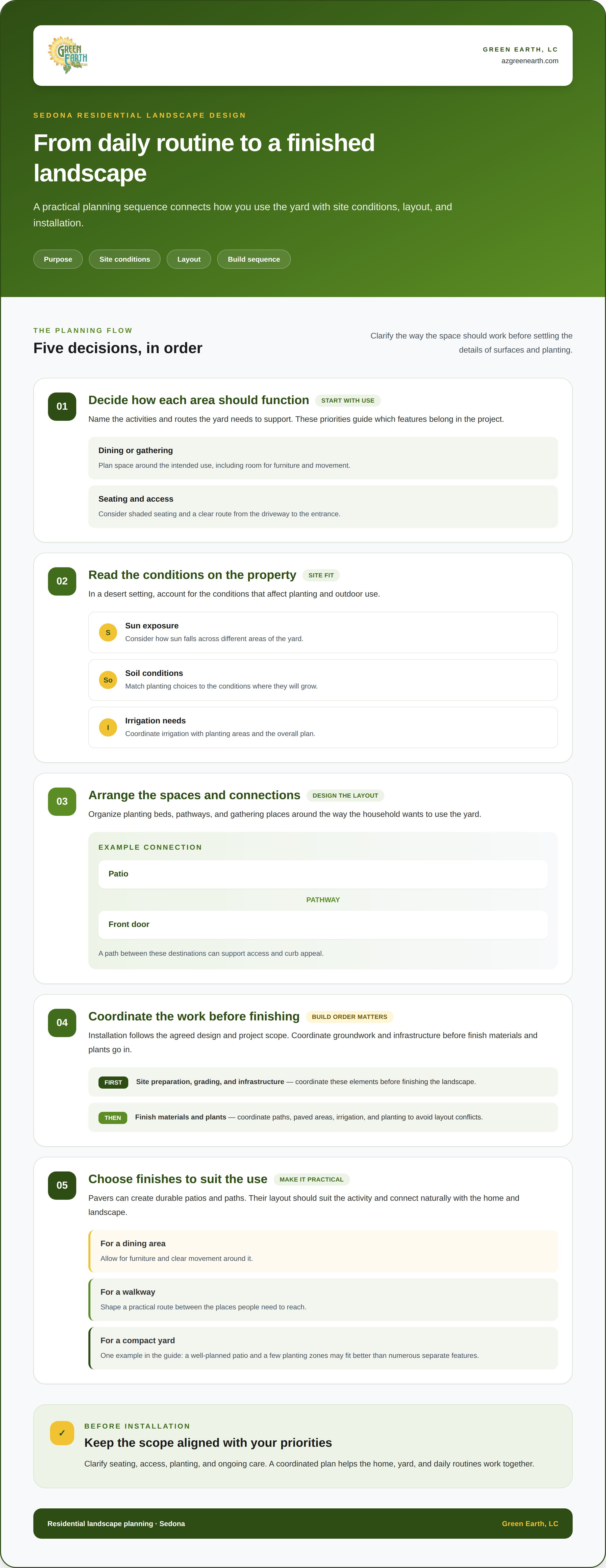
A residential landscape plan connects the home, yard, and daily routines. Start by defining how each area should function, such as a dining space, shaded seating area, or clear route from the driveway to the entrance. A designer can then arrange planting beds, pathways, and gathering places around those uses. In a desert setting, account for sun exposure, soil conditions, and irrigation needs.
Landscape design brings practical requirements and visual choices together. Plant placement, surface materials, and transitions between areas all shape the finished yard. For example, a path from the patio to the front door can improve access and curb appeal. A coordinated palette of plants and hardscape materials can also connect the outdoor space to the home.
Installation follows the agreed design and project scope. Work may include site preparation, coordinating irrigation with planting areas, and building paths or gathering spaces. Grading and infrastructure need to be coordinated before finish materials and plants are installed. Planning the sequence helps prevent conflicts, such as a new planting bed overlapping a paved walkway.
Pavers create a durable surface for patios and paths, with their layout shaped by how the space will be used. An outdoor dining area needs room for furniture and clear movement around it. A walkway needs a practical route between destinations. Choosing a paver scale and pattern that suit the home can strengthen the design without overwhelming the landscape.
Before installation, clarify priorities such as seating, access, planting, and ongoing care. These decisions guide the design and determine which features belong in the project. A compact yard, for example, may benefit more from a well-planned patio and a few planting zones than from numerous separate features. A considered plan brings the elements together to serve the household and complement the home.
Local-stone patios, drainage washes, and walls
A custom stone patio can create a durable gathering place and connect the home with its garden. Start by identifying how people will use it, whether for dining, seating, or access between doors. Then consider the site’s slope, planting areas, and preferred stone appearance. A property in Sedona or the Verde Valley needs a layout suited to its ground, not a copied plan from Flagstaff.
Drainage grading shapes how water moves across an outdoor space. A professional assesses the slope and existing flow paths before setting patio edges or planting locations. For example, grading can direct runoff away from a patio and along an appropriate landscape route. Coordinating grading with irrigation helps prevent lines and drainage features from conflicting.
Retaining walls can define level areas, support transitions, and frame paths or patios. Their placement should respond to the slope and how the property will be used. A wall beside a garden can define a planting area, while one near a patio can establish a clear boundary. A sound design considers wall placement alongside drainage and nearby hardscape.
Stone selection affects a patio’s color, texture, and relationship to the surrounding landscape. Consistent shapes can create a formal look, while varied pieces can feel more natural. The design should also account for transitions to paths, planting beds, and the home’s entrance. These details help the hardscape complement the outdoor setting.
Plan patios, walls, and drainage as connected features. Resolve grading and water flow before finalizing stone placement. This creates a clearer construction scope and helps each element serve its purpose. A drainage grading plan can also account for the way irrigation and garden areas meet the hardscape.
Discuss a site-specific plan for retaining walls and drainage grading with Green Earth, LC.
Green Earth, LC
Green Earth, LC helps property owners plan landscape care around their site’s needs. The team provides HOA and commercial landscape maintenance, Firewise defensible space, and irrigation services, including drip system repair and controller troubleshooting. These services suit properties that need consistent upkeep, vegetation management, or attention to irrigation.
When a property has several priorities, a clear scope can connect maintenance and irrigation work with how people use the space. Green Earth, LC serves Sedona, Camp Verde, Cottonwood, Flagstaff, Prescott, and nearby communities, with landscape services tailored to the property.
Contact Green Earth, LC to discuss your landscaping needs.
Shape the next step around your property
Choosing local landscapers in Sedona means matching your priorities with the work your property needs. Before planning begins, decide what matters most: a more usable outdoor area, consistent upkeep, or practical landscape care. That starting point makes it easier to discuss the site and plan its next phase.
Green Earth, LC provides HOA Landscape Maintenance, Commercial Landscape Maintenance, and Firewise Defensible Space. These services help property owners care for shared or commercial grounds and manage defensible space. Describe the outcome you want and the areas needing attention to start a focused conversation about the right scope for your property.
Contact Green Earth, LC to discuss your landscaping needs and plan a thoughtful next step for your property.
Frequently Asked Questions
What landscaping companies serve Sedona, AZ?
Green Earth, LC serves Sedona and nearby communities, including Cottonwood, Camp Verde, Clarkdale, Village of Oak Creek, Rimrock, Prescott/Prescott Valley, and Flagstaff. Services include landscape maintenance, irrigation, and landscape construction. If you are planning an outdoor project, consider whether ongoing grounds care, irrigation work, or construction is your main priority.
Which Sedona landscapers have the best reviews and ratings?
No single rating establishes which landscaper is best for every project. Green Earth, LC displays a rating of 4.6 based on 40 reviews. Use ratings as one consideration, then assess whether the provider’s work matches your needs, such as irrigation repairs, residential landscape construction, or HOA grounds maintenance. A strong fit depends on the specific scope, not a rating alone.
How much do landscapers in Sedona charge for common services?
Landscaping prices depend on the project scope and site conditions, so one figure cannot represent every project. Maintenance, irrigation troubleshooting, and hardscape construction involve different tasks and materials. Green Earth, LC provides pricing after a quote request. Describe the service and property to help shape an estimate around the work involved.
Which Sedona landscapers offer free estimates or consultations?
Do not assume an estimate or consultation is free unless the provider says so. Green Earth, LC provides pricing after a quote request, with the project scope and site requirements shaping the estimate. For a patio or irrigation concern, describe the area and work you have in mind. This gives the pricing discussion a practical starting point without assuming a fee arrangement.
Are Sedona landscapers licensed, insured, and bonded?
Credentials apply to specific work and should not be generalized across every landscaping service. Green Earth, LC provides backflow inspection, testing, repair, and certification. These services concern backflow work and do not make a blanket claim about licensing, insurance, or bonding for other landscaping services. Consider the specific work involved when reviewing applicable credentials and protections.
What drought-tolerant and native plants are best for Sedona landscaping?
Plants suited to Sedona depend on sun exposure, soil, drainage, and the irrigation plan. Examples to discuss with a landscape professional include pinyon pine, juniper, manzanita, cliffrose, and banana yucca. A custom selection considers where each plant will grow and how it fits the design. Grouping plants with similar water needs can also help organize irrigation zones.
Recent Comments