
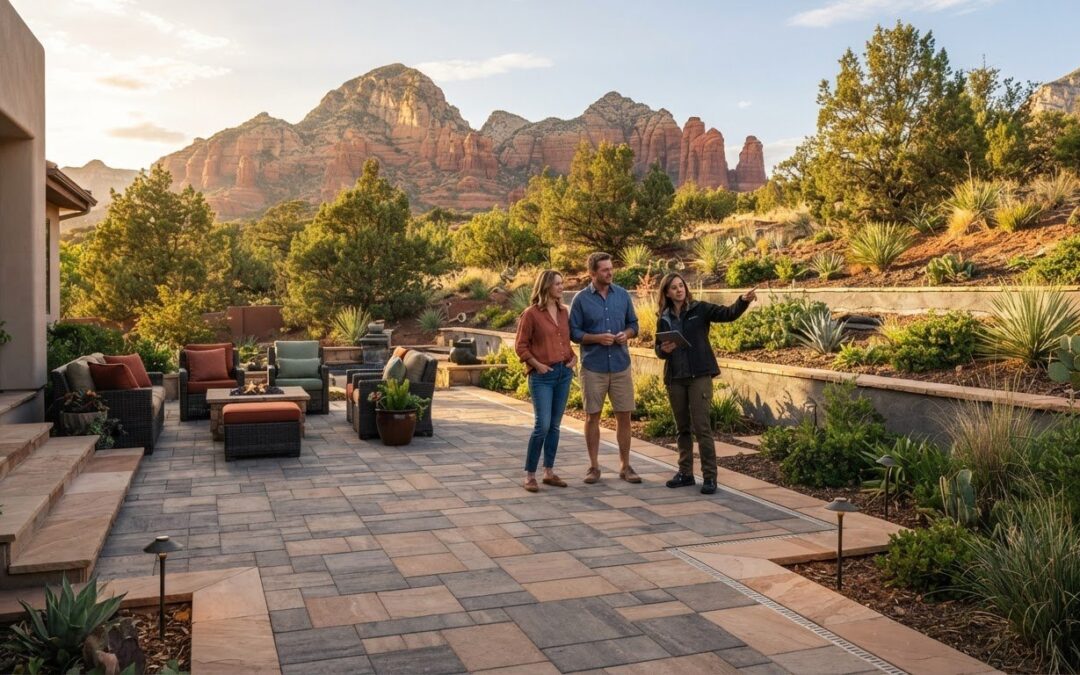
What if the pavers you choose aren’t the biggest factor in your patio estimate? In Sedona, slope, ground conditions, drainage, and access can make site preparation just as important as the visible surface. That’s why an online search for “cost to install paver patio Sedona” is a starting point, not a reliable estimate for your property.
It’s understandable to want a clear number and a fair way to compare bids. But proposals can cover different work, from excavation and base preparation to edge restraints, paver placement, and drainage adjustments. A lower quote may not describe the same finished scope as another proposal.
This guide explains the main parts of a Sedona paver patio estimate, the site conditions that can affect the work, and how to compare proposals on consistent terms. You’ll also learn what details to gather before requesting a site-specific quote, including the planned patio area, grade, access, and drainage concerns. With a clearer scope, you can have a more informed conversation about a patio that suits your home and surrounding landscape.
Key Takeaways
- Searches for “cost to install paver patio Sedona” offer a starting point; a useful estimate reflects design, site preparation, materials, labor, and finishing work.
- Compare paver options by appearance, maintenance needs, availability, and installation requirements rather than assuming one material is always less expensive.
- Review proposals side by side, checking quantities, paver specifications, base work, edge restraint, cleanup, and exclusions.
- Before requesting an estimate, note the patio’s intended use and approximate dimensions, and gather photos and details about site access and desired features.
- Green Earth’s paver and hardscape work draws on more than 47 years of Verde Valley experience, providing local context for planning around site conditions.
What Determines the Cost to Install a Paver Patio in Sedona?
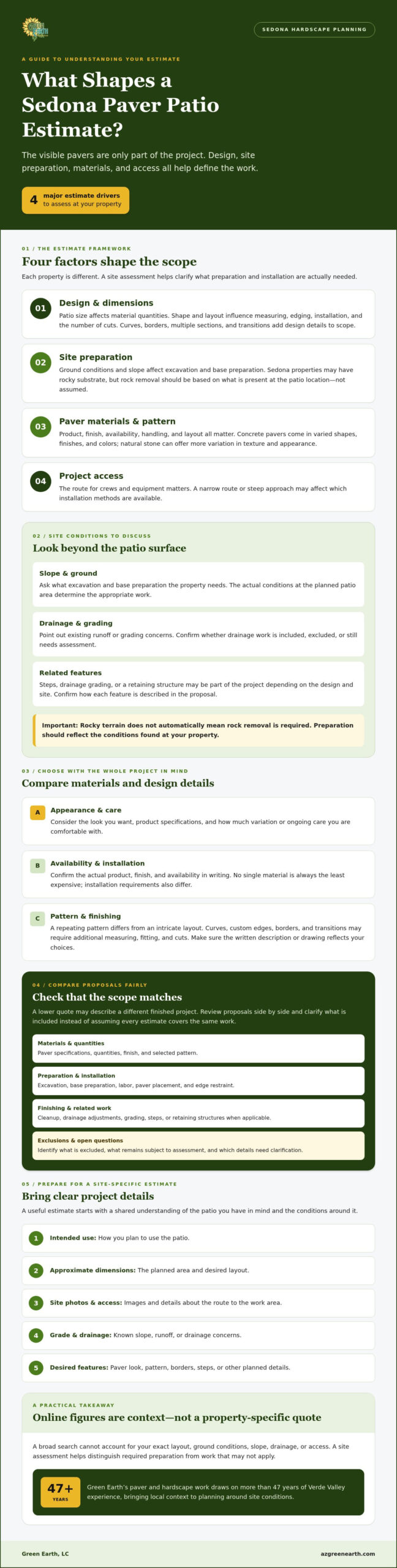
A Sedona paver patio estimate depends on four main factors: design, site preparation, materials, and access. Together, these determine how many pavers are needed and what work is required to prepare the area and complete the installation. Patio design, site preparation, materials, and project access are the four major drivers of a paver patio estimate in Sedona.
An installed project scope generally includes the materials, preparation, labor, and finishing work agreed for the patio, along with any related work specifically listed in the proposal. Depending on the property and design, that work could include steps, drainage grading, or a retaining structure. Confirm what is included instead of assuming every estimate covers the same tasks.
Generic online figures can’t predict the estimate for a specific property. They don’t account for the exact layout, ground conditions, slope, or route crews and equipment may need to reach the work area. A site assessment helps clarify those details and distinguish required preparation from work that may not apply. If you’re researching the cost to install paver patio Sedona, treat broad estimates as context, not as a property-specific quote.
Which project details have the biggest effect on an estimate?
Dimensions affect material quantities, while shape and layout affect measurement, edging, and installation. A simple rectangle takes different planning from a design with curves, several sections, or a detailed border. Paver type, pattern, finish, and the number of cuts can also affect material selection and the time needed to place and fit the units. For a basic overview of paving materials and concepts, see this explanation of paving stone.
Identify steps, borders, and retaining structures during scoping rather than treating them as automatic add-ons. Their requirements depend on the site and design, so ask how each feature is described in the written proposal.
Why Sedona property conditions matter
Slope, ground conditions, and equipment access need to be assessed at the property. Sedona terrain can include rocky substrate, but that doesn’t mean every patio requires rock removal. Excavation depends on what is present where the patio will go and how crews can reach the work area. A narrow route or steep approach may also affect the installation methods available.
Give drainage particular attention if existing runoff or grading concerns could affect the patio area. The estimate should explain whether grading or other drainage work is included, excluded, or still needs assessment. Green Earth offers pavers and hardscape, drainage grading, and retaining wall services, which can address related site-planning needs. The appropriate scope depends on the conditions at each property.
How Paver Choice, Patio Design, and Site Preparation Shape the Sedona Estimate
Material is only one part of an installed patio estimate. The selected paver affects the look and installation requirements, while the full estimate also reflects design details and the preparation needed for the site. A material that suits your preferred color and texture may differ from another option in availability, handling, or layout needs. There isn’t one choice that is always least expensive.
How do paver materials and patterns affect the project?
Concrete pavers come in varied shapes, finishes, and colors, while natural stone can offer more variation in texture and appearance. Choose based on the look you want, the product specifications, and how much variation or ongoing care you’re comfortable with. Review actual samples and confirm the selected material, finish, and availability in writing. A general material label alone may not identify the product being proposed.
Layout matters, too. A straightforward repeating pattern calls for different installation work than a more intricate arrangement. Curves, borders, custom edges, and transitions to existing surfaces may require additional measuring, fitting, and cuts. The Patio Design resource from Penn State Extension offers broader guidance on balancing landscape function and appearance as you plan. Make sure the estimate’s drawing or written description reflects the pattern and details you selected.
What site preparation may be included?
Ask how the proposal describes each preparation and finishing task. Depending on the design and property assessment, the scope may include:
- Excavation to create space for the patio assembly
- Base material placement and compaction
- A bedding layer beneath the pavers
- Edge restraint to help hold the layout in place
- Joint finishing between pavers
Excavation depth and base details should be determined for the site and design, not assumed from a generic template. Ground conditions, intended use, and planned materials can all inform the specified assembly. Compare proposals by checking that these components are described clearly, including work that is excluded or still subject to assessment.
For a broader view of material selection and project planning, see this hardscape construction buying guide. As you assess the cost to install paver patio Sedona, bring your material and layout ideas to a local pavers and hardscape provider, such as Green Earth’s paver and hardscape team. That gives the estimate a better chance of addressing the project you have in mind.
Why Sedona Patio Quotes Differ, and How to Compare Them Fairly
Two patio proposals can have different totals because they describe different work. One may include removal of an existing surface, debris hauling, or drainage work; another may assume a clear, accessible site and exclude those tasks. Contractors may also make different assumptions before assessing the property. A fair comparison starts with scope, quantities, and specifications, not the bottom line alone.
When researching the cost to install paver patio Sedona, a quote is meaningful only when you know what it covers. Use the checklist below to identify gaps and ask each contractor to clarify the same details.
What should a complete paver patio estimate spell out?
Look for enough detail to understand how the proposed work will be done and what the finished scope includes. Depending on the project, the estimate should address relevant items such as:
- Demolition or removal of existing materials, excavation, and disposal
- Patio dimensions, quantities, paver product, pattern, and finish
- Base work, edge restraint, joint material, and installation
- Site cleanup and any specified drainage or grading work
- Exclusions, allowances, and features such as borders, steps, or retaining structures
If a detail is missing, ask whether it is included, excluded, or still subject to assessment. Clarify how unexpected conditions or additional work will be identified, priced, approved, and recorded before work proceeds. This makes assumptions visible and gives you a written reference if the scope changes.
How can you compare contractor proposals apples to apples?
Give each contractor the same starting information: approximate patio dimensions, preferred materials and pattern, known access limitations, and a consistent list of desired features. Then compare the written scopes line by line. A proposal with an allowance or unspecified item isn’t directly equivalent to one with a defined product or task, so flag those differences before weighing totals.
Review access and site-related work separately. A narrow route or limited equipment access may affect how materials reach the work area. Disposal needs, drainage concerns, and a retaining structure can also change what’s included. Ask each contractor how those conditions were assessed and whether the proposed scope covers them.
If grading or drainage work may be needed, confirm who is responsible for assessing and completing it, and whether it appears in the proposal or requires a separate scope. Clear answers help you compare like with like and understand what each estimate represents.
How to Prepare for a Paver Patio Estimate in Sedona
A little preparation helps a contractor understand how you want to use the patio and what the property may require. It also makes estimates easier to compare. Before requesting a quote, gather a simple project brief with your intended use, approximate size, site photos, access notes, and preferred features.
What information should you gather before requesting an estimate?
Start with how the patio will function. Note whether you picture a dining area, outdoor seating, or a connection to an existing outdoor living area. Mark possible locations for seating, steps, borders, or other features, and share any material or color preferences you already have.
Then collect a few practical details:
- Approximate patio dimensions, clearly labeled as preliminary
- Photos of the proposed area from several angles, including nearby doors, paths, and existing hardscape
- Notes about how people and equipment could reach the work area
- Observations about slope, runoff, standing water, or other drainage concerns
These notes help start the conversation, but they don’t replace a professional review or confirmed measurements. If drainage or grading may be part of the project, this Arizona drainage and grading guide offers additional planning context. Confirm any local requirements that may apply to your project with the relevant local authority rather than relying on assumptions or general online advice.
What should happen during a site assessment?
A site visit should connect your design ideas with conditions on the ground. The contractor can review the proposed layout, access route, slope and ground conditions, drainage observations, material preferences, and how the patio meets nearby spaces. Point out concerns that may not be obvious in photos, such as where water collects after rain or where access narrows.
Ask which parts of the estimate are based on visible conditions and which remain provisional until excavation or closer inspection reveals more. Request that assumptions, exclusions, and the process for approving additional work appear in the written scope. Before accepting a proposal, check that it reflects the agreed dimensions, features, materials, preparation, and cleanup. This makes an estimate for the cost to install paver patio Sedona more useful for planning and comparison.
For site-aware planning around pavers, hardscape, and related drainage or grading needs, discuss a patio project with Green Earth.
Plan a Sedona Paver Patio with Green Earth’s Local Hardscape Experience
A well-scoped patio plan starts with the property, not a generic estimate. Green Earth, LC is a locally owned Northern Arizona landscaping and construction firm serving Sedona and the Verde Valley, with pavers and hardscape construction, drainage grading, and retaining wall services. The company reports more than 47 years of experience in the region. That background can inform a site-aware conversation, while the scope for each project depends on its own conditions.
Green Earth also reports sustainable practices and statewide runner-up recognition in Green Living Magazine’s Best Sustainable Landscape Designer category. If you’re considering the cost to install paver patio Sedona, these details provide context about the company. The written proposal is where to assess the materials, preparation, and work being considered for your property.
What to discuss with a local hardscape contractor
Bring your priorities and observations into the conversation. Explain how you plan to use the patio, which materials and layout appeal to you, how the work area can be accessed, and how the patio should relate to the surrounding landscape. Photos and approximate dimensions can help communicate the idea, with final measurements confirmed during project planning.
Share concerns about slope, runoff, or standing water. Ask how drainage or grading would be evaluated and whether addressing it would change the proposed scope. If a retaining structure may be relevant, clarify how that work would be assessed and represented. A clear proposal should document the selected specifications, assumptions, exclusions, and optional work so you can see what is and isn’t included.
Request a site-specific paver patio proposal
Use the estimate discussion to check that the proposed work reflects your priorities and the property conditions observed. Ask which details are confirmed and which may require further assessment, and review how changes or additional work would be communicated before proceeding. This keeps the planning conversation practical without assuming a particular price, schedule, permit outcome, or construction result.
If you’re planning a Sedona-area patio, share your site details, design priorities, and known drainage or access concerns with Green Earth. Contact Green Earth about your patio project to start a conversation about pavers and hardscape planning.
Turn Your Patio Plans Into a Clear Project Scope
A useful estimate starts with the details of your property and the patio you want to create. Design, materials, preparation, and access all shape the proposed scope, while drainage or grading needs may add work that should be documented clearly. Compare proposals by checking that they describe the same dimensions, specifications, inclusions, and exclusions.
Green Earth, LC offers paver and hardscape construction and reports more than 47 years serving the Verde Valley region. The company also reports statewide runner-up recognition in Green Living Magazine’s Best Sustainable Landscape Designer category. This background can inform a planning conversation, but a site-specific proposal helps you understand the work being considered for your property.
Ready to discuss your ideas? Share your intended patio use, preferred materials, approximate dimensions, and known access or drainage concerns with Green Earth. Contact Green Earth to discuss your Sedona paver patio and take the next step toward a well-defined plan. With thoughtful preparation and a clear scope, you can move forward with greater confidence. Green Earth also serves clients in Camp Verde, Cottonwood, Flagstaff, and Prescott.
Frequently Asked Questions
How much does it cost to install a paver patio in Sedona?
There isn’t one dependable price for every Sedona patio. The cost to install paver patio Sedona depends on the project’s dimensions, design, materials, site preparation, and access. Online figures may not reflect your property, so use them only as general context. For a useful estimate, share approximate dimensions, photos, material preferences, and known site concerns, then request a written proposal based on a property assessment.
What factors affect the cost of a paver patio?
The main factors are patio size and layout, paver material and pattern, preparation requirements, and access to the work area. Curves, borders, or steps can add layout and cutting work. Slope, ground conditions, excavation, disposal, and drainage or grading needs may also affect the scope. Ask the contractor to identify which tasks are included, excluded, or dependent on further assessment.
Are concrete pavers or natural stone more expensive to install?
Neither material is universally less expensive to install. The estimate depends on the selected product, its availability, the design, and the work required to lay it. Concrete pavers and natural stone differ in appearance, finish, and variation, so compare specific products rather than material labels alone. Ask for samples and written specifications, and check whether the proposal accounts for the chosen pattern, fitting, and edge details.
Does a paver patio need drainage in Sedona?
Drainage needs depend on the property, patio location, slope, and existing runoff. A site assessment can help determine whether grading or other drainage work belongs in the project scope. Tell the contractor about areas where water collects or flows, and ask how the proposal addresses those observations. Don’t assume every patio needs the same drainage approach or that drainage work is included unless the written estimate says so.
How do I compare paver patio installation quotes?
Compare proposals by scope and specifications before looking at totals. Check that each uses the same dimensions and identifies the paver product, pattern, base work, edge restraint, joint material, installation, and cleanup. Look for exclusions, allowances, and work that remains subject to assessment. Ask how potential extra work will be explained, approved, and documented. If grading or drainage may be needed, confirm who is responsible and whether it is included.
How long does paver patio installation take?
There isn’t a single reliable installation timeline for every patio. Project duration depends on the design, preparation required, site access, and whether related work such as drainage or grading is included. Ask the contractor for a project-specific schedule and clarify what it covers, including preparation and finishing. If the site assessment identifies conditions that need further review, ask whether they could affect the proposed timeline before making plans around it.
Do I need a permit to install a paver patio in Sedona?
Permit requirements can depend on the project’s specific design and circumstances, so confirm them with the City of Sedona’s Community Development Department before work begins. Don’t rely on a general online statement to determine whether your project needs approval. If the property is in Camp Verde, Cottonwood, Flagstaff, or Prescott, check with the relevant local authority for that location. Ask the contractor what requirements they have considered in the proposal.
Recent Comments