
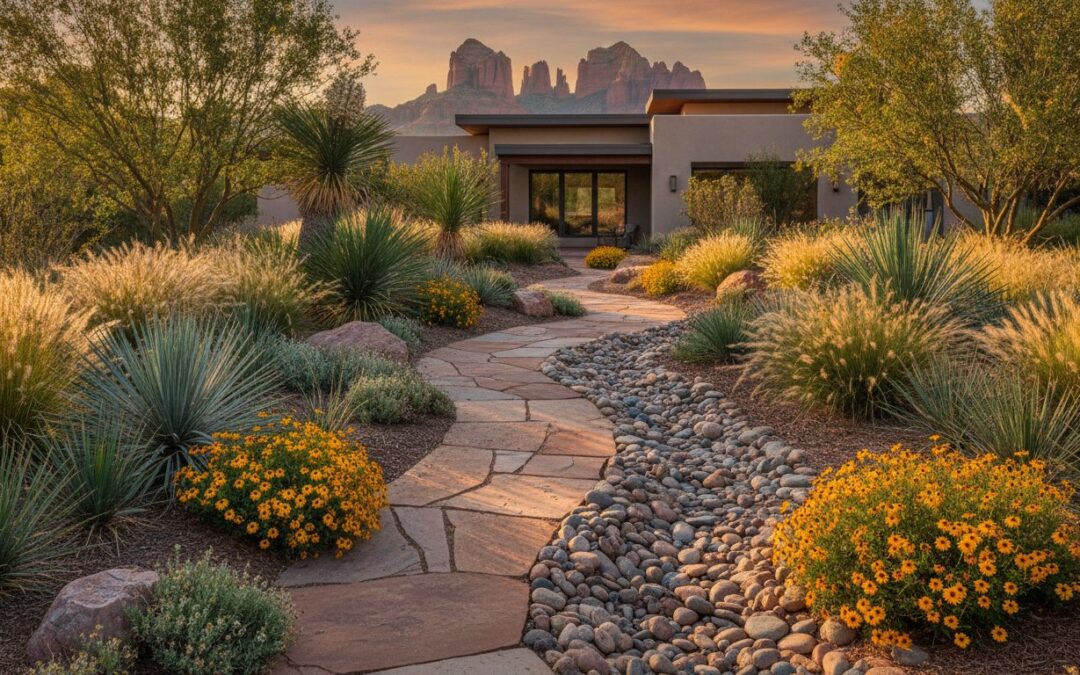
Did you know that transitioning to native plant landscaping can slash your outdoor water usage by up to 60%? For many homeowners in Sedona and Flagstaff, the struggle to maintain a traditional lawn against 100-degree heat and mandatory Colorado River water reductions has become a costly burden. You shouldn’t have to choose between satisfying HOA curb appeal requirements and managing exorbitant summer water bills. It’s frustrating to watch your investment wither while insurance rates climb due to regional wildfire risks. We understand that you want a landscape that respects the local environment without sacrificing aesthetic beauty.
We believe your home deserves an entrance that is both resilient and breathtaking. You’ll discover how to transform your outdoor space into a lush, water-wise sanctuary that thrives in our unique climate while significantly increasing your property value. This guide explores the best drought resistant front yard ideas for 2026, from professional drainage grading to Firewise-compliant hardscaping. We’ll show you how to pair structural elegance with local ecology to create a front yard that survives the monsoons, supports local pollinators, and saves you money for years to come.
Key Takeaways
- Learn why an ecosystem-based approach is essential for Northern Arizona and how to balance aesthetic beauty with long-term ecological health.
- Discover innovative drought resistant front yard ideas that utilize local stone and professional hardscaping to reduce water-intensive areas while boosting curb appeal.
- Identify the most reliable native plant species for the Verde Valley that support local pollinators and withstand extreme temperature shifts.
- Understand the critical role of professional drainage grading and irrigation drip system repair in maintaining a thriving, low-water landscape.
- Master the integration of Firewise defensible space zones into your front yard design to protect your property and manage wildfire risks effectively.
Understanding Drought-Resistant Landscaping in Northern Arizona
In the Verde Valley, drought-resistant landscaping is far more than a survival tactic. It is a sophisticated, ecosystem-based approach that aligns your property with the natural rhythms of Northern Arizona. We approach every project as a visionary partner, believing that true aesthetic beauty is the natural byproduct of ecological health. When you implement drought resistant front yard ideas, you aren’t just saving on your water bill; you’re building a resilient sanctuary that supports local wildlife and enhances the region’s biodiversity.
A common misconception is that a water-wise yard must be a bleak expanse of brown and gray. This couldn’t be further from the truth. A professionally designed landscape uses vibrant perennials, architectural succulents, and varied textures to create a lush, inviting entrance. Beyond the visual appeal, these sustainable designs are significant property value boosters. In 2026, savvy buyers in Sedona and Prescott prioritize homes with mature, low-maintenance landscapes that can withstand increasing water restrictions and rising temperatures.
Xeriscaping vs. Zeroscaping: Why Your Yard Needs Life
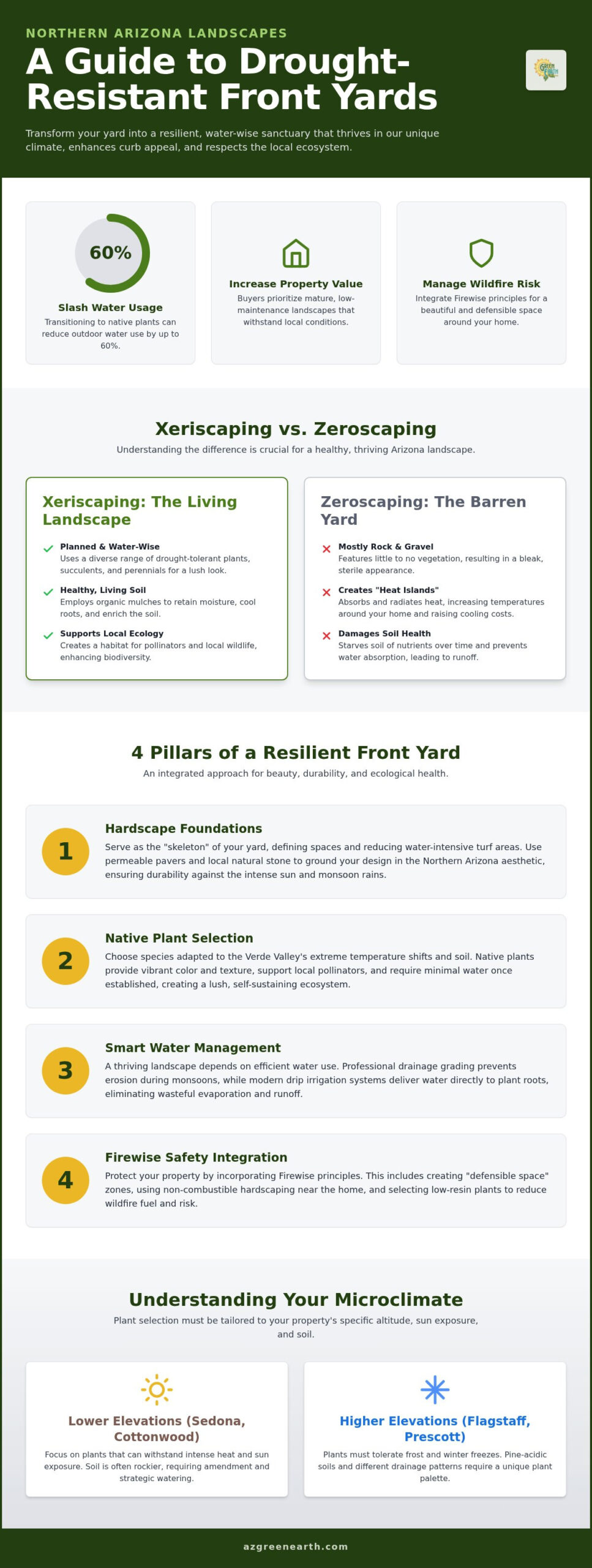
Many homeowners confuse Xeriscaping with “zeroscaping,” but the two concepts are worlds apart. Zeroscaping involves covering a yard in gravel or rock with little to no vegetation. This practice creates “heat islands” that radiate warmth back toward your home and eventually starves the soil of vital nutrients. In contrast, Xeriscaping comes from the Greek word “xeros” for dry, and it represents a planned, living landscape that uses water-efficient plants and organic mulches.
Healthy soil is the foundation of any successful Northern Arizona garden. Organic mulches help retain moisture in the intense Sedona sun, cooling the root systems of your plants and preventing the ground from becoming hydrophobic. By choosing a living landscape over a barren rock bed, you protect your land’s long-term viability and ensure your drought resistant front yard ideas provide lasting beauty.
Microclimates: From Sedona Red Rocks to Flagstaff Pines
Altitude and topography play massive roles in how we select plant palettes for our clients. A strategy that works perfectly in the low-elevation heat of Cottonwood or Camp Verde will likely fail in the frost-prone winters of Flagstaff or the high-desert transitions of Prescott. Plants must be selected not only for their drought tolerance but also for their ability to handle local temperature swings and soil compositions.
In the context of Arizona yard grading, a microclimate refers to a specific zone on your property where factors like slope, sun exposure, or drainage patterns create a unique environment that differs from the general regional climate. Understanding these nuances ensures that your investment thrives for decades rather than just one season. By tailoring your design to these specific conditions, you create a front yard that is truly in harmony with its surroundings.
Hardscape Foundations: The “Skeleton” of Your Front Yard
A successful landscape begins with a strong structural foundation. While plants provide the life and color, hardscaping serves as the “skeleton” that defines your space. By strategically increasing the footprint of non-living elements, you effectively reduce the water-intensive square footage of your property. This is a cornerstone of effective drought resistant front yard ideas, as it allows you to maintain high curb appeal without the constant thirst of a traditional lawn. In the high-UV environment of the Verde Valley, materials must be chosen for their longevity and ability to withstand the intense Arizona sun.
Utilizing local stone is essential for grounding your design in the Northern Arizona aesthetic. Whether you are considering hardscape construction in Cottonwood AZ or a smaller residential update, choosing materials that mimic the surrounding red rocks and high-desert terrain creates a seamless transition between your home and the wild landscape. Following the principles of sustainable landscaping in northern Arizona, we prioritize durability and environmental harmony in every layout.
Permeable Pavers and Natural Stone Walkways
Pathways do more than just guide visitors to your door. They create visual order and structure without requiring a single drop of water. We often recommend permeable pavers for our clients. Unlike solid concrete, these surfaces allow water to seep through, recharging local groundwater during our heavy summer monsoons. You can choose from elegant flagstone, modern concrete pavers, or rustic decomposed granite to match your home’s style. These choices prevent runoff and erosion, keeping your soil healthy and your hardscape stable for years.
Retaining Walls for Visual Depth and Erosion Control
For homes in the hilly terrain of Prescott or the cliffs of Sedona, elevation changes can be a challenge. Professional retaining wall construction in Sedona is often a structural necessity to prevent soil loss during storm events. Beyond their function, these walls add incredible visual depth to a front yard. By creating tiered “planting pockets,” you can concentrate irrigation where it’s needed most, ensuring that your drought resistant front yard ideas remain vibrant and healthy. These levels allow for better water management and give you a canvas to showcase specialized native plants.
If you’re ready to build a foundation that lasts, our team can help you design custom pavers and stone features tailored to your property’s unique needs.
Top Drought-Tolerant Plant Ideas for Visual Impact
Once the structural hardscape is in place, the focus shifts to the living elements that bring your design to life. Integrating high-impact drought resistant front yard ideas requires a deep understanding of our regional transition zones. While generic advice often suggests tropical succulents, those plants rarely survive the hard freezes of Flagstaff or the intense alkaline soil of the Verde Valley. We advocate for the “Right Plant, Right Place” philosophy, ensuring every species is selected for its ability to thrive with minimal intervention and support local pollinators like hummingbirds and native bees.
By choosing plants that have evolved in the Southwest, you create a landscape that is naturally resistant to local pests and requires significantly less supplemental water once established. For a comprehensive look at plant palettes tailored to our specific elevations, our desert landscape design Northern Arizona guide offers detailed lists for every microclimate from Sedona to Prescott.
Native AZ Shrubs and Perennials for Year-Round Color
Native shrubs provide the bulk of your yard’s visual weight and seasonal interest. We often incorporate these “tried and true” species for their reliability and striking appearance:
- Apache Plume: Known for its feathery, pink seed heads that persist long after the white flowers fade.
- Desert Willow: A fast-growing shrub or small tree that produces orchid-like blooms throughout the summer.
- Agave Varieties: From the structural Parry’s Agave to the smaller Queen Victoria, these provide year-round architectural form.
- Red Yucca: These aren’t true yuccas, but their tall flower spikes provide essential vertical interest and attract pollinators.
The silvery foliage of native Arizona sage undergoes a stunning seasonal shift, erupting into deep purple blooms during the monsoon season that contrast beautifully against the red rocks of Sedona.
Strategic Shade: Low-Water Trees for the Front Yard
Trees are the most valuable living assets in your landscape. They provide critical cooling for your home and create a canopy that reduces evaporation for the smaller plants beneath them. The Velvet Mesquite and Desert Museum Palo Verde are exceptional choices for their sculptural branches and low water needs. For those at higher elevations, the Arizona Cypress offers a blue-green hue and incredible drought tolerance. Professional selection is vital here; choosing the wrong species can lead to invasive roots or high-maintenance debris that compromises your Firewise defensible space.
When these living elements are paired with professional irrigation repair and smart grading, your front yard becomes a self-sustaining ecosystem that grows more beautiful with each passing season.
Smart Irrigation and Drainage: Keeping the Yard Alive
Infrastructure is the silent partner of a thriving landscape. While the visual focus remains on the surface, the underlying systems determine whether your design survives the first year. Even the most resilient native species require “establishment watering” for several seasons to secure deep root systems in our rocky soil. Without this initial support, your investment is at risk. We specialize in irrigation repair in Flagstaff and the Verde Valley to ensure these systems remain airtight and efficient. Leaky valves or clogged emitters are the primary culprits of water waste, often going unnoticed until the summer heat intensifies.
In 2026, Arizona faces mandatory reductions of 760,000 acre-feet of Colorado River water annually. This reality makes professional oversight of your water systems a necessity rather than an option. By positioning smart controllers as a “set it and forget it” luxury, we help homeowners maintain vibrant curb appeal while staying well within local water restrictions. These systems act as a safeguard, protecting both your property value and our regional resources.
Drip Irrigation Systems: Precision Moisture Delivery
Drip irrigation is the gold standard for water-wise gardening in Northern Arizona. Traditional sprinklers are notoriously inefficient in our dry, high-altitude air, often losing over 50% of their output to evaporation before a single drop reaches the soil. Drip systems deliver precision moisture directly to the root zone, minimizing waste and preventing weed growth in unplanted areas. This targeted approach is a fundamental component of successful drought resistant front yard ideas. We prioritize pressure regulation and routine troubleshooting of emitters to ensure every plant receives the exact volume of water it needs to flourish.
Monsoon Management: Grading and Swales
Managing the intensity of summer monsoons is just as critical as surviving the dry months. Professional drainage grading in Arizona protects your home’s foundation from water intrusion while maximizing every drop of rain. We often design dry creek beds, or swales, which serve as beautiful stone features that double as functional drainage channels. These basins capture high-volume runoff, allowing it to percolate slowly into the ground to naturally water your trees. This dual-purpose design ensures your yard remains stable during heavy downpours while reducing your reliance on supplemental irrigation.
If your current system isn’t performing at its peak, our team can provide comprehensive irrigation drip system repair and controller troubleshooting to restore your yard’s efficiency.
Integrating Firewise Safety into Your Front Yard Design
In Northern Arizona, drought resistance and fire safety are inseparable goals. In 2026, some Arizona homeowners saw insurance rates increase by as much as 48%, with wildfire risk cited as a primary factor. This reality makes firewise landscaping in Cottonwood AZ a fundamental necessity for protecting your investment. While the primary goal of your landscape might be beauty, its most important role is acting as a shield for your home. We approach these designs as an authoritative environmentalist, ensuring that every stone and plant serves a dual purpose of water conservation and fire protection.
The “Zone” system of defensible space dictates the layout of a modern front yard. Hardscaping elements like custom pavers and retaining walls aren’t just for curb appeal; they act as natural fire breaks. By breaking up continuous lines of vegetation, these structures prevent fire from traveling toward your home. Integrating these features into your drought resistant front yard ideas creates a landscape that is as strategic as it is stunning.
The 0-5 Foot Ignition-Free Zone
The area closest to your home, known as Zone 1, is the most critical for fire prevention. This 5-foot perimeter should be entirely free of combustible materials. We replace traditional wood mulch and pine needles, which act as fuel, with non-combustible decorative rock or river cobble. It’s also vital to ensure no tree limbs hang over your roofline in this zone. If you desire greenery near your foundation, we select fire-resistant plants with high moisture content and low resin levels. These species are less likely to ignite from wind-blown embers during a wildfire event.
Professional Design for Peace of Mind
Balancing strict safety standards with HOA aesthetic requirements is a complex task. In 2026, major insurance providers are increasingly requiring proof of Defensible Space Inspections before renewing policies. This makes a professional landscape plan an essential tool for compliance. We take pride in our role as a visionary partner, taking your ideas and turning them into a reality that meets every safety benchmark. We ensure that trees in Zone 2 are spaced with crowns at least 10 feet apart and that “ladder fuels” are removed to prevent fire from climbing into the canopy.
Building a landscape that thrives in the face of drought and fire requires expertise and local knowledge. Contact Green Earth, LC for a custom water-wise design consultation to secure your home’s future with a professional, sustainable plan.
Secure Your Landscape’s Future Today
Transforming your front yard into a water-wise sanctuary is more than an aesthetic choice; it’s a commitment to the long-term health of Northern Arizona. By prioritizing living Xeriscapes over barren rock beds, you create a cooling effect for your home while supporting local ecology. Integrating structural hardscape and professional drainage ensures your property remains resilient against both drought and monsoon runoff. These drought resistant front yard ideas provide a path to beautiful, low-maintenance curb appeal that satisfies HOA standards and significantly reduces water costs.
As a Green Living Magazine award winner with over 47 years of experience in the Verde Valley, Green Earth, LC specializes in sustainable design and Firewise certified strategies. We understand the unique challenges of our local soil and climate. Transform your front yard with Green Earth, LC-Request a Consultation today to build a landscape that is both breathtaking and secure. Your vision for a vibrant, sustainable entrance is within reach.
Frequently Asked Questions
Is drought-resistant landscaping the same as xeriscaping?
Drought-resistant landscaping is a broad category, while xeriscaping is a specific, seven-step methodology used to conserve water. Xeriscaping focuses on soil improvement, efficient irrigation, and the use of native plants. It shouldn’t be confused with “zeroscaping,” which often involves only gravel and no life. A true drought-resistant design uses living elements to support a healthy local ecosystem rather than creating a barren, heat-absorbing rock bed.
How much water can I really save by switching to a drought-resistant front yard?
You can reduce your outdoor water usage by up to 60% by transitioning to native plant landscaping. In 2026, with mandatory Colorado River water reductions of 760,000 acre-feet annually, these savings are essential for Arizona residents. Professional drought resistant front yard ideas often include replacing thirsty turf with native shrubs and trees. This shift significantly lowers summer water bills while maintaining a vibrant, high-end aesthetic for your property.
Do drought-resistant plants need any water at all?
Yes, all plants require some water, especially during the critical establishment phase. New installations typically need supplemental irrigation for the first two to three seasons to develop deep, resilient root systems. Even mature native species may require deep watering during extreme dry spells or record-breaking heatwaves. We recommend using smart controllers to manage these needs efficiently without wasting resources or overwatering your established desert flora.
Are there HOA-approved drought-resistant landscaping ideas in Sedona?
Most HOAs in Sedona and the Verde Valley now encourage or require water-wise designs. Arizona law (A.R.S. §33-1819) specifically protects your right to install artificial turf where natural grass is permitted. However, living native plants are still subject to individual architectural review processes. We help homeowners navigate these board approvals by providing professional designs that balance modern aesthetics with local ecological standards and community curb appeal requirements.
Can I have a “green” look without using traditional grass turf?
Absolutely. You can achieve a lush, “green” appearance using groundcovers like Kurapia or native bunchgrasses that require a fraction of the water. Incorporating evergreen shrubs like Manzanita or the blue-hued Arizona Cypress also provides reliable year-round color. These drought resistant front yard ideas allow you to maintain a vibrant look that feels traditional while respecting the high-desert environment and avoiding the high maintenance of a standard lawn.
What is the best time of year to install a water-wise landscape in Northern Arizona?
Early fall and spring are the ideal windows for installation in our region. Planting in the fall allows root systems to establish during the cooler months before the intense summer heat arrives. In higher elevations like Flagstaff or Prescott, spring planting is also effective once the ground thaws. Avoiding the peak heat of June ensures your new plants don’t suffer from immediate transplant shock or excessive moisture loss.
How does Firewise landscaping affect my front yard’s appearance?
Firewise design creates a clean, structured look that actually enhances your home’s curb appeal. By using non-combustible materials like decorative pavers or river rock near the foundation, you create a modern, high-end aesthetic. Strategic spacing of trees and the removal of “ladder fuels” results in a park-like feel. This approach ensures your home is protected from wildfire risks while maintaining a beautiful, professionally designed landscape that meets insurance standards.
Is a drip irrigation system better than a traditional sprinkler system for desert yards?
Drip irrigation is far superior for Northern Arizona landscapes. Traditional sprinklers can lose over 50% of their water to evaporation in our dry, high-altitude air. Drip systems deliver precision moisture directly to the root zone, which minimizes waste and prevents weed growth in unplanted areas. We often perform irrigation controller troubleshooting to ensure these systems adjust automatically for our unpredictable monsoon rain patterns and seasonal shifts.
Recent Comments