
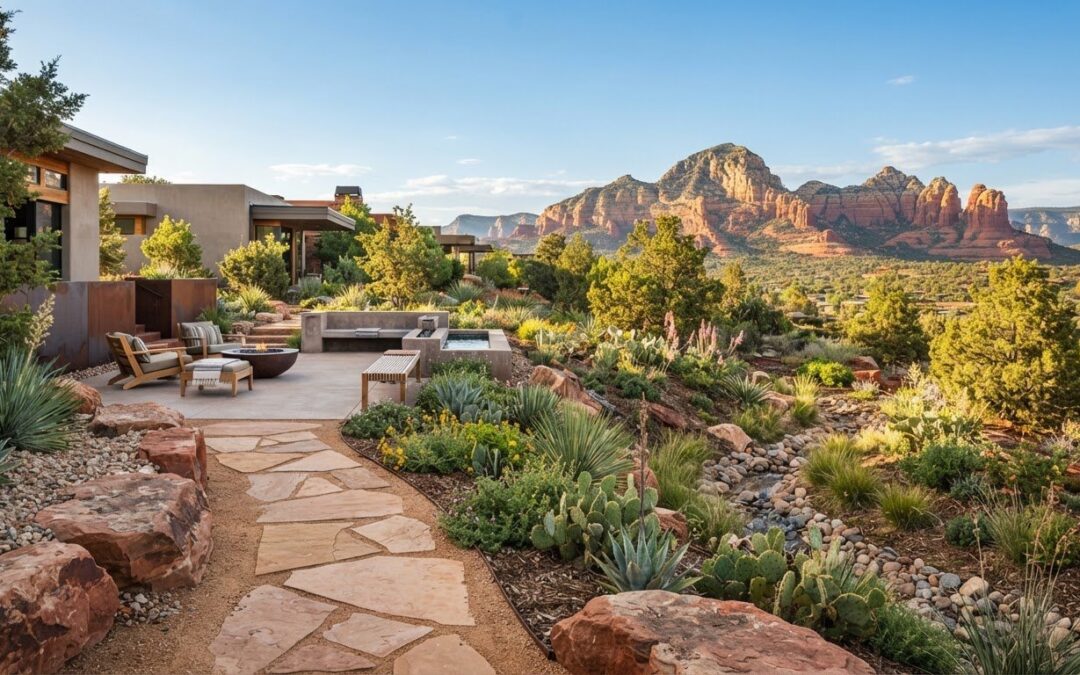
What if drastically cutting your property’s water consumption didn’t require settling for a scorching expanse of bleak gravel and lifeless dirt? Watching traditional turf grass struggle under relentless summer heat while utility bills climb is an exhausting, costly cycle. Between escalating municipal water fees, evolving regional firewise mandates, and confusing HOA rules, keeping an arid landscape healthy can feel like an uphill battle. Fortunately, modern drought resistant landscaping ideas prove that responsible water stewardship doesn’t mean sacrificing lush visual texture, vibrant seasonal color, or refined outdoor comfort.
In this guide, you’ll discover innovative design concepts that transform thirsty outdoor spaces into vibrant, climate-resilient sanctuaries without inflating your maintenance routine. You’ll learn how to safeguard your property’s curb appeal while lowering ongoing utility expenses. We’ll explore how pairing durable hardscape surfaces and passive drainage grading with precision drip irrigation and hydrozoned native plantings creates a sustainable, firewise desert design built to thrive through 2026 and beyond.
Key Takeaways
- Discover innovative drought resistant landscaping ideas that replace high-maintenance turf with elegant, permeable hardscaping and functional outdoor living areas.
- Learn how strategic hydrozoning groups climate-adapted desert species by water demand to prevent overwatering and withstand harsh seasonal temperature shifts.
- Explore passive rainwater harvesting methods, including contoured grading and bioswales, that capture and sink storm runoff directly into root zones.
- See how converting overhead spray systems to precision, pressure-regulated drip irrigation eliminates evaporative waste and protects plant health.
- Integrate firewise defensible space principles into your yard layout to create an effective barrier against wildfire embers without compromising natural beauty.
Rethinking Xeriscaping: The Foundation of Modern Drought Resistant Landscaping
For decades, xeriscaping carried an unfortunate reputation as little more than a barren expanse of crushed gravel dotted with a lonely cactus. That outdated myth ignores what thoughtful ecological planning actually achieves. Today’s drought resistant landscaping ideas blend lush architectural textures, vibrant native blooms, and cool, shaded outdoor living areas with responsible water stewardship. As modern practitioners understand, drought-resistant landscaping balances soil biology, natural hydrology, and climate-adapted plants for resilience.
A successful transition starts with a rigorous site assessment rather than a trip to the nursery. By analyzing solar exposure, seasonal wind corridors, and natural property topography, you can identify distinct microclimates across your parcel. Designing around these patterns ensures every plant, pathway, and seating area works with existing natural forces. Homeowners looking to establish lasting outdoor vitality often apply the foundational tenets outlined in desert landscape design Northern Arizona to create sustainable, resilient outdoor spaces.
The Core Principles of Sustainable Desert Xeriscaping
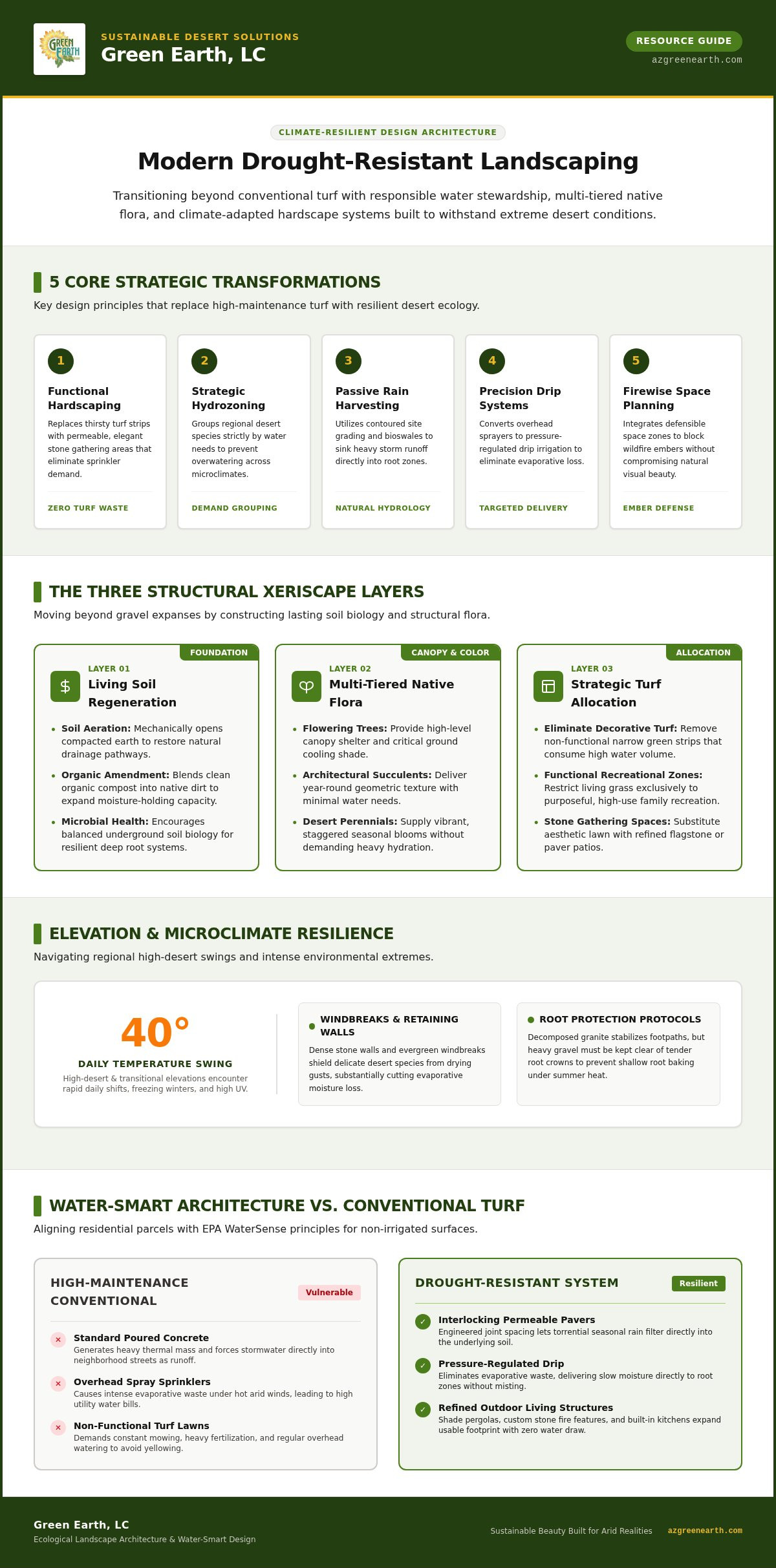
The established principles of xeriscaping extend far beyond simply cutting back irrigation runs. Healthy design focuses on three fundamental structural layers:
- Living Soil Regeneration: Aerating compacted earth and amending native soil with clean organic compost to dramatically expand moisture-holding capacity.
- Multi-Tiered Native Flora: Selecting regionally adapted desert perennials, structural succulents, and flowering canopy trees that provide continuous seasonal color and critical shade.
- Strategic Turf Allocation: Limiting natural lawn strictly to functional recreational spaces, replacing thirsty decorative green strips with beautiful stone gathering areas.
Adapting Design to Elevation and Temperature Swings
Regional geography dictates plant survival. High-desert and transitional elevations experience 40-degree daily temperature swings, bitter winter freezes, and intense UV exposure. A cactus that thrives in Phoenix may turn to mush during a sudden snowfall in Prescott or Flagstaff.
Mitigating these wild swings requires strategic landscape placement. Dense stone retaining walls and evergreen windbreaks shelter fragile plants from drying gusts, significantly lowering evaporative moisture loss. Surface mulches require equal care: while decomposed granite stabilizes pedestrian spaces, keeping heavy gravel away from tender root crowns protects shallow roots from baking under peak summer heat.
Hardscaping Features That Reduce Water Use and Elevate Outdoor Living
Most national design guides treat drought tolerance as a botanical puzzle, focusing almost entirely on agave, yucca, and cacti. That narrow perspective overlooks the most effective tool for permanently cutting property water demand: structural hardscaping. Replacing vast swaths of high-maintenance grass with functional stone gathering areas eliminates thirsty sprinkler zones entirely. These architectural features convert underutilized yards into refined outdoor living spaces, expanding your usable footprint while preserving regional water reserves.
Outdoor features should serve multiple roles on an arid property. Integrating shade pergolas, custom stone fire features, and built-in outdoor kitchens turns a sun-scorched yard into an inviting evening retreat. Federal recommendations from the EPA WaterSense water-smart landscaping guide emphasize balancing living plants with non-irrigated surfaces to achieve lasting conservation. In practice, incorporating hardscape into your drought resistant landscaping ideas protects your soil, cuts routine maintenance hours, and permanently lowers regional utility costs.
Permeable Pavers, Flagstone, and Decomposed Granite Paths
Standard poured concrete generates heavy thermal mass and forces stormwater into neighborhood streets. Modern permeable surfaces take the opposite approach:
- Interlocking Permeable Pavers: Engineered joint spacing lets torrential seasonal rain filter straight through gravel bedding into native subsoil aquifers, preventing pooled surface runoff.
- Natural Flagstone Walkways: Irregular stone pathways blend into the desert floor, bordered by low-water creeping groundcovers that soften structural edges.
- Stabilized Decomposed Granite: Compacted stone dust provides a firm, slip-resistant base for dining zones and meandering walkways without tracking loose grit indoors.
Homeowners exploring authentic regional stone surfaces can review proven material options through hardscape construction Cottonwood AZ to find durable, heat-tolerant materials.
Structural Terracing and Retaining Walls
Sloped lots lose valuable topsoil and moisture during intense desert storms. Engineered retaining walls and dry-stacked native stone structures terrace steep grades, transforming erosive hillsides into terraced, step-down planting areas. These level beds slow heavy runoff and capture rainwater where root systems can actually absorb it.
Using locally sourced canyon fieldstone and weathered boulders anchors the property’s natural contours. These masonry walls also serve as microclimate heat sinks, absorbing daylight warmth and releasing it gently after dusk to shield borderline plants during cold mountain nights. If your terrain presents stubborn erosion challenges, partnering with specialized regional hardscape artisans ensures your stonework and soil grading function in harmony.
Native Plant Selection and Hydrozoning for Arid Microclimates
One of the most frequent mistakes in arid landscaping is planting high-water specimens right beside desert natives. When you run an automated irrigation valve to keep a thirsty shrub alive, adjacent agaves or desert wildflowers quickly rot from over-saturation. True water stewardship depends on methodical garden architecture. Hydrozoning groups plants into distinct water-use zones, preventing unnecessary irrigation waste across mixed-species beds.
By arranging plant communities by their actual hydrological needs, your irrigation zones deliver precise runtimes to each specific bed. Modern drought resistant landscaping ideas rely on this structural discipline to eliminate oversaturation. Beyond saving water, grouping vegetation this way mirrors regional ecology, balancing shade canopies, mid-story flowering shrubs, and ground-hugging succulents. Maintaining open space between these groupings also honors guidelines for defensible space management zones, ensuring property safety while highlighting each plant’s sculptural form.
Defining Irrigation Hydrozones Across Your Property
Structuring your property into three primary zones establishes a logical transition from your home’s foundation out to the native desert perimeter:
- Zone 1 (Oasis Zone): The intimate area closest to covered patios and living spaces. This microclimate benefits from roof shade and accommodates moderate-water plantings, potted citrus, or culinary herbs.
- Zone 2 (Transition Zone): The intermediate yard space featuring drought-tolerant perennials, native ornamental grasses, and structural accents that require supplemental drip runs only during peak heat.
- Zone 3 (Perimeter Zone): The outermost boundary of the parcel. This area relies entirely on natural precipitation and deep-rooted native trees once initial establishment root growth occurs.
Top Native Plants for Multi-Season Resilience and Color
A thriving desert yard requires cold-hardy, drought-proven species that handle both blistering summer sun and sub-freezing winter nights:
- Sculptural Accents: Parry’s Agave (Agave parryi), Red Yucca (Hesperaloe parviflora), and native Sotol (Dasylirion wheeleri) deliver striking year-round architectural forms without winter damage.
- Flowering Pollinators: Autumn Sage (Salvia greggii), Desert Marigold (Baileya multiradiata), and Firecracker Penstemon (Penstemon eatonii) supply brilliant red and yellow blooms while supporting native hummingbirds and solitary bees.
- Canopy Shade Trees: Velvet Mesquite (Prosopis velutina), Desert Willow (Chilopsis linearis), and Thornless Palo Verde provide filtered ground shade, lowering local surface temperatures across surrounding patios.
Passive Rain Harvesting, Grading, and High-Efficiency Irrigation Upgrades
Relying on a garden hose or standard overhead spray heads in the high desert leads to swift disappointment. According to EPA WaterSense data, up to 50% of residential landscape irrigation is lost to evaporation, wind drift, and runoff. Rain barrels provide minor assistance, but they quickly overflow during torrential summer cloudbursts. Truly resilient drought resistant landscaping ideas start below the surface, reshaping the earth to harness natural precipitation before fine-tuning mechanical water delivery.
Pairing thoughtful ground contours with automated, low-volume distribution delivers water precisely where root systems can access it. During severe weather, proper slope shaping also prevents catastrophic foundation saturation. Homeowners looking to protect structural footings against sudden storm runoff can review foundational earthwork strategies outlined in drainage grading Arizona to stabilize vulnerable yards.
Passive Rainwater Catchment and Earth Sculpting
Passive water harvesting uses gravity and earthwork to capture seasonal deluges instead of letting storm runoff escape into municipal storm drains:
- Dry Creek Beds: Carving winding swales lined with native river rock guides high-velocity runoff away from patios while softening hard ground textures.
- Retention Basins: Constructing broad, shallow catchment dips slows, spreads, and sinks monsoon rain directly into the subsoil to hydrate deep-rooted trees.
- Protective Slope Grading: Adjusting property contours directs sudden surface flows safely past vulnerable home foundations without causing severe trenching or soil loss.
Precision Drip Irrigation and Smart Water Controllers
Once your topography captures free precipitation, mechanical irrigation should serve solely as an efficient backup. Switching from high-volume spray heads to pressure-compensating inline drip systems deposits measured gallons at soil level, completely eliminating airborne misting losses. Targeted micro-emitters saturate root zones slowly, encouraging downward root development rather than weak surface spreading.
Smart, weather-based irrigation controllers take efficiency a step further. These systems monitor real-time local precipitation, temperature, and relative humidity, automatically skipping watering cycles whenever storms roll through. If your system suffers from erratic valve pressure, stubborn line breaks, or outdated programming, schedule an irrigation drip system repair and controller inspection to restore pinpoint water delivery and stop runaway utility costs.
Integrating Firewise Defensible Space into Drought-Resistant Yard Layouts
A common misconception assumes any plant requiring minimal water is automatically safe during wildfire season. In reality, many popular arid selections store volatile oils, pitch, and resins that turn into explosive fuel ladders during hot summer months. Integrating property defense with conservation is non-negotiable. Modern drought resistant landscaping ideas balance water reduction with proactive fuel mitigation, shielding structures from radiant heat and wind-blown embers without sacrificing perimeter beauty or visual privacy.
Creating an ember-resistant yard doesn’t mean clearing your property down to bare, scraped earth. Instead, it requires breaking the continuity of combustible materials so ground fires cannot climb into tree canopies or reach structural walls. Balancing this spacing also maintains clear turnaround access for emergency vehicles along driveways and property perimeters.
Establishing the Three Critical Home Defense Zones
Managing fuels around structures follows a structured, three-tiered defensive layout:
- Zone 0 (0 to 5 Feet): The immediate noncombustible perimeter. Ground this zone with decorative rock, decomposed granite, and stone pavers. Keep organic bark mulches, dry leaf debris, and woody shrubs away from exterior siding.
- Zone 1 (5 to 30 Feet): The lean, clean, and green zone. Disperse drought-tolerant plantings into separated pockets bordered by masonry paths, ensuring ground flames cannot travel continuously from plant to plant.
- Zone 2 (30 to 100 Feet): The reduced-fuel zone. Thin dense tree canopies, maintain wide crown spacing, and prune lower branches six to ten feet above ground to keep surface fires from reaching the canopy.
Choosing Low-Ignition Drought-Resilient Species
Plant selection matters just as much as physical spacing. Highly resinous plants like ornamental junipers, cypress varieties, and unmanaged pampas grasses accumulate dead interior thatch, turning into torch-like hazards when exposed to single sparks. These species shouldn’t be planted near residential structures.
Instead, choose fleshy succulents, deciduous desert trees, and low-growing herbaceous perennials with high moisture retention. Consistent seasonal maintenance remains vital: pruning spent flower stalks, raking fallen leaves, and removing dead interior twigs removes ignition sources before extreme heat sets in. Property owners living in vulnerable canyon settings can review detailed regional standards via firewise landscaping in Cottonwood AZ to align their layout with verified fire-district standards.
Build a Beautiful, Water-Wise Outdoor Sanctuary
Creating an enduring desert retreat doesn’t require compromising on outdoor comfort, visual texture, or personal style. By pairing structural stone living areas with precision drip hydrozoning and passive contour grading, you can establish an outdoor space that respects natural resources while withstanding severe weather swings. Implementing modern drought resistant landscaping ideas protects your investment, lowers monthly utility overhead, and safeguards your property against emerging wildfire threats.
Green Earth, LC brings over 47 years of regional experience engineering sustainable, climate-resilient outdoor spaces across Northern Arizona. Recognized as a statewide runner-up for Best Sustainable Landscape Designer by Green Living Magazine, their craftsmen deliver integrated solutions spanning custom pavers, retaining walls, drainage grading, and certified firewise defensible space. Take the next step toward a resilient property and schedule a landscape design consultation with Green Earth, LC today to bring your desert sanctuary to life.
Frequently Asked Questions
Will drought-resistant landscaping lower my home’s property value compared to grass?
No, thoughtfully designed drought resistant landscaping ideas typically preserve or elevate property value across arid markets. Prospective buyers across communities like Sedona and Prescott actively seek outdoor living spaces that don’t come with burdensome utility bills and constant mowing chores. Professional installations featuring paver entertaining patios, sculpted grading, and mature native accents offer strong curb appeal without the brown patches typical of struggling turf lawns. Even in temperate climates where drought is less extreme, landscape professionals like Snappy Landscaping demonstrate how incorporating low-maintenance hardscaping and functional stone features consistently boosts curb appeal and property value while reducing routine lawn maintenance.
How much water can I realistically save by converting to a xeriscape design?
You can expect to save between 40 and 60 percent of your overall residential water usage. Regional conservation data shows that replacing just one square foot of decorative turf with desert-adapted plantings saves roughly 44 gallons of water annually. Combining native vegetation with efficient drip line delivery and smart weather-based controllers eliminates the heavy overspray and evaporation losses common with traditional lawn sprinklers.
Do drought-tolerant plants require regular watering immediately after planting?
Yes, native and drought-hardy plants require consistent hydration during their initial establishment phase. Even tough desert shrubs like penstemon and autumn sage need regular deep watering during their first one to two growing seasons. This targeted irrigation stimulates strong downward root growth into the subsoil. Once these root systems fully establish, you can safely scale back supplemental drip runs to occasional intervals during dry spells.
What is the difference between drought-resistant and drought-tolerant landscaping?
Drought-resistant plants survive extended periods with virtually zero supplemental irrigation by storing water internally or entering dormancy. Think of agaves, cacti, and certain native yucca species. In contrast, drought-tolerant plants thrive on minimal water once established, though they usually require occasional, measured hydration during prolonged summer heat waves. Modern landscape designs combine both types through strategic hydrozoning to maintain lush visual interest throughout the year.
Can my HOA restrict me from removing my grass lawn for drought-resistant landscaping?
In many Southwestern states, including Arizona, state legislation prevents HOAs from banning water-efficient or drought-resistant landscaping. However, community associations still retain authority to enforce architectural guidelines regarding plant types, hardscape materials, and overall aesthetic harmony. Before removing turf, submit a detailed layout showing your proposed paver walkways, decomposed granite ground cover, and native planting hydrozones to secure smooth architectural review approval.
Which ground cover alternatives work best to replace high-water turf lawns?
Several low-profile, living ground covers and inert materials excel across Northern Arizona’s varied elevations. Creeping thyme, dymondia, and native trailing verbenas handle mild foot traffic while staying green with minimal water. For utility corridors and open sitting areas, combining stabilized decomposed granite with engineered permeable pavers delivers a durable, mud-free surface that catches rainfall without driving up regional water bills or demanding routine mowing.
How do I prevent weeds from overtaking a rock or decomposed granite yard?
Preventing weeds requires a solid foundation and clean maintenance practices. Start by laying a commercial-grade, woven geotextile fabric beneath a minimum three-inch layer of crushed aggregate or decomposed granite. This depth blocks sunlight from reaching dormant seeds. Hand-pull windblown seasonal seedlings right after rain storms while the earth is soft, or spot-treat emerging sprouts with targeted pre-emergent applications before winter and summer monsoon cycles begin.
Recent Comments