
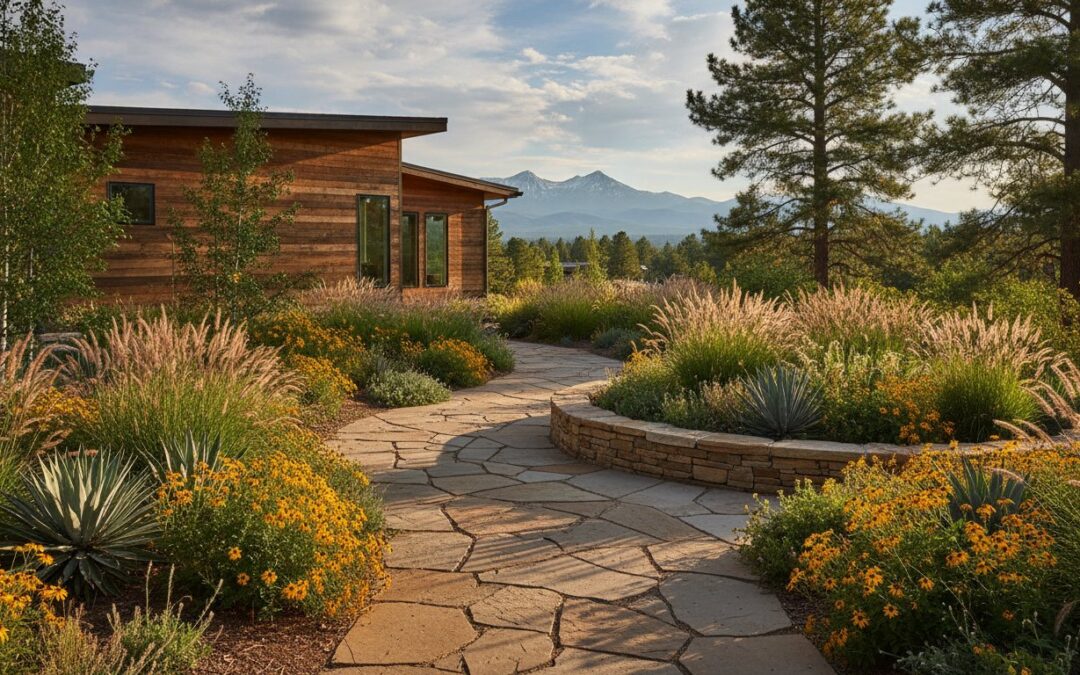
What if the lush, emerald lawn you’ve been fighting to maintain is actually the biggest obstacle to a truly beautiful Northern Arizona home? In our high-altitude environment, keeping traditional turf alive often feels like a losing battle against the scorching sun, sudden frosts, and climbing utility costs. Transitioning to drought tolerant landscaping Flagstaff residents can be proud of is the best way to solve these common frustrations while honoring our local environment. We understand the unique challenges of gardening at 7,000 feet because we’ve spent over 47 years helping this community grow.
This guide will show you how to transform your property into a sustainable, low-maintenance landscape that thrives in our thin air. You’ll learn how to navigate the City of Flagstaff’s $1.00 per square foot rebate program for 2026; select resilient native species; and create a Firewise-compliant yard that protects your home. We’ll break down the technical requirements for drip irrigation and soil management so you can lower your water bills while increasing your property’s natural beauty. By the end of this article, you’ll have a clear roadmap for creating a stunning, water-wise sanctuary that stands up to the rigors of the mountain climate.
Key Takeaways
- Identify why high-altitude UV intensity and rapid evaporation make traditional gardening difficult and how to counter these environmental factors.
- Master the use of hydro-zones and soil amendments to create the resilient drought tolerant landscaping Flagstaff homes need to thrive.
- Get the facts on the City of Flagstaff’s 2026 rebate program to earn $1.00 per square foot for your lawn conversion project.
- See how integrating structural elements like pavers and retaining walls can significantly reduce your irrigable space and manage drainage.
- Learn how professional design-build services ensure your property remains both beautiful and Firewise-compliant in our unique alpine-transition zone.
Understanding Flagstaff’s High-Altitude Drought Realities
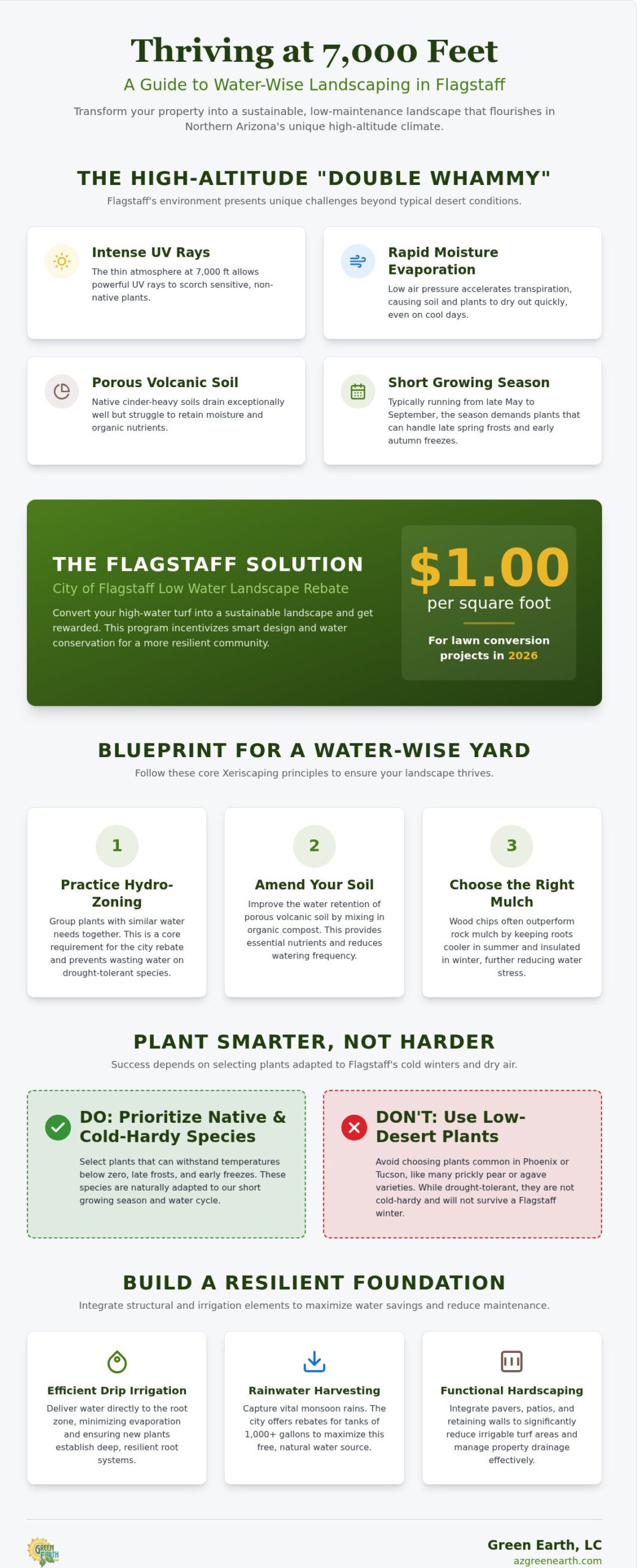
High-altitude gardening in Northern Arizona is a distinct discipline that requires more than just a green thumb. While much of the state deals with extreme heat, Flagstaff homeowners face a unique arid climate along the Mogollon Rim. This region experiences a “Double Whammy” of environmental stressors. First, the thin atmosphere at 7,000 feet allows intense UV rays to beat down on vegetation, which can scorch sensitive leaves. Second, this same altitude causes rapid moisture evaporation from both the soil and plant surfaces. Designing successful drought tolerant landscaping Flagstaff residents can rely on requires a deep understanding of these alpine-transition realities.
Many newcomers make the mistake of choosing “desert” plants common in Phoenix or Tucson. While a prickly pear or agave might thrive in the Valley, they often won’t survive a Flagstaff winter where temperatures regularly drop below zero. Our native volcanic soil also presents a specific hurdle. These rocky, cinder-heavy soils offer excellent drainage, which is great for preventing root rot, but they struggle to retain the organic nutrients and moisture necessary for non-native species. Adhering to the Principles of Xeriscaping helps bridge the gap between our harsh environment and a beautiful, sustainable yard.
The 7,000-Foot Elevation Challenge
Altitude fundamentally changes how plants breathe. Through a process called transpiration, plants release water vapor into the air. In Flagstaff’s thin, dry air, this process accelerates. This means plants often need more frequent, targeted watering than their lowland counterparts, even when the temperature feels cooler. Our growing season is also remarkably short, typically running from late May to September. Successful drought tolerant landscaping Flagstaff projects must prioritize cold-hardy species that can withstand late spring frosts and early autumn freezes without dying back.
Monsoon Rain vs. Supplemental Irrigation
Our local water cycle relies heavily on the summer monsoons. These heavy afternoon rains provide a vital lifeline for native ecosystems and can significantly reduce your water bill if managed correctly. However, relying solely on rainfall is risky. It’s a common misconception that “drought tolerant” means “zero water.” New plantings require consistent supplemental irrigation to establish deep root systems that can survive long dry spells. Capturing natural precipitation through rain barrels or larger harvesting tanks is an excellent strategy. The City of Flagstaff supports this by offering rebates for tanks of 1,000 gallons or more, helping you maximize every drop that falls on your property.
Principles of Sustainable Desert Landscape Design in Flagstaff
Creating a resilient outdoor space starts with smart planning. One of the most effective techniques for drought tolerant landscaping Flagstaff homeowners can implement is hydro-zoning. This involves grouping plants with similar water requirements into specific zones. By placing higher-water plants near the house and drought-hardy native species on the perimeter, you ensure no drop is wasted. This methodical approach is a core requirement for those applying for the City of Flagstaff Low Water Landscape Rebate, which rewards efficiency in design.
Soil preparation is the next critical step. Flagstaff’s volcanic earth is often too porous to hold moisture for long. We recommend amending the soil with organic compost to improve water retention and provide essential nutrients for new growth. Once you’ve planted, choosing the right mulch is vital. While rock mulch is popular for its low maintenance, wood chips are often better for temperature regulation in high-altitude gardens. They keep roots cooler during the summer and provide a layer of insulation against our harsh winters. A balanced mix of low-water perennials can create a surprisingly lush aesthetic without the high water bill of a traditional lawn.
The Seven Principles of Xeriscaping
Successful xeriscaping isn’t just about rocks and gravel; it’s a comprehensive framework for sustainability. These principles include thorough planning, soil improvement, and the selection of appropriate native plants. Minimizing turf areas is essential, as traditional grass is the largest water consumer in local yards. When turf is necessary for pets or children, keep it in small, functional sections. Installing an efficient irrigation system, such as a drip system, ensures water reaches the roots directly and reduces evaporation. If you’re unsure where to start, our team can help you with professional landscape design tailored to your property’s specific needs.
Firewise Integration: Safety Meets Sustainability
Living in the Ponderosa pines requires a landscape that is both beautiful and safe. We prioritize creating a defensible space by managing vegetation density and removing ladder fuels near the home. Selecting fire-resistant plants that thrive at 7,000 feet is a key component of this strategy. These species often have high moisture content in their leaves and don’t accumulate dry, dead material easily. For a deeper look at protecting your property, you can read our guide on firewise landscaping Cottonwood AZ, which shares many of the same safety principles used here in Flagstaff. Balancing ecological health with wildfire preparedness ensures your investment remains protected for years to come.
Maximizing the City of Flagstaff Low Water Landscape Rebate
Transforming your yard into a drought tolerant landscaping Flagstaff showcase is a significant investment, but the City of Flagstaff actively supports this transition through financial incentives. For projects completed between July 1, 2026, and June 30, 2027, the city offers a rebate of $1.00 per square foot for converting traditional turf into low-water-use landscapes. This program is available to both residential and commercial water accounts, making it a viable option for homeowners and HOA boards alike. The goal is to reduce the high summer water demand caused by landscape irrigation, which remains the largest water use in our community during warmer months.
To qualify for these funds, your new design must adhere to specific ecological standards. At least 50% of the converted area must be covered by low-water-use plants at maturity, and rock cover is capped at only 20% of the total ground cover. It’s also vital to remember that artificial turf does not qualify for this program. The city requires the installation of a drip irrigation system to ensure maximum water efficiency. Navigating these requirements can be complex, but professional guidance ensures your project meets every city standard from the start.
Step-by-Step Rebate Application Process
The process begins with an accurate measurement of your existing, living lawn. You must submit a detailed design plan for approval by the Water Conservation staff before any work starts. Using a high-altitude plant selection guide helps you choose species that the city will approve for our unique climate. Once your plan is green-lit and the initial pre-inspection is complete, you can begin the transformation. After the installation is finished, a final inspection confirms that the project matches your approved plan, triggering the rebate payout.
Common Mistakes That Disqualify Rebates
The most frequent error is starting the removal process before the city performs its initial inspection; doing so will immediately disqualify your account. Other pitfalls include:
- Selecting prohibited plant species that aren’t on the city’s approved low-water list.
- Installing non-permeable barriers like plastic sheeting, which prevents healthy soil respiration.
- Failing to provide a clear drip irrigation plan that covers all new plantings.
Working with an experienced partner ensures your drought tolerant landscaping Flagstaff project avoids these technical setbacks and secures your full rebate amount. We take pride in helping our neighbors navigate these regulations to create beautiful, sustainable spaces that benefit the entire community.
Hardscaping and Irrigation: The Foundation of Water-Wise Yards
Structural elements serve as the silent backbone of a water-wise property. By integrating professional hardscape construction Cottonwood AZ principles into your Flagstaff yard, you effectively reduce the total square footage that requires supplemental watering. Every foot of paver patio or stone walkway is a foot of land that doesn’t need a sprinkler. Retaining walls provide even more value by controlling erosion on our sloped mountain lots and creating shaded micro-climates. These structures protect delicate root systems from the intense afternoon sun and help retain soil moisture that would otherwise be lost to wind and heat. This balanced approach is essential for successful drought tolerant landscaping Flagstaff residents can maintain long-term.
A well-built hardscape doesn’t just save water; it defines the functional beauty of your outdoor space. When you combine stone elements with native plantings, you create a visual contrast that feels intentional and high-end. This strategy allows you to enjoy a “lush” feel in specific areas while keeping the overall water demand of the property low. If you’re ready to redefine your property’s footprint, our team can help you design a custom hardscape and irrigation plan that maximizes every drop of water.
Permeable Hardscaping for Moisture Retention
Permeable hardscaping is a game-changer for high-altitude moisture management. Unlike traditional solid concrete, permeable pavers are designed with specialized gaps that allow snowmelt and monsoon rains to filter directly back into the ground. This process recharges the local water table and keeps soil moisture levels more consistent for your surrounding plants. Proper drainage grading Arizona standards are critical here to ensure that water moves away from your foundation while still benefiting your landscape. We focus on directing runoff into basins or rain gardens where it can be put to work, rather than letting it escape into the street.
Smart Irrigation and Troubleshooting
Even the best-designed drought tolerant landscaping Flagstaff can fail without a precise delivery system. Drip irrigation is the gold standard for our environment because it delivers water directly to the root zone. This minimizes the evaporation caused by our thin air and high UV intensity. Upgrading to a smart controller is another vital step; these devices adjust your watering schedule automatically based on real-time weather data from the Mogollon Rim. However, even the smartest systems require human oversight. Regular irrigation repair Flagstaff is necessary to catch small leaks or clogged emitters before they lead to water waste or plant loss. You’ll want to watch for unusually wet spots in your mulch or a sudden spike in your utility bill, which are tell-tale signs that your drip system needs professional attention.
Partnering with Green Earth for Your Flagstaff Landscape
Choosing the right partner for your project is about more than just finding a contractor; it’s about finding a guardian for your land. Green Earth, LC brings over 47 years of specialized Northern Arizona experience to every property we touch. As the statewide runner-up for Best Sustainable Landscape Designer from Green Living Magazine, we’ve established ourselves as a leader in creating drought tolerant landscaping Flagstaff families can enjoy for generations. Our team doesn’t just plant trees. We build resilient ecosystems that balance aesthetic appeal with professional environmental integrity.
Whether you need comprehensive HOA landscape maintenance or want to install a custom outdoor kitchen and fire feature, our approach remains the same. We combine technical proficiency in irrigation water systems with a deep passion for the natural world. This unique blend of expertise allows us to transform arid, challenging spaces into functional retreats that feel like a natural extension of the Mogollon Rim. We take pride in our role as a community fixture, helping both residential and commercial clients achieve excellence in outdoor design.
Our Design-Build Process
We believe that a successful landscape starts with a methodical plan. Our process begins with an in-depth consultation where we align your personal vision with Flagstaff’s specific high-altitude ecology. We consider wind patterns, UV exposure, and volcanic soil composition before the first stone is laid. During the construction phase, our craftsmen focus on longevity, building retaining walls and pavers that stand up to the intense freeze-thaw cycles of our mountain winters. Finally, our maintenance services provide the long-term care necessary to ensure your sustainable yard matures beautifully. We don’t just walk away once the project is finished; we stay involved to ensure your investment thrives.
Why Sustainable Beauty Matters
Investing in professional xeriscaping does more than just lower your water bill. It significantly increases your property value by creating a low-maintenance, high-impact outdoor living area that buyers increasingly crave. Our commitment to eco-friendly practices and water stewardship means your yard will be a point of pride rather than a source of stress. You can explore more about our philosophy in our guide to desert landscape design Northern Arizona. By choosing a partner who understands the delicate balance of our local climate, you’re making a choice for the future of our community and the long-term health of our high-desert environment.
Building a Sustainable Legacy for Your High-Altitude Property
Success in high-altitude gardening requires a shift in perspective. It’s not just about saving water; it’s about building a landscape that respects the Mogollon Rim’s unique ecosystem. By focusing on hydro-zoning, professional irrigation repair, and the City of Flagstaff’s rebate programs, you can create an outdoor space that thrives despite intense UV rays and dry mountain air. A well-designed yard provides more than just visual appeal. It offers a Firewise-compliant sanctuary that increases property value and supports local water conservation efforts through drought tolerant landscaping Flagstaff residents can rely on year-round.
With over 47 years of Northern Arizona expertise, we’ve helped countless neighbors transform their properties into award-winning sustainable retreats. As the statewide runner-up for Best Sustainable Landscape Designer, Green Earth, LC specializes in the intersection of beauty and environmental responsibility. Whether you’re navigating city rebates or need a complete defensible space overhaul, we’re here as your visionary partner. Request a Sustainable Landscape Consultation with Green Earth, LC today to start your journey. Your vision for a stunning, water-wise sanctuary is within reach, and we’re ready to help you bring it to life.
Frequently Asked Questions
Does a drought-tolerant landscape in Flagstaff only consist of rocks and cactus?
No; drought-tolerant designs in Northern Arizona are surprisingly lush and colorful. While rocks and gravel are useful for drainage, they shouldn’t be the only elements. You can incorporate a wide variety of cold-hardy perennials like Penstemon, Lavender, and native grasses that thrive at 7,000 feet. These plants provide seasonal interest and texture without the high water demands of a traditional lawn. A well-designed landscape focuses on biodiversity rather than just desert aesthetics.
How much can I save on my water bill by switching to xeriscaping?
Landscape irrigation is the single largest use of water for Flagstaff residents during the summer months. By switching to xeriscaping, you can significantly reduce your outdoor water consumption. While exact savings vary based on your previous usage and the size of your lot, many homeowners see a noticeable decrease in their monthly utility costs. Transitioning to a drip irrigation system ensures that water is delivered efficiently to root zones, eliminating the waste common with traditional sprinklers.
What are the best native plants for Flagstaff’s 7,000ft elevation?
The best plants for our elevation are those that have adapted to intense UV rays and cold winters. Native species such as Apache Plume, Fernbush, and Rocky Mountain Penstemon are excellent choices for drought tolerant landscaping Flagstaff projects. These plants are naturally resilient to local pests and require minimal supplemental water once established. Using native flora also supports local pollinators like bees and hummingbirds, contributing to a healthier high-altitude ecosystem around your home.
Do I need a permit for drought-tolerant landscaping in Flagstaff?
Most residential landscaping projects in Flagstaff don’t require a city permit unless you’re installing major structural elements like high retaining walls or complex drainage systems. However, if you’re applying for the city’s Low Water Landscape Rebate, you must have your design plan approved by the Water Conservation staff before you begin. Additionally, always check with your Homeowners Association (HOA) for specific CC&R requirements regarding plant selection and hardscape materials to avoid potential fines.
Can I still have a small area of grass with a low-water landscape?
Yes, you can still maintain a small, functional area of grass for pets or children within a low-water design. We recommend using drought-tolerant turf varieties or limiting the lawn to a specific zone. If you’re seeking the city rebate, remember that at least 50% of the converted area must be replaced with low-water-use plants. Strategic placement of turf allows you to keep a touch of green while still achieving significant water savings overall.
How often do I need to maintain a drought-tolerant yard?
Drought-tolerant yards are low-maintenance but not maintenance-free. You’ll still need to perform seasonal tasks such as pruning perennials, checking your drip irrigation system for leaks, and managing occasional weeds. Most homeowners find that they spend significantly less time mowing and watering compared to a traditional lawn. Regular troubleshooting of your irrigation controller ensures your system remains efficient as the seasons change. Professional maintenance services can help keep your sustainable landscape healthy as it matures over the years.
Will drought-tolerant landscaping help with Firewise compliance?
Absolutely; xeriscaping and Firewise principles work hand-in-hand to protect your home. A professional drought tolerant landscaping Flagstaff plan focuses on proper plant spacing and the removal of ladder fuels. By replacing dense, flammable brush with fire-resistant native plants and non-combustible hardscapes like pavers, you create a vital defensible space. This approach reduces the risk of wildfire spread while maintaining a beautiful, sustainable yard that thrives in our unique alpine-transition environment.
How do I apply for the City of Flagstaff water rebate?
To apply for the City of Flagstaff rebate, you must follow a specific sequence of steps:
- Measure your existing living lawn area and create a detailed design plan.
- Submit your application and design for approval by Water Conservation staff.
- Pass a pre-inspection before you begin removing any turf.
- Complete the installation and schedule a final inspection to trigger the $1.00 per square foot payout.
This process ensures your project meets all city efficiency standards and qualifies for the incentive.
Recent Comments