
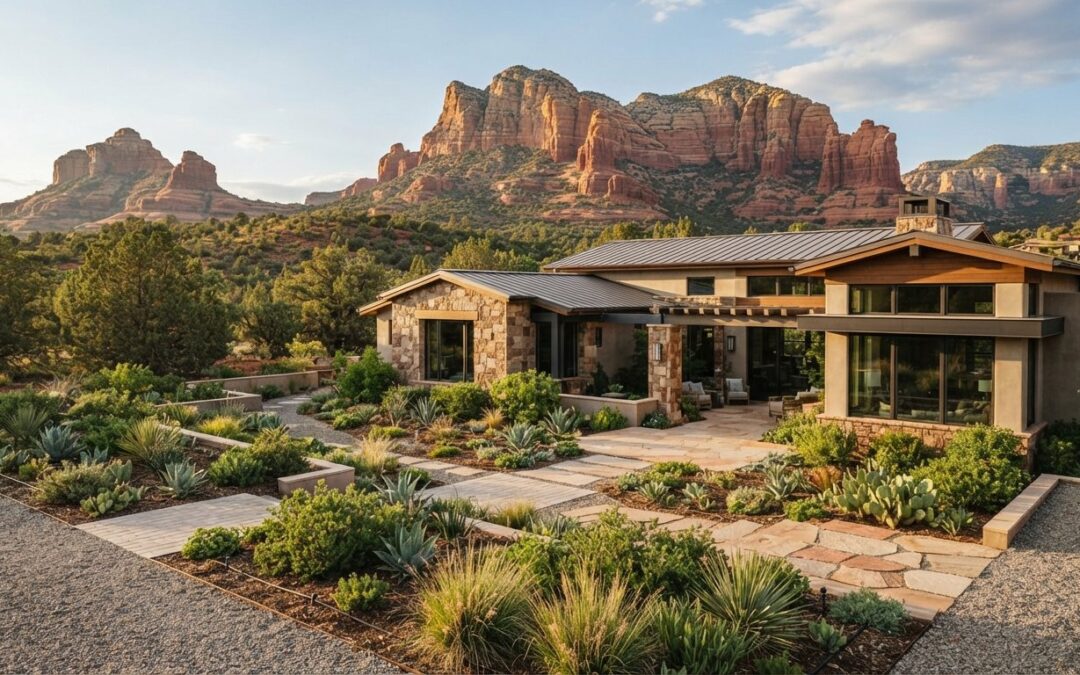
Does protecting your Sedona home from wildfires mean you have to trade your lush, high-desert sanctuary for a sterile field of gray gravel? Many homeowners feel caught between a deep love for our local flora and the practical necessity of safety. It’s a common misconception that fire safety requires a barren landscape. In reality, effective fire resistant landscaping sedona relies on the art of strategic placement and environmental stewardship rather than total vegetation removal.
We understand the unique challenges of living among the Red Rocks, where the beauty of the natural world is our greatest asset and its volatility is our greatest concern. You deserve a property that offers both peace of mind and visual excellence. This 2026 guide bridges the gap between strict Firewise regulations and high-end design. We’ll walk you through the essential zones of defensible space, introduce you to resilient native plants that thrive in our climate, and show you how professional hardscaping creates natural fire breaks. By the end of this article, you’ll have a clear, actionable plan to protect your investment while enhancing the ecological health of your private retreat.
Key Takeaways
- Understand how Sedona’s distinct topography and wind patterns dictate fire behavior within the Wildland-Urban Interface.
- Learn to structure the critical first 30 feet of your property into distinct defensible zones that redirect heat and embers.
- Identify the essential characteristics of fire resistant landscaping sedona, focusing on high-moisture native species and the removal of hazardous plants.
- Explore how professional hardscape elements like pavers and retaining walls serve as permanent, elegant fuel breaks for your landscape.
- Discover how a professional design-build approach integrates Firewise standards while maintaining the environmental integrity of your high-desert retreat.
Understanding Wildfire Risk in the Sedona High Desert
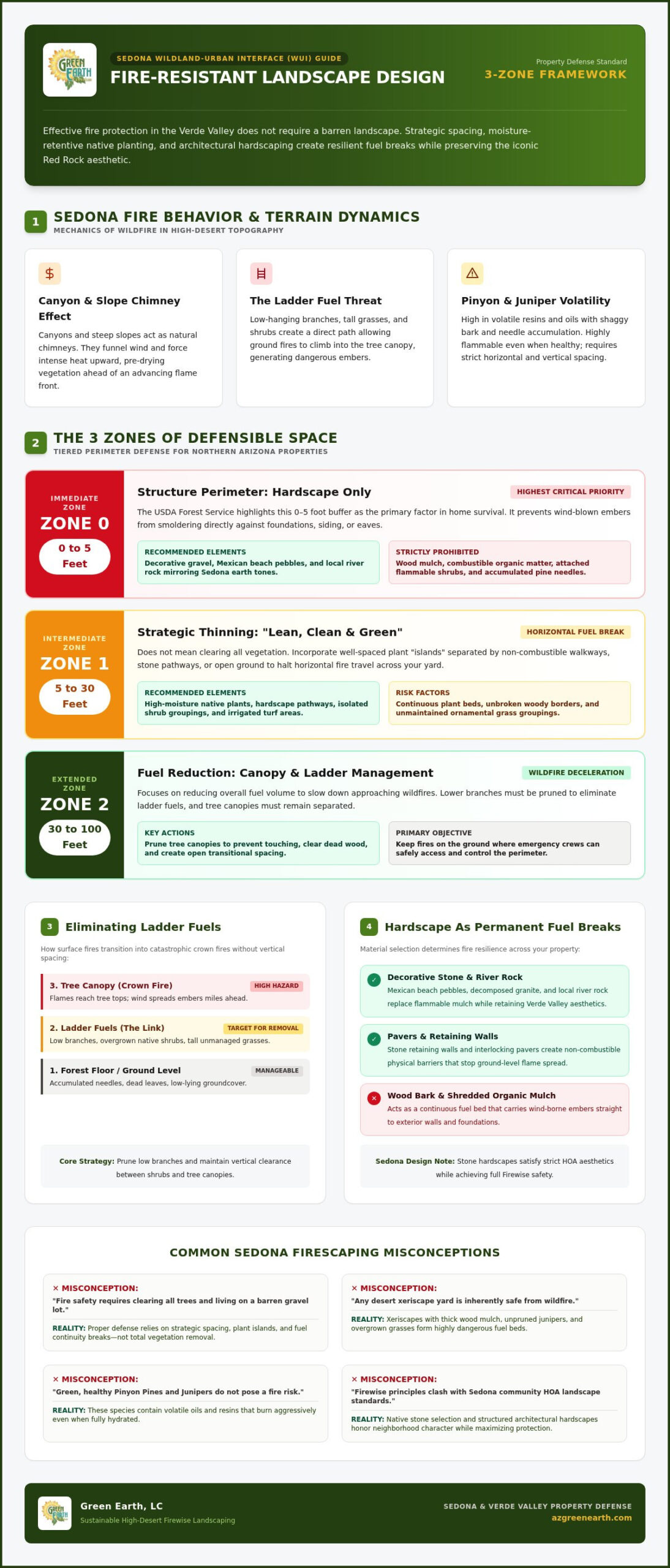
Sedona’s red rock scenery is world-renowned, but for homeowners, it comes with a specific responsibility. Most residential areas here fall within the Wildland-Urban Interface (WUI). This is the transition zone where human development meets undeveloped wildland. In the Verde Valley, this means our backyards are often directly adjacent to dense stands of Ponderosa Pine and scrub brush. Understanding the mechanics of fire in this unique terrain is the first step in implementing effective fire resistant landscaping sedona strategies.
Topography plays a decisive role in how fire moves through our community. Canyons and steep slopes act like chimneys; they funnel wind and allow heat to rise, which pre-dries vegetation ahead of a flame front. A ground fire might seem manageable until it encounters ladder fuels. These are low-hanging branches, tall grasses, or shrubs that provide a path for flames to climb from the forest floor into the tree canopy. Once a fire reaches the crown, it becomes significantly harder to control and produces the embers that threaten homes miles away.
Many residents assume that any desert-style yard is inherently fire-safe. That’s a dangerous misconception. A traditional xeriscape that uses thick layers of wood mulch, tightly packed ornamental grasses, or overgrown native shrubs can actually act as a fuel bed. True fire resistant landscaping sedona requires a shift in perspective. It’s about creating strategic breaks in fuel continuity to slow a fire’s progress and reduce its intensity near your home.
The Pinyon-Juniper Challenge
Our local landscape is dominated by Pinyon Pine and Juniper. These species are naturally high in volatile resins and oils, making them extremely flammable even when they appear healthy. Identifying high-risk vegetation involves looking for dense, shaggy bark and accumulated dead needles at the base. To mitigate risk, focus on both horizontal and vertical spacing. You want to ensure that if one plant ignites, the heat cannot easily transfer to its neighbor or the eaves of your home.
Sedona’s Fire History and Future
The Verde Valley has a long history of seasonal fires, but 2026 climate trends indicate a shift toward longer, more intense drying periods. This extended window of vulnerability means we can no longer rely on a wait and see approach. Establishing defensible space zones is the most effective way to tilt the odds in your favor. Ultimately, Firewise landscaping is a proactive, not reactive, property strategy that prioritizes long-term resilience over emergency response.
Designing the Three Zones of Defensible Space
Effective fire resistant landscaping sedona is built on a tiered defense system. By categorizing your property into specific zones, you create a buffer that reduces fire intensity and gives emergency responders a safer environment to work. This structured approach aligns with USDA Forest Service wildfire research, which emphasizes that how we manage the immediate area around a structure determines its survival chances more than almost any other factor.
Zone 0: Protecting the Home’s Perimeter
This 0 to 5-foot area is the most critical. We recommend a “hardscape only” approach here. Using decorative gravel, Mexican beach pebbles, or local river rock maintains the iconic Sedona aesthetic without providing fuel. Wood mulch is a common mistake; it’s a hidden danger that can carry fire directly to your foundation or siding. Replacing organic mulch with stone ensures that wind-blown embers don’t find a place to smolder against your home. Integrating fire resistant landscaping sedona into your property doesn’t have to result in a barren look. Careful selection of stone colors can mirror the natural red rock beauty of the Verde Valley.
Zone 1 and 2: Managing Vegetation Density
Moving further out, Zone 1 (5 to 30 feet) should be “Lean, Clean, and Green.” This doesn’t mean removing every tree. Instead, we practice strategic thinning. Aim for “islands” of plants separated by non-combustible paths or open space. This prevents a fire from moving horizontally across your yard. In Zone 2 (30 to 100 feet), the goal is to reduce the volume of fuel. Remove dead wood, prune lower branches to eliminate ladder fuels, and ensure tree canopies aren’t touching. For homeowners in other fire-prone regions like the Illawarra, Arborcare Tree Maintenance Pty Ltd provides licensed arborist services to assist with these critical maintenance tasks. This spacing is vital for slowing the spread of a fast-moving wildfire.
If you’re feeling overwhelmed by these technical requirements, our team specializes in Firewise Defensible Space solutions that meet both safety and aesthetic standards. We help you navigate local regulations while building a resilient, beautiful landscape.
Fire-Resistant Plants for Northern Arizona
Selecting the right species is the cornerstone of fire resistant landscaping sedona. In our high-desert environment, the goal isn’t to find plants that are “fireproof,” as all vegetation can burn under extreme conditions. Instead, we look for plants that are difficult to ignite and slow to burn. These species typically share three traits: high leaf moisture, low resin or oil content, and minimal accumulation of dry litter. By prioritizing these characteristics, you create a garden that acts as a heat sink rather than a fuel source.
Some plants, often called “fire bombs,” represent a significant hazard when placed near structures. Italian Cypress and certain ornamental Junipers are notorious for their high resin content and dense growth patterns. They trap dead needles inside their canopy, creating a volatile fuel load that can ignite with a single spark. Replacing these with safer alternatives is a key recommendation of the Firewise USA program, which provides the framework for community-wide safety standards.
Top Fire-Resistant Species for Sedona
Native succulents are the champions of fire resilience in the Verde Valley. Species like Agave, Yucca, and Prickly Pear store vast amounts of water in their fleshy tissues, making them natural fire breaks. They don’t produce the fine, dry fuels that carry flames. Deciduous trees like the Desert Willow or Honey Mesquite are also excellent alternatives to volatile evergreens. Because they have higher moisture content in their leaves and lack flammable resins, they’re much safer to include in Zone 1. For groundcover, consider low-growing perennials like Verbena or winecups to replace flammable ornamental grasses.
Maintaining Plant Health for Safety
A plant’s fire resistance is only as good as its health. Even the most resilient species becomes a liability if it’s stressed, dying, or filled with deadwood. Proper hydration keeps plant tissues resilient to embers. This is why a functional watering system is vital. The link between irrigation repair Flagstaff and fire resistance is direct; a failing drip system leads to dry, brittle vegetation that ignites easily. Regular maintenance should include the following:
- Checking drip emitters for clogs or leaks monthly
- Removing spent flower stalks and dead leaves from succulents
- Pruning out dead interior branches from deciduous shrubs
- Monitoring soil moisture during the peak heat of June
Integrating these plant choices into your fire resistant landscaping sedona plan ensures your property remains a lush, beautiful sanctuary without compromising on safety. It’s a balance of ecological responsibility and high-desert aesthetics.
Hardscaping: The Ultimate Aesthetic Fire Break
Hardscape elements are the unsung heroes of a defensible space plan. Unlike vegetation, stone and concrete don’t require water or seasonal maintenance to remain fire-safe. They provide a permanent, non-combustible barrier that stops fire in its tracks. In the context of fire resistant landscaping sedona, these features serve a dual purpose: they protect your home while enhancing the rugged, high-desert beauty of the Verde Valley. By replacing organic mulch with stone and wood decks with masonry patios, you significantly reduce the risk of ember ignition near your foundation.
Strategic Hardscape Placement
Designing your yard with intentional breaks is essential for slowing a wildfire’s progress. Wide stone walkways and expansive paver patios aren’t just for luxury; they interrupt the path of ground fires. By integrating hardscape construction Cottonwood AZ into your property design, you create functional “islands.” These islands prevent fire from jumping between plant clusters, ensuring that a single ignited shrub doesn’t lead to a total loss. Large boulders and red rock features add local character and act as heat sinks, further reducing the vulnerability of nearby structures by absorbing radiant energy.
Retaining Walls and Slope Management
Sedona’s dramatic topography often necessitates building on steep slopes. When you thin out vegetation to meet Firewise standards, you risk soil instability and erosion. Professional retaining wall construction Sedona provides the necessary structural support to keep your land in place during heavy rains. These walls also act as vertical fire shields, blocking radiant heat from reaching your home’s foundation or siding. They’re a disciplined, forward-thinking solution for properties with varying elevations.
Every landscape modification must account for our intense monsoon season. Clearing brush can change how water moves across your property, potentially leading to flooding. It’s vital that drainage grading Arizona is carefully planned to prevent foundation damage after fire-safety thinning is complete. When we build outdoor kitchens or fire features, we use only non-combustible materials like natural stone and specialized masonry. This ensures your entertainment areas remain safe, compliant, and beautiful for decades to come.
If you’re ready to enhance your property’s safety and beauty, our team can design a custom paver hardscape and retaining wall system tailored specifically to your Sedona home’s unique terrain.
Professional Firewise Solutions with Green Earth, LC
For nearly five decades, Green Earth, LC has served as a responsible guardian of the Verde Valley’s natural beauty. We’ve spent 47+ years refining our approach to land management in Northern Arizona, rooting our work in both professional authority and environmental stewardship. This deep local history allows us to understand the delicate balance between protecting a home and preserving the ecological integrity of the high desert. When you partner with us for fire resistant landscaping sedona, you aren’t just hiring a service provider; you’re engaging a team recognized as a statewide runner-up for Best Sustainable Landscape Designer. We believe that safety should never come at the expense of aesthetics.
Our legacy is built on reliability and excellence. We approach every project as a visionary partner, taking your concerns about wildfire risk and transforming them into a functional, beautiful reality. Our design-build services are tailored specifically to the unique challenges of the Sedona terrain, ensuring that your property is prepared for the future while remaining a welcoming, neighborly retreat. We take pride in our role as a community fixture, helping homeowners and HOAs alike navigate the complexities of fire safety with confidence.
Expert Design and Consultation
Every property has a unique risk profile dictated by its specific slope, orientation, and surrounding fuel loads. We begin our process with a thorough assessment of your land’s specific vulnerabilities. Our design-build process transforms high-risk, overgrown areas into a sophisticated desert landscape design Northern Arizona residents can truly be proud of. We manage the technical details, from navigating complex HOA requirements to meeting strict Firewise USA standards. Our commitment to eco-friendly beauty ensures that your defensible space enhances the local ecosystem rather than stripping it bare.
Taking the Next Step for Safety
Professional execution is the difference between a yard that looks safe and one that actually performs under the pressure of a wildfire. We don’t just clear brush; we strategically manage fuel continuity to ensure your defensible space remains compliant and effective year-round. Maintenance is a continuous commitment to excellence. Our team provides the steady oversight needed to keep your property resilient, from seasonal debris removal to irrigation drip system repair. We ensure that your fire resistant landscaping sedona investment stays healthy and vibrant, even during our most demanding seasons.
You deserve the peace of mind that comes from expert preparation. Scheduling a Firewise assessment is the first step toward securing your home and your community’s future. Contact Green Earth, LC today to schedule a consultation with our experienced team. Let’s work together to build a safer, more sustainable Sedona through professional design and disciplined craftsmanship.
Securing Your Sedona Sanctuary for the Future
Creating a resilient property is a continuous journey of environmental stewardship. By mastering the three zones of defensible space and selecting high-moisture native plants, you do more than just follow regulations; you actively protect the landscape you love. Integrating strategic hardscape elements like pavers and stone walls ensures your fire resistant landscaping sedona remains both a beautiful retreat and a functional fire break. These proactive choices provide the peace of mind necessary to truly enjoy life among the Red Rocks.
Green Earth, LC brings 47+ years of local expertise and specialized Firewise certification knowledge to every project. As the statewide runner-up for Best Sustainable Landscape Designer, we understand how to balance high-desert aesthetics with rigorous safety standards. Don’t leave your property’s protection to chance. We invite you to Request a Firewise Defensible Space Consultation with Green Earth, LC to begin your transformation. Together, we can build a landscape that honors Sedona’s natural beauty while standing strong against the challenges of tomorrow.
Frequently Asked Questions
What is the most fire-resistant plant for Sedona?
Native succulents like Agave and Prickly Pear are among the top choices for fire resistant landscaping sedona. These species store significant amounts of water in their fleshy tissues, which acts as a natural heat sink during a fire. While no plant is entirely fireproof, these succulents are extremely difficult to ignite compared to resinous evergreens. Desert Willow and Honey Mesquite are also excellent deciduous options that provide shade without the volatile oils found in hazardous juniper species.
Does Firewise landscaping mean I have to remove all my trees?
Firewise landscaping focuses on strategic thinning and pruning rather than total vegetation removal. The primary goal is to eliminate “ladder fuels” that allow ground fires to climb into the tree canopy. By maintaining proper horizontal and vertical spacing between plants, you can keep your mature trees while significantly reducing the risk of a crown fire. Our design process ensures your property remains lush and shaded while meeting the safety standards required for the Verde Valley.
How often should I maintain my defensible space?
We recommend a comprehensive maintenance check at least twice a year, typically in late spring before the peak fire season and again in autumn. This involves clearing accumulated pine needles from roof valleys, thinning out new growth, and ensuring your drip system is functioning correctly. Consistent upkeep is vital because even a fire-resistant garden can become hazardous if it’s allowed to accumulate dry debris or dead plant material over several months.
Are rock gardens more fire-resistant than mulch?
Rock gardens and mineral mulches are significantly safer than wood-based products near your home’s foundation. While organic mulch helps retain soil moisture, it also provides a continuous path of fuel for wind-blown embers. Replacing wood chips with local river rock or decorative gravel within the first five feet of your structure creates an essential ember-resistant zone. This simple swap is a cornerstone of fire resistant landscaping sedona that protects your home without compromising visual appeal.
Can hardscaping really stop a wildfire?
Hardscaping serves as a permanent, non-combustible fuel break that can slow or stop the spread of ground fires. Wide paver patios, stone walkways, and masonry retaining walls interrupt the path of flames, preventing them from reaching your home’s siding. While these features won’t stop a high-intensity crown fire on their own, they provide critical protection against radiant heat and surface flames, giving emergency responders a much better chance of defending your property during an event.
How much does it cost to create a fire-resistant landscape?
The investment for a fire-safe landscape depends on your property’s existing vegetation, topography, and the specific hardscape elements you choose to install. Each project is unique, especially when dealing with the steep slopes and rocky soil common in Northern Arizona. We focus on creating custom solutions that provide the highest level of protection for your specific risk level while also increasing your property’s overall value and long-term ecological sustainability.
Do HOAs in Sedona require Firewise landscaping?
Many HOAs in the Verde Valley now incorporate Firewise standards into their community guidelines to protect all residents. These regulations often specify which plant species are allowed and how much defensible space must be maintained around each structure. We frequently work with local HOAs to ensure our designs meet both aesthetic and safety requirements. It’s always best to check your specific bylaws before starting a project, as requirements can vary significantly between different neighborhoods.
Is irrigation necessary for fire-resistant plants in Arizona?
Proper irrigation is essential for keeping plant tissues hydrated and resilient to heat. Even drought-tolerant native species can become highly flammable if they’re severely water-stressed during a drought. A well-maintained drip system ensures that your plants remain “lean, clean, and green” throughout the hottest months of June and July. This hydration keeps the leaves supple and less likely to ignite when exposed to wind-driven embers during a nearby wildfire event.
Recent Comments