
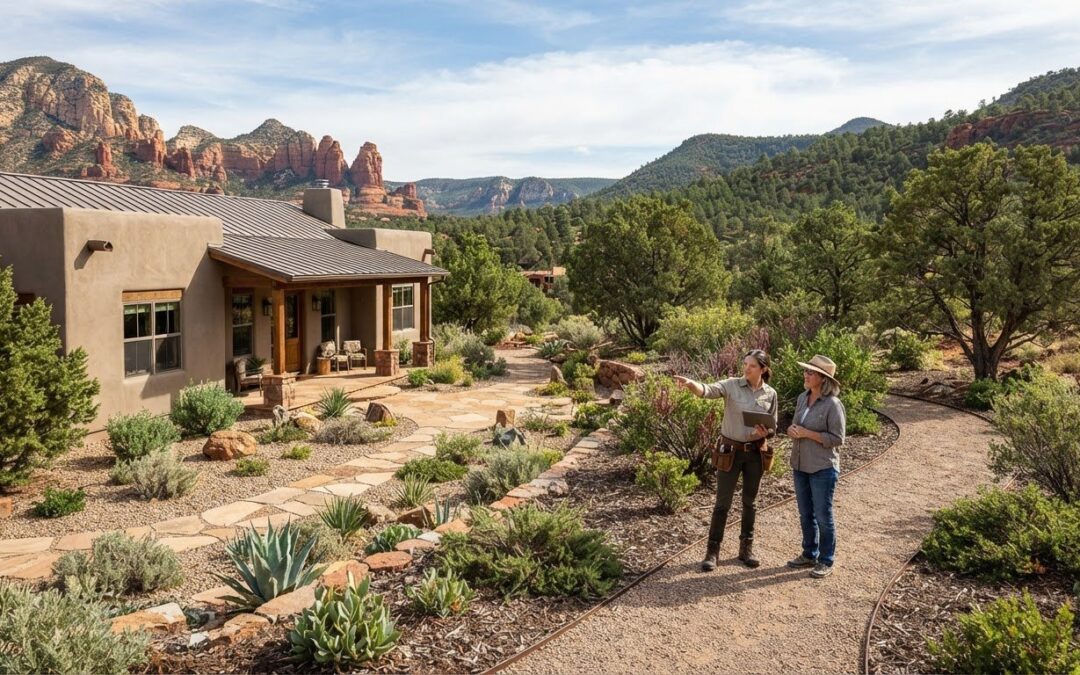
What if wildfire preparedness isn’t about clearing every plant, but making thoughtful changes where they matter most? Firewise defensible space services can help reduce a property’s exposure to wildfire, but no landscaping plan can guarantee that a home will be protected. In Northern Arizona, terrain, vegetation, structures, and ongoing care all influence what makes sense for your land.
To decide where to start, note which landscape areas concern you, how they relate to your home, and whether the work is a one-time change or something that will need ongoing care. A site-specific approach turns those observations into practical priorities, from managing vegetation near the home to planning work that can be maintained over time. The goal isn’t to strip a property of its natural character. It’s to make informed choices that support wildfire preparedness while respecting the local landscape.
This article explains what defensible space can and can’t do, what a professional landscaping project may involve, and how to move from recommendations to implementation and upkeep. With 47 years of local experience, Green Earth, LC provides Firewise Defensible Space as part of its landscape construction and maintenance work, using a custom approach shaped around each property.
Key Takeaways
- Use zone-based guidance to organize landscape priorities by proximity to your home, then tailor the plan to your property.
- Firewise defensible space services can support wildfire preparedness, but landscaping alone can’t make a property wildfire-proof.
- Build a manageable plan by identifying concerns, setting priorities, scheduling landscape work, and keeping up with maintenance.
- Use current local authority guidance to inform site-specific recommendations for your Northern Arizona property.
- Green Earth, LC brings 47 years of local experience to custom Firewise Defensible Space work alongside landscape construction and maintenance.
Why Firewise Defensible Space Matters for Northern Arizona Properties
How can landscaping contribute to wildfire preparedness without stripping a property of its natural character? Start by looking at how the home relates to nearby vegetation, structures, and surrounding land. Defensible space is the area around a home managed with wildfire exposure in mind. Thoughtful landscape work can reduce some risks, but it can’t guarantee a home will avoid wildfire damage. It’s one practical part of a broader preparedness plan.
Northern Arizona properties vary in terrain, vegetation, and how closely homes meet undeveloped land. A useful plan therefore starts with the individual site, not a one-size-fits-all checklist. General guidance can help homeowners understand common principles, while appropriate work for a particular property depends on its conditions and current local recommendations.
What does defensible space mean around a home?
Wildfire exposure can be influenced by the landscape around a home, including the arrangement and condition of vegetation and the relationship between plants and structures. Managing this area means considering the property’s layout and identifying where landscape work may be useful. It doesn’t necessarily mean removing all vegetation. The aim is to make informed choices about the surroundings as part of wildfire risk reduction.
The wildland-urban interface, or WUI, describes places where homes meet or sit among wildland areas. For an overview of the concept, see Defensible space in fire control. Broad educational principles are useful starting points, not a substitute for site-specific recommendations. Slope, existing plants, buildings, and local guidance all affect what work is appropriate.
How Firewise guidance fits a Northern Arizona landscape
Firewise is a preparedness and community-action concept that encourages people to take steps to live with wildfire risk. It is not a contractor certification. For homeowners, its value is as a framework for thinking about the property and surrounding community, then translating that thinking into practical landscape decisions.
Those decisions should reflect actual site conditions and current local guidance, rather than assume that the same treatment fits every Northern Arizona home. A well-considered plan can balance vegetation management with the character of the landscape and the work a property can sustain. Green Earth’s Firewise landscaping in Cottonwood, AZ guide offers a locally focused look at the relationship between landscaping and defensible space.
For property owners, the practical starting point is to view firewise defensible space services as part of ongoing landscape planning, not a promise of protection. Recommendations can help identify where attention is most useful; maintenance helps keep that work aligned with the property over time. The next step is to understand how zone-based guidance organizes landscape priorities around a home.
How Defensible-Space Zones Guide Landscape Work
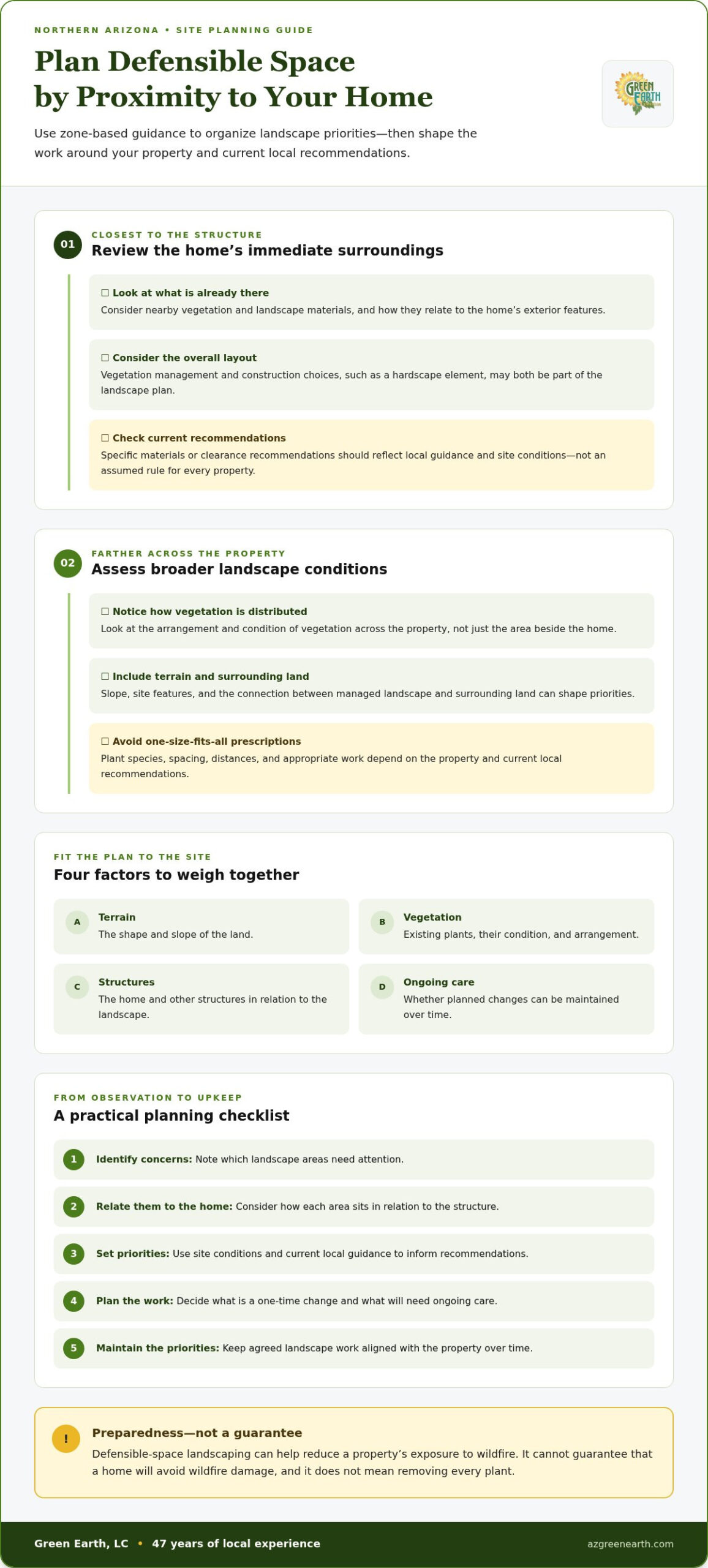
Zone-based guidance gives homeowners a practical way to organize landscape priorities around a structure. It isn’t a universal design or a substitute for current local recommendations. Instead, it helps frame useful questions: What is closest to the home? What conditions need attention farther out? Which planned changes can be maintained over time?
Defensible-space zones organize work by proximity to the home. As distance increases, the focus can shift from details immediately around the structure to the broader arrangement and condition of the property. Boundaries and appropriate work depend on the site and applicable guidance, so don’t treat a general diagram as a property-specific prescription. Ready.gov Wildfire Preparedness offers broader guidance for incorporating wildfire readiness into home and community planning.
The immediate area closest to the home
The area nearest the structure deserves careful consideration because landscape materials and vegetation are close to the home. Review what is present, how it relates to exterior features, and whether the layout aligns with current recommendations. The right choices depend on local guidance and site conditions, so don’t assume that one material or clearance rule applies everywhere. A property-specific plan can help identify appropriate landscape work without relying on guesswork.
Some projects may involve construction choices as well as vegetation management. For example, a hardscape element can be considered as part of the overall layout, with the surrounding landscape planned in relation to it. Any specific material or clearance recommendation should be based on current authoritative guidance, not applied automatically across Northern Arizona.
Intermediate and extended areas across the property
Farther from the home, broader conditions can shape priorities: how vegetation is distributed, the property’s terrain, and how managed landscape connects with surrounding land. These factors help inform a plan, but they don’t support a universal prescription for plant species, spacing, or distances. Current local recommendations remain important, especially where site features call for a tailored approach.
Landscape maintenance helps keep agreed priorities visible after the initial work is complete. A plan might identify areas that need periodic attention or landscape features that should remain part of the property’s ongoing care. Construction and maintenance serve different roles: construction implements selected changes, while maintenance supports the plan over time. This is where firewise defensible space services can connect a property’s design decisions with practical upkeep.
- Closest to the home: Review materials and vegetation in relation to current local recommendations.
- Across the property: Consider terrain and landscape conditions before setting priorities.
- Over time: Include maintenance so planned work remains part of routine landscape care.
Because each property has its own layout and conditions, zone concepts work best as an organizing tool, not a checklist to copy. Green Earth, LC brings landscape construction and maintenance together through a custom approach to Firewise Defensible Space. Explore Green Earth’s landscape services as you consider how to plan property-specific work.
What Firewise Landscaping Can, and Cannot, Do
Landscaping can be a meaningful part of wildfire preparedness, but no landscape service can make a property wildfire-proof. Defensible-space work addresses conditions around a home, not the full range of factors that shape a wildfire or its effects. Weather, fire behavior, surrounding land, building features, and emergency response conditions are beyond what landscape work can determine.
Defensible-space landscaping supports preparedness, but it can’t promise protection. A thoughtful project can put property-specific priorities into practice, such as managing selected vegetation or adjusting landscape features in line with current guidance. Those improvements don’t guarantee a particular outcome, and they shouldn’t be presented as a substitute for broader wildfire readiness.
Can landscaping eliminate wildfire risk?
No. Landscape work can address some conditions around a home, but wildfire risk involves more than the yard. Fires can change direction and intensity, and a property’s structures and surrounding environment also matter. A completed landscape project is not proof that a home will be safe. A realistic goal is to make considered changes, maintain them, and include them in a wider preparedness plan.
That distinction matters when setting project expectations. A plan should describe the work being done and the landscape priorities it addresses, rather than promise that the property will withstand a wildfire. Firewise defensible space services are one tool for preparedness, not a guarantee or a replacement for other actions homeowners and communities may take.
Firewise information, community action, and professional services
Firewise USA® is a National Fire Protection Association program that supports wildfire education and community action. It isn’t a certification for a landscaping contractor, and hiring a landscape service doesn’t make a home or neighborhood a recognized Firewise USA® community. The NFPA Firewise USA® Program provides information about the community program and its approach to wildfire preparedness.
Property-level landscape work can complement community efforts by addressing a homeowner’s site-specific priorities. Community preparedness, however, involves neighbors and wider planning beyond the boundaries of one property. Neither scale should be mistaken for a promise of protection; each contributes a different part of readiness.
Design choices can also account for the character and environmental conditions of a Northern Arizona property. A landscape plan can consider how practical priorities fit with the site’s overall design, rather than treating preparedness and appearance as unrelated goals. Green Earth’s guide to sustainable desert landscape design in Northern Arizona explores that broader design context.
Clear expectations make a project more useful: identify the work being planned, understand which property concerns it addresses, and keep maintenance in view. That way, landscaping contributes to preparedness without overstating what it can do.
How to Plan Firewise Defensible Space Work for Your Property
A clear plan turns wildfire-preparedness concerns into manageable landscape work. Start with what you can observe, then use current local authority guidance to shape priorities for your site. Firewise defensible space services are most useful when the work reflects the property’s actual layout and can be maintained after the project is complete.
Turn property observations into a focused project brief
Walk the property and note areas that concern you, existing landscape features, and places where construction or maintenance may be needed. Photos and brief notes can help organize what you’ve observed, but they aren’t a substitute for a site-specific assessment or official recommendations. Use current guidance from your local fire district or county authority to inform decisions about appropriate wildfire-preparedness work.
Next, group your observations by the kind of work involved. Some needs may call for landscape construction; others may be better addressed through ongoing care. For example, a project could include planned changes to landscape features, paired with maintenance to keep the rest of the property in view. Avoid treating a general checklist as instructions for your particular site. Appropriate recommendations depend on existing conditions and applicable local guidance.
Green Earth, LC uses a custom design approach, shaping landscape work around the property and project rather than applying a standard template. Its integrated design-build work brings planning and implementation together through a single team. This can help translate broad concerns into a coherent project scope while keeping the site’s character and practical needs in view.
Plan for upkeep after landscape work
Preparedness planning shouldn’t end when construction is finished. A landscape changes over time, and maintenance helps keep planned priorities part of routine property care. Green Earth’s landscape maintenance work includes scheduled upkeep and seasonal care, with the approach tailored to the landscape and its needs. That ongoing attention supports the plan, but it can’t guarantee a particular wildfire outcome.
Use this sequence to keep the project organized:
- Identify concerns. Record the areas and landscape conditions you want considered.
- Set priorities. Use current local authority guidance and property-specific assessment to decide what needs attention.
- Plan the work. Separate construction needs from maintenance needs and define a practical scope.
- Keep upkeep in view. Include scheduled maintenance and seasonal care in the long-term plan.
These steps create a useful starting point without asking you to make technical decisions from general advice alone. Share your observations and priorities as the project takes shape, and keep local recommendations central to site-specific choices.
For a custom approach to Firewise landscape planning and implementation, discuss your property’s landscape needs with Green Earth.
Green Earth Firewise Defensible Space Services in Northern Arizona
Turning wildfire-preparedness priorities into practical landscape work takes more than a general checklist. Green Earth, LC provides Firewise Defensible Space as part of its landscape construction and maintenance work, with projects shaped around each property. The focus is on planning and implementing appropriate landscape work, then keeping ongoing care in view. No landscape project can promise protection from wildfire, but a tailored plan can help make priorities clearer and more manageable.
Green Earth brings 47 years in business to Northern Arizona landscape projects. The company was runner-up in Green Living Magazine’s Best of AZ competition for Best Sustainable Landscape Designer. That experience informs a custom design approach, not a template applied from one property to another. Each project can reflect the site, its landscape, and the owner’s priorities.
A custom landscape approach for each project
Firewise Defensible Space work can connect landscape planning with construction and maintenance, helping move from a property’s needs to a considered scope of work. Green Earth manages integrated design-build work through a single team. This brings project planning and implementation together, while keeping the design specific to the property rather than assuming that one layout suits every home.
Environmental responsibility can also inform landscape decisions. Green Earth uses eco-friendly practices, with attention to the relationship between the planned work and the surrounding landscape. The right design still depends on the property and current local guidance; general Firewise principles aren’t a replacement for recommendations specific to a site.
Start a conversation about your Northern Arizona property
Green Earth serves homeowners and property owners in Sedona, Cottonwood, Camp Verde, Clarkdale, Village of Oak Creek, Rimrock, Prescott/Prescott Valley, and Flagstaff. Sharing the areas you’re concerned about and the landscape work you’re considering can help frame a productive discussion. A project may involve landscape construction, maintenance, or a combination shaped around the property’s needs.
For a conversation about Firewise Defensible Space, call (928) 634-4375. Business hours are Monday – Friday, 7 AM – 3:30 PM. Bring your questions and priorities to discuss what a custom landscape project could involve for your Northern Arizona property.
Discuss your Firewise defensible space project.
Make Your Next Landscape Decision Count
Wildfire preparedness doesn’t have to begin with a sweeping redesign. A useful next step is to decide what you want your landscape to support, then shape the project around your property, priorities, and capacity for ongoing care. That keeps the conversation grounded in practical choices rather than promises no landscape service can make.
With firewise defensible space services, the aim is to turn those priorities into a considered landscape project. Green Earth, LC can help you explore an approach that fits your Northern Arizona property and connects design, construction, and maintenance where appropriate. You don’t need every detail figured out before starting. Bring your questions and begin with the part of the landscape you’re ready to address.
Discuss your Firewise defensible space project and take a thoughtful next step toward a landscape plan that works for your property.
Frequently Asked Questions
Is Firewise defensible space a guarantee that my home will survive a wildfire?
No. Defensible-space landscaping is a preparedness measure, not a guarantee against wildfire damage. Fire behavior, weather, building features, and surrounding conditions can all affect what happens, including factors a landscape project can’t control. Use current local authority guidance for recommendations specific to your property. You can then discuss how landscape work may fit those priorities, while keeping other preparedness steps in view.
What is the difference between Firewise and defensible space?
Firewise refers to education and community action around living with wildfire, while defensible space describes managing the landscape around a home with wildfire exposure in mind. They’re related, but they aren’t interchangeable: landscaping work doesn’t itself provide Firewise USA® recognition or participation. If you’re interested in a community program, review current Firewise USA® information to understand its requirements and how communities take part.
Can a landscaper help create defensible space around my home?
Yes. A landscaping company can help plan and carry out relevant work, with the scope shaped by your property and applicable guidance. Green Earth, LC offers Firewise Defensible Space alongside landscape construction and maintenance in Northern Arizona. For example, a project discussion can consider whether your priorities involve a landscape change, ongoing care, or both. Treat the work as one part of preparedness, not a promise that a home is protected.
When should I start planning defensible-space landscaping in Northern Arizona?
Start when you have identified concerns, rather than waiting for wildfire conditions to become imminent. Timing depends on your property, the work involved, and current local recommendations, so there isn’t one calendar date that fits every project. A useful first step is to gather notes or photos of areas you want considered, then review local guidance before planning landscape changes. Keep maintenance needs in mind from the beginning.
Does Firewise defensible space require removing every plant near a home?
Not necessarily. Recommendations depend on the vegetation, structure, site conditions, and guidance that applies to your location. Before removing plants or changing the landscape, identify the specific concern and consult relevant local recommendations. A property-focused discussion can help you consider the landscape as a whole instead of treating a broad checklist as an instruction to clear everything. No plant or landscape choice should be treated as a guarantee against wildfire.
Can Green Earth help with Firewise defensible space in Sedona or Cottonwood?
Yes. Green Earth, LC provides Firewise Defensible Space as part of its Northern Arizona landscaping work, including in Sedona and Cottonwood. The company also serves Camp Verde, Flagstaff, and Prescott/Prescott Valley. Its landscape construction and maintenance capabilities can support a project shaped around the property. To discuss your priorities, call or text (928) 634-4375 during Monday – Friday, 7 AM – 3:30 PM.
How often does defensible space need maintenance?
There’s no single maintenance schedule for every property. The landscape, completed work, and current local recommendations all affect what upkeep makes sense. Green Earth provides scheduled landscape upkeep and seasonal maintenance, which can help keep property care on your radar after project work. As conditions or guidance change, revisit your priorities and adjust the landscape plan as appropriate, rather than relying on a fixed interval for every site.
Recent Comments