
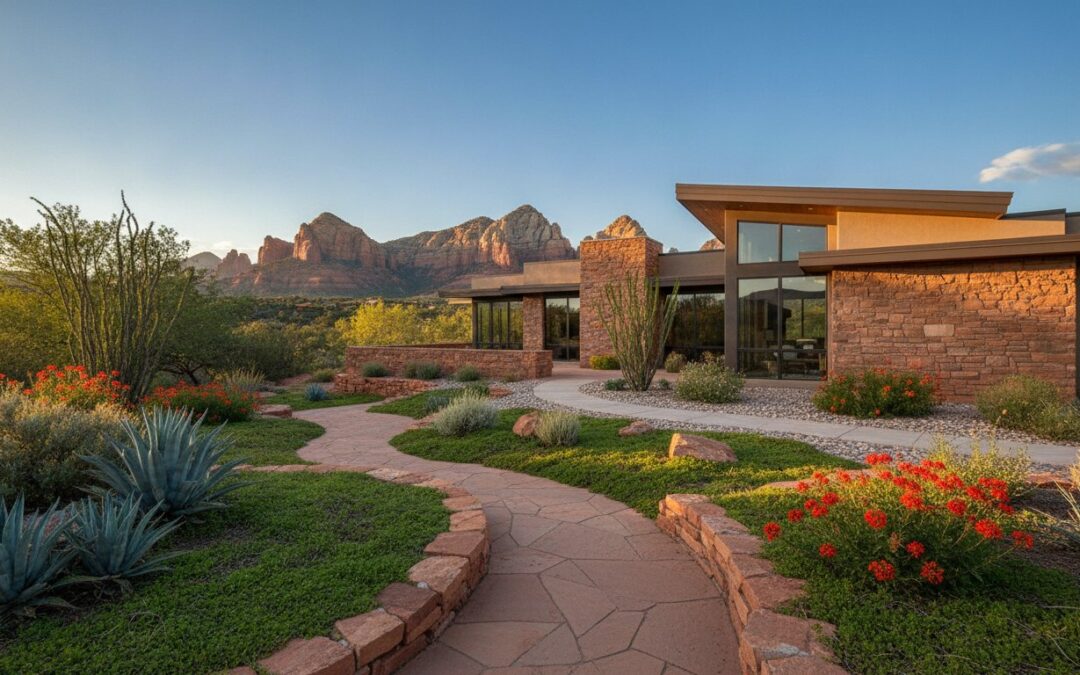
What if your first line of defense against a wildfire wasn’t a barren dirt lot, but a lush, professionally designed garden that actually enhances your property value? For many homeowners in Sedona and Cottonwood, fire season brings a heavy sense of anxiety and confusion over which plants truly belong in a high-risk zone. You shouldn’t have to choose between a beautiful yard and a safe one. Mastering firewise landscaping Verde Valley allows you to cultivate a sustainable, aesthetically pleasing environment that meets the rigorous 2026 Firewise USA standards without sacrificing your home’s curb appeal.
We understand that the threat of wildfires is a constant reality in our stunning high-desert region, especially as insurance providers increasingly require proof of defensible space before renewing policies. This guide will show you how to transform your property into a resilient sanctuary by strategically managing fuel zones and selecting the right materials. We’ll explore the critical importance of the ember-resistant Zone 0, the latest insurance mandates for Arizona homeowners, and how to join the 215 other Firewise USA recognized communities in our state while maintaining high standards of craftsmanship and environmental integrity.
Key Takeaways
- Understand why the Verde Valley’s unique climate and wind patterns require a specialized, proactive approach to wildfire protection.
- Identify the specific requirements for the three critical zones of defensible space to create a comprehensive safety shield around your home.
- Discover how professional firewise landscaping Verde Valley balances high-level safety with lush, sustainable garden design using fire-resistant plants.
- Learn how strategic hardscaping elements like stone walls and pavers serve as permanent fire breaks while simultaneously reducing water consumption.
- Find out how to align your property with the latest 2026 insurance requirements and Firewise USA® standards through expert local implementation.
Understanding Wildfire Risks in the Verde Valley
Firewise landscaping is a proactive, strategic approach to property protection that moves beyond simple yard cleanup. It’s a comprehensive method of land management designed to reduce the vulnerability of your home to wildfire by managing the vegetation and materials surrounding it. In the Verde Valley, our arid climate and unpredictable wind patterns create a “perfect storm” for fire behavior. While many homeowners fear a direct wall of flame, the most significant threat to residential structures is actually wind-borne embers. These glowing fragments can stay aloft for miles, easily bypassing fire breaks to land on vulnerable roofs or in dry vegetation next to a foundation. Creating a robust firewise landscaping Verde Valley plan starts with establishing Defensible Space, which serves as the essential buffer between your structure and the surrounding natural wildland.
The Role of Defensible Space
A properly maintained defensible space does more than just protect your walls; it changes the way fire behaves as it approaches your property. By reducing the density of vegetation and removing dead wood, you effectively slow the fire’s spread and lower its intensity. This provides a crucial window of opportunity and a safe staging area for firefighters to defend your home. The goal is to manage the transition from the untamed wildland to the residential zone with precision. Incorporating sustainable landscaping Arizona techniques allows you to keep your property green and vibrant while ensuring it remains a “low-fuel” environment. This involves thinning out dense thickets and ensuring that there is no “foundation-to-canopy” fuel continuity, which prevents fire from climbing from the ground into the treetops.
Verde Valley Specific Hazards
Living in the Verde Valley means navigating a landscape defined by dramatic topography and proximity to vast public lands. Our local terrain, characterized by deep canyons and steep slopes, naturally accelerates fire movement. Fire travels uphill much faster than it does on flat ground because the heat pre-warms the fuel above it. For homeowners bordering the Coconino or Prescott National Forests, the risk is amplified by several factors that require specialized firewise landscaping Verde Valley strategies:
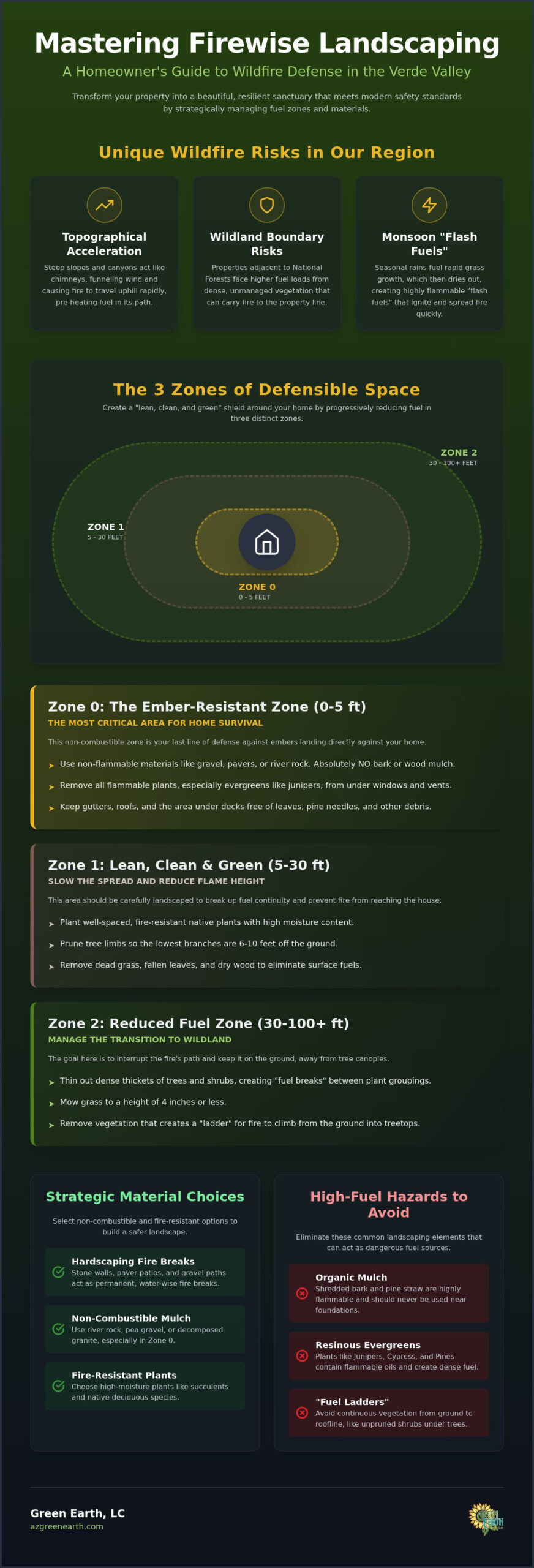
- Topographical Acceleration: Canyons act like chimneys, funneling winds and heat upward to ignite higher terrain.
- Boundary Risks: Properties adjacent to national forests deal with higher fuel loads and dense undergrowth that can carry fire to the property line.
- Monsoon Cycles: Seasonal rains trigger a burst of grass growth that quickly turns into “flash fuels” during the subsequent dry spells.
Recognizing these regional hazards is vital for anyone looking to build a resilient and beautiful home in this unique environment. By addressing these factors through professional design, you can significantly reduce your risk while maintaining the natural beauty of the high desert.
The Three Zones of Firewise Defensible Space
Effective firewise landscaping Verde Valley relies on a structured, three-zone defense strategy. This methodical approach creates a “lean, clean, and green” environment that progressively reduces available fuel as it gets closer to your home. By organizing your property into these distinct perimeters, you can significantly disrupt a fire’s path while maintaining a vibrant, healthy landscape that complements our high-desert surroundings. This isn’t about stripping the land bare; it’s about strategic placement and thoughtful maintenance.
Zone 0: The Most Critical Five Feet
The Immediate Zone is the most vital area for home survival. It encompasses the 0 to 5-foot perimeter around your home’s foundation and any attached structures like decks or fences. In the Verde Valley, it’s common to see organic wood mulch used right up against siding, but this creates a direct path for embers to ignite the house. We recommend replacing all organic materials in this zone with non-combustible alternatives such as river rock, decorative gravel, or pavers. You should also remove any flammable shrubs, particularly resinous evergreens like junipers, and replace them with low-growing, high-moisture succulents. Don’t forget the roofline. Clearing gutters and roof valleys of pine needles and dry leaves is a simple yet essential task that prevents wind-blown embers from starting a fire at the top of your structure.
Zone 1 and 2: Breaking the Fire’s Path
The intermediate and extended zones, spanning from 5 to 100 feet or more, focus on creating fuel breaks and managing vertical “ladder fuels.” In Zone 1 (5-30 feet), your goal is to create landscape “islands” separated by hardscaped paths or well-irrigated garden beds. Tree canopies should be spaced so that their crowns are at least 10 feet apart to prevent fire from jumping from tree to tree.
Managing ladder fuels is equally important for property safety. This involves pruning the lower branches of mature trees, such as Ponderosa Pines, to a height of 10 feet from the ground. This prevents a ground fire from climbing into the canopy. When selecting new additions for these zones, consult the University of Arizona’s list of Firewise Plant Materials to ensure your choices are resilient and have low ignitability. Beyond 30 feet, the focus shifts to thinning out dense brush and removing dead wood. You can also utilize professional drainage grading Arizona to incorporate natural stone barriers that double as fire breaks and erosion control. If you’re looking for a partner to help design your defensible space, our team can help you evaluate your property’s specific needs to balance safety with local aesthetics.
Fire-Resistant Plants vs. High-Fuel Hazards
Creating a resilient property through firewise landscaping Verde Valley doesn’t require you to abandon the beauty of a living garden. In fact, a well-hydrated, strategically planted landscape can act as a cooling buffer for your home. The distinction lies in understanding the ignitability of local species, which is largely determined by their moisture retention and sap composition. Pyrophytic plants are species that have evolved to thrive in fire-prone environments by producing flammable oils and resins, effectively acting as high-energy fuel that must be removed from your defensible space. By replacing these hazardous varieties with fire-resistant alternatives, you maintain ecological health without increasing your risk.
Hydration is the single most important factor in keeping fire-resistant plants from becoming fuel. Even the most resilient species can become hazardous if they’re stressed by drought or broken equipment. Utilizing professional irrigation repair Flagstaff and Northern Arizona services ensures your drip systems deliver consistent moisture to your landscape islands. When plants are turgid and healthy, they’re much harder to ignite than brittle, neglected vegetation. A healthy garden is a safer garden.
The “Verde Valley Villains”: Plants to Avoid
Certain plants are notorious for their explosive fire behavior in our high-desert climate. Junipers and Cedars are often called “gasoline on a stick” due to their high oil content and dense, dry interior branches. These should never be planted within Zone 1. Similarly, Pampas Grass and other tall ornamental grasses often harbor a core of dead material that catches embers like tinder. Pine trees also pose a significant risk; their heavy needle drop creates a flammable carpet on the ground, while their low-hanging branches act as ladder fuels that carry flames into the canopy.
Firewise Favorites for Northern Arizona
Fortunately, the Verde Valley offers a rich palette of fire-resistant options that thrive at our elevation. Succulents and Cacti are ideal choices because they store water in their fleshy tissues and have very low fuel volumes. For larger structural elements, consider deciduous trees like the Desert Willow or Honey Locust. These species lack the flammable resins of evergreens and, when given proper spacing, are much safer for residential use. Low-growing groundcovers like Verbena or Sedum are also excellent for Zone 1, as they stay moist and close to the earth, making it difficult for ground fires to gain momentum. Choosing these varieties allows you to maintain a lush aesthetic while prioritizing safety.
Using Hardscaping as a Strategic Fire Break
While vegetation management is essential, the structural elements of your property provide a permanent, non-combustible defense. Strategic hardscaping creates physical barriers that stop ground fires in their tracks, preventing them from reaching your home’s foundation. In our arid climate, integrating stone, masonry, and concrete isn’t just a safety measure; it’s a sophisticated design choice that promotes long-term sustainability. Professional hardscape construction Cottonwood AZ allows homeowners to replace high-maintenance, flammable lawns with elegant, water-conserving features. This dual-purpose approach reduces your fire risk while simultaneously lowering your monthly water bills and increasing your property’s overall market value.
As an “Authoritative Environmentalist,” we view the use of stone and masonry as a way to harmonize with the natural Verde Valley terrain. These materials don’t require the constant irrigation that traditional landscapes demand, making them a cornerstone of responsible land management. By choosing firewise landscaping Verde Valley designs that prioritize hardscaping, you’re investing in a landscape that remains beautiful and resilient through the driest summer months without becoming a liability.
Retaining Walls and Stone Paths
In the hilly regions of the Verde Valley, fire can race up slopes with alarming speed. Stone retaining walls are highly effective tools for terracing these inclines, creating vertical breaks that disrupt the upward flow of heat and flame. Beyond their defensive role, these structures add architectural interest and prevent soil erosion. You can further segment your landscape by installing wide gravel or paver paths. These walkways act as mini-firebreaks between “landscape islands,” ensuring that even if a fire starts in one area, it lacks the fuel continuity to jump to the next. Dry creek beds are another excellent addition; they provide a naturalistic aesthetic and manage seasonal runoff while serving as a wide, non-combustible buffer.
Decks and Patios: Safety Upgrades
Traditional wooden decks are often the most vulnerable part of a home during a wildfire. Embers can easily drift underneath and ignite dry debris or the structure itself. To mitigate this, screening the area under your deck with 1/8 inch metal mesh is a non-negotiable safety step. For a more permanent and fire-safe solution, consider replacing aging wood with stone patios or modern fire-resistant composites. If you enjoy outdoor cooking, it’s vital to create a dedicated “buffer zone” of non-combustible pavers around your outdoor kitchen or fire feature. This ensures that a stray spark won’t ignite nearby wildland vegetation. If you’re ready to upgrade your property’s resilience, request a hardscape design consultation to discuss a custom plan that protects and performs.
Professional Firewise Implementation with Green Earth, LC
Establishing a resilient perimeter requires more than just a weekend of brush clearing; it demands a deep understanding of local ecology and fire behavior. With over 47 years of regional experience, Green Earth, LC has become a trusted leader in firewise landscaping Verde Valley. We don’t believe that safety should come at the expense of beauty. Our team specializes in blending the rigorous Firewise USA® standards with award-winning sustainable design to create landscapes that are as visually stunning as they are defensible. Whether we’re managing a private estate or providing professional HOA landscape maintenance, our commitment remains the same: protecting your property while acting as responsible guardians of the Northern Arizona ecosystem.
Recurring maintenance is the backbone of long-term fire safety. Vegetation grows, seasons change, and fuel loads can shift quickly in the high desert. For our commercial and HOA partners, we provide consistent oversight to ensure that defensible zones remain compliant and effective year after year. This methodical approach to land management prevents the accumulation of “flash fuels” and keeps your community’s insurance risk as low as possible. We take pride in our history as a community fixture, ensuring that every property we touch is better prepared for the challenges of fire season.
Our Firewise Assessment Process
Every project begins with a comprehensive evaluation of your property’s specific vulnerabilities. We analyze the terrain, assess the health of existing vegetation, and identify potential ignition points near your structures. This process isn’t just about identifying what to remove; it’s about developing a phased plan that balances your safety needs with your aesthetic goals and budget. We often coordinate directly with local fire districts to ensure every modification meets current compliance standards, giving you total peace of mind during the dry summer months. By evaluating the structure’s vulnerability alongside the surrounding flora, we create a unified defense plan.
Why Local Expertise Matters
The Verde Valley isn’t a monolith. The micro-climate of a red-rock property in Sedona differs significantly from the river-fed terrain of Camp Verde or the wind-swept slopes of Cottonwood. Our deep roots in the community allow us to select plant species and hardscape materials that are perfectly suited for your specific elevation and soil type. We leverage a robust network of local professionals to execute every design with precision and high standards of craftsmanship. Our dedication to this craft has earned us statewide recognition as the runner-up for Best Sustainable Landscape Designer. When you choose to invest in firewise landscaping Cottonwood AZ or elsewhere in the valley, you’re choosing a partner who cares deeply about the long-term health and safety of your land.
Build a Resilient Legacy for Your Property
Protecting your home from wildfire is a structured process that begins with the critical five-foot ember-resistant zone and extends to the thoughtful management of local vegetation. By integrating strategic hardscaping elements like stone retaining walls and choosing fire-resistant plants, you transform your yard into a functional barrier that doesn’t sacrifice aesthetic appeal. Implementing professional firewise landscaping Verde Valley standards ensures your property is prepared for the unique pressures of the Arizona dry season while meeting the latest insurance requirements.
Green Earth, LC brings 47+ years of Verde Valley expertise to every project, providing a visionary approach that balances fire science with award-winning sustainable designs. We offer full-service design, construction, and maintenance to ensure your defensible space remains effective and beautiful throughout the year. Don’t wait for the next red flag warning to address your property’s vulnerabilities. Our team is ready to help you navigate these safety standards with precision and care.
Protect your home today-Schedule a Firewise Assessment with Green Earth, LC. Taking these proactive steps now provides lasting peace of mind for you and your community.
Frequently Asked Questions
What is the most important zone in Firewise landscaping?
The Immediate Zone, also known as Zone 0, is the most critical area for protecting your structure from wildfire. This five-foot perimeter around your foundation and any attached decks prevents wind-borne embers from igniting organic materials directly against your home. Replacing wood mulch with river rock and removing flammable shrubs in this area is the single most effective step you can take for home survival.
Do I have to remove all the trees on my property to be Firewise?
You don’t need to clear-cut your property to achieve a fire-safe environment. Firewise standards focus on strategic spacing and the removal of ladder fuels rather than total vegetation removal. By keeping tree crowns at least 10 feet apart and pruning lower branches to a height of 10 feet, you can maintain a beautiful canopy that doesn’t allow fire to climb or spread easily.
Can Firewise landscaping actually improve my curb appeal?
Strategic firewise landscaping Verde Valley often results in a more polished and intentional aesthetic that enhances your home’s exterior. High-quality hardscaping, such as pavers and stone retaining walls, adds structural beauty while significantly reducing your weekly maintenance and water needs. When you replace overgrown, high-fuel brush with vibrant succulents and well-spaced deciduous trees, you create a clean, professional look that increases property value.
How often should I maintain my defensible space in the Verde Valley?
Maintenance should be performed at least twice annually to ensure your defenses remain effective against seasonal threats. The most critical times for intervention are in early spring before the dry summer heat and again after the monsoon season has triggered a burst of grass growth. Regular thinning of “flash fuels” and clearing of debris from roof valleys ensures that your defensible space doesn’t become a liability over time.
Is mulch safe to use in a fire-prone area like Sedona?
Organic wood mulch is only safe when it’s used at least five feet away from any structure or flammable siding. Within the Immediate Zone, you should exclusively use non-combustible materials like decorative gravel, pavers, or river rock to prevent ground fires from reaching your walls. In outer zones, mulch can be used sparingly to retain soil moisture, provided it’s segmented by non-flammable pathways.
What are the best fire-resistant plants for Northern Arizona?
The most resilient options for our region include high-moisture succulents and deciduous species that lack flammable resins. Desert Willow, Honey Locust, and various types of Agave or Yucca are excellent choices for the Verde Valley’s specific elevation and soil. These plants offer beautiful textures and seasonal colors while remaining much harder to ignite than oily, resinous evergreens like junipers or cedars.
How much does professional Firewise landscaping cost?
The investment for professional mitigation depends entirely on the unique characteristics of your land, including slope, total acreage, and the current density of vegetation. Every property in Sedona and Cottonwood presents different topographical challenges that require a customized implementation plan. Scheduling a professional assessment is the best way to determine the specific scope of work and materials needed to protect your home effectively.
Will Firewise landscaping help with my homeowners insurance?
Effective firewise landscaping Verde Valley is increasingly becoming a requirement for homeowner policy renewals across Arizona. As of 2026, many major insurance providers utilize defensible space inspections to determine a property’s risk level. Proactively managing your fuel zones helps you maintain your coverage and aligns your property with the safety standards recognized by over 215 Firewise USA communities in the state.
Recent Comments