
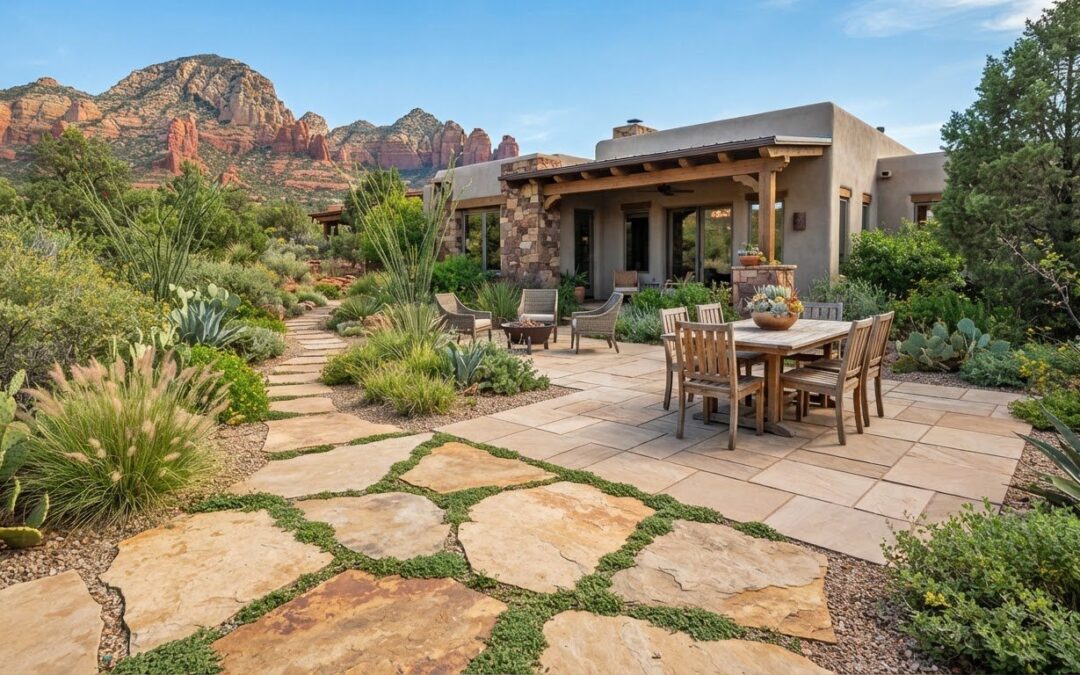
Flagstone doesn’t have to mean one look or one installation method. For flagstone patio installation in Cottonwood, options include irregular stones for a casual pattern or select-cut pieces for a more ordered appearance; the stone can be dry-laid on a sand-and-gravel base at least 3 inches deep or mortared to an existing concrete slab. Permeable joints can also leave room for grass or ground cover between stones.
Choosing flagstone patio installation in Cottonwood starts with the look you want, the site’s condition, and how you plan to use the space. This guide compares flagstone styles, dry-laid construction, and permeable joints, then explains what shapes a project estimate and how scheduling follows the construction sequence. You’ll know which details to consider when planning a patio for your home and outdoor space.
Key Takeaways
- Compare the patio’s intended look and use with the stone’s shape and layout before settling on a design.
- Plan for the base, drainage, site preparation, and stone selection to shape the estimate, rather than focusing on the surface alone.
- Learn how permeable joints and planting between stones affect the patio’s appearance and ongoing care.
- Understand what to include in a project plan so installation scheduling can account for preparation and construction work.
- See how individual stone replacement and straightforward upkeep can help keep a flagstone patio in good condition.
Flagstone durability and maintenance
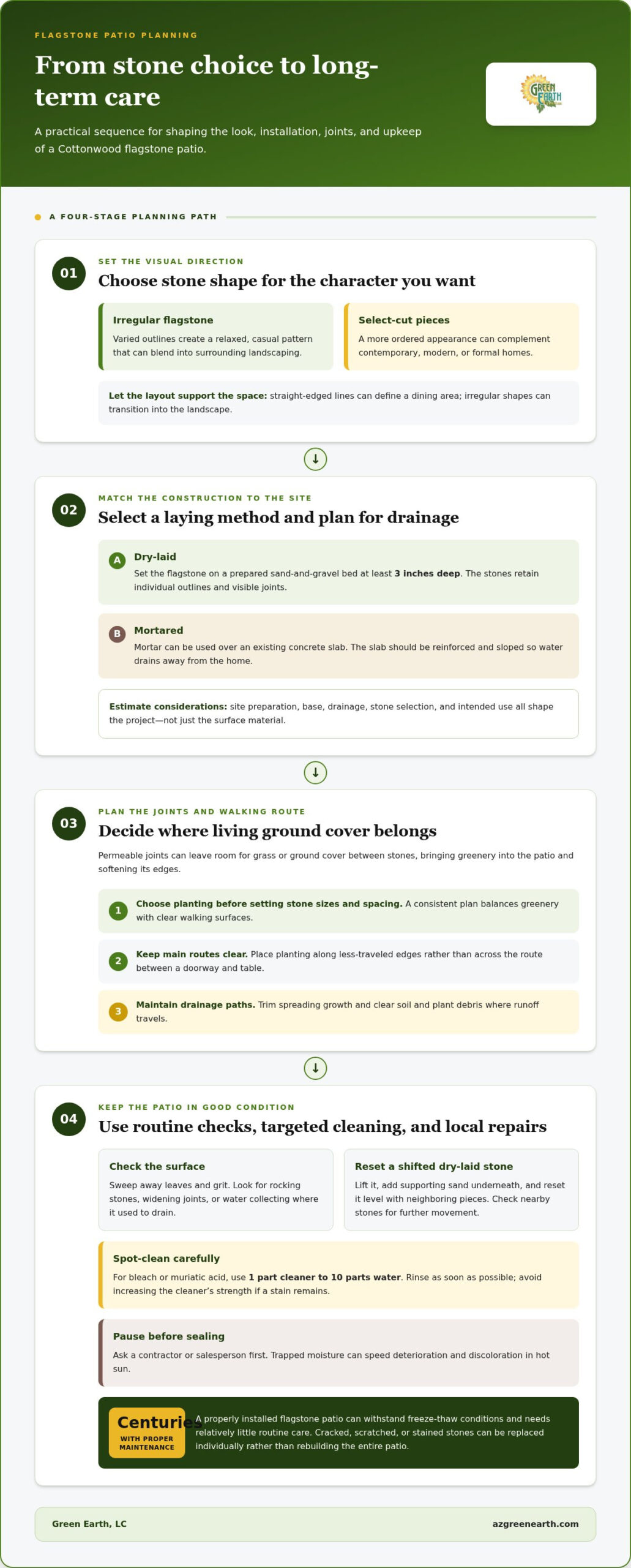
A properly installed flagstone patio can withstand freeze-thaw conditions and needs relatively little routine care. With proper maintenance, flagstone can last for centuries. Longevity depends on a stable installation and attention to shifting, debris, and cleaning. For example, clear leaves before they hold moisture or soil against the stone. Regularly check the surface to distinguish ordinary dirt from a stone that has moved or become stained.
Check the surface during routine outdoor upkeep. Look for stones that rock underfoot, widening joints, or water collecting where it previously drained. These signs may indicate movement beneath the stone rather than damage to the stone itself. With a dry-laid installation, lift a shifted piece, add supporting sand underneath, and reset it so it sits evenly beside neighboring stones. Then inspect the surrounding area for further movement.
- Remove loose debris: Sweep leaves and grit away so they don’t accumulate in joints or scratch the surface underfoot.
- Spot-clean carefully: For bleach or muriatic acid, use one part cleaner to 10 parts water. Rinse the chemical off as soon as possible.
- Pause before sealing: Consult a contractor or salesperson before sealing, since trapped moisture can speed deterioration and discoloration in hot sun.
Use cleaning products for specific stains rather than applying them across the whole patio. Rinse promptly after spot-cleaning, especially if the cleaner contains acid or another chemical. If a stain remains, don’t keep increasing the cleaner’s strength. Concentrated products or prolonged contact can affect the stone. Targeted cleaning makes routine maintenance straightforward and reduces the risk of surface damage.
Make a deliberate decision about sealing. Hot sun and trapped moisture can contribute to deterioration and discoloration, so don’t assume sealant automatically protects the stone. Get guidance before applying it. For routine upkeep, sweep, check for movement, and treat specific stains with an appropriate cleaner, rinsing promptly. A shifted dry-laid stone can often be repaired locally: lift it, add supporting sand, and reset it level with adjacent pieces.
These checks help preserve the patio’s appearance and usability without turning maintenance into a major project. Pay extra attention to stones near frequently used seating, where furniture movement and foot traffic can reveal rocking or unevenness. Correcting a shifted stone’s support helps restore a steadier surface. For ongoing care, start with gentle cleaning, reserve chemicals for spot treatment, and rinse them away promptly. This routine helps maintain flagstone’s long service life and natural character.
Permeable joints and ground cover between stones
Grade the patio so water flows away from the home instead of collecting beneath the stones. A mortared installation should sit on a reinforced concrete base sloped for drainage.
Flagstone joints can be permeable, with grass or ground cover growing between the stones. This brings landscaping into the patio design and softens the stone’s edges with living color. Decide whether you want planted joints or open gaps before choosing stone sizes and spacing. A consistent plan helps balance planting with clear walking surfaces.
Stone shape also sets the character of the space. Irregular flagstone suits casual-style homes, where varied outlines create a relaxed pattern. Select-cut pieces can complement contemporary, modern, or formal homes. Their alignment and pattern can echo the home’s geometry, giving the patio a more ordered appearance. For example, a straight-edged layout can define a dining area, while irregular shapes can blend into surrounding landscaping.
Ground cover changes the look of joints and the care they need. Plants can soften the transition between stones, but growth may spread across the walking surface. Trim it back if it obscures stone edges or joints that need inspection. Keep soil and plant debris clear of drainage paths, especially where runoff travels toward an outdoor seating area. A planned border can distinguish planted joints from nearby garden beds.
Flagstone is naturally heat-resistant and can feel cooler underfoot, which can be welcome on a sunny patio used for seating or walking barefoot. Stone is still a hard surface, so choose ground cover to suit each area’s use. Keep planting out of the main route between a doorway and table, for example, and use it along less-traveled edges. This creates a clear path while retaining the softer look of green joints.
Damage doesn’t always mean rebuilding the entire patio. A cracked, scratched, or stained flagstone can be replaced individually. In a mortared layout, carefully remove the affected stone and surrounding mortar, then set a matching replacement and renew the joints. Match its thickness and surface as closely as possible to neighboring stones to preserve an even walking surface and cohesive pattern.
- For planted joints: Keep growth trimmed and clear debris from drainage paths.
- For a formal look: Align select-cut stones to complement the home.
- For localized damage: Replace the affected stone without redoing the whole patio.
Where patio planting meets irrigation, a coordinated landscape plan can help keep the hardscape and surrounding greenery working together.
Dry-laying flagstone on a sand and gravel bed
A dry-laid patio places flagstone over a prepared bed of sand and gravel rather than bonding each piece with mortar. The base should be at least 3 inches deep. This method suits a design where stones retain individual outlines and joints remain visible. Its success depends on preparing an even foundation and fitting stones carefully, not simply placing flagstone over existing soil.
Start by laying out the patio’s shape and checking how it meets doors, paths, and nearby landscaping. Mark the perimeter, then excavate enough space for the base and stone surface to finish at the intended height. Account for thresholds and adjoining ground to avoid an awkward step. Plan drainage so runoff flows away from the home, not toward its foundation.
Prepare the ground before adding bedding materials. Remove loose organic matter and establish a firm, even area for the sand-and-gravel bed. Keep the prepared base at least 3 inches deep across the patio, including edges and corners. A low spot beneath one flagstone can leave that piece unstable, while an uneven base can create abrupt changes between neighboring stones.
Dry-fit the flagstones before final placement. Arrange them across the patio, turning and shifting pieces to create a balanced pattern. For example, use broad stones in a seating area and smaller pieces along an edge. Keep walking routes comfortable and avoid narrow gaps that interrupt a natural flow. Once the layout works, set each piece into the bed and adjust its support until it rests firmly.
Check the surface as you work. Walk across each section and look for rocking stones, raised edges, and abrupt transitions. Correct a loose piece by lifting it, adjusting the bedding, and resetting it. Dry-laid work allows hands-on adjustments, but careful placement matters: the patio should feel steady underfoot and remain even at entrances and along its perimeter.
Stone selection also affects how efficiently the layout comes together. Irregular pieces create a natural pattern, while select-cut shapes can produce more regular lines. Set aside stones that fit edges or transitions instead of forcing them into the middle. For a patio or walkway, plan to order at least 25% more stone than the project requires. Extra material gives the layout room for trimming and selection.
A dry-laid base can be repaired locally when a stone moves, but routine observation still matters. After installation, check the surface following heavy use or noticeable settling. Address a rocking stone before it becomes a trip point, and keep joints clear of debris that hides their condition. The sand-and-gravel bed, minimum depth, and deliberate fitting together form the foundation of a stable flagstone patio.
Estimates and project scheduling
A useful flagstone estimate connects the patio design to the work needed beneath it. Start with the planned footprint, stone pattern, and how the patio meets the home, paths, or garden. A simple rectangle has different layout needs from a curved seating area with several borders. Those choices affect material quantities, cuts, site preparation, and the work sequence.
Project pricing depends on the site and scope, and is provided after a quote request. Key factors include patio size, stone selection, access, excavation, base preparation, drainage grading, and joint treatment. A sloped site, for example, may need more grading than a level area. A layout around existing features may also require more careful fitting than an open, straight-edged design.
Review the estimate for a clear scope, not just a description of the finished surface. It should explain the preparation and installation work included. Look for details such as removing existing material, preparing the base, setting stone, finishing joints, and managing drainage. If the patio connects to an existing walkway, make sure the transition is included in the plan. A written scope shows how the proposed work relates to the site.
- Define the footprint: Mark the patio edges and note doors, steps, and nearby garden beds.
- Choose the surface: Decide between irregular stone, select-cut stone, and the intended joint style.
- Identify site conditions: Note slopes, existing paving, access routes, and drainage concerns.
- Clarify the work sequence: Confirm how preparation, base work, stone setting, and finishing fit together.
Scheduling follows the construction sequence, from site preparation to base construction, stone placement, and joint finishing. Each stage depends on the previous one: setting flagstone before the base is ready can compromise the layout. Settle design decisions before work begins, especially stone shape, patio boundaries, and connections to nearby hardscape.
Planning access can make the work sequence more practical. Clear a route for materials and equipment, and move outdoor furniture away from the work area. If the patio is beside a gate or narrow side yard, include that constraint in the plan. Identify features to leave undisturbed, such as established planting beds or an existing path, so the layout can account for them.
Before approving the project plan, review the scope, site constraints, and work sequence together. A clear plan shows what happens first and which decisions need to be made beforehand. For a Cottonwood patio, matching the estimate to actual site conditions is more useful than relying on a generic scope or assumed calendar.
Flagstone patio installations in Cottonwood and nearby areas
For Cottonwood homeowners, the best patio plan considers the house, site, and intended use together. Across the Verde Valley, the same practical comparison of materials, drainage, and layout helps guide a well-planned project.
Nearby Installation Areas
In Cottonwood and the surrounding Verde Valley, start by observing how the patio connects to the property. Note the slope, existing paths, doors, garden beds, and gathering spots. A patio beside a dining area may need a clear route for chairs and foot traffic. A smaller sitting space could follow a garden edge or frame an existing view.
Choose stone colors and shapes that complement the home and surrounding landscape. In daylight, compare exterior finishes, nearby soil, and established plants with the stone you’re considering. For a project in Cornville or another nearby community, site access and ground conditions also shape the installation plan. Include these details when defining the patio’s footprint and intended use.
Patio Material Comparisons
Flagstone’s natural variation in shape, surface, and color makes each layout distinct. Pavers use separate manufactured pieces to create a more regular, modular pattern. Poured concrete creates a continuous surface, while stamped concrete adds a pattern to it. Compare each material’s visual effect and consider how its joints and edges will fit the planned space.
Consider the patio’s purpose, too. Irregular flagstone can suit a relaxed garden setting; select-cut stone can create a more aligned appearance. Pavers may work well when a repeated unit pattern is central to the design. Concrete and stamped concrete offer different looks through the continuous surface and its finish. For each option, consider connections to steps, paths, and planting beds, as well as how water will drain away from the home.
Permits and Local Codes
For a Cottonwood patio, don’t assume permit or code requirements based only on choosing flagstone, pavers, or concrete. The project scope and site conditions are the starting points for determining which local requirements apply. Include that review in planning before construction begins rather than treating it as a material-selection decision.
Describe the full scope clearly: surface installation, grading changes, drainage work, and any associated structures. Assess a patio that includes more than paving as a complete project. Keep the site plan aligned with the project description so the proposed work can be reviewed as intended. This gives Cottonwood homeowners a practical way to address local requirements without drawing conclusions from another property’s project.
For a material comparison tailored to your layout, explore patio and hardscape options.
Green Earth, LC: HOA Landscape Maintenance
Green Earth, LC helps communities and commercial properties maintain the broader landscape around outdoor spaces. HOA Landscape Maintenance and Commercial Landscape Maintenance support ongoing care of shared grounds, while Firewise Defensible Space addresses vegetation management around properties. Where irrigation issues affect planting near a patio, Irrigation Drip System Repair and Irrigation Controller Troubleshooting can help address system problems.
Consider these services when your patio is part of a larger property plan, such as improving shared outdoor areas or coordinating landscape upkeep. The right next step depends on the property’s needs, whether that means maintaining an HOA landscape or addressing an irrigation issue near the patio.
Contact Green Earth, LC to discuss your landscape needs.
Plan the Outdoor Space You’ll Enjoy Next
Use your patio plan to shape the outdoor space around it. Think about how people will move between the patio, garden, and other gathering areas, then decide which parts of the property should feel connected. For flagstone patio installation in Cottonwood, a clear vision of how the finished space fits daily life can guide your design decisions.
Green Earth, LC also supports the wider landscape through HOA Landscape Maintenance, Commercial Landscape Maintenance, and Firewise Defensible Space. These services can suit a shared property, commercial setting, or broader landscape plan. Consider how the surrounding grounds will complement your patio as the project takes shape.
Contact Green Earth, LC to discuss your outdoor project and its place in the landscape. A thoughtful plan can turn an open area into a welcoming part of your home or property.
Frequently Asked Questions
What flagstone options are available near Cottonwood?
Flagstone options include irregular pieces for a relaxed, natural pattern and select-cut stone for a more ordered layout. Compare the stone’s color, shape, and surface with your home’s exterior and nearby landscaping. A patio beside a formal entry, for example, may suit aligned pieces, while a garden seating area can use varied shapes. Joint treatments also affect the finished look, from open permeable gaps to planted spaces between stones.
How much does flagstone patio installation cost in Cottonwood, Arizona?
Project pricing depends on the design, site conditions, and construction requirements, and is provided after a quote request. The estimate can account for patio size, stone selection, access, existing surfaces, grading, drainage, and base preparation. A layout with curved edges or difficult access involves different work from a simple open area. The project scope connects the estimate to the work planned.
What is the average cost per square foot for flagstone patio materials and labor in Cottonwood?
A per-square-foot average won’t describe every Cottonwood patio accurately because materials and site work vary. Stone quantity, pattern, cuts, excavation, base preparation, drainage, and access all influence the estimate. A compact patio with straightforward access differs from one requiring extensive site preparation or detailed fitting around existing features. Review the defined area and scope to understand how materials and labor contribute to the quote.
Which flagstone types are best for patios in Cottonwood’s climate?
Choose flagstone based on the patio’s exposure, intended use, and desired appearance, not color alone. Flagstone is described as durable in freeze-thaw conditions, naturally heat-resistant, and cooler underfoot. For a sunny seating area, consider how the stone feels during outdoor use; near a garden, consider how its color complements plants and soil. Viewing a sample beside the home can help you assess the overall effect.
How do contractors prepare the base for a flagstone patio in Cottonwood?
Base preparation starts by defining the patio footprint, intended finish height, and drainage direction. For dry-laid stone, the sand-and-gravel base should be at least 3 inches deep. A mortared installation should use a reinforced concrete base sloped for drainage. Door thresholds, adjoining paths, and nearby planting areas also matter because they affect finished height and how the patio connects with the rest of the property.
What are the steps to install a flagstone patio with mortar versus a sand or gravel base?
For a dry-laid patio, prepare the area, build the sand-and-gravel base, arrange the stones, and adjust each piece for stable support. For a mortared installation, prepare a reinforced concrete base with a drainage slope, set the stones with mortar, and finish the joints. Mortar bonds the surface; dry laying allows individual stones to be lifted and reset. The site and desired finish help determine the method.
How long does flagstone patio installation take in Cottonwood?
Installation time depends on the project footprint, site preparation, access, stone layout, and installation method. Work generally progresses from site and base preparation to fitting stones and finishing joints. A patio requiring grading or careful cuts around existing features involves a different sequence from an unobstructed layout. Finalizing the design and clearing access for materials beforehand helps the work proceed in order.
How can homeowners find and compare flagstone patio contractors in Cottonwood, Arizona?
Start with a clearly defined project: note the patio’s intended use, approximate outline, preferred stone appearance, and connection to existing paths. Green Earth, LC offers Pavers Hardscape and custom landscape design and installation. Share the site conditions and desired layout to help define a scope that suits the property. For an HOA or commercial property, distinguish the patio construction request from ongoing landscape maintenance needs.
Recent Comments