
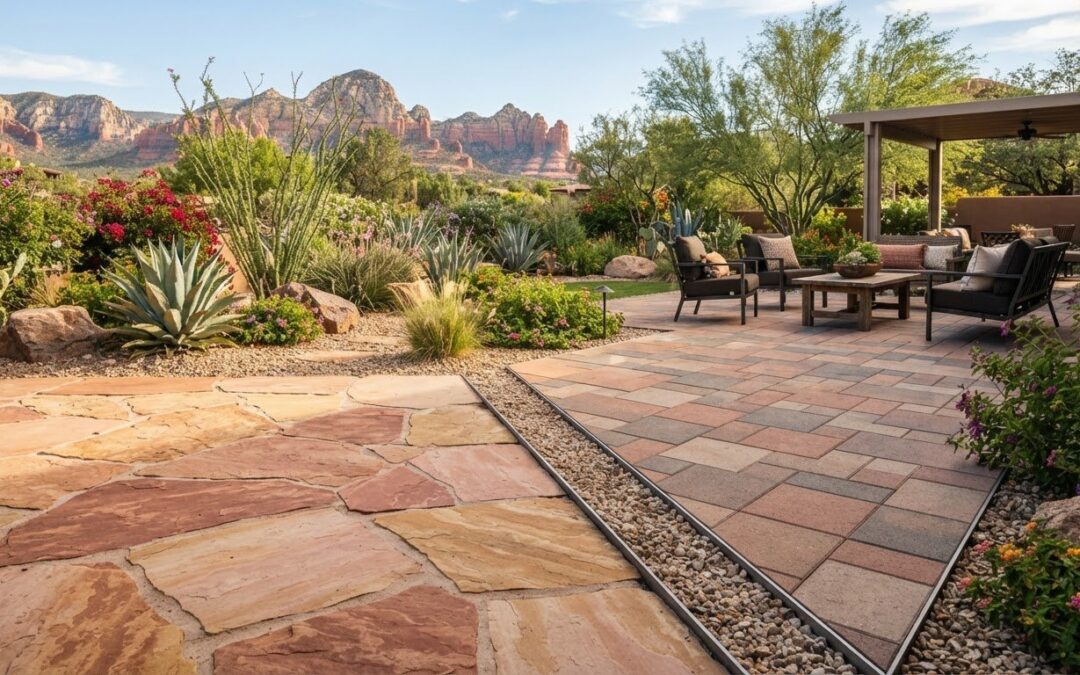
The patio with the lower upfront cost may not deliver better long-term value. A flagstone vs pavers cost comparison often favors pavers on initial cost, while natural flagstone offers distinctive character; both surfaces can last 30+ years when installed correctly and maintained over time. Material price is only one part of the decision.
It’s reasonable to weigh appearance against budget, but the base, drainage, climate, and upkeep also affect patio performance. This flagstone vs pavers cost comparison looks at installation costs, durability, maintenance, and climate suitability, then offers a practical way to weigh those factors together. Consider long-term value alongside the look and function you want.
Key Takeaways
- Compare long-term upkeep as well as installation cost: paver joints may need fresh sand, while flagstone sealant can be affected by moisture.
- Prioritize a stable, well-drained base. Climate, soil, and site conditions influence which patio material is the better fit.
- Use patio size and layout to frame your options, then compare the same surface area and construction details for a fair assessment.
- Choose pavers for a surface that can be lifted and relaid, or flagstone for natural stone character; weigh those practical differences against the look you want.
Maintenance & Durability: How Do Paver and Flagstone Patios Hold Up Over Time?
Natural flagstone often costs more to install than most paver options, while concrete pavers generally offer a lower-cost route. Brick and natural-stone paver costs vary with material, layout, base preparation, and labor. Estimates from southeastern Pennsylvania are regional, and Pennsylvania flagstone costs also vary with stone selection and installation method. Don’t treat those figures as a local quote for Sedona, Camp Verde, Cottonwood, Flagstaff, or Prescott.
For an example 500-square-foot large-flagstone patio, the walking surface takes an average of 5 days to install. Professional paver installation typically takes 1-2 weeks. Shaping irregular stones adds labor compared with laying uniform concrete pavers. Dry-laid flagstone uses a gravel bed; mortared flagstone uses mortar over a concrete substrate and requires a different installation process. A project quote reflects patio area, material, base preparation, drainage, edging, and labor.
Both surfaces can last 30+ years when installed correctly and maintained over time. Pavers sit on compacted crushed stone, so individual units can be lifted and relaid if repairs are needed. Their joints may need fresh sand; polymeric sand helps limit weeds but doesn’t eliminate them. Flagstone is porous, and moisture from below can affect sealant appearance. Sealed concrete pavers may need resealing every 2-3 years.
| Option | Installed cost position | Installation and upkeep |
|---|---|---|
| Concrete pavers | Often lower than flagstone | Uniform units; joints may need sand |
| Natural flagstone | Often higher than most pavers | Stone shaping; gravel-bed or mortar installation |
| Bluestone | Depends on material and installation | Natural stone; base and drainage matter |
Permit and building rules vary by jurisdiction. Patio size, grading, drainage, and retaining walls can affect requirements, so account for them before construction begins. Compare the same patio area, base, drainage, edging, and joint system, then weigh repairs and upkeep against the initial cost.
Patio material selection by climate and budget
Climate, site preparation, and finish all shape a patio’s total investment. Compare material options with the base and drainage needs of your property in Northern Arizona.
Flagstone and Paver Costs by Patio Size
For a 200-square-foot patio, flagstone usually costs more than many paver options, particularly when installation involves mortar. A concrete paver patio can be a more budget-conscious choice, while stone type, layout, and site preparation influence the final comparison. For larger patios, material quantities increase with area, but an irregular layout can also require extra cutting and careful fitting.
Local Factors Affecting Patio Costs
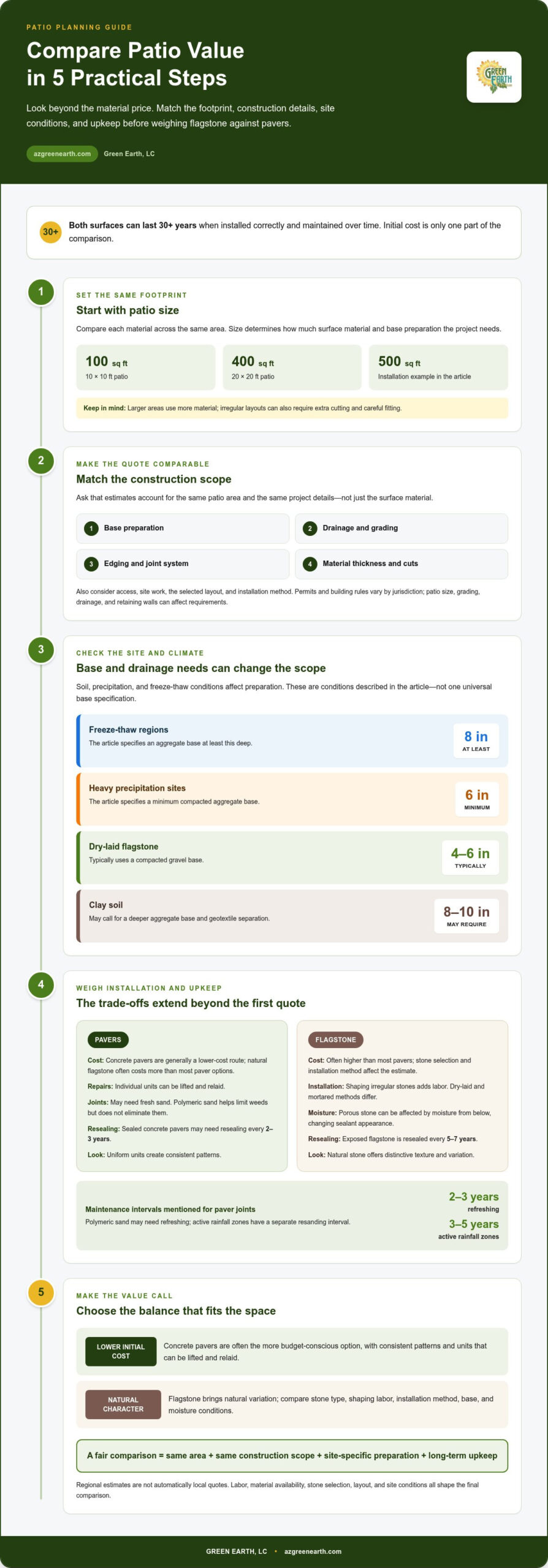
Local labor rates affect installation totals, and nearby material availability can shape delivery needs and selection. Climate influences preparation: freeze-thaw regions require an aggregate base at least 8 inches deep, while heavy precipitation sites may need a minimum 6-inch compacted aggregate base. Compare estimates for the same area, drainage, edging, base, and material thickness to understand how site conditions affect each option.
Concrete patios can be among the least expensive surfaces, but shifting ground may cause cracks, and patches can remain visible against aged concrete. Gravel is often the most affordable patio material, though it needs periodic top dressing, and weeds may become more common over time. Factor these upkeep needs into your budget for outdoor space.
Appearance matters, too. Uniform concrete pavers create consistent patterns, while irregular flagstone offers natural variation. Stone thickness, cuts, joint spacing, and patio shape affect material use and labor. Choose a finish that complements your home and supports site drainage, rather than judging materials by appearance alone.
For a tailored layout that considers the surrounding landscape, explore pavers hardscape as part of your patio planning.
Flagstone patio starting costs by size
Patio dimensions determine how much surface material and base preparation the project requires. A 20-by-20-foot layout covers 400 square feet, while a 10-by-10-foot space covers 100 square feet. Estimate each material for the same footprint, then account for access, grading, drainage, edging, and the selected installation method.
National installed estimates show broad ranges for flagstone, bluestone, and concrete pavers, rather than a single starting figure that applies everywhere. Stone type, cuts, and layout affect the amount of material used. For a 400-square-foot patio, multiply the applicable per-square-foot estimate by 400, then consider site work and finishing separately. This helps compare options on equal-sized spaces without treating a national range as a local quote.
Preparation can make a meaningful difference to the project scope. Dry-laid flagstone typically needs a compacted gravel base at least 4-6 inches deep. Clay soils may require an 8-10-inch aggregate base and geotextile separation, adding work beyond the stone surface itself.
Long-term upkeep belongs in the size calculation, too. Polymeric sand in paver joints may need refreshing every 2-3 years; in active rainfall zones, resanding is recommended every 3-5 years. Exposed flagstone is resealed every 5-7 years. These maintenance intervals help homeowners compare the ongoing care of a smaller courtyard with a larger outdoor entertaining area.
Before choosing, compare estimates for the same dimensions and construction details. Include the patio footprint, base depth, drainage, edging, joint treatment, and cuts required for the selected pattern. A clear scope makes the comparison more useful and helps separate material costs from site-preparation needs.
Comparing flagstone and pavers for value
Neither surface wins on every measure: flagstone offers natural texture and variation, while pavers provide consistent patterns and repair flexibility. Compare installation scope, drainage, maintenance, and your preferred look before deciding which offers better value.
Flagstone Patio and Walkway Pros and Cons
Flagstone brings natural color and stone variation to patios and walkways, giving each surface a less uniform appearance. With care, flagstone typically lasts 20-30+ years, and correctly installed patios can last 30+ years. The trade-off is that shaping irregular stones takes skilled labor, and porous stone can wick moisture from below. That moisture may eventually affect the appearance of sealant.
Paver Patio and Walkway Pros and Cons
Concrete pavers create consistent patterns and can be lifted and relaid because they rest on compacted crushed stone. This can make localized settling easier to address than damage to a continuous surface. Joints still need attention: polymeric sand helps limit weeds but doesn’t stop them completely, and paver joints may need fresh sand over time.
For either material, drainage and base preparation affect durability. A flagstone patio needs a stable base, while pavers depend on compacted aggregate beneath the units. In wet areas, poor drainage can affect the base and surface. Compare proposals for the same patio area, drainage approach, edging, base, stone thickness, and joint system.
Think about how the space will be used. A walkway with frequent foot traffic benefits from a stable, even surface; a garden path may suit natural stone’s irregular texture. Concrete pavers look more uniform, while flagstone’s individual shapes create visible variation. Both can work in outdoor living areas, but their maintenance needs differ.
For a practical value comparison, list installation scope, expected upkeep, repair approach, and desired finish side by side. Then consider how drainage grading supports the patio’s long-term performance. Plan patio drainage and layout around the site’s slope and surface choice.
Green Earth, LC: HOA Landscape Maintenance
Green Earth, LC helps communities care for the landscapes around patios and other shared outdoor spaces. Its HOA Landscape Maintenance and Commercial Landscape Maintenance services support ongoing grounds care. Irrigation Drip System Repair and Irrigation Controller Troubleshooting address irrigation concerns that can affect planted areas near hardscapes.
Consider these services when choosing patio materials as part of a broader property plan or when shared grounds need ongoing attention. Green Earth, LC also provides Firewise Defensible Space for properties where managing surrounding vegetation is a priority. These services complement patio planning, but the surface, base, and drainage design still need to suit the site.
For help with landscape maintenance or irrigation needs around your property, contact Green Earth, LC or visit azgreenearth.com.
Plan a Patio That Fits the Whole Landscape
A thoughtful flagstone vs pavers cost comparison is a starting point, not the whole design decision. Consider how the patio will connect to planting areas, walking routes, drainage, and the way people use the property. This broader view can help the surface feel integrated rather than added later.
For shared properties, the surrounding landscape needs care alongside the hardscape. Green Earth, LC offers HOA Landscape Maintenance and Commercial Landscape Maintenance, as well as Firewise Defensible Space. These services support broader property needs beyond the patio, helping owners and managers plan outdoor spaces as connected environments.
Bring your priorities for appearance, use, and landscape care into the next planning conversation. Contact Green Earth, LC today to discuss the needs of your property and take a confident next step toward an outdoor space that works beautifully.
Frequently Asked Questions
Why is flagstone so expensive?
Flagstone can cost more because installers fit naturally shaped stones individually instead of placing identical units. Each piece may need to be selected, positioned, and adjusted for a stable surface. Stone type and installation method also affect the work involved. For example, a mortared installation uses a concrete substrate and mortar bed, adding steps beyond simply laying the stone.
Cost of Flagstone vs Pavers: Which Is Cheaper?
Concrete pavers are typically cheaper than a natural flagstone patio installed with mortar, though total project costs depend on design and site preparation. For a fair comparison, use the same patio area, base, drainage, edging, and joint system. A simple rectangular layout and an intricate pattern can require different amounts of cutting and labor, so compare the full scope, not just the material.
Do pavers or flagstone last longer?
Neither material has a guaranteed lifespan advantage: correct installation and ongoing care strongly influence longevity. Concrete pavers typically last 15-25 years, while flagstone typically lasts 20-30+ years with care. However, both patio types can last 30+ years when installed correctly and maintained over time. These figures are useful comparisons, not a promise for every site or installation.
Flagstone vs Bluestone vs Pavers: Which Should You Choose?
Choose flagstone for the varied character of natural stone, bluestone for a specific stone within that category, or concrete pavers for a more uniform finish. Flagstone describes a flat paving-stone format; bluestone names a particular stone. Consider how each surface fits your preferred appearance, layout, and maintenance routine. The right match depends on the look and function you want outdoors.
Installation and DIY: Which Is Easier?
Concrete pavers are generally more straightforward to arrange because their consistent shapes create repeatable patterns, but the base still needs careful preparation and compaction. Flagstone requires fitting stones with varied edges, which takes patience and judgment. Accurate grading and drainage matter for either project. An experienced homeowner may manage a small DIY area, while complex layouts call for more installation skill.
What are the disadvantages of flagstone?
Flagstone’s natural variation can make it harder to achieve a level, consistent surface, especially when stones differ in thickness or shape. Its porous surface may wick moisture from below, which can affect how sealant looks over time. Fitting individual stones can also add installation effort. For a frequently used path, consider surface evenness and how joints and gaps will feel underfoot.
Recent Comments