
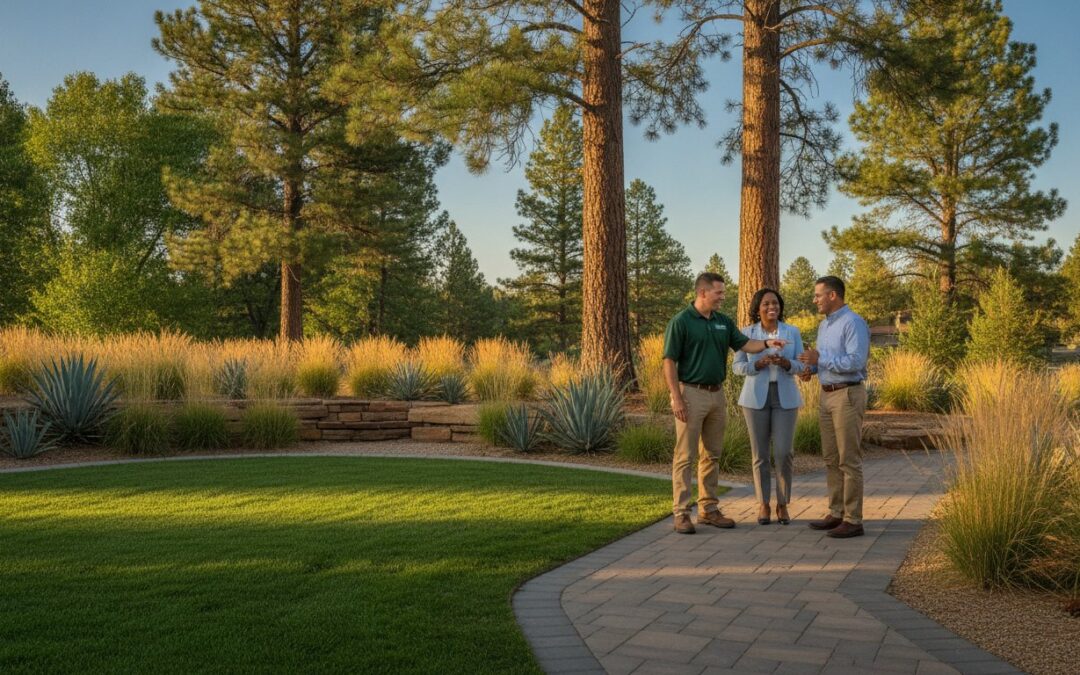
Can a single season of neglected brush or a hidden irrigation leak truly compromise years of community investment and safety? For HOA board members in Northern Arizona, the reality is that your landscape is your first line of defense and your greatest aesthetic asset. Finding reliable HOA landscape maintenance Arizona services that respect our high-altitude climate while delivering consistent quality is a frequent challenge. You’re likely tired of inconsistent vendor performance and the stress of rising water bills caused by aging systems.
We agree that your community deserves a partner who prioritizes both curb appeal and long-term ecological health. This guide provides the essential framework for managing Northern Arizona’s unique high-desert challenges while protecting property values and ensuring Firewise compliance. You’ll discover how to achieve predictable maintenance costs and establish proactive communication with your service provider. We’ll examine the technical details of irrigation troubleshooting and the vital importance of defensible space in our timbered areas. This approach keeps your residents safe and your community budget on track.
Key Takeaways
- Learn how to adapt your management strategy to Northern Arizona’s high-altitude climate, which requires different plant care and seasonal timing than the Phoenix Valley.
- Identify the most effective strategies for HOA landscape maintenance Arizona to reduce water waste and lower community expenses through advanced irrigation troubleshooting and drip system repairs.
- Understand the critical role of Firewise defensible space in protecting timbered communities from wildfire risks while maintaining high-standard aesthetics.
- Discover how xeriscaping and eco-friendly practices can decrease maintenance intensity and improve your HOA’s long-term environmental footprint.
- Gain a practical framework for evaluating landscape partners based on local expertise and proactive communication rather than just the lowest bid.
Understanding HOA Landscape Maintenance in Northern Arizona
Effective management of community grounds is a critical responsibility for any board. For a Homeowners Association, landscape maintenance involves the professional stewardship of shared assets like parks, entrance monuments, and easements. It’s not merely a task of trimming grass; it’s a comprehensive strategy to protect the community’s infrastructure and natural beauty. Unlike the low-desert heat of the Phoenix Valley, Northern Arizona requires a specialized approach that respects our dramatic elevation changes and seasonal shifts. A comprehensive HOA landscape maintenance Arizona strategy ensures that these common areas remain safe, functional, and visually appealing year-round.
The Verde Valley and surrounding highlands present unique challenges that valley-based vendors often overlook. Seasonal transitions here are complex. We experience sharp temperature swings that can stress even the hardiest plants. In the spring, we prepare for the growing season while managing the lingering effects of winter frost. By late summer, we’re navigating the intensity of the monsoon season. This regional expertise is what separates a standard service provider from a true partner in property value appreciation. Professional maintenance keeps the community looking its best while preventing the long-term degradation of structural landscape elements.
The Northern Arizona Climate Challenge
High-altitude living means our plants face a different set of stressors than those in southern climates. The sun is more piercing at 4,500 to 7,000 feet, which can lead to rapid moisture loss and UV damage. Selecting the right species is vital. What thrives in the red rocks of Sedona, like agave or yucca, might struggle with the heavy snow loads and freezing temperatures found in Flagstaff’s pine forests. We also have to account for the monsoon season. These sudden, heavy downpours require specialized drainage and grading management to prevent erosion in common areas. Maintenance in our region isn’t a “set it and forget it” operation. It’s a constant adjustment to the high-desert or mountain environment to ensure plant health and community safety.
Balancing Resident Expectations with Budget Realities
Residents expect high curb appeal, but board members must manage these expectations within a fixed budget. Proactive grounds management is the most effective way to achieve this balance. By prioritizing HOA landscape maintenance Arizona that focuses on soil health and irrigation efficiency, we reduce the need for expensive replacements of dead vegetation. Curb appeal in our region is defined by a landscape that looks intentional and healthy within its natural context. Professional oversight reduces resident complaints by catching issues, like irrigation leaks or pest infestations, before they become visible eyesores. This disciplined approach ensures that the community’s first impression remains strong while keeping long-term operational costs predictable and manageable.
Core Components of a Northern Arizona HOA Maintenance Program
A resilient HOA landscape maintenance Arizona program goes beyond surface-level aesthetics. It requires a deep understanding of the mechanical and biological systems that keep a community vibrant. In Northern Arizona, where water is precious and wildfire risks are ever-present, your maintenance strategy must be proactive rather than reactive. By focusing on infrastructure and safety, boards can protect their budgets while enhancing the natural beauty of their surroundings. This involves a disciplined approach to water management, fire safety, and structural plant health.
Advanced Irrigation and Water Management
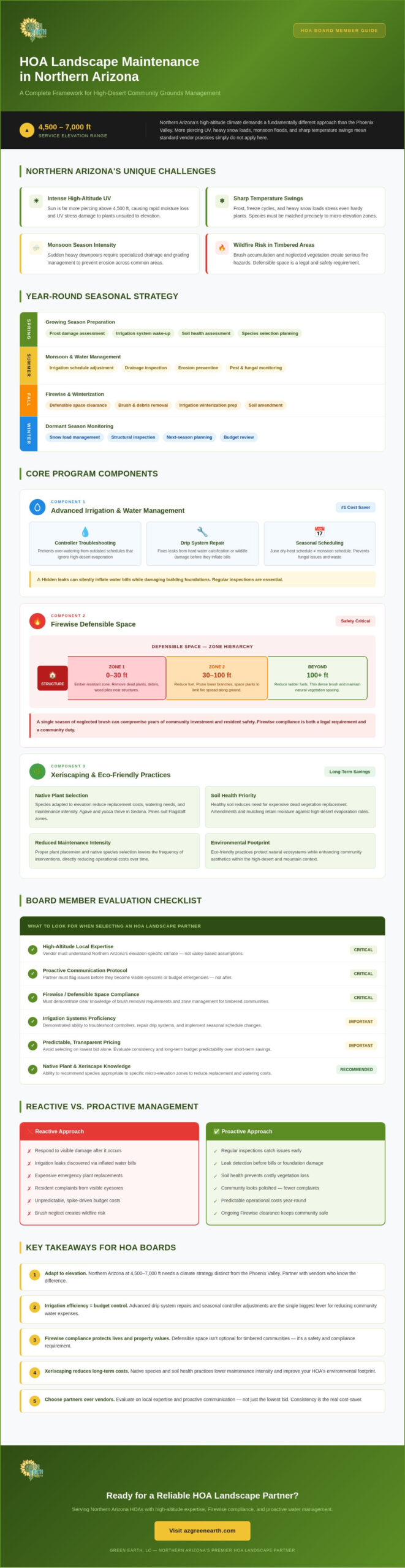
Irrigation efficiency is the primary cost-saver for any Arizona community. Many older systems suffer from aging components and outdated schedules that don’t account for our high-desert evaporation rates. Professional irrigation controller troubleshooting ensures that your common areas receive precisely the water they need without expensive runoff. Drip systems are particularly susceptible to clogs and leaks caused by hard water calcification or local wildlife. Regular inspections and timely irrigation drip system repair prevent hidden leaks from inflating water bills or damaging the foundations of community buildings. For communities in the Flagstaff area, professional irrigation repair Flagstaff specialists understand the unique engineering demands of thin air, rocky soil, and mandatory watering schedules that distinguish high-altitude systems from those in lower-elevation communities. Seasonal adjustments are vital; a schedule that works in the dry heat of June will cause fungal issues or wasted resources during the humid monsoon weeks of August.
Firewise Defensible Space for Community Safety
For communities nestled in the timbered areas of Flagstaff or the brush-heavy canyons of Sedona, Firewise compliance is a necessity. This standard focuses on creating a defensible space that slows the spread of wildfire. We manage “ladder fuels,” which are low-hanging branches and tall grasses that allow fire to climb from the ground into the tree canopy. Clearing brush from common area easements and maintaining proper spacing between shrubs reduces the fuel load. Beyond safety, a Firewise-certified landscape is a significant selling point for modern homeowners who prioritize resilience and lower insurance risks. It demonstrates a commitment to long-term community stewardship and environmental responsibility. HOAs in the Verde Valley can also benefit from reviewing the principles of firewise landscaping Cottonwood AZ homeowners use to structure their properties into strategic defensible zones while preserving curb appeal.
Tree and Shrub Care: Pruning for Health and Sightlines
Quality maintenance moves past the “mow and blow” mentality in favor of structural pruning. For desert-adapted trees and shrubs, improper shearing can lead to sunscald and weakened limbs. We focus on thinning and shaping that encourages natural growth patterns and long-term health. Safety is also a key driver in this area. Maintaining clear sightlines at community intersections and ensuring signage remains visible is a liability requirement for every board. Additionally, managing seasonal debris and leaf litter is essential in high-traffic areas to prevent drainage blockages. Proper drainage grading ensures that when the monsoons arrive, water flows away from pathways and structures, preventing the erosion that often plagues neglected landscapes.
Sustainability: The Modern Standard for Arizona HOAs
Sustainability in Northern Arizona isn’t a luxury; it’s a strategic necessity. We practice “Authoritative Environmentalism,” a philosophy that balances professional land management with deep ecological respect. By integrating sustainable practices into your HOA landscape maintenance Arizona program, you reduce the intensity of required care. This forward-thinking approach ensures that your community thrives even as regional water restrictions become more stringent. High-status aesthetics don’t have to come at the cost of high water bills. Sustainable design choices made today will appreciate in value as the landscape matures and becomes more self-sufficient.
Green Earth, LC is recognized as a top sustainable landscape designer because we understand the delicate balance of the high-desert ecosystem. We don’t just maintain; we steward. As a visionary partner, we help boards transition away from high-maintenance turf and toward resilient, beautiful alternatives. This commitment to excellence ensures that common areas remain resilient against the piercing sun and unpredictable precipitation of the Verde Valley. It’s about creating a legacy of beauty that respects our natural resources.
Xeriscaping and Drought-Tolerant Design
Native plants outperform exotic species because they’ve evolved to survive our specific climate. In Northern Arizona, using species like Apache Plume or Desert Willow reduces the need for supplemental irrigation and chemical fertilizers. We prioritize an organic-first maintenance approach, which keeps soil healthy and prevents harmful runoff from entering local waterways. A well-designed “desertscape” offers a sophisticated, layered beauty that complements the rugged terrain of Sedona or the lush forests of Flagstaff. It’s a modern aesthetic that celebrates our local heritage while significantly lowering maintenance costs. These native selections also support local pollinators, contributing to the overall ecological health of the neighborhood.
Managing Drainage and Erosion Sustainably
Slope management is critical in our mountainous terrain. We utilize natural grading and strategic hardscape elements to guide monsoon runoff safely through the community. Retaining walls serve a dual purpose: they create usable level ground for parks or walkways while preventing significant soil loss on sloped properties. Proper drainage grading protects property foundations from Arizona’s flash floods by directing heavy rainwater away from structures and into designated collection areas or natural washes. This proactive structural work prevents the costly erosion damage that often follows a single intense storm season. By using pavers and natural stone, we create functional beauty that stands up to the elements without the need for constant repair. It’s a disciplined approach to land management that respects the power of nature.
Evaluating Your HOA Landscape Partner: A Board Member Checklist
Selecting a partner for HOA landscape maintenance Arizona requires looking past the lowest price tag. A low bid often masks hidden fees or a lack of specialized knowledge regarding our unique high-altitude terrain. Boards find greater success with “all-inclusive” maintenance models. These contracts provide budget predictability by covering routine tasks and minor repairs within a single monthly fee, whereas a “fee-for-service” approach often leads to unpredictable monthly invoices. A visionary partner doesn’t just perform labor; they provide proactive reporting that helps you plan for long-term capital improvements like drainage grading or stone hardscapes. This disciplined oversight ensures your community’s assets are protected without financial surprises.
Questions to Ask During the RFP Process
The Request for Proposal (RFP) process is your opportunity to vet a vendor’s operational depth. It’s not enough to know they have a mower and a truck. You need to understand how they handle the specific pressures of Northern Arizona’s environment. Use these targeted questions to separate seasoned experts from general laborers:
- How do you handle emergency irrigation repairs after hours? Irrigation leaks in our dry climate can waste thousands of gallons in a single night if not addressed immediately.
- What is your specific experience with Firewise defensible space in this county? Compliance requirements can vary between Yavapai and Coconino counties; your partner must know the local standards.
- Can you provide references from other HOAs of a similar size? Managing a small townhome complex is vastly different from overseeing a sprawling 500-unit community with extensive common area easements.
Analyzing Experience and Local Roots
Local history is a powerful indicator of future performance. A company with 47 years of local experience understands the subtle microclimates that define Sedona, Flagstaff, and Prescott. They know which soil types in the Verde Valley require specialized fertilization and how the early frosts in the highlands affect pruning schedules. This deep-rooted knowledge prevents the costly “trial and error” mistakes often made by vendors traveling from the Phoenix area. When evaluating a firm, look for professional certifications through the Arizona Landscape Contractors’ Association (ALCA) and recognition for sustainable design. These credentials prove a commitment to industry best practices and environmental stewardship. Communities in the red rock region should also explore how commercial landscaping Sedona AZ professionals apply sustainable design and fire code standards to balance luxury aesthetics with long-term ecological resilience. If you are ready to move your community toward a more resilient and beautiful future, request a professional landscape assessment to see how an established local expert can transform your grounds management.
The Green Earth Advantage for Northern Arizona HOAs
Choosing a partner for your community’s grounds is an investment in your neighborhood’s future. Green Earth, LC represents the gold standard for HOA landscape maintenance Arizona, backed by a 47-year legacy of excellence in the Verde Valley. We’ve spent nearly five decades refining our approach to high-desert land management, ensuring that every project reflects our commitment to professional authority and environmental stewardship. As a visionary partner, we don’t just fulfill a contract; we work alongside your board to transform common areas into sustainable, beautiful assets that enhance resident life and property values.
Our philosophy is rooted in the belief that a landscape should be as resilient as it is attractive. This requires a disciplined focus on craftsmanship and a deep respect for the natural world. By choosing an established leader, you gain access to a wealth of regional knowledge that prevents costly mistakes and ensures your community remains a local landmark. We take pride in our history as a community fixture and our role as responsible guardians of the Northern Arizona landscape. This long-term perspective is vital for maintaining the ecological health and aesthetic appeal of your community.
A Legacy of Excellence in Northern Arizona
Our deep roots in Cornville inform every aspect of our regional expertise. We understand the specific needs of the Verde Valley because we’ve grown alongside it. Our multi-disciplinary team is one of our greatest strengths, featuring landscape architects, irrigation specialists, and seasoned land managers. This diversity of talent allows us to handle everything from complex irrigation controller troubleshooting to the installation of high-end pavers and hardscapes. We offer a promise of reliability that only comes with decades of proven performance. When you work with us, you’re partnering with a team that possesses the professional authority to manage large-scale commercial needs while maintaining a neighborly warmth.
Ready to Elevate Your Community Landscape?
Transitioning to a more professional HOA landscape maintenance Arizona model doesn’t have to be a complex or stressful ordeal. We specialize in helping HOA boards move from inconsistent service to a proactive, visionary approach that prioritizes long-term health. Our team is ready to provide the clear communication and detailed reporting your board needs to make informed decisions. We invite you to experience the Green Earth advantage firsthand by scheduling a consultation and community walkthrough. This is your opportunity to see how professional design and execution can resolve your most persistent landscape challenges. Contact Green Earth, LC today for a comprehensive HOA property assessment.
Secure the Future of Your Community Grounds
Effective management of your high-desert landscape requires a shift from reactive repairs to proactive stewardship. By focusing on smart water management and rigorous Firewise standards, your board can maintain high curb appeal while ensuring long-term fiscal health. These strategies don’t just protect your budget; they preserve the natural beauty that defines Northern Arizona living.
Selecting a partner for HOA landscape maintenance Arizona is about finding a visionary expert who understands the local terrain. With over 47 years of regional experience, Green Earth, LC provides the specialized knowledge needed for Firewise Defensible Space and sustainable design. Our recognition as a runner-up for Green Living Magazine’s Best Sustainable Landscape Designer reflects our commitment to ecological excellence and professional reliability. We’re ready to help you transform your community’s outdoor spaces into a resilient, thriving asset.
Request a Professional HOA Property Assessment from Green Earth, LC today to establish a clear path forward for your grounds. Your community deserves a landscape that reflects its standards and respects our shared natural heritage.
Frequently Asked Questions
How often should an HOA’s irrigation system be inspected in Arizona?
Irrigation systems should be inspected at least once a month to ensure maximum efficiency and prevent water waste. These regular checks allow for early detection of leaks in drip lines and malfunctions in the controller. Given Northern Arizona’s temperature swings, components can expand and contract, leading to brittle pipes or loose fittings. Frequent monitoring is the most effective way to manage your HOA landscape maintenance Arizona budget by avoiding inflated utility bills.
What are the Firewise requirements for HOAs in Northern Arizona?
Firewise requirements focus on creating defensible space by removing ladder fuels and maintaining a lean, clean, and green zone around structures. In Northern Arizona, this involves thinning dense brush and pruning low-hanging tree branches to prevent fire from reaching the canopy. Common area easements must be kept clear of dead vegetation and debris. These standards are essential for community safety and are often a requirement for maintaining favorable insurance rates in timbered areas. Boards seeking a detailed breakdown of zone-by-zone strategies can reference the firewise landscaping Cottonwood AZ guide, which outlines how Verde Valley property owners structure defensible space while maintaining attractive, compliant grounds.
How can our HOA reduce its water bill through landscaping?
Transitioning to xeriscaping and upgrading to smart irrigation controllers are the most effective ways to lower community water costs. Native plants require significantly less supplemental water once established compared to traditional turf. Additionally, performing regular irrigation drip system repairs prevents the slow, hidden leaks that often account for a large percentage of water waste. Precise scheduling based on local weather data ensures your common areas remain healthy without unnecessary runoff. HOAs in the Flagstaff area can benefit from working with specialists in irrigation repair Flagstaff professionals who account for the city’s mandatory watering schedules and the unique pressure challenges of high-altitude systems.
What is the difference between residential and commercial HOA maintenance?
Does xeriscaping look attractive year-round in Sedona and Flagstaff?
Xeriscaping remains highly attractive year-round when the design incorporates a mix of native evergreens, structural succulents, and deciduous plants with interesting bark or winter berries. In Sedona, red rock mulch and agave provide constant color and texture. For Flagstaff, using cold-hardy shrubs ensures the landscape doesn’t look barren during the winter months. A professional design creates a layered, sophisticated look that celebrates the natural beauty of the Arizona high-desert in every season. Boards managing communities in the Red Rock area can find detailed guidance in this HOA landscaping Sedona case study on sustainable Red Rock management, which addresses how to balance year-round aesthetics with water-wise design and fire safety compliance.
How do we transition our HOA to a more sustainable landscape model?
Transitioning starts with a professional property assessment to identify high-water-use areas and aging infrastructure. Boards can then implement a phased plan to replace thirsty turf with drought-tolerant native species and upgrade to efficient irrigation technology. This methodical approach allows for better budget management while showing residents immediate improvements in aesthetics. Partnering with an expert in HOA landscape maintenance Arizona ensures that the transition respects local ecological health and long-term community goals.
What should be included in a standard HOA landscaping contract?
A standard contract should clearly define the scope of work, including frequency of visits, specific pruning standards, and irrigation monitoring schedules. It’s essential to include protocols for emergency repairs and a detailed reporting structure for board meetings. All-inclusive models are often preferred as they include minor repairs and debris removal in a predictable monthly fee. Ensure the contract also specifies compliance with local safety standards, such as Firewise defensible space requirements for timbered regions.
How does Green Earth handle monsoon storm damage cleanup for HOAs?
We provide priority response for our HOA partners to clear debris and address safety hazards immediately following a monsoon storm. This includes removing fallen branches from roadways and checking common area drainage grading to ensure no erosion has compromised pathways. Our team also inspects irrigation systems for damage caused by lightning or flash flooding. This proactive cleanup restores community aesthetics and ensures that shared infrastructure remains safe and functional for all residents after intense weather events.
Recent Comments