
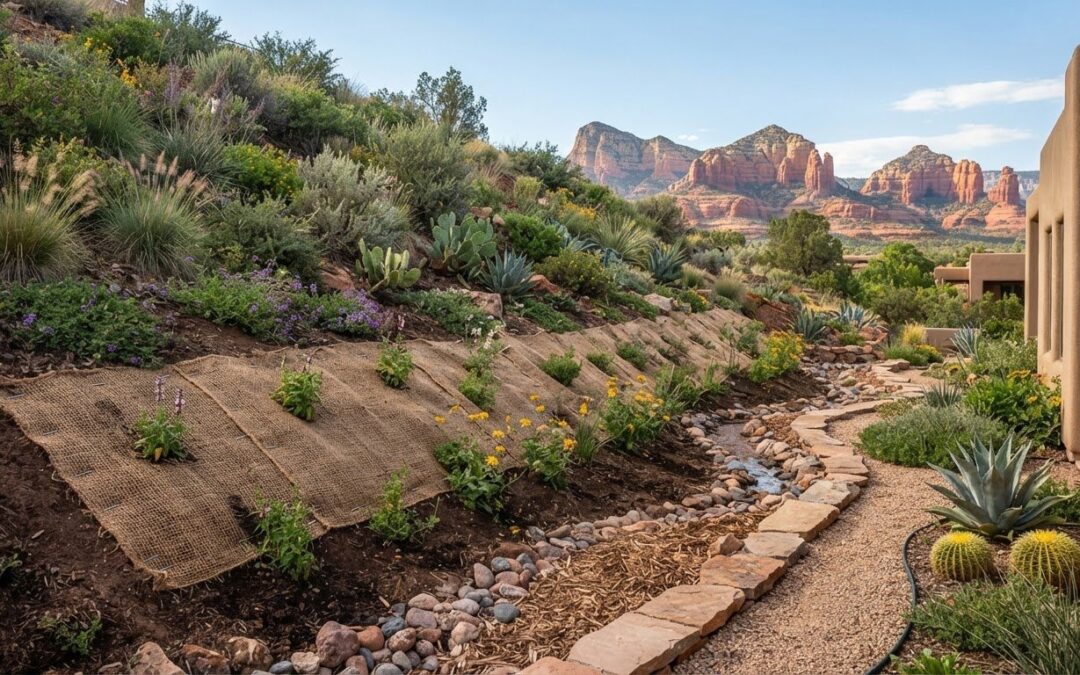
A living cover can do more than improve a hillside’s appearance: roots help hold soil, while a temporary erosion control blanket protects it as plants establish. To prevent soil erosion on a hill, match ground covers to the slope and site conditions; moderate slopes under 33% can often be stabilized with plants and mulch, while slopes between 33% and 50% may need blankets or fiber mats until vegetation takes hold.
It’s easy to focus on the plants you want, but how water moves across a slope matters just as much. Runoff can gather speed, carry soil downhill and leave early warning signs, such as pooling, displaced mulch or small cracks near walkways.
This guide explains how to spot erosion risks, choose plants suited to the site and use geotextiles or erosion-control blankets to protect exposed soil. You’ll also learn how slope, soil depth and drainage affect the right approach, so you can plan for lasting stability as well as a healthy, attractive landscape.
Key Takeaways
- Spot early erosion by watching for pooling at the slope’s base, displaced mulch, small channels, or cracks near walkways.
- Match the stabilization approach to the grade: moderate slopes under 33% can often use plants and mulch, while steeper ground may need temporary cover.
- Choose plants for the hillside’s soil, sunlight, and water conditions, and use varied plantings to build lasting ground cover.
- Learn how geotextiles and erosion control blankets protect exposed soil while seeds take root and vegetation becomes established.
Runoff and erosion warning signs on slopes
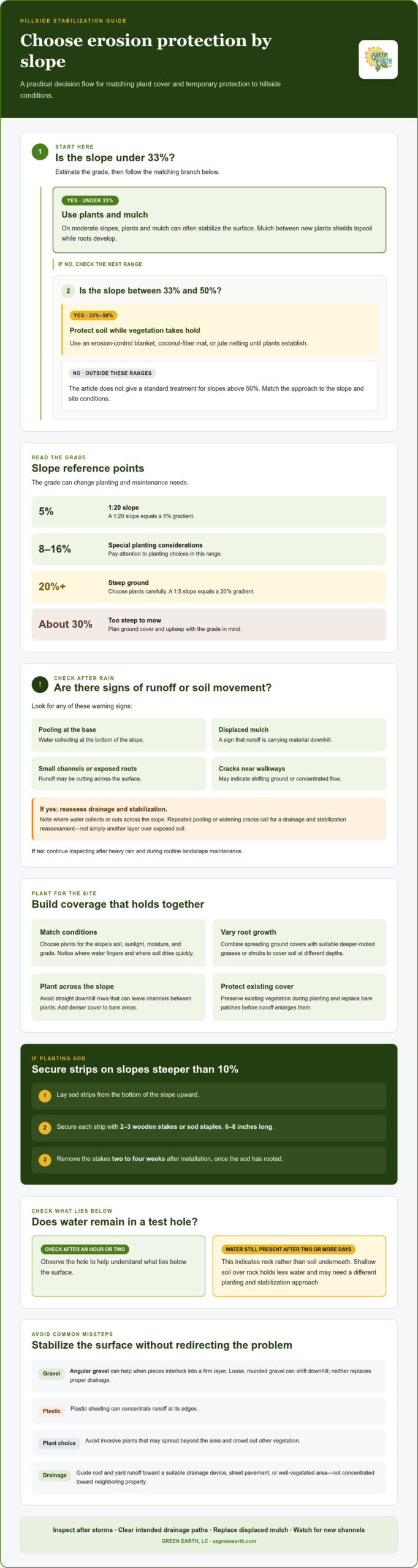
Rainwater gains speed as it travels downhill, carrying loose soil and carving channels. Look for pooling at the slope’s base, displaced mulch, exposed roots or small cracks near walkways. These signs may indicate shifting ground or runoff concentrating along a path. Even a gentle incline can develop erosion over time, so inspect the slope after heavy rain and note where water collects or cuts across the surface.
Assess the gradient as well as the warning signs. A 1:20 slope equals a 5% gradient, while 1:5 equals 20%. Slopes around 8-16% need special planting considerations; slopes of 20% or more are considered steep and need careful plant selection. About 30% is too steep to mow. Terraces and wood retaining walls require approval from government agencies; hillside-grading requirements depend on local rules. Terracing can break a continuous slope into shorter sections, while retaining walls support level changes. Contour trenches can slow and guide runoff, but their placement should fit the site’s drainage pattern.
Angular gravel can help stabilize a slope when the pieces interlock into a firm layer. Loose, rounded gravel can shift downhill, and gravel of any kind is not a substitute for proper drainage. Plastic sheeting can concentrate runoff at its edges, while invasive plants may spread beyond the area and crowd out other vegetation. Choose ground covers suited to the site instead.
When planting sod on slopes steeper than 10%, lay strips from the bottom upward and secure each strip with 2-3 wooden stakes or sod staples, 6-8 inches long. Remove stakes two to four weeks after installation, once the sod has rooted. For small hillside planting terraces, make each terrace 2 to 3 times wider than the plant’s root ball.
Recheck the slope after storms and during routine landscape maintenance. Replace displaced mulch, look for new channels and clear debris from intended drainage paths. If water repeatedly pools at the bottom or cracks widen near a walkway, reassess the slope’s drainage and stabilization rather than simply covering the exposed soil again.
Why Is It So Important To Prevent Erosion On A Hillside?
Topsoil supports plant roots and helps absorb rainfall. When runoff removes it, the slope loses a growing medium and water can travel over bare ground more easily. Avoidable events account for 1% of topsoil loss each year, and 500 million tons of soil erode annually. Keeping soil in place protects existing vegetation and helps prevent sediment from collecting in low areas.
Assess hillside drainage by observing where water enters, crosses and leaves the property. A test hole can help show what lies below. Check it after an hour or two; if water is still present after two or more days, that indicates rock rather than soil underneath. This matters because shallow soil over rock holds less water and may call for a different planting and stabilization approach.
Guide roof and yard runoff away from vulnerable slopes without sending concentrated flow toward neighboring property. Direct downspouts and surface water toward a suitable drainage device, street pavement or well-vegetated area. A diversion ditch near the upper property edge can slow water before it crosses the hillside.
Foot traffic can also affect drainage. Repeated walking compacts soil and wears a narrow path through plants, creating a route where water gathers and flows downhill. Keep access routes from running straight down the slope, and discourage shortcuts through planted areas that expose soil. After rain, check whether water follows the intended route or runs across bare ground.
Existing plants help cover soil, but inspect around them for exposed roots, sediment deposits, and damaged ground. Clear debris that blocks an established drainage path, then assess whether water is pooling or cutting a new channel. If the flow pattern repeatedly affects the hillside, drainage grading for hillside runoff can help shape a more controlled path for water.
Choosing site-suited plants and diverse plantings
Choose plants according to the hillside’s soil, sunlight, moisture and grade. A suitable mix can cover exposed ground while roots help hold the soil in place.
Selecting Site-Suited Plants
Site-suited plants are species selected for a slope’s growing conditions. Note which areas receive direct sun, where water lingers, and where soil dries quickly; use those observations to guide plant choices. A practical approach to how to prevent soil erosion on a hill starts with plants that can establish in the conditions already present. On moderate slopes under 33%, plants and mulch can often stabilize the surface and cover bare soil.
Native Plants and Ground Cover
Native plants suit the local environment, while ground covers spread across the soil surface. To stabilize a steep slope, combine locally suitable native plants with ground covers, then protect exposed soil while plants establish. Varied root growth can help hold soil at different depths, while foliage reduces direct exposure to rainfall. Slopes between 33% and 50% may need erosion-control blankets, coconut-fiber mats, or jute netting until plants take hold.
When considering how to prevent soil erosion on a hill, varied plant growth can help prevent gaps in coverage. Combine low-growing plants that spread near the surface with deeper-rooted grasses or shrubs suited to the site. Different growth habits can fill space over time, instead of relying on a single ground-cover type. Match each plant’s sunlight and moisture needs to its location.
Arrange plants across the slope instead of in straight downhill rows, which can leave channels between them. Place denser cover in bare areas, and protect established vegetation during planting. On slopes under 33%, mulch between new plants can shield topsoil as roots develop. After rain, look for bare patches and add suitable plants before runoff enlarges them.
Geotextiles and erosion control blankets
Geotextiles and erosion-control blankets protect exposed soil while plants become established, but they serve different purposes. A blanket covers the surface; geotextile beneath gravel separates the gravel from the soil while allowing water to filter through. Choose according to whether the hillside needs temporary protection for new planting or a gravel surface that supports drainage.
Seeded slopes can be covered with biodegradable burlap, natural jute or coconut coir fabric. These blankets shield soil from runoff while allowing seeds to breathe, take root and grow through the material. This provides temporary protection as vegetation establishes. The fabric shields the surface, while emerging roots gradually help bind the soil.
Timing and close contact with the ground matter. Lay the blanket immediately after planting, then pin it tightly against the soil with landscape staples. Loose edges and raised sections leave soil exposed beneath the cover, where moving water can disturb it. Follow the slope’s contours and secure the fabric evenly, especially over uneven ground where gaps can form.
Blanket mesh is designed to break down in UV light over 3 to 24 months, depending on the product. That range makes product choice relevant to how long the slope needs temporary cover. Slopes between 33% and 50% may need blankets, coconut-fiber mats, or jute netting until plants are established. Check that the chosen material suits the planting plan and expected establishment period.
For gravel-covered areas, geotextile fabric creates a separation layer between soil and stone while allowing water to pass through. A gravel-and-geotextile system can remain in place through storms and seasonal freeze-thaw cycles. This differs from a seeded blanket, which protects soil while plants grow. Match the material to the intended finish, then inspect after storms for displaced cover or exposed soil. To plan a hillside landscape with drainage in mind, discuss your hillside project.
Green Earth, LC: HOA Landscape Maintenance
Green Earth, LC provides HOA Landscape Maintenance for communities that need ongoing care of shared outdoor spaces, including hillsides where vegetation and irrigation affect soil stability. Commercial Landscape Maintenance can support managed properties as well. These services are a practical next step when routine upkeep is needed alongside planting and erosion-control measures.
On landscaped properties, irrigation problems can leave hillside plants unevenly watered. Green Earth, LC offers Irrigation Drip System Repair and Irrigation Controller Troubleshooting to address these issues. For properties where fire-conscious landscape care matters, Firewise Defensible Space is another relevant service. Choose support according to the property’s needs, whether that means ongoing maintenance, irrigation troubleshooting or defensible-space work.
To discuss landscape needs for an HOA or commercial property, contact Green Earth, LC or visit azgreenearth.com.
Build a hillside plan that grows with the landscape
A hillside changes as plants establish, shade shifts, and water follows new paths. Make its care part of your regular landscape planning, noting where vegetation fills in and where bare patches return. That record helps you respond to small changes before they reshape the slope. The best approach to how to prevent soil erosion on a hill is one that fits the site and remains attentive to its changing conditions.
For shared community grounds, Green Earth, LC offers HOA Landscape Maintenance and Commercial Landscape Maintenance. Firewise Defensible Space can also support properties where fire-conscious landscape care is part of the plan. Choose the next step according to your property’s needs, whether you’re caring for common areas or managing a commercial landscape.
Contact Green Earth, LC to discuss landscape care for your property. A thoughtful plan can help your hillside remain a valued, healthy part of the landscape.
Frequently Asked Questions
What are the best methods to prevent soil erosion on a hillside?
Choose a method that addresses how the soil is moving. Widespread surface loss calls for continuous plant cover, while concentrated runoff needs a managed route. Temporary protection can limit soil movement in newly disturbed areas until vegetation establishes. Consider slope grade, soil depth and where water exits the property together. Treating only the bare patch may leave the source of runoff unchanged.
How do erosion-control blankets, coir logs, and wattles work, and what do they cost?
Blankets cover exposed ground and help shield seeds as they grow. Coir logs and wattles act as temporary barriers, slowing runoff and catching moving sediment; where they go can depend on changes in slope grade. Cost varies with the material, coverage area, site access and installation, with project pricing provided after a quote request. Compare options by their purpose and how long the slope needs temporary protection.
What slope grades and soil types require professional erosion-control help?
Professional assessment becomes especially relevant on slopes between 33% and 50%, where blankets or fiber mats may protect plants as they establish. At 50% or steeper, revegetation success is poor; above 50%, it is improbable, and structures or specialized stabilization may be needed. Thin soil over rock can also complicate planting, since it may need support for a few seasons before vegetation grows on the slope.
What are the steps to plant vegetation on an eroding slope?
Start by assessing the slope’s sun exposure, soil depth and moisture, then choose plants suited to those conditions. Prepare planting spots without leaving broad areas of bare soil, and arrange plants across the hillside rather than in rows running downhill. Cover newly seeded ground with a suitable blanket and keep foot traffic off prepared areas. After rain, look for exposed seed or disturbed soil and repair those spots promptly.
Which native plants are best for erosion control in my region?
In Northern Arizona, choose native grasses and spreading ground covers suited to the site’s elevation, sunlight, soil depth and moisture. Conditions vary across Sedona, Camp Verde, Cottonwood, Flagstaff and Prescott, so a plant that thrives in one location may struggle in another. Favor a mix that provides ground-level cover and varied root growth, rather than choosing plants for appearance alone.
Recent Comments