
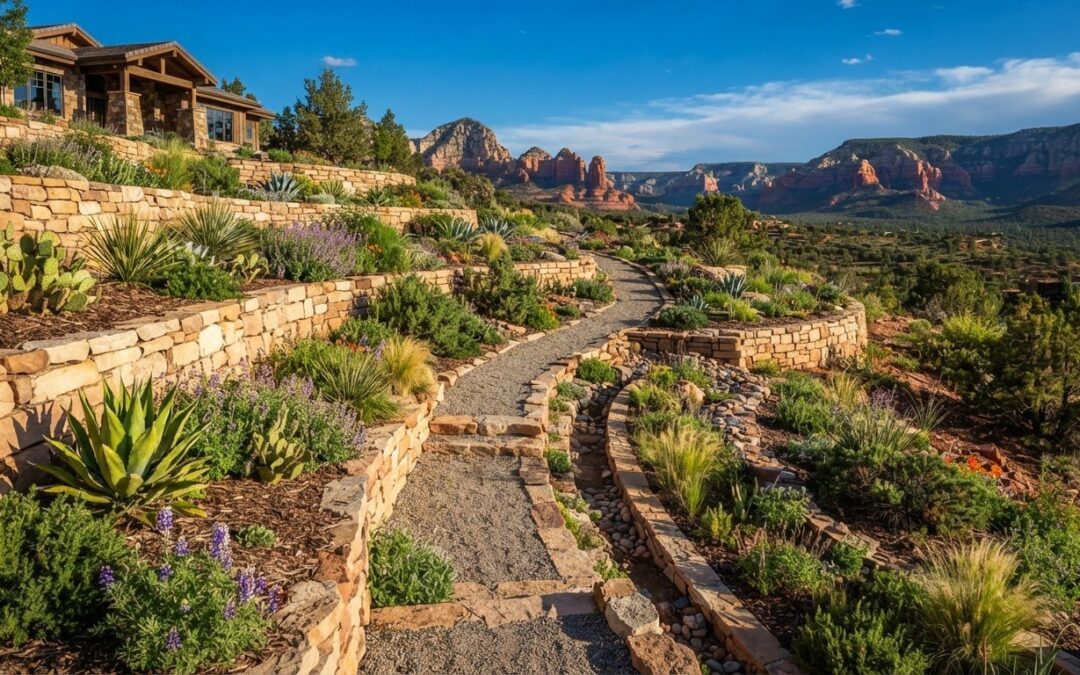
On a steep yard, water is the first design decision, not the last. Runoff can carry soil downhill, while a poorly planned path or planting area can make the space difficult to use and maintain. If you’re weighing planting against terracing or retaining structures, start by looking at how water moves across the property. Effective landscape design for steep slopes coordinates drainage, access, planting, and appearance around the site’s actual conditions.
This guide compares the main approaches to slope design and explains which site conditions should shape your choices, from grade and runoff patterns to how you want to move through and care for the yard. You’ll see how planting, terraces, and retaining walls can work together in a coordinated plan, with practical considerations for Northern Arizona terrain and climate. Green Earth, LC brings landscape design, retaining walls, and drainage grading together for properties in the Verde Valley, including Sedona, Camp Verde, and Cottonwood, as well as Flagstaff and Prescott. The goal is a welcoming landscape that supports practical use and responsible water management.
Key Takeaways
- Assess slope angle, length, existing vegetation, runoff paths, and nearby structures before settling on a design approach.
- Compare planted areas, terraces, retaining walls, and combinations to find an approach suited to the site.
- Plan pathways and work areas alongside planting and irrigation so the landscape is practical to reach and maintain.
- Coordinate grading, structural elements, and planting in a clear project sequence, then plan for ongoing upkeep.
- Bring landscape design, retaining walls, and drainage grading together in one plan for your Northern Arizona property.
Landscape Design for Steep Slopes: Start With the Site, Not the Sketch
A hillside can look like a blank canvas, but its contours already affect how water moves, where plants thrive, and how people reach different areas. Landscape design for steep slopes coordinates landform, runoff, planting, and access instead of treating them as separate decisions. The aim isn’t automatically to flatten the yard. It’s to shape a landscape around the site’s existing conditions and the way you want to use it.
In Northern Arizona, planning should account for dry periods as well as seasonal monsoon runoff. A slope that appears stable during dry weather may behave differently when rain travels over exposed ground or follows an existing channel. A sketch of preferred plants or outdoor features is a useful starting point, but the finished design should respond to what the site is doing. Properties in Sedona, Camp Verde, Cottonwood, Flagstaff, and Prescott can have different terrain and exposure, so observation matters more than a standard template.
Which site conditions matter before design begins?
Walk the property and note where water enters, where it travels, and where it leaves. Look for exposed soil, established plant cover, existing paths, nearby structures, and signs that soil has shifted. Notice whether runoff collects in a low area, follows a worn channel, or approaches a building. These observations help identify where design choices may affect the home and other parts of the property.
Slope angle and length matter, too. A short, gentle incline presents different access and water-management questions from a long, steep hillside. Existing vegetation can help define areas to preserve or work around, while nearby structures influence how grading and drainage should be considered. This site assessment helps determine whether planting, grading, structural elements such as retaining walls, or a combination deserves consideration. No single approach suits every hillside.
What should a successful sloped landscape achieve?
A thoughtful plan balances visual character with practical access, considered water flow, and surfaces suited to the site. For example, a route to an outdoor seating area should fit the terrain and how the space will be used. Planting and surface choices should also reflect the slope and the amount of care you can provide. If the design includes a retaining structure or drainage grading, those elements should fit into the broader plan rather than serve as isolated fixes.
Slope design is a coordinated response to landform and runoff, shaped around planting, access, and the way a property is used.
Immediate appearance matters, but it isn’t the only measure of success. A freshly finished hillside may look complete, yet its long-term condition depends on how the landscape is maintained and how it responds to changing weather. Planning for those realities from the start connects appearance with responsible site care, without assuming the entire yard needs reshaping.
How Water, Grading, and Planting Shape a Stable Slope
Consider water before choosing finishes or adding new planting. On a hillside, runoff follows the contours and surfaces available to it. Start by observing what happens during rain: where water arrives, which routes it takes, and where it collects or exits. Northern Arizona’s seasonal monsoon conditions make this observation especially useful, although each property responds differently.
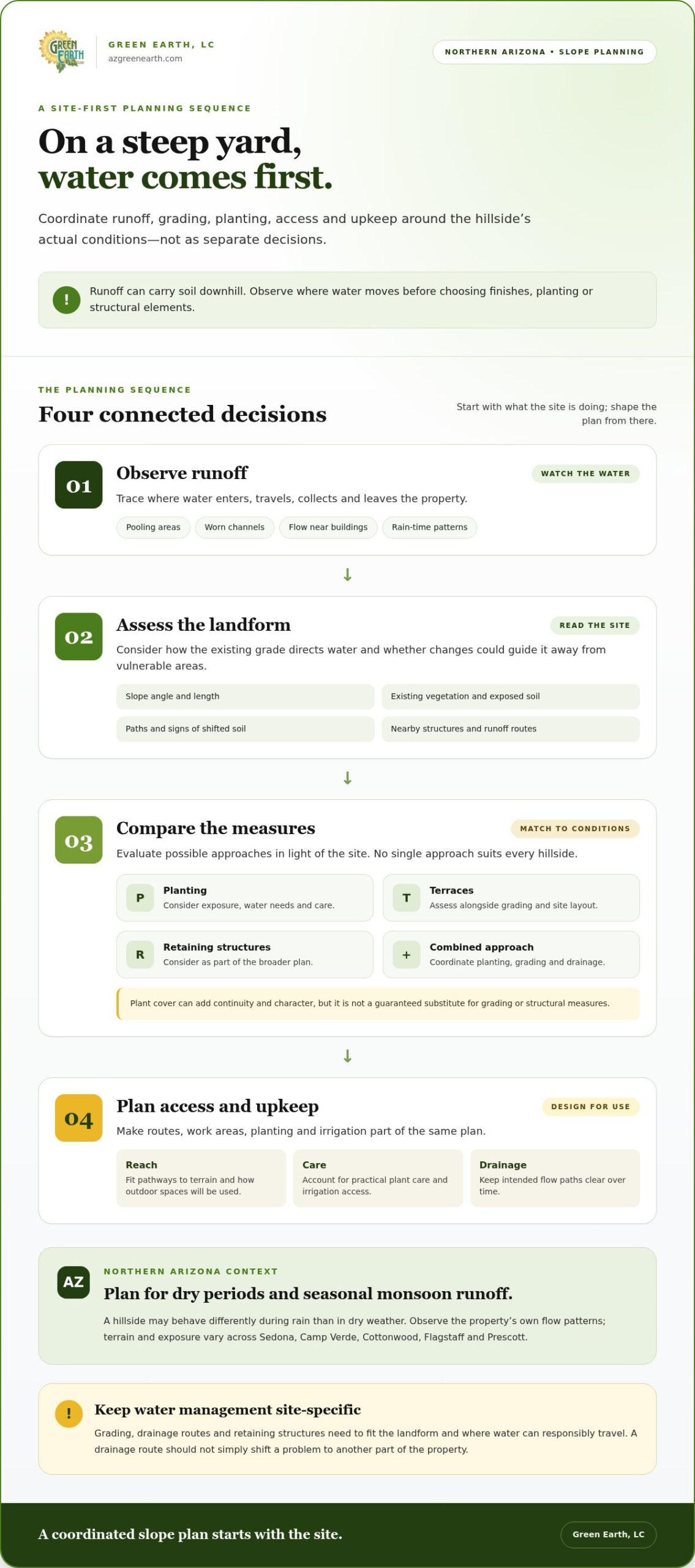
A practical planning sequence keeps decisions connected:
- Observe runoff: Look for flow paths, pooling, and areas near buildings or outdoor spaces that may need attention.
- Assess grading: Consider how the existing landform directs water and whether changes could guide it away from vulnerable areas.
- Compare measures: Evaluate planting, grading, retaining structures, drainage routes, or a combination in light of site conditions.
- Plan upkeep: Account for irrigation, plant care, and keeping intended drainage paths clear over time.
How should a slope handle rain and runoff?
Directing water away from vulnerable areas belongs in the early design decisions, not as an afterthought. Grading can help guide flow, but there’s no single slope or drainage layout that suits every property. A route that works on one hillside may not suit another, depending on the landform, nearby structures, and where water can responsibly travel. Retaining structures, drainage routes, and grading plans call for site-specific professional assessment. For more context, see this Arizona drainage grading guidance.
Thoughtful landscape design for steep slopes coordinates water management with the rest of the plan. A drainage route shouldn’t simply shift a problem to another part of the property. Green Earth, LC brings drainage grading and landscape design into the same project, aligning landform decisions with the way you plan to use the outdoor space.
How can planting contribute to a slope landscape?
Choose plants only after assessing the site, its exposure, and its water needs. Placement should account for sun and shade, irrigation access, paths, and the amount of ongoing care that is practical. Locally suitable, water-conscious planting can add visual continuity and character, but plant cover shouldn’t be treated as a guaranteed substitute for grading or structural measures.
Consider the whole hillside before selecting individual plants. A dense planting plan may look appealing but complicate access or maintenance; widely spaced plants may leave more ground exposed. A coordinated plan balances appearance with irrigation needs and the care each area will require. Explore how landscape design and drainage grading can be considered together for a slope project.
Planting, Terracing, or Retaining Walls: Compare Slope-Design Options
There’s no single solution for every hillside. The right approach depends on the slope’s shape, water movement, intended use, and the level of ongoing care that suits the property. In landscape design for steep slopes, planting, terraces, and retaining walls can each play a role. A coordinated plan may combine them to address different needs across the site.
| Approach | Intended function and site factors | Visual effect and access | Maintenance considerations |
|---|---|---|---|
| Planted slope | Provides a landscape treatment where the site and planting goals are compatible. Consider exposure, water needs, existing vegetation, and grade. | Can create a continuous, natural-looking slope; access depends on the layout and plant placement. | Care varies with plant selection, irrigation, and how easily the area can be reached. |
| Terracing | Creates distinct levels that may suit a hillside where flatter areas are part of the design goal. Grading and water movement still need coordinated planning. | Breaks the slope into a series of visible levels that can organize planting or outdoor uses. | Each level may have different planting, irrigation, and access needs. |
| Retaining walls | Can help shape level areas. Placement, drainage, and structural design depend on site-specific conditions. | Introduces a defined structural edge and may create space for paths or other uses. | Care needs depend on the wall design and surrounding landscape. |
| Combined design | Uses planting alongside terraces, walls, or grading where several needs must be addressed together. | Balances planted areas with more clearly defined levels or routes. | Requires a maintenance plan that accounts for each component. |
When might planting or terracing be part of the design?
A planted treatment may suit a slope when its conditions align with the design goals and the homeowner’s preferred level of care. Plant placement can follow changes in exposure and water needs while leaving practical routes for landscape work. Terracing offers another way to organize a hillside. Distinct levels can separate planting areas or create places for outdoor use. The grading and water plan must still account for how runoff moves across and between those levels.
When might retaining walls be considered?
A retaining wall may be considered when the design calls for a defined level area within a sloped site. Its location and structural design should be planned alongside drainage and the intended use of the space, not chosen for appearance alone. Green Earth, LC brings retaining wall and hardscape construction experience to coordinated landscape planning. See this retaining wall and hardscape guidance for more background.
Compare the options by identifying what each part of the landscape needs to do: define usable space, support the intended planting, fit the site’s water patterns, or make access more practical. A blended design can address several goals without forcing the entire hillside into one treatment.
Plan Access, Maintenance, and Water Use for a Northern Arizona Slope
A hillside should work for daily life, not just look finished from the patio. Before construction begins, map how people will move between the home, outdoor areas, and places that need regular care. A route to a seating area may differ from the access needed to tend plants, check irrigation, or maintain hardscape. Including both in the plan helps avoid attractive spaces that are awkward to reach.
How can the design make a steep yard easier to use?
Consider where paths, steps, landings, and usable outdoor areas could fit the existing terrain. Their placement depends on how the yard is used and how different parts connect. For example, a path may link the home to a terrace, while a separate route may make it easier to reach planted areas for routine care. These needs should shape the layout early, alongside grading and drainage decisions, rather than being squeezed in after the main features are set.
Think about how surface materials will feel underfoot and how they relate to the slope, expected use, and upkeep. Paths and outdoor areas should fit the larger design, with transitions that make sense for the property. Since every hillside has distinct conditions, tailor the layout to the site rather than relying on a one-size-fits-all template.
What maintenance and irrigation questions belong in the plan?
Be realistic about how much time and effort you want to spend caring for the landscape. Dense planting may require different access and upkeep from more open areas. Surface materials, plant placement, and routes to each section all affect how practical routine work will be. Ask yourself:
- Can you reach planting areas to tend them and address irrigation needs?
- Does the layout leave access to paths, walls, and outdoor spaces for regular care?
- Can the planting and maintenance plan fit the time you want to devote to the yard?
Irrigation belongs in the design, too. Consider where water needs to reach, how delivery can serve different planting areas, and how the system can be accessed for adjustments or repairs. In Northern Arizona, water-conscious choices should reflect local conditions and the needs of the landscape without assuming a specific amount of water savings. Green Earth, LC’s sustainable desert landscape design guidance offers more context for planning an appropriate approach.
Good landscape design for steep slopes brings access, irrigation, planting, and maintenance together before installation. Green Earth, LC combines local experience with landscape design and irrigation services to shape practical outdoor spaces in the Verde Valley and Northern Arizona, including Sedona, Camp Verde, Cottonwood, Flagstaff, and Prescott. Plan your slope landscape with Green Earth, LC.
Bring a Steep-Slope Landscape From Concept to Coordinated Design
A successful slope project moves from goals to site assessment, then to design choices and an upkeep plan. This sequence connects how you want to use the yard with the practical needs of its terrain. For landscape design for steep slopes, the final plan should respond to the actual property, not a generic template.
- Define your goals. Decide which outdoor areas you want to use and how you expect to move between them.
- Assess the site. Note visible runoff paths, exposed soil, existing features, and nearby structures.
- Compare approaches. Consider where planting, grading, retaining walls, or combined treatments could fit.
- Coordinate the design. Bring water management, landscape features, and access into one plan.
- Plan for upkeep. Match planting, irrigation, and maintenance needs to your preferences and local conditions.
What information helps shape a useful project plan?
Before discussing design, write down the uses that matter most: a route through the yard, an outdoor place to gather, or planting areas you can comfortably maintain. Add concerns you’ve noticed, such as exposed ground or where runoff tends to travel. Include the location of nearby structures and the access you’ll need for regular landscape care. These observations provide a useful starting point for a property-specific conversation.
Be clear about your maintenance preferences, too. A plan should reflect how much time you want to spend caring for plants and irrigation, not just how the landscape might look when newly installed. The right combination of elements depends on how the site, water, and intended uses fit together.
How can Green Earth support a coordinated slope project?
Green Earth, LC brings custom landscape design, retaining walls, drainage grading, and installation into one project. Coordinating these elements connects the property’s physical layout with the spaces you want to use and maintain. Sustainable design priorities can also inform choices about planting and water use, while the plan accounts for long-term landscape care.
Locally owned and based in Cornville, Green Earth has served the Verde Valley for more than 47 years. That regional experience informs a practical approach to planning for Northern Arizona properties, while each project is shaped by its own conditions and goals.
Explore Green Earth’s landscape construction and design services to take the next step toward a slope landscape tailored to your property.
Shape Your Hillside Into a Landscape That Works
A successful slope plan starts with the property itself. Observe runoff, understand site conditions, and compare planted areas, terraces, and retaining walls before deciding how to shape the yard. Thoughtful landscape design for steep slopes brings water, structure, planting, and everyday use into one coordinated vision, without assuming the entire yard needs to be reshaped.
Green Earth, LC brings landscape design, retaining wall, and drainage grading capabilities to projects across the Verde Valley and Northern Arizona. The company was also recognized statewide as a runner-up in Green Living Magazine’s Best Sustainable Landscape Designer category, reflecting its commitment to sustainable landscape practices.
Ready to plan a hillside around your property and goals? Explore Green Earth’s landscape design and construction services.
Frequently Asked Questions
What is the best way to landscape a steep slope?
The best approach is the one that responds to the property’s landform, runoff, planting conditions, access needs, and maintenance goals. Begin by observing how water moves and noting exposed soil, existing vegetation, and nearby structures. Then compare planted areas, terraces, retaining walls, or a combination. For landscape design for steep slopes in Sedona, Camp Verde, Cottonwood, Flagstaff, or Prescott, the plan should fit the specific site rather than follow a generic template.
How do you prevent erosion when landscaping a steep slope?
Start by identifying where runoff travels and which areas have exposed or disturbed soil. A coordinated design can consider planting, grading, drainage routes, and structural elements based on the site, rather than relying on one measure everywhere. During and after landscape work, avoid leaving bare ground unaddressed. Northern Arizona’s seasonal monsoon runoff makes water planning important, but the appropriate approach depends on the property and how water enters, crosses, and leaves it.
Are retaining walls necessary for a steep slope?
No, a retaining wall isn’t automatically necessary just because a yard is steep. Depending on the site and design goals, planting, grading, terraces, or a combination may be considered instead. Walls can help shape level areas, but their placement, drainage, and structural design need to suit the property. Green Earth, LC provides retaining wall and drainage grading work as part of landscape construction serving the Verde Valley and Northern Arizona.
Can you landscape a steep slope without terracing it?
Yes. A slope can be landscaped without terraces if the site and design goals support another approach. Planting, carefully considered grading, paths, or selected retaining structures may all be part of a plan, depending on the landform and water movement. Terracing is one way to create distinct levels, not a requirement for every hillside. The layout should also account for access and ongoing care so the landscape remains practical to use.
What plants are suitable for a steep slope in Northern Arizona?
Suitable plants depend on the site’s exposure, water availability, soil conditions, and maintenance expectations. Rather than selecting plants by region alone, choose locally appropriate, water-conscious options that match the conditions of the specific slope. A planting plan for Sedona may have different considerations from one in Flagstaff, Prescott, Cottonwood, or Camp Verde. Plan irrigation access and room for landscape care alongside plant placement, and avoid assuming one species will thrive across every site.
How should drainage be handled on a sloped property?
Drainage planning begins with observing where water enters, flows across, and exits the property. Grading and drainage routes can then be considered in relation to vulnerable areas, nearby structures, and the slope’s contours. There’s no single grading solution for every yard, and changes should account for where water will go next. Green Earth, LC provides drainage grading in the Verde Valley and Northern Arizona as part of coordinated landscape planning.
Can a steep slope be turned into usable outdoor space?
A steep slope can often be planned to support practical outdoor use, though the design depends on the property’s conditions. Paths, steps, landings, planted areas, or level spaces created with retaining structures may help connect different parts of the yard. Consider how people will move through the space and how it will be maintained before construction begins. A coordinated design can bring access, drainage, landscape features, and everyday use into one plan.
Recent Comments