
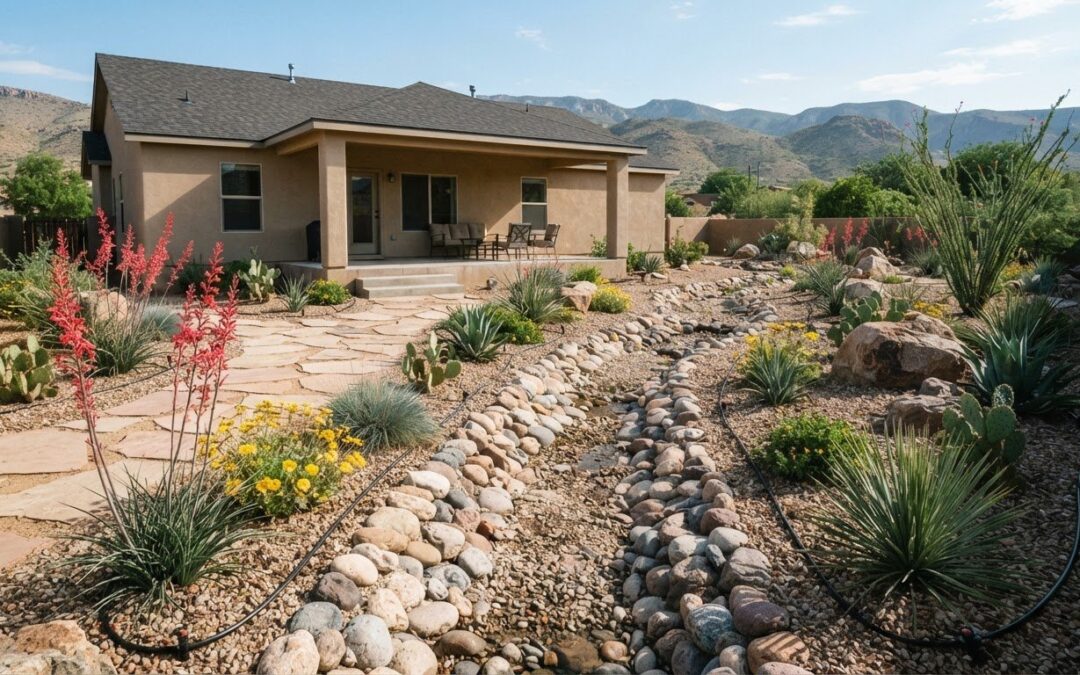
A beautiful Cottonwood yard doesn’t have to demand constant attention. Low maintenance landscaping in Cottonwood, AZ starts with plants suited to the local climate, a well-planned irrigation system, and outdoor features that reduce areas needing regular care. The goal is a landscape that looks considered while using water thoughtfully and keeping routine upkeep manageable.
That balance matters in Cottonwood, where heat, dry conditions, and irrigation needs influence how a yard performs through the seasons. Drought-tolerant plants can help reduce ongoing care, but layout, drainage, and watering choices also affect how much maintenance a landscape requires.
This guide explains how climate-smart planting, irrigation planning, and hardscape choices can make residential landscaping easier to maintain. You’ll learn how professional maintenance and irrigation services can help, which site details shape a design, and how to plan a yard that suits your home and the Verde Valley.
Key Takeaways
- Learn how irrigation planning and drainage choices can support a healthier yard while keeping routine care manageable.
- See how maintenance needs can differ between residential properties, shared community landscapes, and commercial sites.
- Explore how climate-suited planting and thoughtful landscape design can reduce ongoing upkeep.
- Understand when professional maintenance, drip system repair, or defensible space services may help address your property’s needs.
Irrigation and yard maintenance
In Cottonwood, an efficient irrigation plan matches water delivery to each planting area. A shaded shrub bed has different needs from a sunny strip of groundcover. Separate irrigation zones let you set appropriate schedules for each area, supporting water-efficient care and avoiding unnecessary watering. For low maintenance landscaping in Cottonwood, AZ, thoughtful zoning can also make routine adjustments easier.
The equipment affects how reliably water reaches plants. A controller manages schedules, while valves direct water to selected zones. Drip tubing and emitters deliver water near plant roots, making them useful for established beds and individual shrubs. Because a damaged line, clogged emitter, or controller problem can disrupt watering, maintenance should consider the entire route from controller to planting area.
- Controller: Troubleshooting can address schedule or zone operation problems that affect watering consistency.
- Drip lines: Irrigation drip system repair can resolve leaks or damaged tubing that interrupt delivery.
- Emitters: A blocked or misplaced emitter can leave a nearby plant dry while water continues elsewhere.
- Valves and zones: Reviewing how each section operates helps identify uneven coverage and wasted flow.
Routine yard maintenance should account for changing plant needs and visible irrigation issues. While caring for planting beds, a landscape professional can inspect drip lines for leaks, overspray, pooling, or dry patches. These signs help distinguish an irrigation fault from a placement or drainage concern. Addressing the cause supports plant health and helps prevent recurring disruption.
For low maintenance landscaping in Cottonwood, AZ, irrigation design and upkeep need to work together. A well-zoned system supports targeted watering, and suitable equipment makes adjustments easier. If a controller stops responding or drip delivery becomes uneven, professional troubleshooting or repair can restore system function and help keep landscape care on track.
Smart watering can complement zone-based irrigation. Green Earth, LC provides irrigation services that support water conservation and landscape health, including controller troubleshooting and system audits.
Yard conditions matter when water pools or soil shifts. Green Earth, LC provides grading and drainage solutions that address site conditions alongside irrigation upkeep.
Services in Cottonwood and nearby communities
Landscaping needs vary from a compact Cottonwood yard to shared community grounds. Permit requirements depend on the proposed work and applicable City of Cottonwood requirements; HOA rules are set by each association’s governing documents. Effective planning starts with assessing the site, selecting suitable features, and coordinating layout, irrigation, and construction details.
Cottonwood Landscaping Services
Landscaping services in Cottonwood can bring planting areas, irrigation, hardscape, and drainage together as one functional space. For example, sloped ground may call for grading alongside paths or planting beds. Consider how each element works with the others, including how water moves and how much routine care different areas need.
HOA and commercial properties can have different maintenance needs from private residences. Shared grounds may include multiple planting zones, walkways, and entrances. A clearly defined scope helps align landscape work with how the property is used and maintained.
Nearby Service Areas
Cottonwood is in the Verde Valley in Northern Arizona. The site itself guides landscaping work: a sloped lot, exposed outdoor area, or existing hardscape can shape the project requirements. Green Earth, LC serves properties in Cottonwood, Sedona, and Camp Verde.
When discussing a project anywhere in the Verde Valley, describe the site, existing features, and your goals. This helps define the work, whether you’re planning a residential yard, shared grounds, or a commercial property.
Landscape Planning and Installation
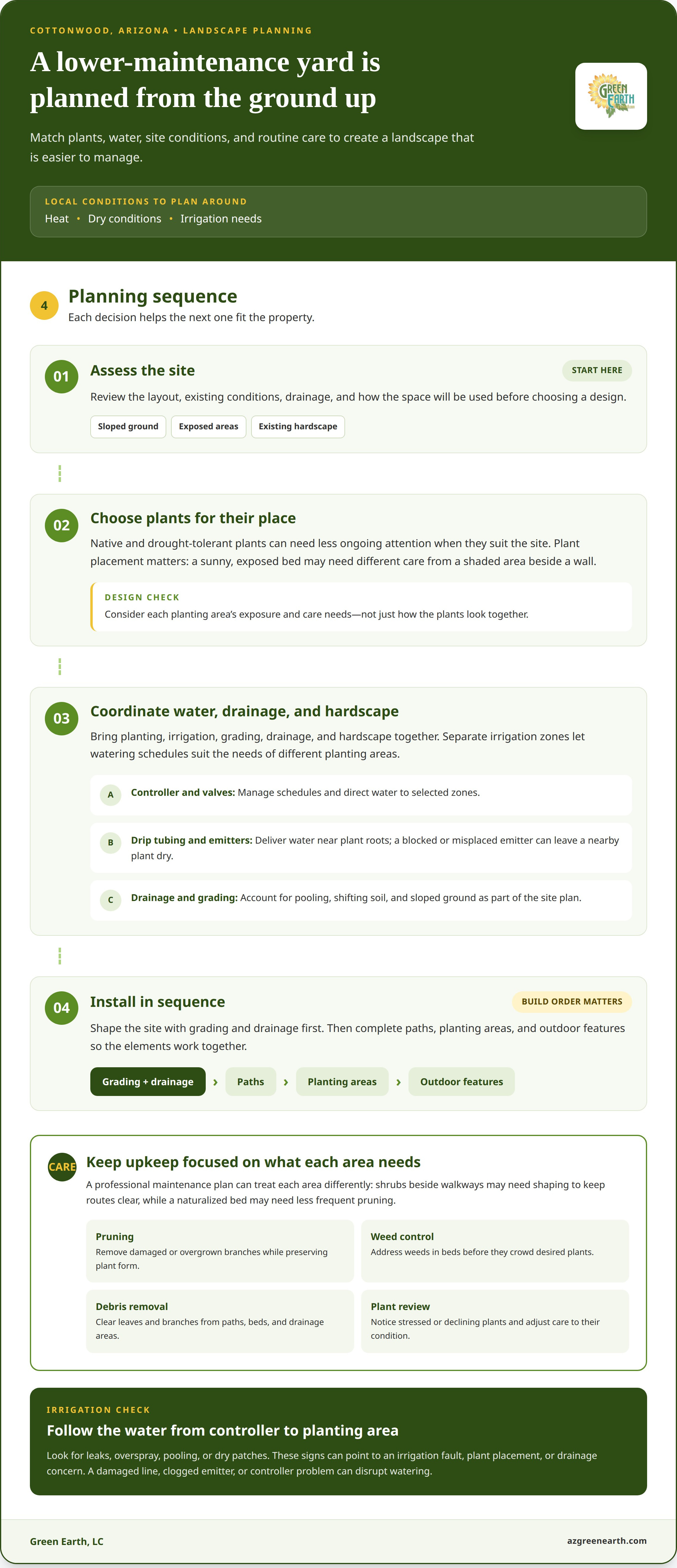
A lower-maintenance landscape starts with a site assessment. Professionals review the layout, existing conditions, drainage, and intended uses before developing a design. They can then coordinate planting, irrigation, and hardscape so the elements suit the property and work together.
During installation, the sequence matters: grading and drainage shape the site before paths, planting areas, or outdoor features are completed. Professional landscape planning can help bring those choices together into a coherent design for a Cottonwood property.
Landscape maintenance
Lower-maintenance care starts with choosing plants suited to Cottonwood’s conditions. Native and drought-tolerant plants can need less ongoing attention when they’re a good fit for the site. Placement matters too: a sunny, exposed bed may call for different care from a shaded area beside a wall. A practical landscape balances appearance with manageable upkeep.
A professional maintenance plan treats each area according to its needs. Shrubs beside a walkway, for example, may need shaping to keep the route clear, while a naturalized bed may need less frequent pruning. Reviewing plant growth, condition, and nearby surfaces helps determine what will preserve the design without unnecessary trimming.
Regular landscape visits can focus on practical tasks that protect the property as a whole:
- Pruning: Remove damaged or overgrown branches while preserving each plant’s form.
- Weed control: Address weeds in planting beds before they crowd desired plants.
- Debris removal: Clear fallen leaves and branches from paths, beds, and drainage areas.
- Plant review: Identify stressed or declining plants and adjust maintenance to their condition.
These tasks maintain the landscape without constant reshaping or replacement. Repeated trimming, for instance, may mean a shrub has outgrown its location. A maintenance professional can identify the pattern and recommend adjusting the planting layout, helping keep the yard orderly while reducing recurring work in that spot.
Location shapes the plan, too. Planting suited to a Prescott property shouldn’t automatically be copied in Cottonwood. Sun exposure, plant selection, and irrigation all affect maintenance needs. A site assessment connects these factors to a practical care schedule, clarifying which areas need regular attention and which can remain more natural.
For HOAs and commercial properties, consistent maintenance helps shared outdoor areas retain a cared-for appearance. A defined scope can cover entrances, common planting beds, and walkways together. Matching tasks to plant growth and property use supports a healthy landscape without avoidable work.
For Cottonwood landscapes, Green Earth, LC recommends native and drought-tolerant plants suited to local conditions. Choosing plants with manageable care needs can help reduce routine upkeep.
Cottonwood climate and landscape conditions
Cottonwood’s dry conditions make plant selection, ground cover, shade, and surface materials important design decisions. A landscape plan works best when each element suits the property’s sun exposure, slope, and intended use.
Low-Maintenance Plants
Choose plants adapted to dry conditions and the specific Cottonwood site. Native and drought-tolerant plants are practical starting points, but sun exposure and soil matter as well. A sunny entry bed may need different plants from a shaded side yard. A landscape professional can assess these areas and group plants with similar needs to create a cohesive, easier-to-maintain design.
Drought-Tolerant Native Plants
For Verde Valley landscapes, prioritize native plants suited to local conditions and low-water planting plans. The right choices depend on sun, soil, and growing space, so no single plant suits every yard. Don’t carry Prescott planting choices over to Cottonwood without assessing the property and its conditions first.
Ground Covers and Lawn Alternatives
Ground covers and lawn alternatives can reduce the area that needs regular mowing. Use planted beds, gravel, or mulch where a lawn isn’t needed for play or gathering. In xeriscaping, gravel and stone can define paths or open areas, while mulch can cover planting beds. Choose materials to suit drainage and the overall design, not appearance alone.
Low-Upkeep Shade Trees
For shade, choose drought-tolerant native trees suited to the planting location, not just for their mature appearance. Allow room for the canopy and roots, and consider nearby walls, paths, and seating. A well-placed tree can shade a gathering area; retaining walls can help shape sloped planting areas as part of the overall layout.
Plan retaining walls for your landscape as part of a design that responds to Cottonwood’s terrain and planting needs.
Green Earth, LC
Green Earth, LC helps property owners create lower-maintenance landscapes with maintenance and irrigation services. Turn to the team for ongoing HOA or commercial landscape care, or when an existing drip system needs repair. Firewise Defensible Space is also available as part of a considered landscape plan.
For an established landscape, maintenance helps keep planting areas orderly and identify issues affecting the property’s appearance. If irrigation problems are adding to upkeep, drip system repair or controller troubleshooting can address equipment concerns. The right next step depends on your property, its current landscape, and the work you want done.
Contact Green Earth, LC to discuss your landscaping needs.
Shape a Landscape That Fits Your Home
Start by deciding how you want your outdoor space to function. Consider which areas should stay open, where shade would improve comfort, and how much ongoing care you can manage. These priorities give a landscape professional a clearer starting point than appearance alone.
A plan for low maintenance landscaping in Cottonwood, AZ should connect your goals with the property’s conditions. Discuss the areas you use most, the features you want to keep, and the changes that would make everyday upkeep easier. This helps establish a practical direction for design and long-term care.
Green Earth, LC can help you move from general goals to a considered landscape plan. Contact Green Earth, LC to discuss your property and the next steps. A well-planned outdoor space can feel inviting while fitting the way you want to care for it.
Frequently Asked Questions
How can a landscaping professional help reduce irrigation maintenance and water bills in Cottonwood?
A landscaping professional can identify leaks, uneven coverage, or controller settings that lead to unnecessary watering. Green Earth, LC provides irrigation service, including system audits, leak detection, seasonal maintenance, and controller troubleshooting. An audit, for example, can reveal a drip line watering an empty bed or a sprinkler overshooting a paved area. Addressing these issues can reduce avoidable water use and recurring system problems.
Recent Comments