
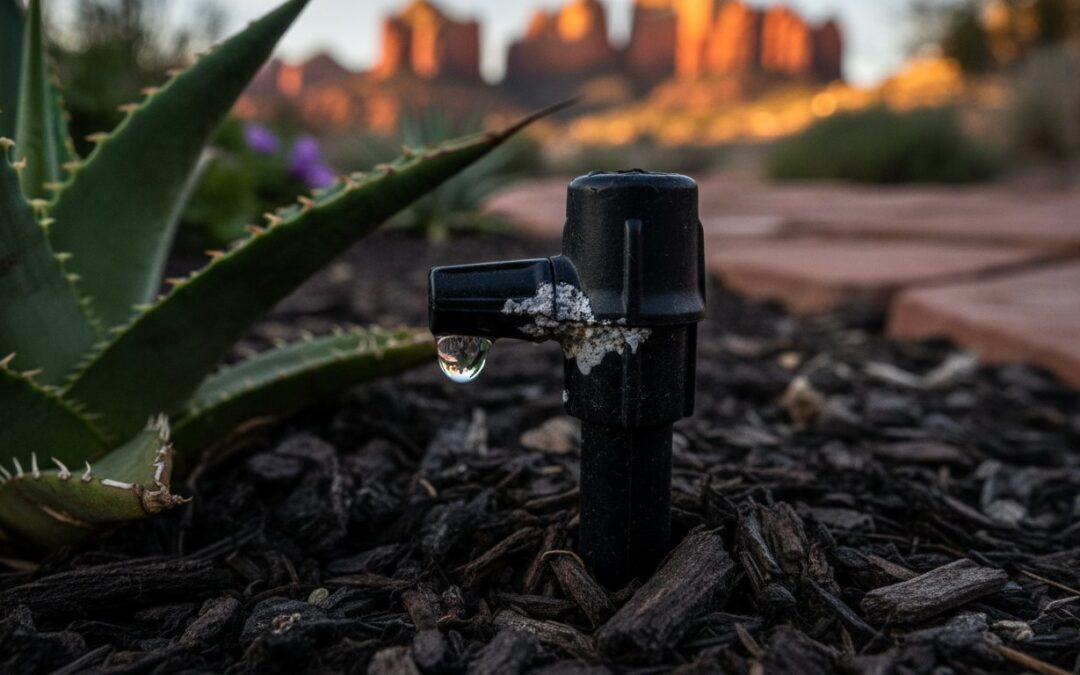
In the high desert of Northern Arizona, a slight drop in water pressure isn’t just a minor technical glitch; it’s a direct threat to the survival of your landscape. It’s disheartening to watch your native plants struggle in the heat while your water bills remain high, especially when you can’t quite figure out why your emitters are barely trickling. You’ve worked hard to create a sustainable outdoor space, and the complexity of irrigation valves and regulators shouldn’t stand in the way of its health. This guide will help you identify the root causes of low water pressure in drip irrigation system Arizona and provide actionable fixes to restore your system’s performance.
We’ll examine common regional challenges like mineral calcification and javelina damage, while also simplifying the technical aspects of pressure regulation and valve maintenance. By the end, you’ll have a clear path to protecting your landscape investment and ensuring every drop of water is used effectively. Our goal is to help you transition from a struggling system to a thriving, water-wise sanctuary that stands up to the unique demands of the Sedona and Flagstaff climates. Whether you’re managing a residential garden or a large HOA property, understanding these mechanics is the first step toward long term sustainability.
Key Takeaways
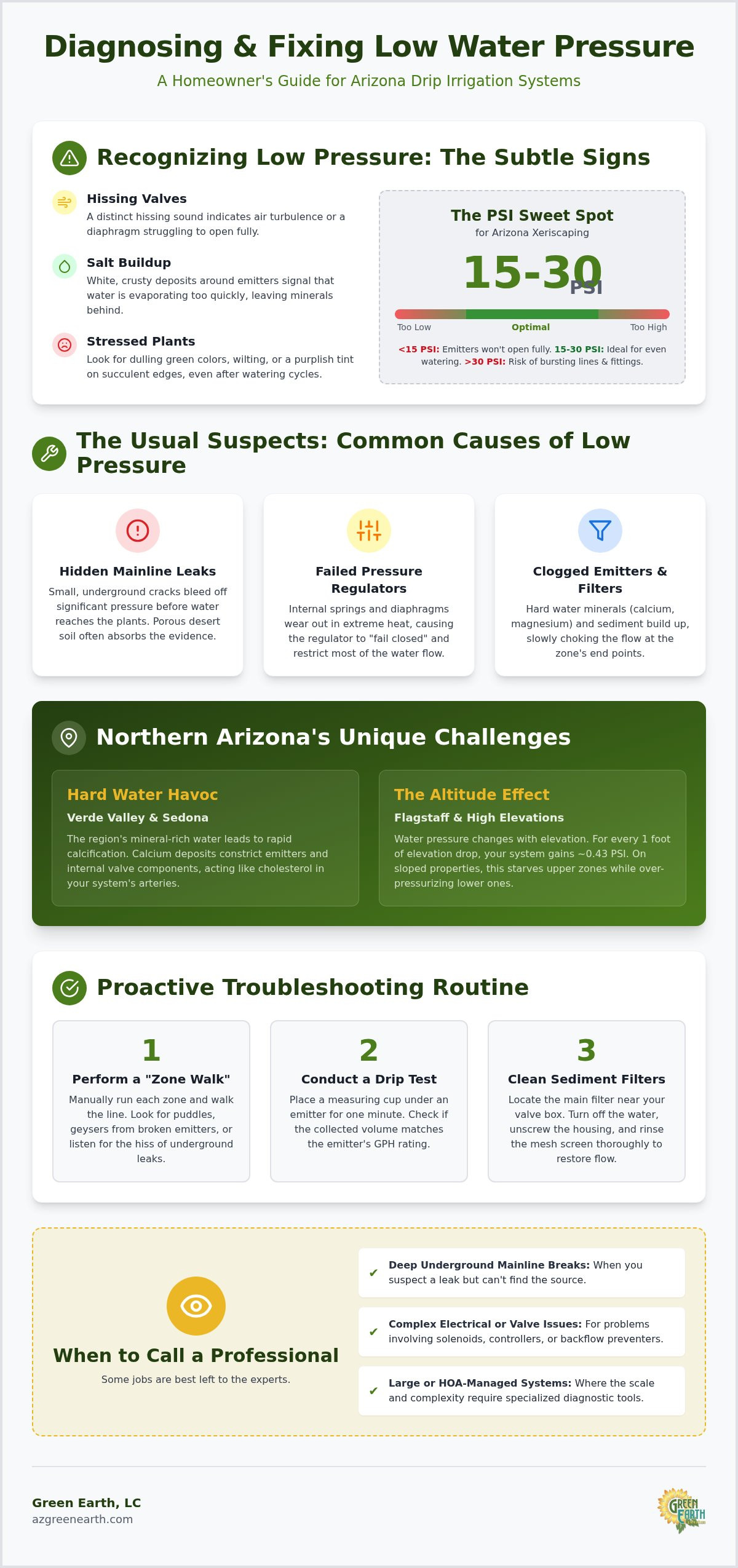
- Identify subtle symptoms of system failure, such as salt buildup on emitters or hissing valves, and learn why maintaining 15-30 PSI is essential for desert landscapes.
- Discover the most common causes of low water pressure in drip irrigation system Arizona, ranging from hidden mainline leaks to malfunctioning backflow preventers.
- Understand how regional factors like the hard water of the Verde Valley and the high altitude of Flagstaff create unique challenges for your irrigation components.
- Master a proactive troubleshooting routine that includes performing a “Zone Walk” and cleaning sediment filters to restore optimal flow to your native plants.
- Recognize when to transition from DIY fixes to professional irrigation repair, especially for complex HOA systems or deep underground mainline breaks.
Recognizing Low Water Pressure in Arizona Drip Systems
In the arid climates of Sedona and the Verde Valley, identifying low water pressure in drip irrigation system arizona requires a keen eye for subtle environmental shifts. Unlike a traditional sprinkler system that announces failure with a visible dry patch, a drip system often fails quietly. You might notice your desert willow or agave looking slightly off-color before they truly begin to wilt. This “stress coloring” often manifests as a dulling of the natural vibrant greens or a slight purpling of succulent edges. If you notice salt buildup, those white, crusty deposits around your emitters, it’s a sign that water is moving too slowly to flush out minerals. You might also hear a distinct hissing sound from your valves, which indicates air turbulence or a diaphragm struggling to open against insufficient pressure.
Visual Cues of Under-Irrigated Landscapes
A healthy drip irrigation system should deliver water directly to the root zone without creating runoff. To verify your output, perform a manual drip test by placing a small measuring cup under an emitter for one minute. If the volume doesn’t match the gallon-per-hour (GPH) rating of your emitter, you’re likely facing a pressure deficit. Another deceptive sign is soil crusting. In areas like Prescott or Camp Verde, the sun can bake the top layer of soil into a hard shell. This crust can mask low water delivery because the surface looks damp, yet the moisture never reaches the deep roots where it’s needed most. This makes low pressure an invisible water waster; homeowners often increase run times to compensate for poor output, leading to surface evaporation rather than deep hydration.
The Mechanical Basics of Pressure Regulation
Your system relies on a delicate balance, typically referred to as the PSI Sweet Spot. For most Arizona xeriscaping, maintaining a pressure between 15 and 30 PSI is critical. If the pressure drops below 15 PSI, the emitters won’t open fully, leading to uneven watering across the zone. Conversely, exceeding 30 PSI can cause fittings to pop and lines to burst. A pressure regulator is designed to manage this flow, but these components often fail in the extreme Arizona heat as internal springs and diaphragms lose their elasticity over time.
Elevation also plays a significant role, particularly for properties in Flagstaff. Water gains approximately 0.43 PSI for every foot of elevation drop. If your landscape has significant slopes, plants at the bottom might receive too much pressure while those at the top suffer from low water pressure in drip irrigation system arizona. Understanding whether your pressure loss is system-wide or confined to a single zone is the first step in effective Irrigation Controller Troubleshooting. If every plant is struggling, the issue likely lies with the main regulator or backflow preventer. If the problem is localized, you’re likely dealing with a clogged filter or a restricted lateral line.
Common Causes of Low Pressure in Desert Drip Lines
Identifying the source of low water pressure in drip irrigation system arizona requires looking beyond the emitters. While a clogged nozzle is common, systemic pressure loss usually points to a mechanical failure or a breach in the supply line. In our arid environment, components are pushed to their limits by mineral-heavy water and intense heat. A mainline leak is often the most deceptive culprit. Because these lines are under constant pressure, even a small crack can bleed off significant volume before the water ever reaches your plants. These leaks don’t always create a surface puddle; in our porous desert soils, the water may simply drain straight down, leaving you with dying plants and a skyrocketing water bill.
Pressure regulators are also frequent points of failure. These devices are designed to step down high municipal pressure to a safe level for drip tubing. However, when the internal spring or diaphragm fails, the regulator can “fail closed,” restricting flow so severely that the system cannot function. This results in a situation where you have plenty of pressure at the hose bib but almost none at the plant. Additionally, Arizona’s hard water causes rapid emitter calcification. Calcium and magnesium deposits slowly constrict the internal labyrinths of your emitters, effectively choking the life out of your irrigation zones.
Valve and Backflow Complications
The solenoid valves that gate your water flow are precision instruments. If a tiny piece of grit or a grain of sand bypasses your filter and lodges in the valve diaphragm, it can prevent the valve from opening fully. This mechanical restriction creates a bottleneck that starves the entire zone. You can often diagnose this by using the manual bleed screw on the valve. If the pressure improves when the valve is opened manually, the issue likely resides with the solenoid or the controller’s electrical signal. For larger properties, Irrigation Controller Troubleshooting is often necessary to determine if a master valve is failing to open, which would cause a total loss of pressure across all zones.
Physical Damage and Pipe Fatigue
Physical degradation is an unavoidable reality in Northern Arizona. In Sedona and Camp Verde, the high UV index causes exposed poly-tubing to become brittle and crack, leading to multiple small leaks that aggregate into a major pressure drop. Furthermore, thirsty desert trees like Mesquites will often send roots toward the slightest hint of moisture, eventually crushing or infiltrating the lines. Pipe fatigue in Arizona is the structural weakening of irrigation lines caused by the repeated expansion and contraction of materials during 40-degree diurnal temperature swings. This constant stress eventually leads to hairline fractures in PVC and poly-lines alike, compromising the integrity of your entire system.
Northern Arizona Regional Pressure Challenges
While Phoenix landscapes deal with extreme heat, Northern Arizona homeowners face a different set of environmental stressors. In the Verde Valley and Sedona, the geological composition creates specific hurdles that lead to low water pressure in drip irrigation system arizona. Our region’s water is notoriously rich in calcium carbonate, which acts like “cholesterol” for your irrigation lines. Over time, these minerals solidify into a rock-hard crust that narrows the internal diameter of your tubing and chokes off emitters. Meanwhile, properties in Flagstaff must contend with dramatic elevation changes. Gravity can either surge pressure at the bottom of a slope or starve the zones at the top, making precise calibration a necessity for high-altitude gardening.
Sedona’s iconic red rocks and rocky terrain present another physical challenge. As the ground shifts during the freeze-thaw cycles of winter, sharp rocks can crimp or even puncture buried poly-tubing. This underground damage often goes unnoticed until your plants begin to fail. Unlike the sandy soils of the southern desert, our local terrain requires specialized installation techniques to protect lines from the weight of shifting earth and stone. Understanding these regional nuances is vital for anyone performing Irrigation Drip System Repair in our unique climate.
Mineral Buildup and Calcification Solutions
If you see white, crusty deposits forming around your emitter heads in Cottonwood or Camp Verde, you’re looking at advanced calcification. Standard flushing often fails to dislodge these deposits once they’ve bonded to the plastic. For older systems, we recommend a more sustainable approach. Soaking removable emitters in a mild citric acid or vinegar solution can dissolve the calcium without introducing harsh synthetic chemicals into your soil. This maintains the ecological health of your garden while restoring the precise flow rates your native plants require to survive the summer months.
Wildlife and Pest Damage Diagnostics
Wildlife interference is perhaps the most frustrating cause of low water pressure in drip irrigation system arizona. During the dry pre-monsoon season, javelinas, coyotes, and rodents become desperate for hydration. They can smell the water inside your poly-tubing and will bite through the lines to reach it. You can distinguish these “taps” from pressure cracks by looking for ragged, serrated edges on the tubing. Javelinas are particularly notorious in Sedona for targeting specific zones where moisture is most concentrated. To prevent this, we often suggest burying lines at least six inches deep or upgrading to armored, rodent-resistant tubing in high-traffic wildlife corridors. Protecting your system from these thirsty neighbors is essential for long-term water conservation and landscape health.
Step-by-Step Troubleshooting for Homeowners
Troubleshooting low water pressure in drip irrigation system arizona begins with a methodical “Zone Walk.” Start at the valve box and trace the path of your lateral lines through every garden bed. You’re searching for tell-tale signs of a breach; look for saturated soil or unusually vibrant plants that might be hogging the water supply. If the plants at the end of the line are wilting while those near the valve are thriving, you likely have a flow restriction or a leak siphoning off the energy needed to reach the perimeter. This initial visual audit is the most effective way to map out where the pressure drop actually begins.
Flushing the System to Restore Flow
Arizona’s environment introduces fine particulates into your lines that eventually settle and choke off flow. Locate the end-caps of your drip zones, which are typically found at the furthest point of each poly-tubing run. Open these caps and run the system for several minutes in what we call the “Clear Water Test.” You should continue flushing until the discharge is free of the reddish silt or grey sediment common in our local soils. To inspect your drip filter for the fine volcanic ash common in Northern Arizona, remove the mesh screen and rinse it in a bucket of clean water to see if dark, gritty sediment settles at the bottom. This simple maintenance step can immediately restore the velocity needed to keep emitters clear.
Testing and Replacing the Pressure Regulator
A faulty regulator is a prime suspect when pressure drops across the entire landscape. You can test this by attaching a simple hose-bib pressure gauge to your system’s assembly. Establish a baseline by checking the pressure coming directly from your home’s main line; it’s often 60 to 80 PSI. If the gauge reads significantly below 15 PSI after the regulator while the valve is open, the internal diaphragm is likely “stuck” in a closed position. When choosing a replacement, look for a preset 25 or 30 PSI regulator to provide the ideal balance for Arizona’s native shrubs and succulents. This ensures your emitters operate within their engineered specifications without risking blowouts from high-pressure surges.
Minor leaks in your lateral lines can often be patched with simple couplers once identified during your zone walk. However, if your troubleshooting reveals systemic issues or if the pressure remains inconsistent despite your efforts, it’s time to seek expert intervention. Professional Irrigation Drip System Repair can calibrate your system to peak efficiency, ensuring your desert oasis thrives while adhering to responsible water management practices. Taking action early prevents the costly loss of established plants and reduces the strain on our shared water resources.
When to Call a Professional for Irrigation Repair
While minor clogs are manageable, systemic low water pressure in drip irrigation system arizona often signals deep-seated mechanical or structural failures. If you’ve flushed your lines and checked your filters but still face wilting plants, the problem might be an underground mainline break. These breaches require professional excavation and specialized pressure-testing equipment to locate without damaging your entire yard. For commercial properties and HOAs, complex wiring and solenoid malfunctions in high-capacity valves demand a level of diagnostic precision that goes beyond standard homeowner tools. Identifying an electrical short in a multi-zone controller requires a disciplined approach to ensure the system’s integrity isn’t further compromised.
Green Earth, LC brings over 47 years of experience to every project, ensuring that irrigation repair in Flagstaff isn’t just a quick fix but a long-term investment in your land’s health. We specialize in identifying the subtle electrical faults and hydraulic imbalances that lead to chronic low pressure. Our approach combines technical mastery with a commitment to environmental stewardship, helping you preserve the natural beauty of the Verde Valley while minimizing water waste. We treat every landscape as a unique ecological system that requires precise calibration to thrive in our specialized climate.
The Value of Professional Water Audits
A professional audit is the most effective way to identify where your system is losing efficiency. For Sedona businesses, this process can save thousands in annual water costs by pinpointing exactly where low water pressure in drip irrigation system arizona is causing over-compensation in run times. We calibrate every zone to complement your desert landscape design Northern Arizona, ensuring that moisture reaches the deep roots of native species. This calibration also ensures your property meets Firewise standards by maintaining the necessary moisture retention in your defensible space to protect against seasonal fire risks.
Sustainable Upgrades for Aging Systems
Modernizing an aging system involves more than just patching holes. We often recommend converting old, inefficient zones to pressure-compensating emitters, which maintain a steady flow regardless of elevation changes or distance from the valve. Integrating drainage grading Arizona into your irrigation plan also prevents erosion and ensures that natural rainfall works in harmony with your drip system. Professional maintenance remains your best defense against the harsh diurnal shifts and intense UV exposure of our region. By upgrading to smart, weather-based controllers, you can protect your landscape investment while remaining a responsible guardian of our local water resources.
Securing the Future of Your Northern Arizona Landscape
Managing a desert garden requires a deep understanding of the delicate balance between water delivery and environmental stress. By identifying the early signs of low water pressure in drip irrigation system arizona, you can intervene before your native plants suffer permanent damage. Whether you’re clearing mineral deposits from emitters in the Verde Valley or adjusting for elevation shifts in Flagstaff, proactive maintenance is the key to a resilient, beautiful landscape. Your irrigation system is the lifeline of your property; keeping it calibrated ensures every drop contributes to a thriving ecosystem rather than becoming a source of waste.
When technical challenges exceed your DIY efforts, partnering with a seasoned expert provides the peace of mind you deserve. With over 47 years of Arizona landscaping expertise and a history as a Sustainable Landscape Designer Award Runner-Up, Green Earth, LC understands the specific micro-climates of Sedona and Flagstaff. We’re committed to excellence in craftsmanship and environmental integrity. Schedule your professional irrigation diagnostic with Green Earth, LC today to protect your outdoor investment. Your vision of a vibrant, sustainable oasis is well within reach.
Frequently Asked Questions
Is 20 PSI enough for a drip irrigation system in Arizona?
Yes, 20 PSI is within the ideal operating range for most desert drip systems. Emitters are generally engineered to function best between 15 and 30 PSI to ensure uniform water distribution across your landscape. If your pressure falls below this threshold, the emitters may fail to open or provide inconsistent flow. Maintaining this specific range protects your poly-tubing from high-pressure bursts while providing enough force to overcome friction loss in longer runs.
How do I find a hidden leak in my underground drip line?
Finding a hidden leak requires looking for surface anomalies like unexplained damp spots, sunken soil, or patches of unusually lush vegetation. You can also perform a pressure test by capping all emitters and checking if your water meter continues to spin. In Northern Arizona’s porous soils, water often drains downward rather than pooling on the surface. If you suspect a breach but see no signs, professional acoustic leak detection may be necessary to prevent water waste.
Why do my drip emitters stop working after a few years?
Drip emitters typically fail due to mineral calcification or internal debris buildup. Arizona’s hard water contains high levels of calcium and magnesium that solidify inside the emitter’s narrow labyrinth, eventually choking off the flow. Additionally, the extreme UV index in Sedona and Cottonwood can degrade the plastic housing, making components brittle over time. Regular system flushing and using high-quality, pressure-compensating emitters can extend the lifespan of your irrigation components significantly.
Can hard water cause low pressure in my irrigation system?
Yes, hard water is a primary cause of low water pressure in drip irrigation system arizona. Over time, calcium carbonate scales the internal walls of your poly-tubing, reducing the pipe’s diameter and increasing friction. This restriction starves the emitters furthest from the valve. In regions like the Verde Valley, this mineral “choking” is a common systemic issue that requires periodic flushing or emitter replacement to restore the original flow velocity and protect your landscape investment.
How often should I clean my drip irrigation filter in the desert?
You should clean your drip filter at least once every three months, or more frequently during the monsoon season. Desert winds carry fine dust and organic debris that can quickly clog a standard mesh screen. In areas with volcanic soil, such as Flagstaff, fine ash can bypass coarse filters and settle in your lines. A clean filter is your first line of defense against systemic pressure loss and prevents sediment from reaching and clogging your emitters.
Will adding more emitters lower the water pressure in my system?
Yes, adding more emitters increases the total flow demand on your irrigation zone. Every valve has a maximum flow capacity, and if the combined output of your emitters exceeds the supply capacity, you will experience low water pressure in drip irrigation system arizona. It’s essential to calculate your total gallons-per-hour demand before expanding a zone. This ensures your pressure stays within the safe 15 to 30 PSI range required for healthy desert plant growth.
What is the best time of day to test my irrigation pressure?
The best time to test your irrigation pressure is during your system’s actual scheduled run time, typically in the early morning. Municipal water pressure fluctuates based on local demand. Testing at 5:00 AM provides a realistic look at the pressure your plants receive when other households are also using water. This ensures your regulator and valves are performing correctly under real-world conditions rather than during peak mid-day pressure surges when demand is lower.
Can I fix a pressure regulator myself or do I need a pro?
Homeowners can often replace a simple threaded pressure regulator located at a hose bib or valve manifold. However, if the regulator is integrated into a complex commercial or HOA backflow assembly, professional intervention is recommended. Incorrect installation can lead to high-pressure surges that blow out emitters or cause mainline fractures. A professional can also calibrate the system to ensure the pressure remains stable across varying elevations and slopes common in Northern Arizona.
Recent Comments