
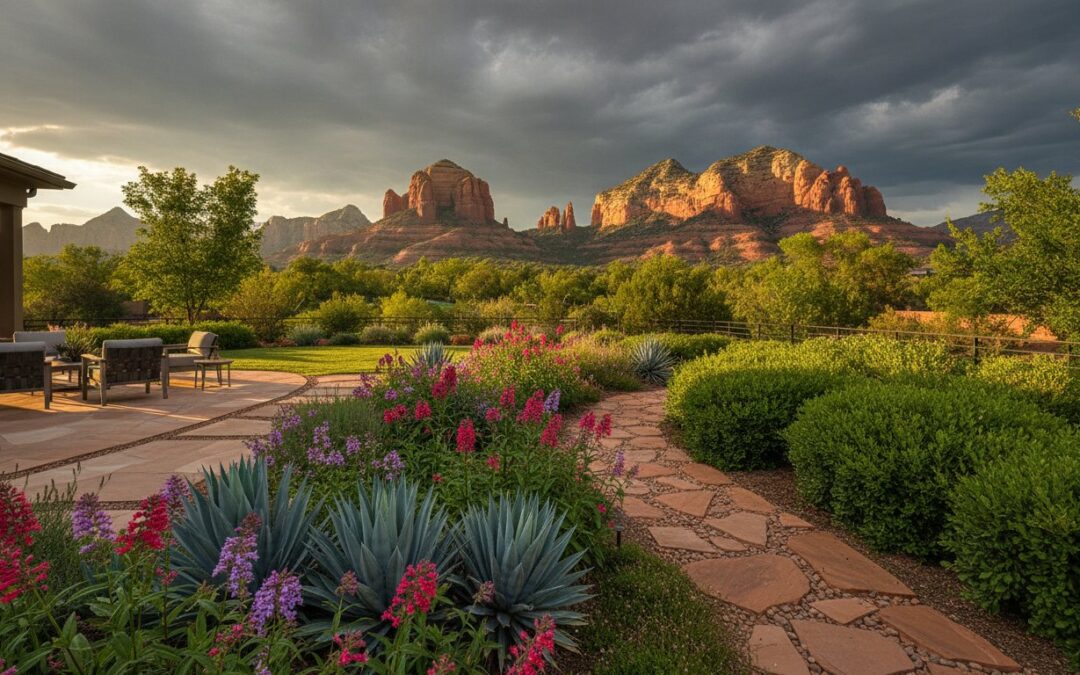
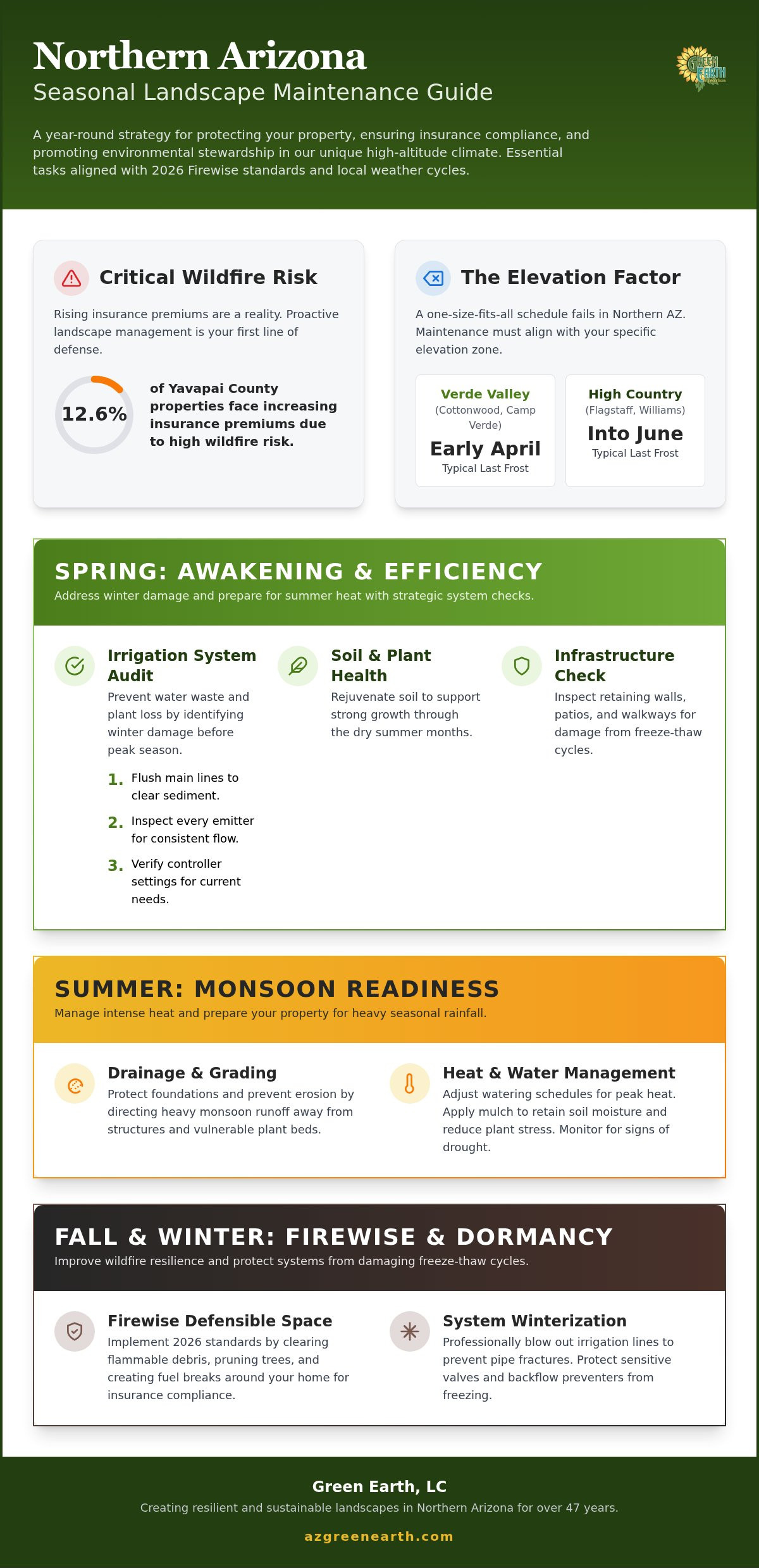
In 2026, a thriving backyard in Northern Arizona is more than a luxury. It is a vital asset for home safety and insurance compliance. With 12.6% of Yavapai County properties facing rising premiums due to wildfire risk, the way you manage your outdoor space has never mattered more. Most local homeowners already know that our high-altitude climate is as unforgiving as it is beautiful. You’ve likely experienced the sting of losing a prized shrub to a late Flagstaff freeze or felt the stress of preparing for the June 15 monsoon start. Effective seasonal landscape maintenance Arizona requires a deep understanding of these unique local cycles to prevent plant loss and manage water responsibly.
We are here to provide the clarity you need to protect your investment and the local environment. You’ll learn how to master the 12 month care requirements for our region, from high-altitude winterization to Sedona drainage solutions. This checklist previews the essential tasks for every season, including 2026 Firewise standards for defensible space, irrigation troubleshooting to reduce waste, and the specific timing for pruning that keeps your landscape resilient year round.
Key Takeaways
- Align your maintenance schedule with Northern Arizona’s distinct elevation zones to ensure plants receive care at the precise moment they need it.
- Execute a comprehensive spring irrigation audit to identify winter damage and optimize water delivery before the peak summer heat.
- Protect your property from heavy runoff by mastering monsoon-ready drainage and grading techniques tailored for the Verde Valley and surrounding highlands.
- Integrate 2026 Firewise defensible space standards into your seasonal landscape maintenance Arizona checklist to improve wildfire resilience and insurance compliance.
- Implement professional winterization strategies to safeguard irrigation systems and structural hardscapes against high-altitude freeze-thaw cycles.
Understanding Northern Arizona’s Unique Seasonal Maintenance Cycles
Northern Arizona presents a complex tapestry of climatic shifts that defy the standard desert stereotype. While the southern part of the state might follow a simpler hot to warm pattern, our region demands a more nuanced approach. Effective seasonal landscape maintenance Arizona hinges on recognizing that our year is defined by four true seasons, each bringing specific stressors to plants and infrastructure. Neglecting these transitions doesn’t just result in an untidy yard; it invites catastrophic irrigation failures, increased wildfire vulnerability, and the costly loss of established vegetation. We view landscape care as a form of environmental stewardship, where timely intervention preserves the delicate balance of our local ecosystems.
The Elevation Factor: Verde Valley vs. High Country
Elevation is the primary architect of our maintenance schedules. The Arizona/New Mexico Mountains ecoregion encompasses everything from the riparian basins of the Verde Valley to the alpine forests of the San Francisco Peaks. In the Verde Valley, communities like Cottonwood and Camp Verde often see their last frost in early April. In contrast, Flagstaff properties may experience freezing temperatures well into June. This drastic variation means a one size fits all Arizona checklist is fundamentally flawed. We track specific plant hardiness zones to ensure that pruning and fertilizing occur when the biology of the plant is ready, not just when the calendar says so. Failing to account for these 3,000 to 4,000 foot elevation gaps often leads to premature irrigation startup or the death of frost sensitive species.
Stewardship and Sustainability Goals
For over 47 years, our approach has been rooted in the belief that a well maintained landscape is a sustainable one. In the context of Northern Arizona, stewardship involves managing resources like water with extreme precision. Seasonal care is the most effective way to reduce long term replacement costs. When we audit systems and soil health quarterly, we prevent the “replace and repeat” cycle that plagues many unmanaged properties. Using native plants is a cornerstone of this strategy, as they are naturally adapted to our regional rainfall patterns and soil chemistry. For those managing larger properties, professional HOA landscape maintenance in Arizona ensures that these sustainability goals are met across common areas, protecting both the community’s budget and the regional ecological health. By aligning our work with the natural rhythms of the high desert and mountains, we create outdoor spaces that are resilient, beautiful, and environmentally responsible.
Spring Checklist: Awakening and Irrigation Efficiency
Spring in Northern Arizona is a season of recovery and strategic preparation. As the ground thaws, the primary goal of your seasonal landscape maintenance Arizona plan should shift toward infrastructure integrity and soil health. This is the critical window to address winter damage before the intense heat of May and June arrives. Rushing to prune or activate systems too early can be a costly mistake, especially in higher elevations where false springs are common. A disciplined approach during these months ensures your landscape has the structural strength to survive the coming dry spell.
Irrigation System Activation and Troubleshooting
The expansion of freezing water often causes hairline fractures in PVC pipes and drip emitters that remain invisible until the system is pressurized. We recommend a methodical three-step activation. First, manually flush the main lines to clear any accumulated sediment or mineral deposits that settled during dormancy. Second, inspect every emitter for consistent flow; a single clogged head can lead to localized plant death within days of the first heatwave. Finally, verify your controller settings to ensure they reflect current evaporation rates rather than mid-summer needs.
High-altitude systems in Coconino County face unique pressure challenges during the spring thaw. If you encounter low pressure or persistent leaks, seeking professional irrigation repair in Flagstaff is essential to ensure your system remains sustainable and water-efficient. Our team often finds that a simple irrigation controller troubleshooting session can save thousands of gallons of water by identifying hidden programming errors before they impact your utility bill.
Plant Health and Soil Prep
Soil preparation is the foundation of a resilient landscape. We suggest testing the pH of your soil, particularly if you’re growing high-desert ornamentals that require specific acidity levels to thrive in our alkaline earth. Spring is also the ideal time to apply slow-release fertilizers. These provide a steady stream of nutrients that support the natural growth flush without causing the rapid, weak growth associated with high-nitrogen alternatives.
Wait to prune frost-damaged limbs until you are certain the last freeze has passed. For the Verde Valley, this typically occurs by mid-April, but Flagstaff residents should often wait until early June to avoid exposing tender inner wood to a late cold snap. Once the weather stabilizes, thin out overgrown perennials to improve airflow and reduce the risk of early-season pests like aphids or spider mites. Finally, replenish organic mulch to a depth of two to three inches. This layer acts as a protective barrier, keeping roots cool and retaining precious moisture as the winds pick up in late spring.
Summer Checklist: Monsoon Readiness and Heat Management
Summer in Northern Arizona is a season of extremes. The transition from the arid pre-monsoon heat of June to the torrential rains of July requires a specialized approach to seasonal landscape maintenance Arizona. Between June 15 and September 30, the official monsoon window, your property must withstand both record-breaking temperatures and sudden, high-volume runoff. Failure to prepare for these shifts often results in foundation damage or the loss of heat-stressed vegetation. We focus on stabilizing the soil and optimizing water delivery to ensure your landscape remains resilient during these volatile months.
- Inspect property grading: Ensure soil slopes away from structures to prevent foundation flooding.
- Clear drainage channels: Remove silt and organic debris from swales and retaining wall weep holes.
- Adjust irrigation frequency: Increase watering depth during the June “dry heat” micro-season.
- Monitor monsoon weeds: Pull invasive species immediately after rain events before they go to seed.
Monsoon Mitigation and Drainage Grading
Flash floods are a serious concern in our region. With an average of two to three fatalities annually across the state, water management is a safety priority. Identifying poor drainage before the first storm hits is essential. Look for “craters” or compressed soil where water pooled in previous years. We often implement swales or French drains to redirect high-velocity runoff safely away from high-traffic areas. Managing commercial landscaping in Sedona AZ requires this level of proactive storm resilience to protect high-value hardscapes and retaining walls from erosion. Proper grading ensures that even the heaviest downpour becomes a resource for your soil rather than a threat to your infrastructure.
Protecting Plants from Extreme Heat
Heat stress can mimic the appearance of disease. Young trees and sensitive ornamentals often need temporary shade cloths during July’s peak afternoon sun to prevent leaf scorch. Water deeply. This encourages root depth. Instead of frequent, shallow watering, we recommend longer run times that allow moisture to penetrate the top 12 to 18 inches of soil. This technique is particularly vital for established native trees that may struggle during prolonged dry spells. Monitor your succulents closely. Soft, yellowing tissue often indicates overwatering from monsoon rains, while shriveled, leathery skin suggests the plant needs a deeper soak. By balancing these needs, you maintain a vibrant landscape through the most challenging months of the year.
Fall and Winter: Firewise Prep and Dormancy Care
As the vibrant colors of autumn settle over the Verde Valley and the first snow dusts the San Francisco Peaks, the focus of seasonal landscape maintenance Arizona shifts toward protection and safety. Fall in our region is not merely a time for leaf removal. It is a critical window for reducing wildfire fuel loads and safeguarding expensive irrigation infrastructure against the impending hard freezes of the high country. By taking a proactive approach to dormancy care, you ensure that your plants remain healthy while significantly lowering the risk to your property during the next fire season.
Firewise Landscaping and Defensible Space
Wildfire resilience is a year-round commitment in Northern Arizona. Implementing firewise landscaping in Cottonwood AZ and surrounding areas requires a disciplined management of the three-zone defensible space system. We prioritize the maintenance of Zone 1, the 30-foot perimeter immediately surrounding your structures. This involves removing accumulated pine needles from roofs and thinning out dense vegetation to ensure tree crowns are spaced at least 10 feet apart. A vital task during this season is the removal of “ladder fuels.” These are the low-hanging branches on mature Ponderosa pines and junipers that allow a ground fire to climb into the tree canopy. Clearing these fuels is one of the most effective ways to protect your home from high-intensity crown fires.
If you are concerned about meeting the 2026 insurance requirements for your property, our team provides expert Firewise defensible space inspections and thinning services to help you remain compliant and safe.
Winterization and Frost Protection
For residents in Flagstaff and Prescott, winterization is a race against the first deep freeze. Draining your irrigation backflow preventer is the single most important step to prevent burst pipes and costly emergency repairs. In the slightly more temperate Verde Valley, we focus on protecting sensitive palms or citrus trees using burlap wrapping to insulate the trunk and crown. It is also essential to adjust your irrigation controller for the winter months. Dormant plants require significantly less water; continuing a summer schedule during winter often leads to root rot and fungal issues in the cold, damp soil.
Once deciduous trees have entered full dormancy, typically after the first few hard frosts, we begin structural pruning. This timing minimizes stress on the tree and allows for a clear view of the branch architecture. Finally, applying a layer of pre-emergent herbicide in late fall prevents the winter weed outbreaks that often follow our seasonal moisture. This stewardship-first approach protects your soil’s nutrient balance and reduces the labor required when spring eventually returns.
The Value of Professional Seasonal Management in 2026
Managing a property in Northern Arizona has evolved into a sophisticated exercise in risk management and resource conservation. While a checklist provides the necessary framework, the technical execution of seasonal landscape maintenance Arizona requires a level of precision that only comes from decades of local experience. In 2026, as water regulations tighten and fire insurance mandates become more rigorous, the difference between “good enough” yard work and professional stewardship can mean the difference between a resilient landscape and a costly liability. We provide the continuity and expertise needed to navigate these high-stakes seasonal shifts.
Customized Maintenance for HOAs and Commercial Properties
Large-scale properties require a strategic partner capable of managing complex systems and multi-layered budgets. Effective HOA landscape maintenance in Arizona demands more than just aesthetic care; it requires a deep understanding of community-wide irrigation networks and fire safety compliance. We help boards and managers avoid the “reactive cycle” by identifying potential failures before they occur. Our proactive planning for 2026 landscape upgrades and hardscaping ensures that community assets are protected and that all common areas meet current fire ordinances without sacrificing regional beauty.
- Irrigation Efficiency: We perform detailed audits and irrigation controller troubleshooting to eliminate water waste and reduce utility costs.
- Compliance: Our team ensures every acre of your property adheres to the latest Firewise defensible space standards.
- Legacy Expertise: With over 47 years of experience in the Verde Valley, we understand the specific soil chemistry and climate stressors of our region.
The Green Earth, LC Difference
Our commitment to sustainable Northern AZ beauty is rooted in a passion for the natural world and a disciplined approach to craftsmanship. As a statewide runner-up for Best Sustainable Landscape Designer, we leverage eco-friendly practices that increase property value while respecting the local ecosystem. We utilize specialized equipment for drainage grading and fire mitigation, providing solutions that are both functional and visually stunning. This authoritative approach allows us to act as a visionary partner for our clients, transforming vague ideas into resilient realities. Contact us today for a comprehensive seasonal property audit to ensure your landscape remains a healthy, safe, and beautiful asset throughout 2026 and beyond.
Securing Your Northern Arizona Legacy for 2026
Mastering the unique environmental demands of the high desert and mountains requires more than a simple calendar. It demands a commitment to stewardship and a deep understanding of our regional climate cycles. By prioritizing elevation-specific irrigation audits and rigorous Firewise safety standards, you protect your property from the volatile shifts of the monsoon and the winter freeze. Effective seasonal landscape maintenance Arizona is a vital investment in the long-term health and value of your land.
As a statewide runner-up for Best Sustainable Landscape Designer with 47+ years of Northern Arizona expertise, we specialize in the complex requirements of HOA and commercial property management. Our team is ready to act as your visionary partner in maintaining a resilient, beautiful outdoor space that honors the natural world and meets the highest standards of craftsmanship. Take the first step toward a worry-free year by ensuring your systems are optimized for the challenges ahead.
Request a Seasonal Maintenance Quote from Green Earth, LC to schedule your comprehensive property audit. We look forward to helping your landscape thrive through every season of 2026.
Frequently Asked Questions
When is the best time to prune trees in Northern Arizona?
The ideal time for major structural pruning is during late winter or early spring while plants are dormant. This timing allows the tree to heal quickly as growth begins when the weather warms. For flowering species, wait until after their bloom cycle to avoid cutting off new buds. Pruning during dormancy also minimizes the risk of attracting certain pests that are active in warmer months.
How often should I water my desert landscape in the winter?
Most dormant plants only require deep watering once or twice a month during the winter. This prevents root desiccation when natural precipitation is low. You should monitor soil moisture levels and water only when the top few inches are dry, ensuring the ground isn’t frozen. Proper winter moisture is essential for the plant’s survival and its ability to flush new growth in the spring.
Does my HOA require me to follow Firewise landscaping standards?
Many HOAs in the Wildland-Urban Interface now require residents to adhere to Firewise standards. This is often driven by 2026 insurance requirements that mandate proof of defensible space for policy renewals. Checking your specific community bylaws is essential to ensure compliance. Maintaining these standards doesn’t just satisfy regulations; it significantly increases the safety and resilience of your entire neighborhood against wildfire threats.
What are the most common signs of irrigation leaks in Arizona?
Common signs of leaks include unexplained pooling water, overly lush patches of weeds, or a sudden decrease in emitter pressure. If your water bill increases without a change in usage, it’s often a sign that an underground line needs professional attention. Identifying these issues early through irrigation drip system repair prevents soil erosion and protects your landscape budget from high utility costs.
How can I protect my plants from the Sedona monsoon winds?
Protecting plants from Sedona winds involves thinning out dense canopies to allow air to pass through more easily. This reduces the “sail effect” that causes trees to topple during microbursts. For younger plants, using sturdy stakes and soft ties provides the necessary support during high-velocity monsoon gusts. Proper structural pruning is your best defense against the physical stress of summer storm systems.
Is professional seasonal maintenance worth it for small residential yards?
Professional seasonal landscape maintenance Arizona provides significant value even for smaller properties. Expert oversight prevents the rapid plant loss often caused by Arizona’s extreme temperature swings. A single missed irrigation adjustment or improperly timed pruning can lead to replacement costs that far exceed the price of a professional audit. We help you maintain a healthy, beautiful yard while reducing long-term waste.
What is the difference between a drip system and a sprinkler system for desert care?
Drip systems deliver water directly to the root zone through emitters, which minimizes evaporation in our arid climate. Sprinkler systems are typically used for large turf areas but are less efficient for desert plants because they lose significant water to the wind and heat. Drip systems are the preferred choice for sustainable, water-conscious landscaping because they provide precise moisture control where it’s needed most.
How do I prepare my Flagstaff garden for the first hard freeze?
Preparing for a Flagstaff freeze requires insulating all exposed pipes and draining your irrigation backflow preventer to prevent burst lines. Adding a fresh layer of organic mulch around the base of sensitive perennials helps regulate soil temperature and protect roots. You should also wrap the trunks of young or thin-barked trees to prevent sunscald, which occurs during the intense high-altitude winter sun.
Recent Comments