
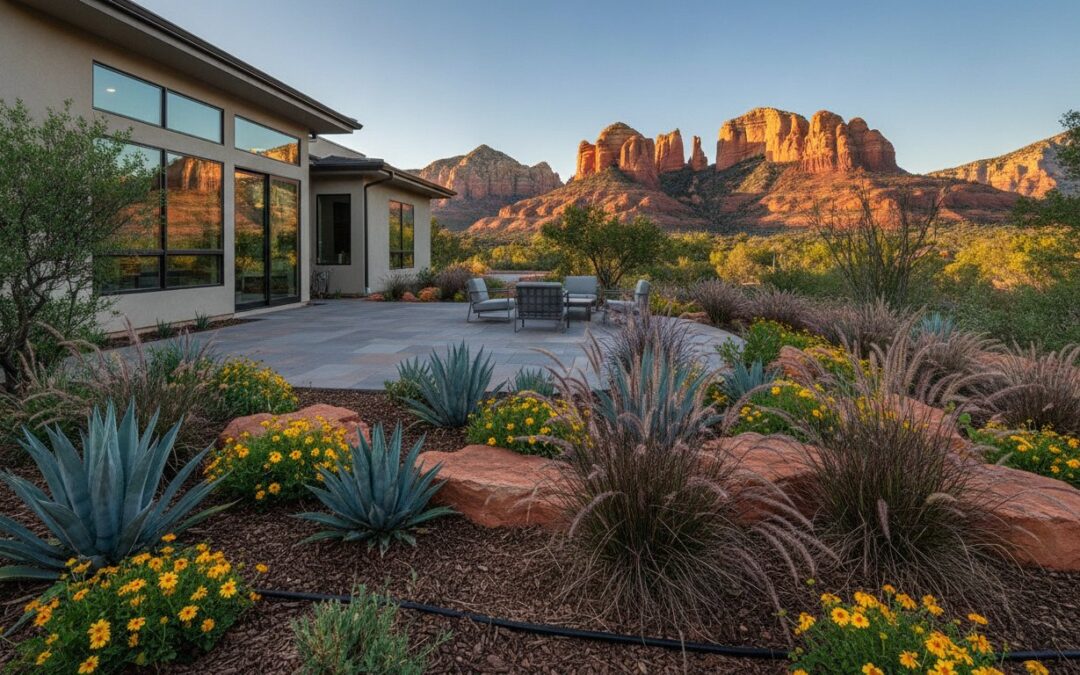
Did you know that in certain regions of our state, nearly 97% of buildings are now classified as having a very high wildfire risk? For homeowners in Northern Arizona, the challenge isn’t just about keeping the garden green; it’s about protecting your property from the elements while managing rising utility costs. You’ve likely felt the sting of tiered water rates or the frustration of seeing expensive plants fail in our alkaline soil. Achieving successful sustainable landscaping Arizona requires more than just picking native shrubs; it demands a strategic, professional approach to land management and water conservation.
We understand that you want a landscape that reflects the natural beauty of the high desert without the constant fear of monsoon erosion or fire encroachment. This resource guide provides a clear path to creating an eco-friendly, high-performance outdoor space that thrives in our unique climate. We’ll examine the 2026 Firewise Zone standards, explain how to navigate municipal turf rebates, and provide professional insights into irrigation troubleshooting and drainage grading. You’ll gain the technical knowledge and design inspiration needed to transform your property into a resilient, sustainable sanctuary that honors the local environment.
Key Takeaways
- Understand how high-efficiency drip systems and passive rainwater harvesting prevent water waste while supporting a lush environment.
- Discover how to implement the three-zone defensible space model to protect your home from wildfire threats without sacrificing curb appeal.
- Learn why sustainable landscaping Arizona relies on nurturing native biodiversity and using organic mulch to retain essential soil moisture.
- Find out how professional design and a strategic, phased conversion approach can maximize your property’s long-term value and resilience.
What is Sustainable Landscaping in the Arizona Context?
In the arid Southwest, true sustainability goes far beyond simply reducing water consumption. It’s a holistic philosophy of land management that seeks to mimic local ecosystems. By creating a self-sustaining environment, we reduce the need for external inputs like chemical fertilizers and excessive supplemental irrigation. For 47 years, Green Earth, LC has pioneered sustainable landscaping Arizona across the northern region, blending professional design with a deep respect for our regional ecology. We don’t just build gardens; we cultivate high-performance landscapes that protect your property and the planet.
While many homeowners are familiar with the term xeriscaping, it’s only one component of a modern sustainable landscaping Arizona strategy. In 2026, a truly eco-friendly landscape must address broader environmental challenges. This includes providing critical pollinator support for local species, reducing the urban heat island effect through strategic shading, and facilitating groundwater recharge during our intense monsoon seasons. When we design with the whole ecosystem in mind, the result is a resilient outdoor space that gains value as it matures. It transforms your yard from a high-maintenance chore into a functional asset.
The Seven Principles of Arizona Xeriscaping
Success begins with a firm foundation in established Xeriscaping principles. These seven pillars ensure that every design choice serves a functional purpose. We start with comprehensive planning to create water-efficient zones, grouping plants with similar hydration needs together. This prevents overwatering and ensures each species thrives. Our team emphasizes soil improvement through the use of organic mulches, which regulate ground temperature and suppress weeds. By selecting low-water-use plants native to the Verde Valley, we ensure your landscape remains vibrant even during prolonged dry spells. This methodical approach minimizes waste while maximizing aesthetic appeal.
High Desert vs. Alpine Sustainability
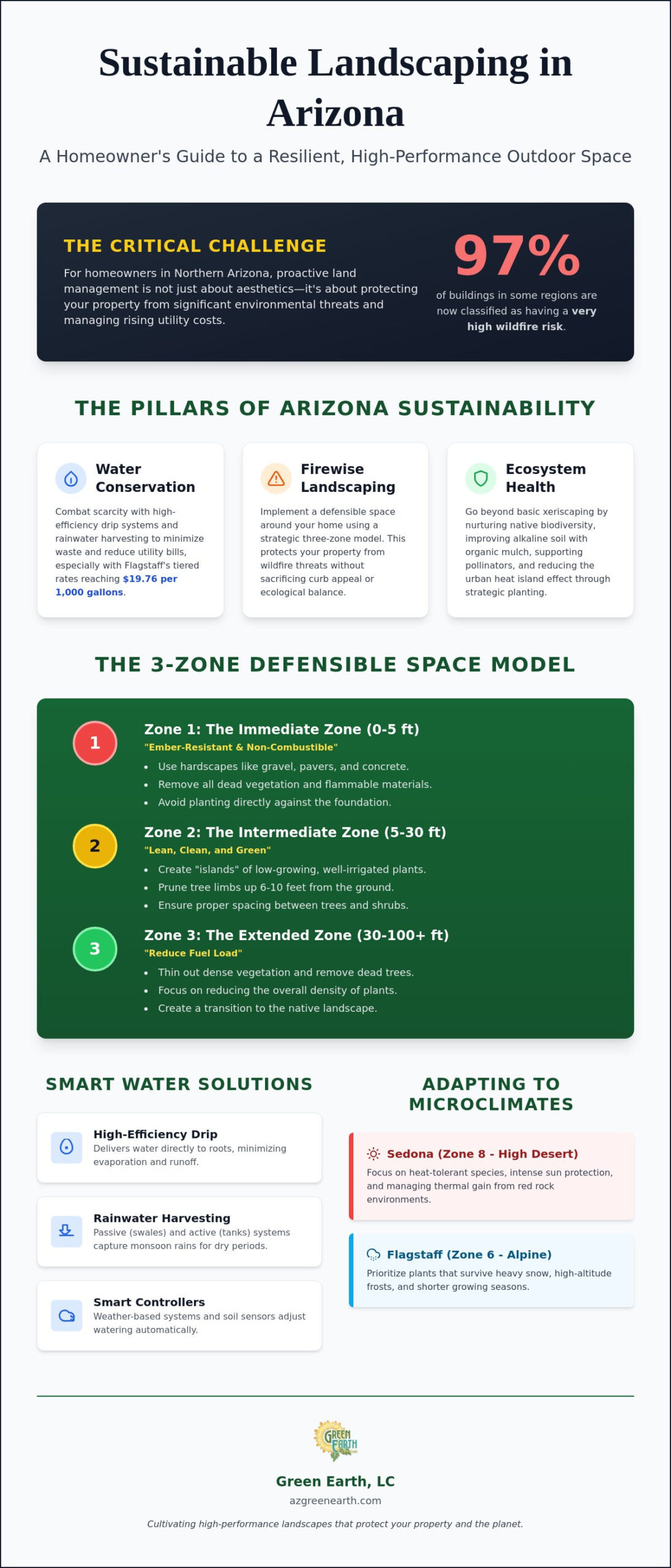
Northern Arizona’s diverse geography requires specialized knowledge. In Sedona’s red rock heat (Zone 8), sustainability focuses on heat-tolerant species and intense sun protection. Conversely, Flagstaff’s high-altitude frost (Zone 6) demands plants that can survive heavy snow and short growing seasons. We also adapt our designs for the unique microclimates found in Prescott and Camp Verde. Whether you’re managing Sedona’s thermal gain or Flagstaff’s freezing cycles, our designs prioritize long-term resilience and property protection. Understanding these regional nuances is the difference between a landscape that merely survives and one that truly flourishes. Homeowners looking to balance stunning aesthetics with ecological responsibility will find that thoughtful desert landscape design Northern Arizona professionals can navigate these complex microclimates with precision.
Water Management: Beyond the Drip Irrigation System
Water scarcity defines our region, but efficient management turns this challenge into a sustainable opportunity. In 2026, sustainable landscaping Arizona is no longer just about choosing the right plants; it’s about how we capture and distribute every drop of moisture. With Flagstaff’s tiered water rates reaching as high as $19.76 per 1,000 gallons for high-volume usage, the financial incentive for precision irrigation is higher than ever. High-efficiency drip systems provide water directly to the root zone, which minimizes evaporation and prevents the runoff common with traditional spray heads. This targeted approach ensures that your desert-adapted flora receives exactly what it needs without wasting a precious resource.
Rainwater harvesting offers a dual-benefit approach to moisture management that integrates seamlessly with professional landscape design. Passive systems, such as swales and basins, utilize the natural topography of your land to direct monsoon rain toward thirsty vegetation. Active systems involve storage tanks that collect roof runoff for later use during our driest months. By integrating these methods, we reduce the demand on municipal supplies while ensuring your landscape remains resilient during periods of drought. If you notice damp spots or a sudden spike in your utility bill, it’s often a sign that you need professional drip irrigation repair Arizona to restore system integrity and prevent costly water loss.
Smart Irrigation Technology for 2026
Modern water management relies on data-driven precision. Weather-based controllers now adjust watering schedules in real-time based on local atmospheric conditions, while soil moisture sensors prevent irrigation when the ground is already saturated. Regular irrigation troubleshooting is essential in Northern Arizona to account for seasonal shifts and hardware wear. Converting outdated, high-flow spray heads to low-flow drip emitters is one of the most effective ways to upgrade an existing property. We recommend a professional evaluation of your system to ensure every component is functioning at peak efficiency.
Grading and Drainage for Sustainable Landscapes
The Arizona monsoon season brings intense rainfall that can quickly lead to erosion and property damage if not managed correctly. Professional drainage grading ensures that water moves safely away from your home’s foundation and into productive areas of the garden. We design swales and collection basins that keep water on-site, allowing it to percolate into the soil rather than washing away topsoil. Permeable pavers offer another sustainable hardscape solution, allowing rain to soak through the surface and recharge the groundwater below. This structured approach to drainage protects your investment while supporting the overall health of your local ecosystem. To begin optimizing your property’s water use, you can explore our professional services for irrigation controller troubleshooting to identify hidden inefficiencies.
Firewise Landscaping: Safety as a Sustainable Practice
In the high desert and alpine regions of the North, a landscape that cannot withstand a wildfire is inherently unsustainable. True sustainable landscaping Arizona requires a dual focus on ecological health and property protection. With wildfire risks categorized as very high for a vast majority of buildings in certain regional corridors, creating a defensible space is no longer optional. It’s a fundamental part of responsible land management. We view fire safety as a design opportunity rather than a limitation. By strategically managing vegetation and fuel loads, we create beautiful outdoor environments that act as a shield for your home.
Implementing firewise landscaping Sedona involves a methodical approach to the land surrounding your structures. This isn’t about clearing all vegetation; it’s about the thoughtful placement and maintenance of specific plant species. Green Earth, LC integrates these safety principles into every custom design to ensure that your aesthetic goals align with modern safety standards. Our team evaluates your property’s unique topography and wind patterns to determine the most effective fuel reduction strategies. This proactive planning provides peace of mind while enhancing the natural character of your local environment.
The core of this practice is the three-zone defensible space model. Zone 0, the ember-resistant zone, extends from zero to five feet from your foundation and should be entirely free of flammable materials. Zone 1, reaching from five to 30 feet, is the “lean, clean, and green” area where we use well-spaced, fire-resistant plants. Finally, Zone 2 extends from 30 to 100 feet or more, focusing on thinning native vegetation to reduce the chance of fire spreading through the canopy. This tiered system creates a functional buffer that significantly improves a home’s chance of survival during a fire event.
Choosing Fire-Resistant Native Plants
Plant selection is critical for wildfire defense. We prioritize high-moisture succulents and deciduous trees over oily, resinous evergreens like junipers or pines, which can ignite easily. Proper spacing is essential to prevent crown fires from jumping between trees. In the critical Zone 0, we focus on inorganic mulches and low-growing, succulent groundcovers. Maintaining this lean perimeter ensures that wind-blown embers don’t find a fuel source against your home’s exterior walls.
Hardscaping for Wildfire Defense
Strategic hardscape elements serve as vital fire breaks in a sustainable design. We utilize pavers, stone retaining walls, and rock mulches to create non-combustible gaps in the landscape. These features provide a dual purpose by offering structural beauty and stopping the ground-level spread of flames. When we install outdoor kitchens or fire features, we ensure they’re placed on non-flammable surfaces far from overhanging branches. This disciplined approach to hardscaping ensures your high-performance landscape is as safe as it is functional.
Soil Health and Native Biodiversity in Northern Arizona
Healthy soil is the foundation of any high-performance landscape. Many homeowners believe the rocky, alkaline earth of Northern Arizona is a hindrance that must be replaced with imported topsoil. However, true sustainable landscaping Arizona starts with nurturing the ground you already have. Native species have evolved over millennia to thrive in these specific mineral compositions. By amending the soil with organic matter rather than replacing it, you preserve the established microbial life that supports local plant health. This approach creates a more resilient garden that requires fewer chemical interventions over time.
Biodiversity is the next critical layer of a sustainable property. We design “Pollinator Corridors” that use native desert blooms to provide food and habitat for local bees, butterflies, and birds. This isn’t just about aesthetics; it’s about supporting the local ecosystem that keeps our region’s flora healthy. To maintain this balance, we employ sustainable pest management by encouraging beneficial insects. Predators like ladybugs and lacewings manage common garden pests naturally, which eliminates the need for harsh synthetic sprays. This holistic method ensures your outdoor space remains a safe, vibrant sanctuary for both your family and the local wildlife.
Native Plant Palette for the Verde Valley
Selecting the right species is essential for long-term success. For the Verde Valley, we prioritize architectural trees like the Desert Willow, Mesquite, and Palo Verde, which provide essential shade and structural beauty. Shrubs and accents such as Agave, Yucca, and Apache Plume offer year-round interest with minimal water requirements. To add seasonal color, we integrate wildflowers like Desert Marigold and Penstemon. These plants are perfectly adapted to our intense sun and periodic droughts, ensuring your landscape remains lush without excessive maintenance.
Composting and Mulching in Arid Climates
Managing moisture is a constant battle in our dry climate. Organic mulch acts as a protective blanket, regulating soil temperature and significantly reducing evaporation. While wood chips are excellent for moisture retention and adding nutrients back into the soil, we use rock mulch strategically in Firewise Zone 0 to prevent fire spread. We also encourage using “Desert Gold”—compost made from kitchen and yard waste—to naturally lower soil alkalinity and improve drainage. To ensure your property maintains these ecological standards year-round, consider our professional HOA landscape maintenance services to keep your soil and plants at peak health.
Planning and Maintaining Your Sustainable Landscape
Converting a traditional yard into a high-performance ecosystem is a strategic journey, not a single weekend event. Many homeowners find success by phasing their landscape conversion, starting with the removal of high-water-use turf and replacing it with native zones. This step-by-step approach allows you to manage costs while observing how your property responds to new drainage grading or soil amendments. A master master plan prevents the haphazard placement of plants that might eventually grow into fire hazards or block essential drainage paths. Professional design is essential for securing a long-term ROI, as it ensures that hardscape elements like pavers and retaining walls are integrated perfectly with your smart irrigation systems. For community leaders, adopting HOA landscape maintenance Arizona standards is the most effective way to drive community-wide sustainability and protect collective property values in our changing climate.
Working with a Sustainable Landscape Designer
When selecting a visionary partner for your project, ask specific questions about their water-wise expertise and Firewise knowledge. A seasoned designer understands the complex design-build process, ensuring that structural elements like outdoor kitchens or fire features don’t compromise your defensible space. Local experience in the Verde Valley is irreplaceable. A designer who knows the specific temperature swings between the heat of Camp Verde and the frost of Prescott will select plants that actually survive their first winter. For homeowners in the Prescott area specifically, working with experts in landscaping Prescott AZ ensures your property is designed to withstand both heavy summer monsoons and biting winter freezes without sacrificing beauty or efficiency. For a deeper look at how expert planning translates vision into reality, explore our comprehensive guide to desert landscape design Northern Arizona homeowners and community boards rely on for sustainable, high-elevation outdoor living. This specialized knowledge prevents the expensive plant-and-replace cycle that often plagues DIY projects. We pride ourselves on being a partner that transforms vague ideas into functional, beautiful realities through disciplined execution.
A 12-Month Sustainable Maintenance Roadmap
Maintenance for sustainable landscaping Arizona follows the rhythm of the seasons rather than a rigid weekly schedule. Pruning should focus on plant health and fire safety rather than forced geometric shapes. This allows native species to maintain their natural, drought-tolerant forms and reduces the stress on the plant. Your 12-month roadmap must include quarterly adjustments to irrigation controllers to account for Arizona’s dramatic seasonal shifts in temperature and humidity. In the winter, focus on structural pruning and checking drip lines for frost damage. During the monsoon, monitor your basins and swales to ensure they are capturing runoff effectively without overflowing. Finally, perform annual soil and mulch top-offs every spring. This practice maintains the protective barrier your soil needs to retain moisture during the peak heat of June, ensuring your landscape remains a resilient, low-input sanctuary for years to come.
Cultivating a Resilient Future for Your Arizona Property
Creating a landscape that thrives in our unique climate requires a disciplined blend of ecological science and professional craftsmanship. We’ve explored how high-efficiency irrigation, native biodiversity, and strategic defensible space work together to protect your home and conserve our most precious resources. By shifting toward sustainable landscaping Arizona, you aren’t just reducing your utility bills; you’re becoming a responsible guardian of the local environment. For homeowners aiming for total energy independence, pairing these landscape strategies with professional solar solutions from G-Solar & Electrical can provide a comprehensive approach to modern sustainability. A successful transition depends on a master plan that accounts for Northern Arizona’s specific soil alkalinity and seasonal temperature swings.
With over 47 years of experience in the region, Green Earth, LC understands the technical nuances of high-desert and alpine land management. As the statewide runner-up for ‘Best Sustainable Landscape Designer’ by Green Living Magazine and a provider of Firewise USA recognized practices, we’re committed to excellence in every project. We invite you to Schedule a Sustainable Landscape Consultation with Green Earth, LC to begin your property’s transformation. Let’s work together to build a beautiful, functional, and enduring outdoor sanctuary that honors the natural spirit of the Southwest.
Frequently Asked Questions
Is sustainable landscaping the same as xeriscaping?
Sustainable landscaping is a broader, more holistic approach that includes xeriscaping principles as a core component. While xeriscaping focuses primarily on water conservation, a sustainable model also prioritizes soil health, wildfire defense, and native biodiversity. It seeks to create a self-sustaining ecosystem that reduces the need for chemical fertilizers and intensive maintenance while supporting local pollinators.
Do I have to remove my grass to have a sustainable yard in Arizona?
You don’t necessarily have to remove all of your grass, but replacing non-functional turf with drought-tolerant plants is the most effective way to improve sustainability. Many homeowners choose to keep small, strategic areas of grass for children or pets while converting the rest of the property to a desert-adapted landscape. This balanced approach significantly lowers water consumption while maintaining the utility of your outdoor space.
How much water can I actually save with a sustainable landscape?
Transitioning from traditional spray-irrigated turf to a high-efficiency drip system can reduce outdoor water usage by 50% or more. In regions like Flagstaff, where high-tier water rates can reach $19.76 per 1,000 gallons, these savings provide a substantial financial benefit. Implementing sustainable landscaping Arizona strategies ensures your property remains vibrant without the burden of excessive utility costs.
Are native Arizona plants fire-resistant?
Not all native plants are fire-resistant, which is why professional selection and placement are essential. Succulents and high-moisture deciduous species are excellent for defensible space, while resinous natives like certain junipers can be highly flammable. A sustainable design balances the use of beautiful native flora with the technical requirements of the three-zone Firewise model to protect your property.
Can sustainable landscaping work for commercial properties and HOAs?
Sustainable landscaping is highly effective for commercial properties and HOAs, offering a significant return on investment through reduced maintenance and water expenses. Modern sustainable landscaping Arizona designs enhance curb appeal while helping community boards meet increasingly strict municipal water regulations. These landscapes provide a professional, polished look that reflects a commitment to environmental stewardship and long-term fiscal responsibility.
What is the best time of year to start a sustainable landscape project in Northern Arizona?
Early fall and spring are the ideal seasons to begin a landscape project to avoid the stress of peak summer heat or deep winter frost. Planting in the fall is particularly beneficial as it allows root systems to establish during the cooler months before the dry heat of June arrives. Hardscape elements like pavers and retaining walls can often be installed year-round, depending on local ground conditions.
Does the city of Sedona or Flagstaff offer rebates for sustainable landscaping?
While many Arizona municipalities offer turf removal rebates ranging from $1 to $3 per square foot, programs vary by city and are updated annually. As of 2026, cities like Phoenix and Chandler have robust grass removal incentives, while Northern Arizona cities often focus on water conservation through tiered utility rates. We recommend checking with your local water provider for the most current rebate opportunities before you begin your conversion.
Recent Comments